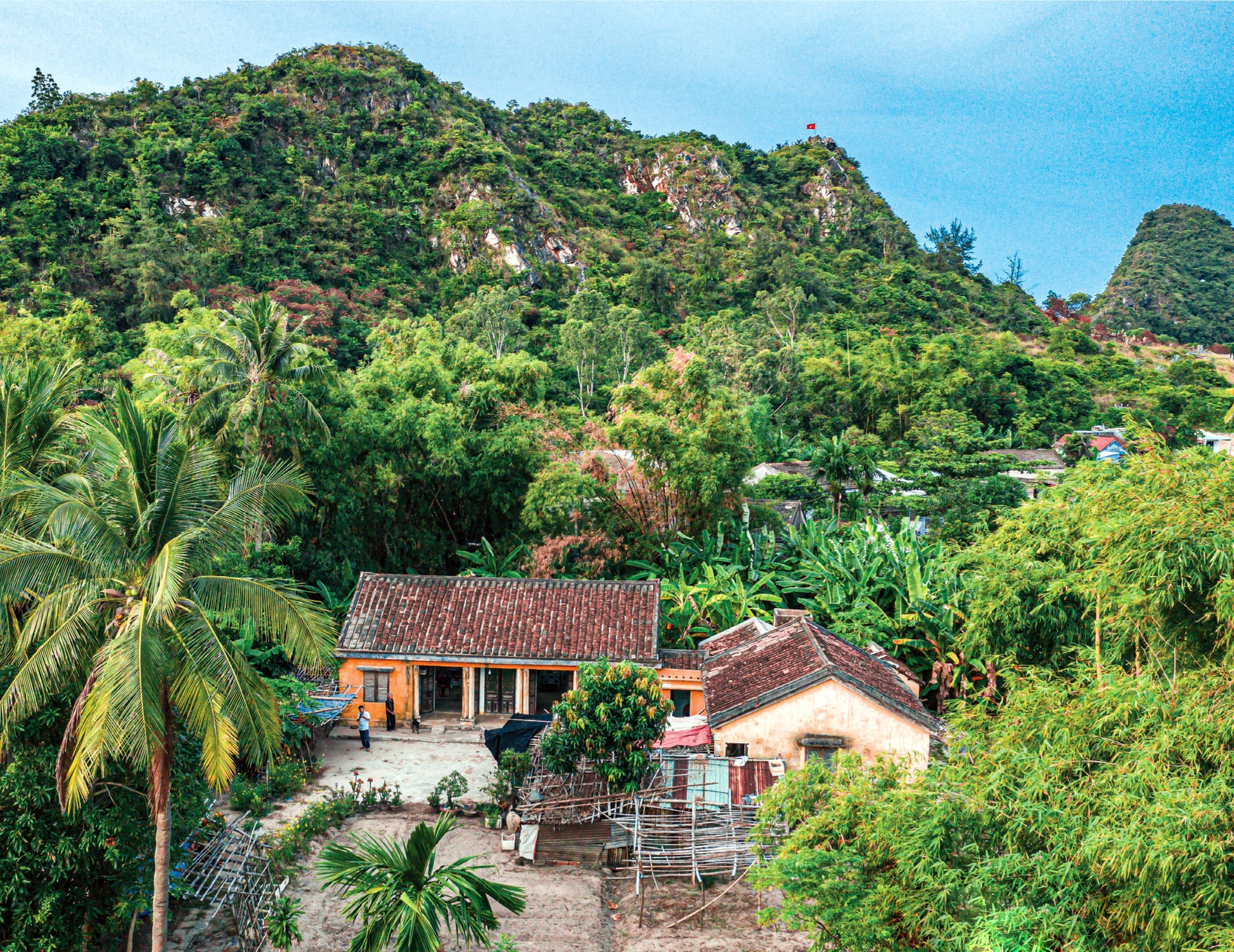
In the tourism development plan with the theme "Touching the Original," Da Nang Tourism Year 2026, Khue Bac is considered to have great potential for exploiting community-based tourism associated with local values.
"Touching" the spirit of the past
As a land rich in historical and cultural relics, alongside famous ancient temples, the system of village communal houses also contributes to the distinctive cultural landscape of Da Nang . Among them, Khue Bac village and its communal house are considered a destination of great historical value, closely linked to the life of the local community for many generations. In the ancient village space, the communal house plays a central role in community activities, where religious activities, meetings, and festivals take place.
According to local people, the Khue Bac communal house was originally built only with bamboo, reeds, and leaves. During the reign of King Dong Khanh (1885-1888), the communal house was rebuilt with more solid bricks and stones. Over time, due to war and the harsh climate of Central Vietnam, the structure has been damaged but still retains many traces of its ancient architecture.
Before 1945, the communal house served as a meeting place for revolutionary forces and a literacy class for the local people. During the war against the Americans, the structure was severely damaged; even today, the walls and pillars still bear the marks of bombs and bullets.
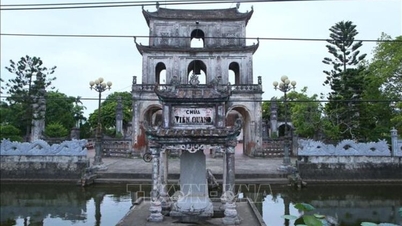
In 2010, Khue Bac communal house was recognized as a city-level historical and cultural relic. In 2015, the structure was restored and renovated, but still retained its traditional architecture with a five-bay, four-roof design; the front faces the Co Co River, and the back rests against Tho Son mountain. The roof is covered with yin-yang tiles, and the apex features a sculpted image of two dragons flanking the moon. Inside, the rear chamber is dedicated to the local tutelary deity and the ancestors who contributed to the village.
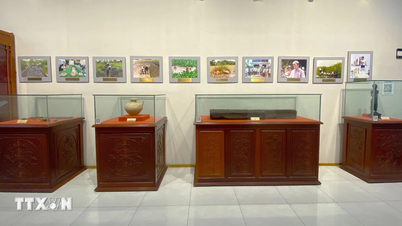
Beyond being a place of worship, the temple garden also preserves many ancient cultural relics such as the Tam Vi shrine, the Ba Cong shrine, and the Moi well (Cham well). Archaeological excavations in 2015 uncovered numerous pottery, stone artifacts, and production tools, including a stone axe belonging to the pre-Sa Huynh culture dating back approximately 2,500-3,000 years.


Research results show that the temple garden area contains two cultural layers: the upper layer is the remains of Champa culture dating from around the 2nd-3rd centuries AD; the lower layer belongs to the early Metal Age period of the Sa Huynh culture. In addition, archaeologists also discovered coins and pottery fragments from the Song to Ming dynasties, indicating traces of trade by foreign merchants in the area.
Besides the ancient communal house, Khue Bac also preserves four ancient houses over a century old, including one that is over 180 years old. These houses are strongly influenced by traditional Central Vietnamese architecture, featuring a thatched roof, yin-yang tiled roof, and a three-bay interior. From the pillars and beams to the altars and seating platforms, everything is made of jackfruit wood, which has acquired a distinctive dark brown color over time.
Currently, three out of the four ancient houses in the village are included in the Plan for the Preservation, Restoration and Rehabilitation of the Ngu Hanh Son National Special Scenic Area, approved by the Prime Minister on July 11, 2023.
Today, Khuê Bắc village communal house remains the cultural center of the community. During the Lunar New Year or the spring festival on the 20th day of the 3rd lunar month, people gather at the communal house to perform rituals praying for favorable weather. Traditional activities such as lion dance, traditional opera, and martial arts competitions are still maintained, contributing to preserving the cultural life of the village at the foot of the Marble Mountains.
Extracting the original value from the space of the ancient village.
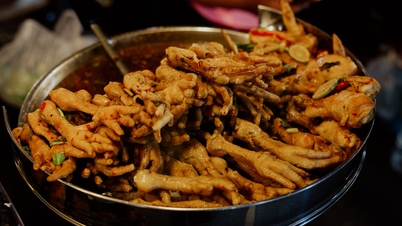
The ancient village landscape, communal house, old houses, and the scenery along the Co Co River create a distinctive cultural picture of Khue Bac. Here, the tranquil pace of life of a Central Vietnamese village is preserved, with its old houses, quiet village roads, and close-knit community. Visitors to Khue Bac can not only explore the historical sites but also experience the local culture and enjoy familiar Quang Nam dishes such as banh xeo (Vietnamese savory pancake), Quang Nam noodles, rice paper rolls with pork, or bun mam (fermented fish noodle soup).
The well-preserved architectural, historical, and cultural values have made Khue Bac a suitable space for developing community-based cultural tourism. The ancient village and its historical sites offer visitors a leisurely experience, helping them better understand the lifestyle and long-standing traditions of the people living along the Co Co River.
In Da Nang's sustainable tourism development plan, themed "Touching the Originals" for the 2026 Tourism Year, cultural spaces like Khue Bac communal house are considered important resources. This direction is concretized through an experiential ecosystem with eight "touch" states, reflecting the modern man's need for balance and connection.



In Khue Bac, visitors can "connect with the earth" by strolling through village paths and learning about the architecture of ancient temples and houses; "connect with the source" through the historical stories of the land along the Co Co River; or "connect with tranquility" in the peaceful rural setting. Simple meals featuring typical Quang Nam dishes offer a "taste experience," while the friendliness of the locals and the festival activities at the village temple create a feeling of "connection" with the local community.
From ancient communal houses and century-old buildings to the vibrant village life along the Co Co River, Khue Bac today not only preserves the memories of the past but also opens up intimate and authentic experiences for tourists. In the city's tourism development, cultural spaces like Khue Bac contribute to heritage preservation while creating enriching journeys of discovery, helping visitors better appreciate the cultural identity of the Central Vietnamese land and people.
Source: https://baodanang.vn/dau-xua-khue-bac-3328083.html
![[Image] National conference summarizing one year of operation of the overall organizational model of the political system, the three-tiered government model.](https://vphoto.vietnam.vn/thumb/1200x675/vietnam/resource/IMAGE/2026/07/01/1782882811691_ndo_br_1-jpg.webp)