

During the plenary discussion in the assembly hall on the draft Law on Credit Institutions (amended) on the afternoon of June 10th, delegate Truong Trong Nghia (from Ho Chi Minh City delegation) stated that, according to international practice, some professions have their customer information strictly protected by constitution and law, including banking, medicine, and law.
"Banking secrets, like other secrets, fall under the category of personal secrets, family secrets, and private information. Protecting private life secrets, personal secrets, and family secrets is a human right recognized in international conventions, of which Vietnam is a signatory," Mr. Nghia said.
According to Mr. Nghia, Clause 3, Article 14 of the draft Law stipulates that credit institutions and branches of foreign banks are not allowed to provide customer information of credit institutions, banks, or branches of foreign banks except in cases where requested by competent State agencies in accordance with the law and with the customer's consent.
Meanwhile, Article 21 of the 2013 Constitution stipulates that everyone has the inviolable right to privacy, personal secrets, and family secrets. Information about private life secrets and family secrets is protected by law, and Article 14 of the 2013 Constitution stipulates that human rights and civil rights can only be restricted by law in cases where it is necessary for national defense, national security, and social order and safety.
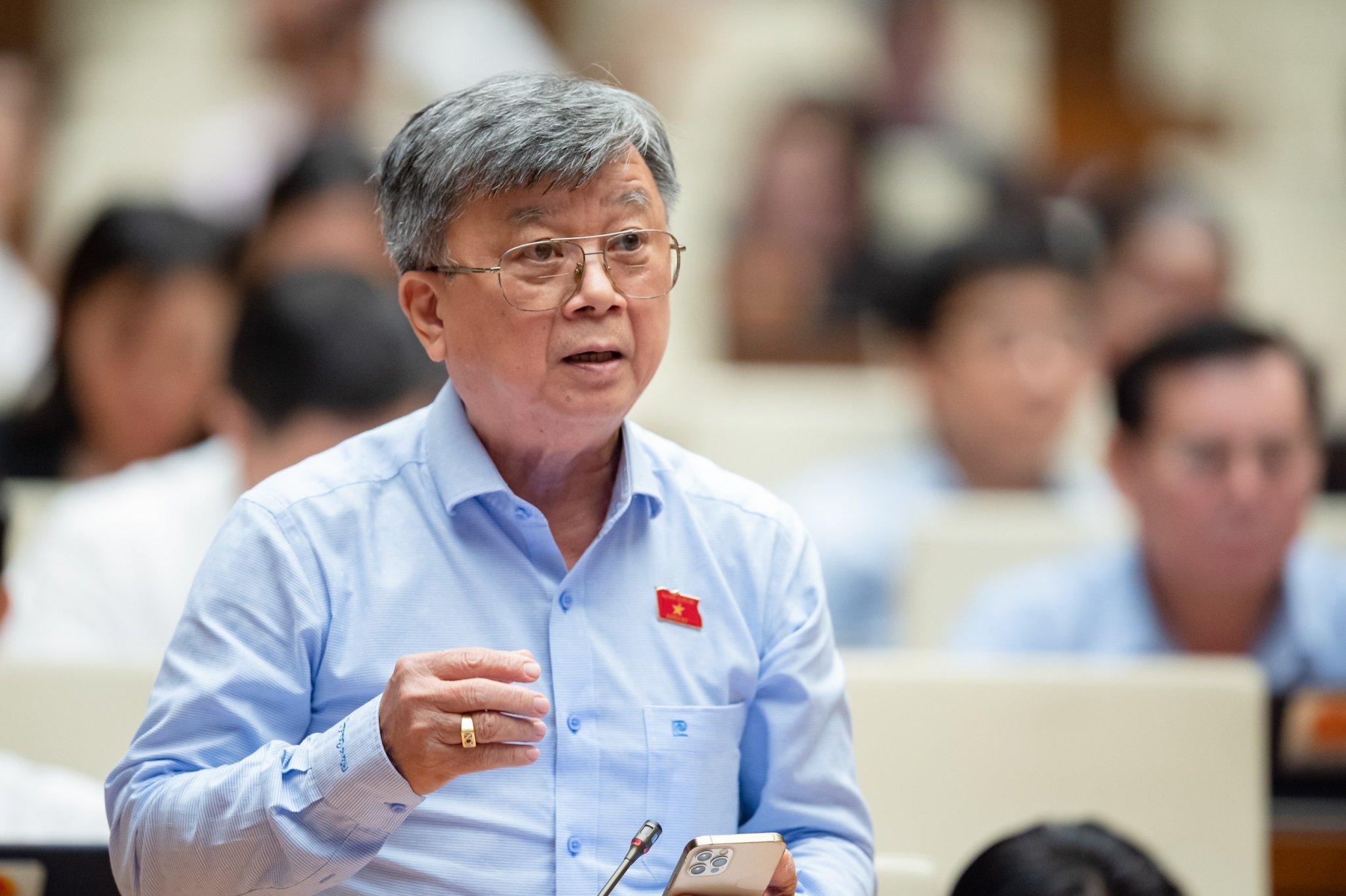
Delegate Truong Trong Nghia (Photo: Quochoi.vn).
Delegates argued that the current provisions in Article 14 of the draft law restrict the human right to information protection because the provision requiring information provision according to government regulations or laws is insufficient.
Mr. Nghia suggested that the draft law amend Article 14 to only provide customer information in accordance with the Law on Credit Institutions and related laws, not according to the law.
Decree 117 on information security stipulates that customer information may only be provided in accordance with specific provisions of the Act, Law, or National Assembly Resolution. He proposed including this provision in Article 14 of the Law on Credit Institutions.
The second point raised by the delegates was that information should only be requested from customers involved in the ongoing investigation, and that the requested information must be necessary for the investigation.
"It's impossible for an official document to suddenly arrive and ask for customer information," Mr. Nghia questioned.
Decree 117 expands the scope of entities required to provide information to include members of government inspection teams, audit teams, district-level investigative agencies, and customs authorities.
"According to my calculations, tens of thousands of people have the right to request customer information. Therefore, we propose redesigning the law as suggested, and if it is included, the subjects entitled to request this information should be specified," he said.
Furthermore, Mr. Nghia argued that for such individuals, only the head or deputy head of the organization should be authorized to sign the request document, and that this authority should not be extended to other members of the delegation.
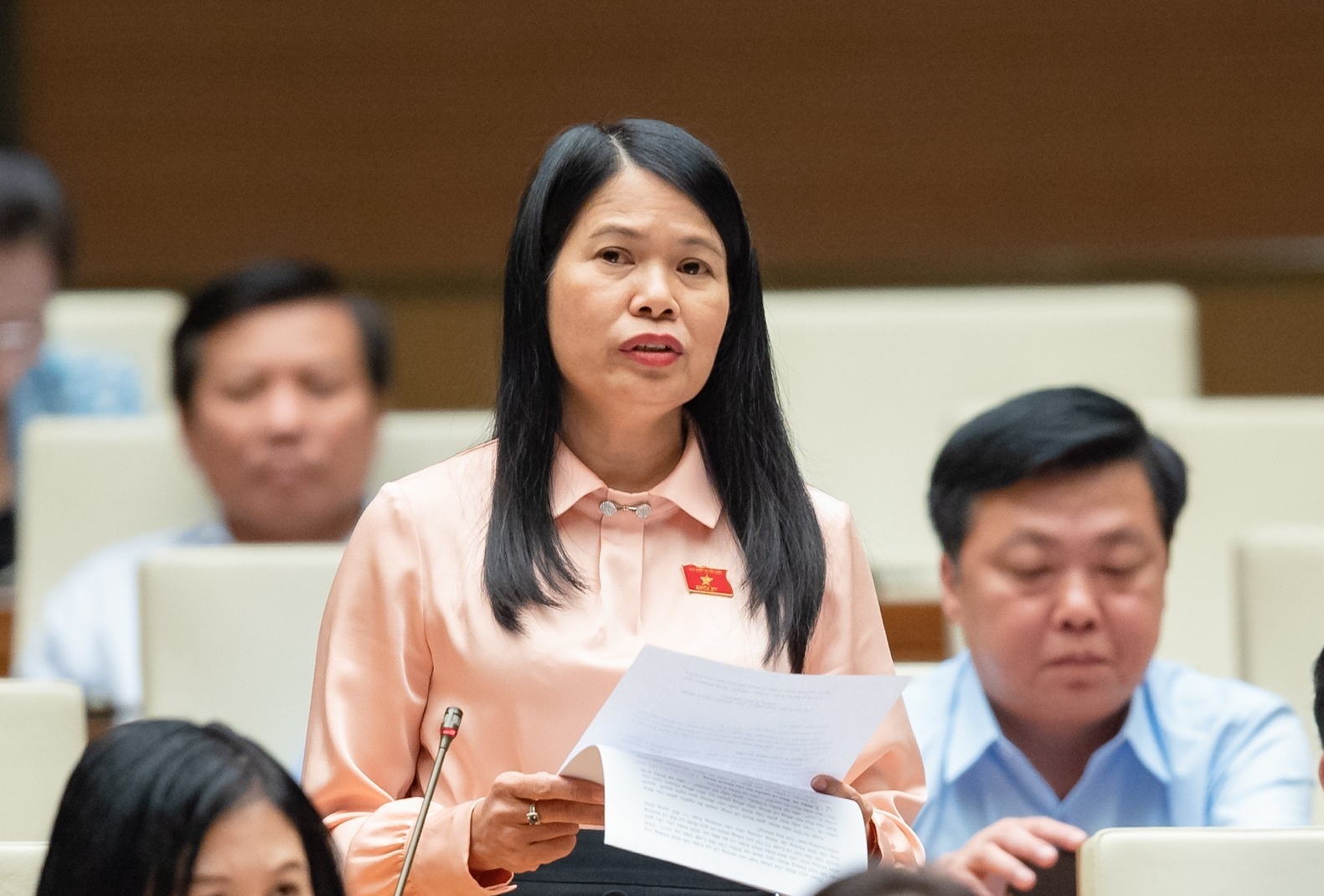
Delegate Vu Thi Lien Huong (Photo: Quochoi.vn).
Agreeing with delegate Truong Trong Nghia, delegate Vu Thi Lien Huong (Quang Ngai delegation) proposed adding the case of providing customer information or acting in accordance with the law to Article 14, Clause 3.
"For example, in cases where a customer dies or loses their legal capacity, their heirs may request information, or the law may require banks to submit periodic reports. Therefore, I propose that the draft law clearly specify which cases allow for the provision of customer information," the female representative commented.
In a previous comment, delegate Pham Van Thinh (Bac Giang delegation) proposed adding item 8, which regulates customer information systems, to Chapter IV on the operations of credit institutions and branches of foreign banks. The aim is to ensure the confidentiality of customer information systems while establishing a standardized information structure linked to the citizen identification number and tax code of organizations and individuals.
According to Mr. Thinh, this is to ensure that when needed, authorities can look up all the accounts of an organization or citizen, as well as obtain data on transactions in payment accounts of all organizations and individuals in the economy.
This section also needs to strictly regulate the responsibilities of credit institutions, organizations, and individuals opening accounts to ensure the legitimacy of the accounts, because lack of legitimacy would be a significant factor in motivating illegal activities by organizations and individuals .
Source




![[Photo] General Secretary and President To Lam and the President of the Philippines hold talks.](https://vphoto.vietnam.vn/thumb/1200x675/vietnam/resource/IMAGE/2026/06/01/1780283481955_vna-potal-tong-bi-thu-chu-tich-nuoc-to-lam-va-tong-thong-philippines-hoi-dam-8797519-1429-jpg.webp)






























































































Comment (0)