Struggling to avoid contaminated food.
In early 2026, police forces in Ho Chi Minh City uncovered a series of food safety violations that shocked public opinion: hundreds of tons of fresh noodles containing borax, thousands of tons of snails soaked in "liquid glass," and a ring producing fake beef from pork treated with chemicals...
According to Ms. Tran Dieu Van (37 years old, Phuoc Long ward, Ho Chi Minh City), contaminated food is everywhere, and it's hard to know where to avoid it. The closer it gets to Tet ( Lunar New Year), the more worried she becomes about food safety. Ms. Van tries to protect herself by having her mother send her home-grown vegetables and pork from Dong Nai every week. "It costs a lot, but the effort is immense," but in return, her meals are less anxious. Recently, after the Chau Phat facility (Ho Chi Minh City) was discovered producing hundreds of tons of noodles mixed with borax, Ms. Van bought a chemical testing kit for her family. The fear has led her to test food every day, from sausages and ham to vermicelli, noodles, and dried fish...

Ms. Tran Dieu Van (Phuoc Long ward, Ho Chi Minh City) bought a test kit to check for borax contamination while cooking.
Sharing the same sentiment, Ms. Nguyen Thi Man (35 years old, Tang Nhon Phu ward, Ho Chi Minh City) also completely removed the food that was "named and shamed" in the press from her family's menu. After her son suffered from food poisoning, her family minimized eating out and absolutely avoided buying canned or processed foods. As for vegetables and fruits, she only buys them from a single source: her neighbor's garden.
Associate Professor Dr. Nguyen Duy Thinh, a food safety expert and former lecturer at Hanoi University of Science and Technology, believes that people's self-screening of food is only a temporary solution, limited in scope. The fundamental solution is effective prevention and raising awareness of responsibility from producers themselves. This is even more urgent as the Lunar New Year approaches, when people's food consumption increases significantly.
On January 29th, many primary and secondary schools in Ho Chi Minh City, including Nguyen Van Huong Primary School (Phu Thuan Ward), Huynh Tan Phat Secondary School (Tan Thuan Ward), Tan Quy Primary School (Tan Hung Ward), Trung Son Secondary School, Le Quy Don Primary School (Binh Hung Commune), Khanh Binh Secondary School (Chanh Hung Commune), etc., temporarily suspended providing lunch for students after reports emerged that the company supplying the school lunch showed signs of not meeting food safety and hygiene standards.
According to announcements from schools, the suspension of school lunch services will remain in effect until the results of inspections by relevant authorities are available or the school finds a new supplier.
Stricter food safety regulations on many Tet holiday items.
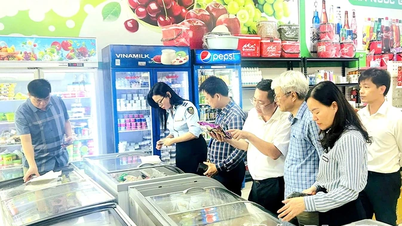
According to Ms. Pham Khanh Phong Lan, Director of the Ho Chi Minh City Department of Food Safety, inspections are being carried out continuously before, during, and after the Lunar New Year (Year of the Horse) and the Spring Festival season of 2026. The inspections focus on product groups that are heavily consumed during this period, such as meat and meat products, beer, wine, alcoholic beverages, soft drinks, cakes, jams, candies, vegetables, fruits, and food additives… Food service establishments are also being closely inspected to promptly detect, prevent, and handle food safety violations, striving to control and prevent food poisoning incidents.

Choose and buy fresh vegetables at Co.opmart Ly Thuong Kiet supermarket, Hoa Hao ward, Ho Chi Minh City.
(PHOTO: HOANG HUNG)
Authorities will conduct inspections of more than 1,300 establishments involved in the production, processing, trading, and import of food, as well as food service businesses. Inspections will focus on major hubs such as supermarkets, shopping malls, wholesale markets, local markets, and individual businesses. Upon detecting signs of violations, the inspection team will collect product samples for testing. Simultaneously, the Ho Chi Minh City Department of Food Safety has requested that the People's Committees of communes, wards, and special zones strengthen inspections within their jurisdictions and intensify the dissemination of information and training on food safety knowledge for establishments serving the Tet holiday.
In January 2026 alone, the Ho Chi Minh City Department of Food Safety conducted inspections of 367 food production and business establishments and food service businesses in the city. As a result, the inspection teams discovered 7 establishments in violation, with a total administrative fine of over 79 million VND. In surprise inspections of 11 food production, business, and service establishments, the inspection team found only 1 establishment in violation.
Regarding pork supplies entering Ho Chi Minh City, over the past month, food safety teams have traced the origin of 241,189 pigs at the Hoc Mon wholesale market for agricultural products and food and the Binh Dien market, ensuring safety for the city's consumers.
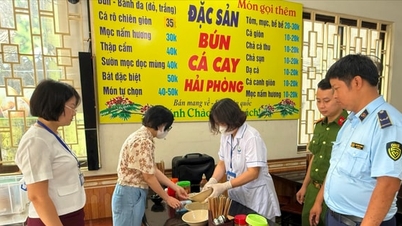
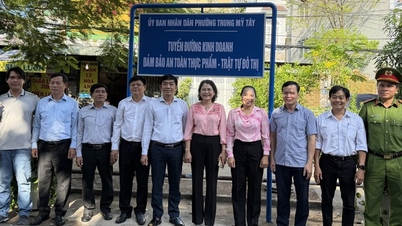
In Ho Chi Minh City, food safety inspections and monitoring during the Tet holiday are entering their peak period. In Vung Tau ward, inspection campaigns were launched on December 30, 2025, and will continue until March 20, 2026. According to Ms. Tran Thi Bich Van, Vice Chairman of the People's Committee of Vung Tau ward, in the period before Tet, the local authorities organized three inspection teams to check more than 60 establishments, focusing on product groups that are heavily consumed during Tet and traditional food processing villages.
Meanwhile, in Rach Dua ward (which has over 361 food service establishments and 406 street food vendors), food safety monitoring is also being implemented rigorously. The ward has organized inspection teams to prevent food poisoning from street food early on.
KHANH CHI
GIAO LINH
Source: https://www.sggp.org.vn/dam-bao-an-toan-thuc-pham-tet-post836029.html
































































































Comment (0)