


Standardization is needed to ensure fairness.
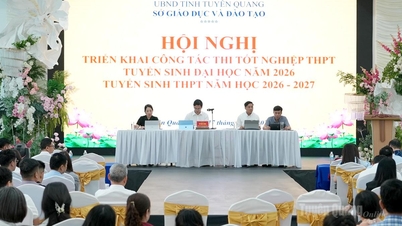
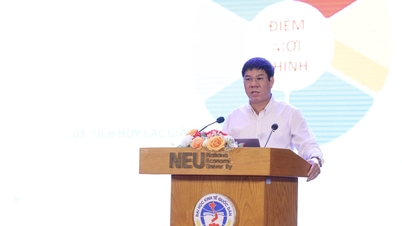
At the recent training conference on organizing the 2026 high school graduation exam, the Permanent Deputy Minister of Education and Training, Pham Ngoc Thuong, acknowledged that while most localities had conducted the exam seriously, some areas still raised questions from the public. Notably, in some localities, the distribution of scores in Literature showed unusually high scores, especially at levels of 9, 9.5, and 10. In response to this, the Ministry requested explanations from the Departments of Education and Training. According to the assessment, reasons such as "well-organized review sessions" or "students with good abilities," while seemingly reasonable, are insufficient to confirm the objectivity of the results.
The appearance of unusually high scores raises a major question: was there leniency in the grading process? This is not just a technical issue but also directly relates to the fairness of the exam. When one locality has significantly higher average scores than another, while the students' abilities do not differ proportionally, the scores no longer accurately reflect their true potential.
In reality, the rankings of Literature among provinces and cities have fluctuated significantly in recent years, with some places seeing increases or decreases of dozens of places in just one year. This shows that exam results depend not only on the exam questions or students' abilities, but also on the grading method. Given its essay-based nature, Literature is easily influenced by the subjective judgment of graders if there aren't sufficiently strict standards. Especially with the current open-ended exam questions and materials outside of textbooks, many are concerned that if the grading process isn't standardized, it could easily lead to "biased" grading.
In response to this situation, the Ministry of Education and Training stated that it will continue to review localities that have shown signs of lax grading in previous years. This review should not be limited to just one year but should be conducted continuously to avoid a situation where "one year a locality is mentioned, and the same issue reappears in another." Simultaneously, inspections will be strengthened at all stages of the exam; when necessary, coordination with inspection agencies may be undertaken to ensure fairness and impartiality.
Dr. Hoang Ngoc Vinh, former Director of the Department of Professional Education (Ministry of Education and Training), proposed technical solutions to enhance fairness, such as increasing cross-marking. Accordingly, each province or city could establish multiple marking clusters and distribute exam papers among these clusters so that examiners do not mark papers from students belonging to their own school. This approach minimizes subjective bias and ensures objectivity in evaluation.
Flexible, but must adhere to standards.
Associate Professor Dr. Do Ngoc Thong - General Editor of the 2018 General Education Program for Literature, once emphasized: When grading Literature, teachers need to adhere to the answer key but at the same time apply it flexibly. The assessment must maintain standards, accurately reflect the quality of the work, and avoid lowering or raising scores without justification for any reason.
This viewpoint is also shared by Ms. Nguyen Thu Huyen (Literature teacher, Kim Bang B High School, Ninh Binh ) from her teaching practice. According to her, with the 2018 General Education Program, the teaching, learning, and assessment of Literature have undergone many changes towards emphasizing creativity, comprehensiveness, and flexibility; the practice of "counting ideas" or writing long essays to gain an advantage is no longer prevalent.
Specifically, in the tests, grading is still based on a detailed rubric but is no longer rigid; instead, it is designed to be open-ended, with clear criteria for content, argumentation, evidence, expression, and essay organization. Based on this, teachers focus on evaluating the overall work, respecting novel approaches, well-founded arguments, and the students' personal style of expression.
Essays with original ideas and independent thinking, even if not technically perfect, can still be recognized if they meet the basic requirements of the prompt. Conversely, essays that are complete but formulaic, copied from sample essays, or lack depth of argumentation will find it difficult to receive high marks.
Regarding the word limit, Ms. Huyen believes this is a factor that helps guide students to develop selective writing skills, organize ideas logically, and use language effectively. At the same time, limiting the word count also helps examiners focus on evaluating the depth of content rather than being influenced by the length of the essay.
"However, when grading, flexibility is needed; points shouldn't be deducted rigidly simply because the essay exceeds the allotted length. Conversely, if the essay is too short and doesn't meet the requirements in terms of content and argumentation, it's unlikely to receive a high score. The most important thing is the quality of the writing, reflected in the way the issue is developed, the persuasiveness of the argument, and the subtlety of the language," Ms. Huyen stated.
According to her, to ensure fairness and consistency in grading, teachers need to regularly exchange and discuss answers, thoroughly understand the spirit of the new curriculum, and maintain high standards in assessment. Only then will the Literature scores truly reflect the students' abilities and learning process.
Source: https://daidoanket.vn/dam-bao-cong-bang-khi-cham-thi-ngu-van.html

















































































Comment (0)