


The Cai Lon - Cai Be irrigation system contributes to controlling water resources for drought and salinity control. Photo: GIA BAO
Actively regulate water levels, prevent saltwater intrusion, and preserve freshwater.
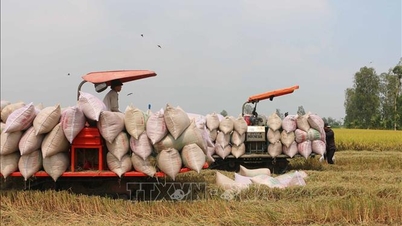
According to Mr. Nguyen Huynh Trung, Head of the Provincial Irrigation Department, the water supply for water treatment plants, water supply stations, and freshwater supply for agricultural production in the province is basically ensured. No damage caused by drought and salinity has been recorded in the province. The 2025-2026 winter-spring crop has been planted, with a sown area of 503,563 hectares, reaching 99.58% of the planned area. Over 62,000 hectares of fruit trees and vegetables have also been planted.
To achieve this result, from the beginning of the dry season, the province issued and implemented a systematic plan for drought, water shortage, and saltwater intrusion prevention and control. The Department of Agriculture and Environment proactively coordinated with relevant units to flexibly operate the sluice and dam system in the province to control salinity and maintain freshwater levels at different times. Simultaneously, numerous working groups were established to conduct on-site inspections of sluice operation and drought and saltwater intrusion prevention and control during the dry season in key areas such as the Long Xuyen Quadrangle, the western part of the Hau River, and the U Minh Thuong area. This allowed for timely assessment of production, water resources, and the handling of emerging issues at the grassroots level.
On March 11th, a delegation from the Department of Agriculture and Environment inspected the entire outer dike system of the U Minh Thuong buffer zone. Currently, the water level inside the dike is +0.25, and the sluice gates managed by the Provincial Irrigation Sub-Department are not leaking or affected by salinity. The dams at Canal 9 and Tau Luy have been sealed to retain water, ensuring safety for the buffer zone. Sluice gates managed by the communes are still leaking; the communes have arranged for them to be sealed to allow for maintenance and repair. The water levels in the household irrigation ditches are currently full, and the ground in the ditches remains wet due to unseasonal rains, causing the water level in the canals to rise by 1.5cm. Thanks to proactive measures in drought and salinity control, the locality continues to ensure sufficient freshwater supply for agricultural production.
Although located in areas at risk of saltwater intrusion every year, Vinh Hoa Hung commune is no longer threatened by drought and salinity this year. According to Mr. Nguyen Van Thiem, Chairman of the People's Committee of Vinh Hoa Hung commune, drought and salinity control in the area has been very effective. When the salinity boundary at Cai Tu bridge exceeded 1‰, the Cai Lon - Cai Be sluice gate system was operated promptly, effectively preventing saltwater intrusion and preserving freshwater, ensuring water supply for production and daily life of the people. In addition, the commune proactively dredged canals, reinforced embankments, operated electric pumping stations, and increased water storage in the fields. Regular monitoring and forecasting of saltwater intrusion helped people proactively manage water intake, storage, and rational use.
Besides engineering solutions, all levels of government, sectors, and localities regularly conduct awareness campaigns to educate people on water conservation, checking water quality before irrigation, and proactively adapting to drought and salinity conditions.
According to forecasts, saltwater intrusion may increase from the end of March to April, and some areas remain at risk of localized water shortages. Given this situation, relevant sectors and localities are urged to continue closely monitoring water resource developments, proactively operating irrigation systems, and accelerating ongoing construction projects to ensure timely water supply for agricultural production.
Ensure a safe and continuous power supply.
Along with ensuring water resources, the electricity sector is proactively implementing a comprehensive set of solutions for investing in the power grid and managing its operation, ensuring a stable and continuous power supply to serve the production needs of people and businesses. Priority is given to power supply during the dry season, for irrigation, drought and salinity control, and major activities of the province.
In 2026, the provincial power system load is projected to increase significantly, peaking from April to July. Based on supply-demand balance calculations, the electricity supply for the province is assured. The power sector is prepared with plans to ensure electricity supply when demand increases to meet socio -economic development needs.
Mr. Dong Luu Nghiem, Deputy Director of An Giang Power Company, said that to ensure electricity supply for production and consumption in 2026, the company has put into operation many 220kV and 110kV power projects. At the same time, it has invested 272 billion VND in major repairs to 55 power projects and over 1,372 billion VND in basic construction. These projects play a crucial role in ensuring a safe, continuous, and reliable electricity supply.
In addition, the power sector has developed flexible operating plans for all situations. When incidents occur, the principle of "transferring power to the grid first, then addressing the incident" will be implemented to quickly restore power supply and minimize the impact on production activities. "During extreme weather conditions affecting production, the power sector prioritizes power supply for irrigation and drought and salinity control. This includes prioritizing power supply for water treatment plants and pumping stations serving irrigation and drought control; ensuring power supply to areas prone to saltwater intrusion and coastal areas; and scheduling maintenance and repair work on the power grid at appropriate times to minimize power outages affecting drought and salinity control efforts," said Mr. Dong Luu Nghiem.
In addition, power companies also coordinate closely with local authorities to understand irrigation schedules, water regulation, and lists of loads needed for drought and salinity control, thereby developing appropriate power supply plans to ensure safe and flexible operation in all situations.
Source: https://baoangiang.com.vn/dam-bao-dien-nuoc-mua-kho-a480544.html










































































Comment (0)