


Mr. Le Xuan Thuy (left) instructs tourists on how to fish without bait at sea in Phu Quoc Special Economic Zone. Photo: PHAM HIEU
Close to real life
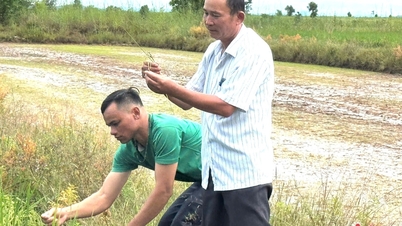
Early on a weekend morning, the house of Mr. Nguyen Van Den, residing in Kinh Nam hamlet, U Minh Thuong commune, was filled with the laughter of a group of young people from Ho Chi Minh City. Some learned to make banh xeo (Vietnamese savory pancakes), others followed the homeowner to the garden to pick vegetables, and some paddled boats through small canals to cast nets, set traps, and fish with hooks… creating a vibrant rural scene.
Mr. Den said that his family used to be gardeners, and their income depended heavily on market price fluctuations. Recently, seeing that tourists enjoy experiencing the countryside, his family boldly cleaned up their house, invested in raising fish and snails, growing organic vegetables and water lilies, buying boats, nets, traps, etc., and adding small services to welcome guests. Initially, there were only a few individual guests through referrals from acquaintances, but thanks to their genuine hospitality and experiences that evoke memories of their hometown, his house gradually became known to more people. As a result, his family now has a stable source of income each month.
Besides reliving their childhood and immersing themselves in the peaceful and idyllic countryside, visitors can also purchase meaningful products such as melaleuca forest honey, dried banana chips, candy, banana jam, gac fruit wine, and various types of dried fish specialties from U Minh Thuong as gifts for family and friends.
Every morning, in Rach Vem fishing village, Phu Quoc special economic zone, Mr. Le Xuan Thuy – owner of Xuan Thuy floating house – is busy checking the vehicles that transport guests from the shore to the floating house, and then going to various points to serve tourists. Mr. Thuy said that this has been his familiar work since 2017, when he started in tourism . “Before, I made a living by fishing and raising fish in cages. Then, seeing many international tourists coming here to explore the pristine beauty, my family decided to renovate the floating house and add more services for tourists. Thankfully, the floating house has received quite a lot of support from domestic and international tourists. Currently, I have invested in three more speedboats to serve tourists; providing regular employment for more than 10 local workers,” Mr. Thuy said.
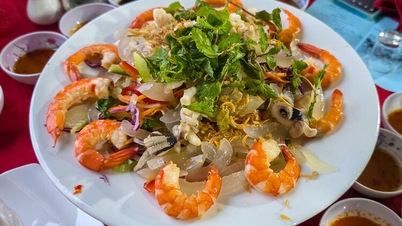
According to Mr. Thuy, his floating restaurant currently offers services exploring the pristine Rach Vem fishing village and Ham Rong Cape – a place considered the kingdom of starfish. Here, visitors can cast nets, search for shellfish, fish at sea, and enjoy the famous seafood of Phu Quoc Island. “To attract more tourists, the floating restaurant focuses on preserving the landscape and marine environment and regularly posts photos and videos on social media for promotion. More importantly, we maintain a friendly and hospitable attitude so that tourists not only return but also recommend us to their friends,” Mr. Thuy shared.
Challenges and directions
While the homestay tourism model is attractive, it faces many challenges, such as a lack of tourism knowledge and skills. Many households are still struggling with welcoming guests, developing products, and promoting their image, leading to inconsistent service quality. Infrastructure and hygiene issues are also significant obstacles. Many areas have difficult access roads, substandard toilets, and basic services, leaving tourists unsatisfied. Furthermore, spontaneous and unplanned development can lead to unhealthy competition, lowering the overall quality of the destination. The similarity of homestays and community tourism models also diminishes their appeal. During off-peak seasons, the number of tourists drops sharply, resulting in unstable income and making it difficult for many households to maintain operations.
Experts suggest several ways to make the homestay tourism model effective in the long term: Locals need to improve their awareness and skills, from communication and service to developing unique products. Each family should find its own "story" to create a lasting impression on tourists. Local authorities play a crucial role in planning, supporting, training, and promoting destinations, helping people feel more confident in participating in tourism. In addition, it is necessary to focus on preserving cultural identity and the living environment. "To develop sustainable community tourism, we need a dedicated workforce ready to wholeheartedly and meticulously support the people, ensuring synchronized and harmonious development," affirmed Mr. Thai Doan Hong, General Director of the Ho Chi Minh City Trade Union Tourism Joint Stock Company.
According to Bui Quoc Thai, Director of the Department of Tourism, the tourism industry has recently organized many training courses for local people and authorities on community tourism, improving tourism skills, promoting regional linkages and business connections, boosting communication, and promoting digital transformation in tourism. In the future, the tourism industry will review and select a number of typical locations to build model community tourism destinations in a professional manner, linked to traditional craft villages in ethnic minority and mountainous areas, ensuring harmony between local culture, natural ecology, market demand, and the benefit of the people.
Source: https://baoangiang.com.vn/lam-du-lich-tai-nha-a480547.html
![[Image] "Journey of Hope" promotes the organ and tissue donation movement in Vietnam.](https://vphoto.vietnam.vn/thumb/1200x675/vietnam/resource/IMAGE/2026/05/20/1779294400833_1-8910-jpg.webp)



























































Comment (0)