

PV : Having worked in Tuan Giao for nearly ten years, how have you incorporated the rugged and challenging landscape of that region into your poetry?
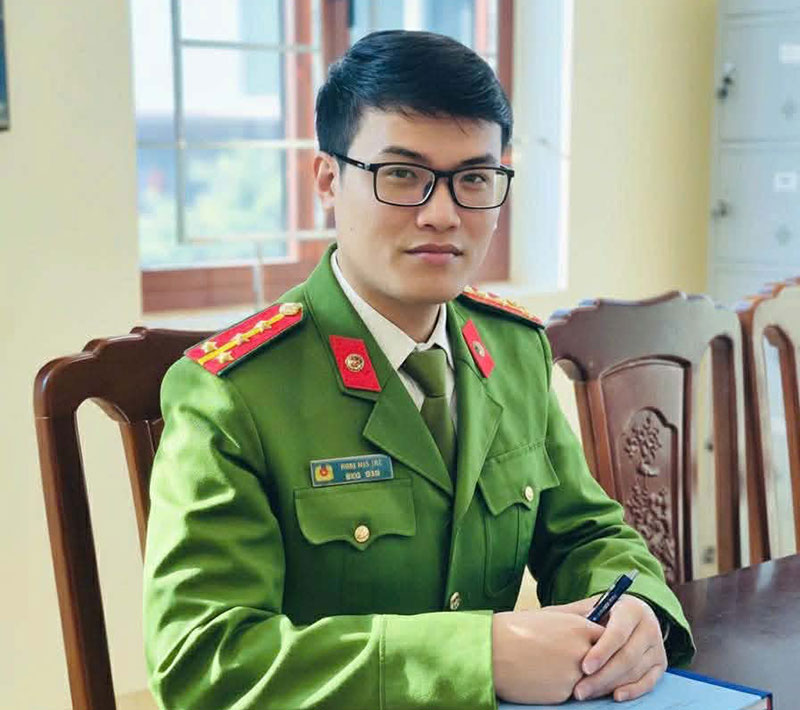
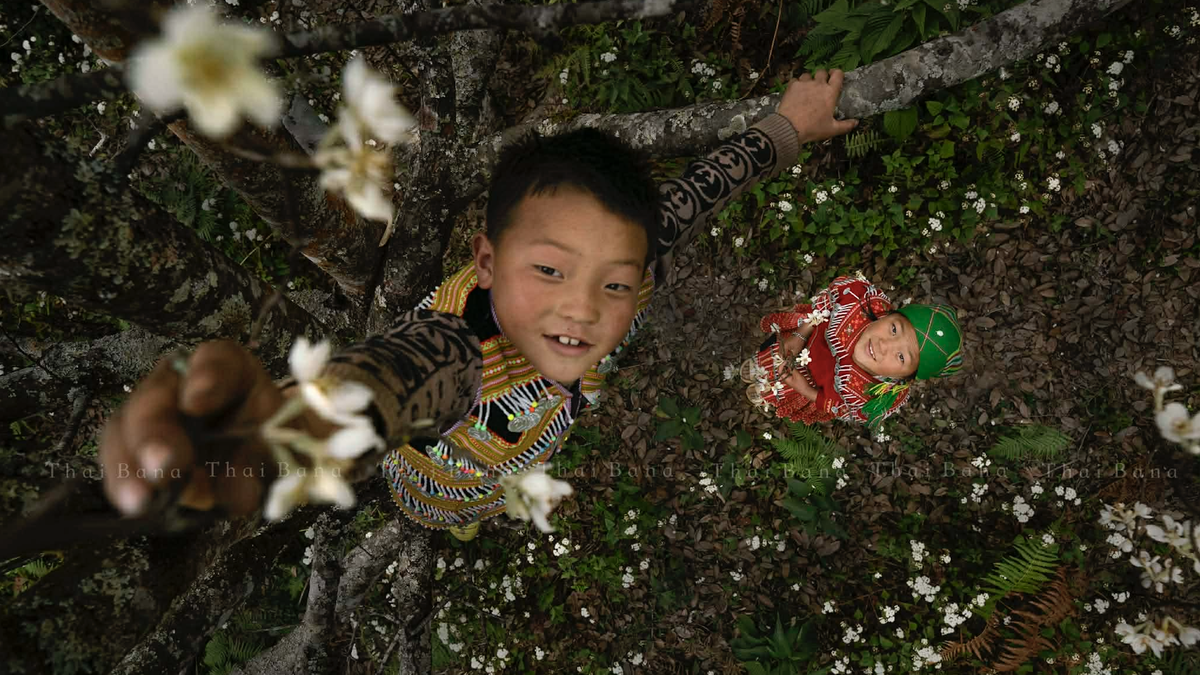
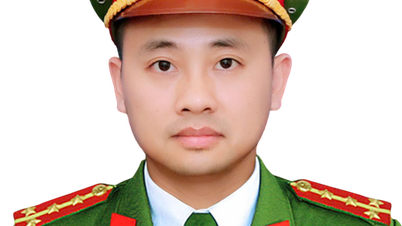
Captain Phan Duc Loc: I have spent nearly ten years of my youth working in the grassroots – the most beautiful period of a person's life. Tuan Giao, where I am currently working, is a land still facing many difficulties and shortages, but the scenery and the warmth of its people have always inspired profound literary works. During my visits to remote villages, I met eighty-year-old elderly people still carrying baskets into the deep forest to find bamboo shoots and pick mushrooms; I met innocent children carefully writing their first letters on the steps of a staircase, holding pieces of charcoal; I met young men and women playing flutes and dancing together during festivals; and I met farmers climbing rice plants to the very top of the sky.
Several times, I wondered if literature was even necessary there. And during one visit to the propaganda unit for Project 06, I found an answer that surprised and moved me. A middle-aged man looked at the name tag on my chest and asked, " Are you the one who wrote the story 'The Valley of Rain'? My whole family listens to it on the 'Late Night Storytelling' segment of the Voice of Vietnam Radio . Please write more articles about Tuan Giao and send them to the radio so that the people can listen to them! " He gave me a small bauhinia tree. Inspired by that encouragement, on the walk back to the unit, which was covered in white bauhinia flowers, I spontaneously composed the poem " Spring Road " with these simple lines: " Who braves the lingering March chill / The bauhinia blossoms burn until they wither / Warmth lingers on the soldier's shoulders / The sound of footsteps follows the rhythm of the wind endlessly ."
PV : In your opinion, what is the most difficult thing about writing about the police force?
Captain Phan Duc Loc : This topic is suitable for prose and film, but it's always a challenge for poetry. There was a time when I wrote poems on this topic in a forced, clichéd, and propaganda-style manner. After a certain period of time, rereading my own work, I feel a little... embarrassed. For generations, our poets have always affirmed that the most important thing in poetry is emotion, and writing about the police force is no exception. When emotion is embellished with colorful, empty words, it is denying itself the opportunity to touch the reader's heart. Therefore, in my opinion, the most difficult thing when writing about the police force is maintaining naturalness and simplicity.
PV : In your poems about the police, where do you usually begin: people, small details, or grand concepts?
Captain Phan Duc Loc: I usually begin with poetic imagery. I always remind myself to restrain the use of flowery, ornate adjectives. Allow me to quote from the poem "Evening on the Thuong River" by poet Huu Thinh: " What poetry wants to say / Poetic imagery is singing ." Poetic imagery encompasses both nature and people. Poetic imagery creates detail. And when poetic imagery is beautiful, profound, and subtle enough, the poem will be captivating enough for readers to discover its thoughts and message. For example, with a powerful poetic image, the opening lines of Nguyen Duc Hau's entry poem " The Plain " evoke much reflection on the vitality of the homeland – the source that silently permeates the minds of each person and each generation: " A tree hastily planted at the edge of the river / Ten years later its shadow spreads across the village ."
PV : As the youngest judge of the competition, what was your first feeling when you held thousands of entries in your hands?
Captain Phan Duc Loc: First, I was surprised by a literally thick collection of poems by over 1,000 authors with more than 3,000 poems. Those numbers were beyond imagination. Next came the excitement. I eagerly read and reread the submitted works many times and felt moved, admired, and appreciated the beautiful and original poems. What surprised me was that there were some well-known poets writing at a very young age, and some young poets writing with remarkable maturity. This "reversal of circumstances" further confirms the assertion that poetry has no limits, only unique paths.
PV: How is the portrait of the soldier portrayed in the poems submitted to this competition? Are there any poems or authors that made you pause longer than usual?
Captain Phan Duc Loc: The portraits of the People's Public Security officers appearing in " New Spring " are both familiar and novel. Before receiving the competition entries, I feared that some authors might stray into the path of illustrative poetry, as I once did, and that I might have to read awkward, clichéd, and mechanical verses. But fortunately, exceeding my expectations, the competition had quite a few good poems on this theme, especially those written by Public Security officers.
I was impressed by the collection of three poems: " Spring on the Mountaintop ," " Spring Comes to Dao Sa, " and " Spring Remembers You " by poet Ly Hoang Cung, a village police chief in Lao Cai . There are beautiful, harmonious, and subtle verses that touch the heart: " Clouds sleep buried in the mountain slopes / Breathing white smoke in the misty season / Who goes against the flow to the village / Green shirts stained with dust on the road " ( Spring Comes to Dao Sa ). These are things that anyone who has lived in the highlands of Northwest Vietnam for a long time has seen, but when Ly Hoang Cung incorporates them into his poetry, they are breathtakingly beautiful. These few skillful sketches are enough for readers to feel the difficulties and challenges that the police officer must bravely overcome on his journey to maintain peace in the village. The competition has contributed to Ly Hoang Cung's professional advancement and promises many more breakthroughs in the near future.

PV: What are the strengths and weaknesses of the police writers in this year's competition?
Captain Phan Duc Loc: Considering only the police authors, I see a richness and diversity in emotion, tone, writing style, and technique. Each has their own unique style and strength. Ho Anh Tuan expresses a deep longing for his comrades; Dau Hoai Thanh is both poignant and intense, yet gentle and tender; Duc Minh skillfully renews the structure and wording; Trieu Viet Hoang evokes boundless nostalgia; Nguyen Duy Thanh carefully selects imagery; Le Huy Hung brings a simple and sincere story; Dau Thi Thuy Ha creates profound and recurring associations; Tran Le Anh Tuan builds moments of quiet contemplation and reflection; Le Thanh Van yearns for the call of his homeland; Phi Van Thanh is heroic and tragic; Hoang Anh Tuan is simple and natural, like breathing; Tang Vu expresses a poignant and melancholic concern; Nguyen Minh Hien is deeply attached to the land he was once connected to; Nguyen Thi Hong Cam is burdened with anxious premonitions. It can be said that the common thread among police authors is that they write poetry with the same passion they have dedicated to their work of ensuring security and order.
PV : So, in your opinion, what makes a poem about the police a success?
Captain Phan Duc Loc: We must ensure the sincerity of the emotions, the careful selection of imagery, the naturalness of the language, and the metaphorical message. And a little surprise would be perfect!
PV : After this competition, how has your perspective on poetry and on yourself changed?
Captain Phan Duc Loc : The competition helped me realize that many talented poets dislike ostentation and superficiality, so they choose to write quietly and reclusively. When they appeared on this platform, I had to secretly read their works more extensively and deeply. " New Spring " taught me how to live humbly, respect the written word, and be more thoughtful before publishing my work. There were periods when I wrote excessively, proudly showing off my published works and awards, and getting carried away by the intoxicating congratulations. I was swept up in the crowd and sometimes forced myself into certain molds and themes to achieve my desired success. Until one day, my close friend frankly advised me: " Loc is really going downhill ." I pondered this deeply.
Now, I don't know where I stand on the literary slope. But more than anyone else, I know what I have and what I lack to continue on the arduous and challenging path of writing ahead. In this moment, I want to tell my fellow poets who are just beginning to write: Daring to stop halfway is sometimes harder than reaching the very end of a poetic path.
Interviewer : Thank you, writer!
Source: https://cand.com.vn/Chuyen-dong-van-hoa/dam-dung-lai-de-tho-noi-nhieu-hon-i800438/


![[Photo] The Prime Ministers of Vietnam and Russia witness the signing ceremony on cooperation in building a nuclear power plant.](https://vphoto.vietnam.vn/thumb/1200x675/vietnam/resource/IMAGE/2026/03/23/1774278492322_vna-potal-hai-thu-tuong-viet-nam-va-nga-chung-kien-le-ky-ket-hiep-dinh-ve-hop-tac-xay-dung-nha-may-dien-hat-nhan-8658380-jpg.webp)



































































Comment (0)