

The Russia-Ukraine conflict is at a turning point. Both sides are constantly making contradictory and multifaceted moves. What lies behind this? How long will the conflict last and how will it end? Who truly wants to negotiate? Many important issues and questions need to be answered.
 |
| Many questions remain unanswered in the Russia-Ukraine conflict, which has lasted over two and a half years. (Source: DSM) |
Ukraine is determined to win despite the difficulties.
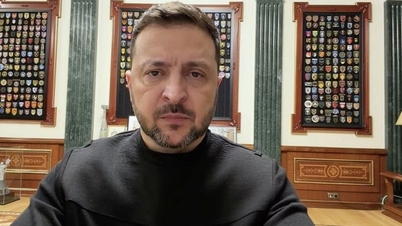
Ukrainian President Volodymyr Zelensky finalized his “Winning Plan” and sought the support of the US and NATO. At the core of the plan are NATO and the EU affirming Ukraine’s security and geopolitical position, providing military aid with modern weapons without restrictions on their use, and offering more financial support for the conflict and post-conflict reconstruction.
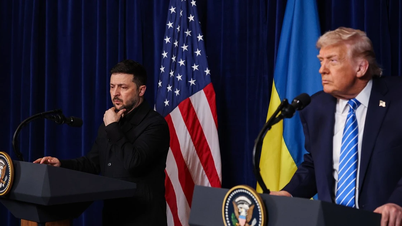
In a joint press conference with European Commission President Ursula von der Leyen on September 20, the Ukrainian president pressured his allies: “The entire plan relies on swift decisions from partners (NATO, EU, US)… and these processes cannot be delayed.” During his trip to the US, Zelensky presented the plan to President Joe Biden, considering it the main basis: “Most of the plan’s decisions depend on him (Joe Biden)… based on the goodwill and support of the US.”
President Zelensky emphasized the "Russian threat," stating that Ukraine is fighting for the security of the EU and the US, and therefore Western allies have a responsibility! He warned that if allies do not wholeheartedly support Ukraine by the end of 2024, they will miss the opportunity for victory. Through this, Kyiv aims to draw NATO and the West into the conflict against Russia.
On August 6th, Ukraine concentrated its most elite forces and unexpectedly launched an offensive in the Kursk province of Russia, which it has held to this day. While assessments vary widely (bold, reckless, more harmful than beneficial), Kyiv has achieved some objectives, exerting military , political, and economic pressure, forcing Russia to reduce its offensive in Donetsk, and providing leverage for future exchanges…
In particular, the Kursk offensive was seen as the key to convincing allies to believe in Ukraine's victory plan. The actual effectiveness of the plan remains unknown, but Ukraine is becoming overly dependent on external forces. Meanwhile, the EU, NATO, and the US are also finding it increasingly difficult to proceed.
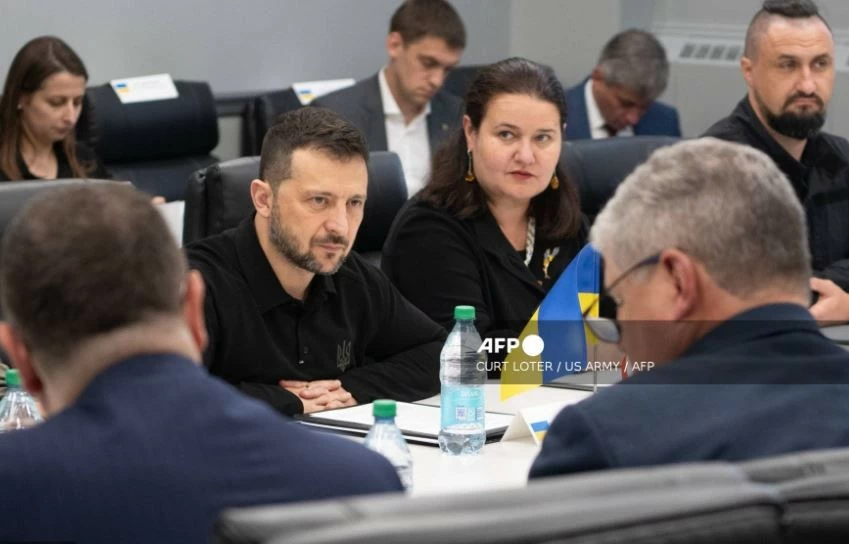 |
| President Volodymyr Zelensky visits an ammunition factory in Scranton, Pennsylvania, which he says is ramping up production of 155mm artillery shells to aid Ukraine, on September 22. (Source: AFP) |
NATO is determined to intervene but is still struggling.
With the full backing of its Western allies, Kyiv would hardly have been able to hold out until now. The level of aid and support has steadily increased, especially in the form of modern weapons and financial assistance. During his visit to Ukraine on September 20th, the EC President announced the establishment of two new credit mechanisms allowing Kyiv to borrow up to 45 and 35 billion Euros. At the end of April, the US approved an aid package worth $60.84 billion before the presidential election. However, the crucial symbolic point of allowing Ukraine to use long-range weapons to penetrate deep into Russian territory remains unresolved, a matter that NATO and the EU are still struggling to address.
On September 19, the European Parliament (EP) adopted a resolution supporting the lifting of arms restrictions and pledging “collective and bilateral support” for Ukraine. However, it was largely a recommendation; many EU members remained hesitant. Even the US and UK, two of the most hardline nations, have been ambiguous on their stance. It's not that they are “concerned about Russia,” but rather they fear a global war, even a nuclear war, if Moscow is provoked. Furthermore, the use of modern weapons requires coordinated action, rigorous training, and direct expert and advisory support.
Beyond immediate concerns, the West and NATO are also considering long-term options, advocating for support in building military production facilities in Ukraine; improving and more deeply integrating Kyiv's military industry with the EU and Western defense industry complex. These could be disguised military bases, housing NATO weapons right next to Russia. Notably, in mid-September, Ukraine participated for the first time in a NATO-organized anti-drone exercise in the Netherlands.
Weapons, intelligence, satellite reconnaissance, advisors, and forces from several NATO countries, under the guise of "volunteers," are increasingly present in Ukraine. The nature of NATO's proxy war between Ukraine and Russia is gradually changing. NATO's involvement is becoming more comprehensive, powerful, deep, and direct. However, many Western experts believe that this intervention will only prolong the conflict, rather than completely defeat Russia. This is because Russia cannot avoid retaliation, and Moscow's actions, while cautious, are also very decisive.
 |
| According to many experts, NATO's intervention efforts will make it impossible for Russia to avoid a response. (Source: Washington Post) |
Russia is ready for all scenarios.
On the one hand, Russia is persistently attacking in many areas of Donetsk, maintaining strong artillery strikes and organizing counterattacks to regain control of territory in the Kursk province. Moscow continues to produce and deploy more powerful weapons, increase the size of its army, and adjust its forces to achieve its objectives on both main fronts of the battlefield. The offensives and counterattacks are not massive, but fundamentally the battlefield situation is favorable to Russia.
In response to recent moves by NATO and the West, Russia has once again drawn a "red line." If NATO and the West provide long-range weapons to Ukraine to launch attacks deep into Russian territory, Moscow will consider this an act of direct military engagement and will be ready to retaliate with its existing weapons, including nuclear weapons. Russia's response could be as follows:
First, expel or close the embassies of countries that are leading the supply of advanced long-range weapons enabling Ukraine to launch attacks deep into Russian territory. Second, halt the export of certain essential goods such as agricultural products, food, oil, gas, and uranium to countries actively involved in the conflict. Recently, Prime Minister Mikhail Mishustin announced a list of 47 Western countries with an "unfriendly" or "anti-Russian" attitude. The list excludes Hungary, Slovakia, and Turkey, clearly demonstrating the divergence in relations.
Third, be ready to supply modern weapons to countries that are adversaries of the US and NATO, such as North Korea… Fourth, launch a powerful fire attack, using hypersonic missiles, against NATO personnel targets in Ukraine and possibly military targets in Poland, Romania…, where modern, long-range weapons are allegedly stored, trained, and supplied to Kyiv.
Five, conduct nuclear weapons exercises and new nuclear tests, maintaining readiness and deterrence capabilities. Six, launch nuclear attacks, possibly both tactical and strategic, on key military targets in several leading NATO member states that are actively involved; the transatlantic nation would also not be exempt from retaliation.
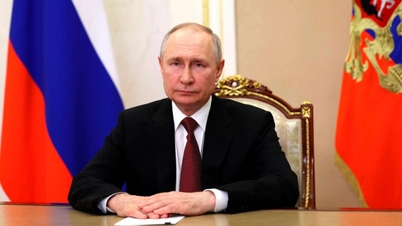
Some Western leaders believe this is merely "verbal deterrence!", despite President Vladimir Putin's repeated warnings against attempting to stop Russia, a country with the world's largest nuclear arsenal. Russian Security Council Deputy Chairman Dmitry Medvedev warned on Telegram on September 14th that using nuclear weapons is "a very bad story with very serious consequences," but the West is defying this, so "any patience will eventually run out!"
In reality, Moscow has been and will continue to adjust its nuclear doctrine to be more flexible, capable of responding to an enemy attack with conventional weapons that threatens Russia's survival, sovereignty, and territorial integrity. This statement is clear, but using nuclear weapons is an extremely difficult decision, a mental gamble for the leaders of all sides.
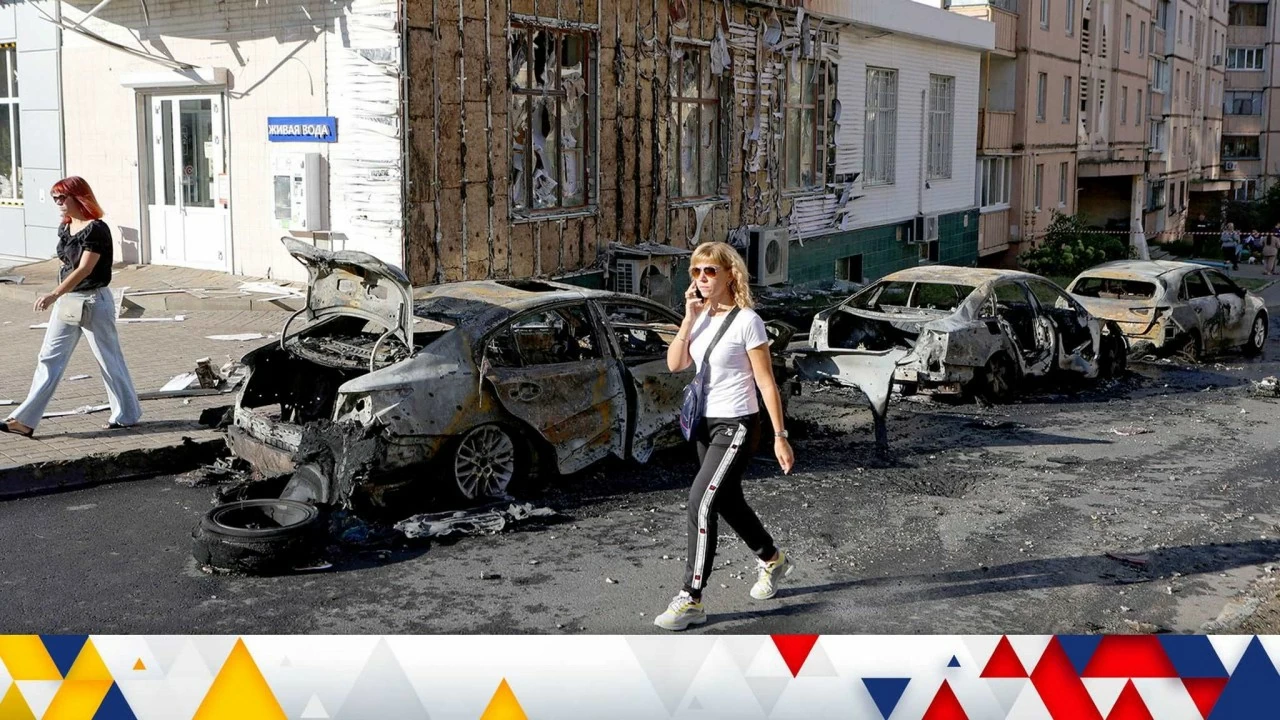 |
| A woman walks past burnt-out cars in Belgorod, Russia. (Source: Reuters) |
Negotiation skills: when and how.
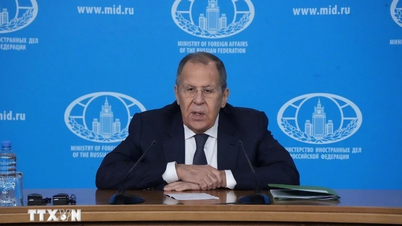
The conflict is escalating, and Russia has a slight advantage on the battlefield, yet the Kremlin leader still declares his readiness to negotiate on the Ukraine issue, but insists on taking into account the interests of all countries involved, including Russia. In fact, Moscow has been involved in negotiations since April 2022 in Istanbul, Türkiye. The head of the Ukrainian negotiating team at the time initialed the main points, and Russian troops agreed to withdraw from Kyiv, but President Zelensky ultimately tore up the agreement.
Moscow wants to demonstrate goodwill and send a political message to US and Western leaders, especially with important elections approaching. On the other hand, Russia has also suffered significant losses and is facing difficulties under immense and multifaceted pressure from the West. Negotiating to end the conflict while achieving basic goals is still more advantageous than continuing a protracted and costly war.
Ukraine has also spoken of negotiations but has not abandoned its preconditions. While the West and the EU want to continue the conflict against Russia, they also have a contingency plan in place: negotiating from a position of advantage. Therefore, negotiations remain a possible scenario; the question is, what kind of negotiations, and under what conditions?
Negotiations may occur in the following situations:
Firstly, one side would achieve a near-absolute military victory, forcing the other to accept conditions to end the conflict. This scenario is unlikely. Ukraine cannot defeat Russia. Russia is also unlikely to achieve an absolute military victory, because Kyiv has the West and NATO behind it.
Secondly, a protracted war, where neither side can completely defeat the other, resulting in heavy losses, will force a ceasefire and negotiations. The side that gains the upper hand on the battlefield will have more favorable conditions and a more advantageous outcome. This scenario is likely to occur.
Thirdly, a change of leadership could occur at the top (possibly in Kyiv), with the pacifist faction coming to power. This scenario is not impossible, but there are currently no clear signs of it.
Negotiations typically take place after a decisive strategic battle has been won. The Geneva talks in 1954 and the Paris talks in 1973 were examples of this. In this conflict, Ukrainian forces could suffer significant casualties in Kursk, or Kyiv could launch a major offensive in Crimea, and Russia could unleash a devastating all-out attack on the enemy. Negotiations, if they occur, would likely begin at the earliest in late 2024 and into 2025.
Thus, negotiations are a possible scenario, but predictions remain just predictions, as many factors could derail them. Besides the two direct rivals, the possibility of negotiations also depends heavily on external factors. As long as NATO and the West want to exclude Russia, genuine negotiations are impossible.
Some Western leaders gradually adjusted their stance, shifting from wanting to completely defeat Russia to freezing the conflict, paving the way for protracted negotiations, and gaining the greatest possible advantage; buying time to restore Ukraine's strength. Moscow understood this and certainly did not want that scenario to happen.
Source: https://baoquocte.vn/xung-dot-nga-ukraine-dam-phan-lan-ranh-do-va-nhung-dong-thai-trai-chieu-287528.html



















![[Photo] Reception to welcome General Secretary and President To Lam and his wife on their State visit to the Philippines](https://vphoto.vietnam.vn/thumb/1200x675/vietnam/resource/IMAGE/2026/06/01/1780295488620_vna-potal-chieu-dai-chao-mung-tong-bi-thu-chu-tich-nuoc-to-lam-va-phu-nhan-tham-cap-nha-nuoc-toi-philippines-8798060-7855-jpg.webp)























































Comment (0)