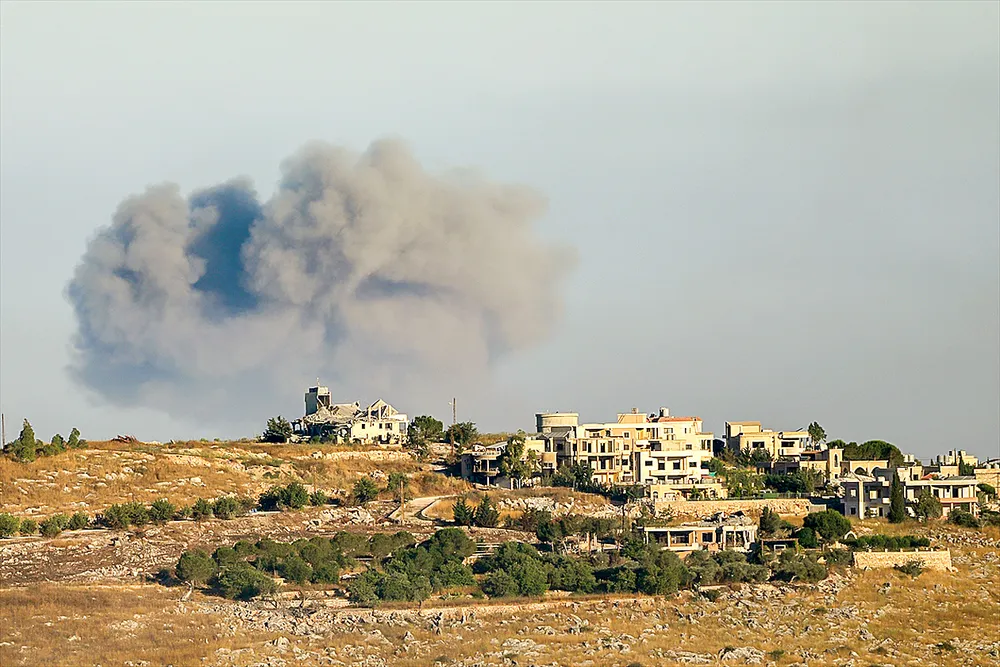
Iran closes the Strait of Hormuz.
In a statement broadcast on Iranian state television, the Khatam al-Anbiya Command said the closure of the Strait of Hormuz was the first step in response to what Tehran considers a violation of commitments by the other side. The agency warned that Iran could implement further measures if actions it deems aggressive continue.
Iran accuses the US of failing to fully fulfill its obligations under the Memorandum of Understanding (MoU) that ended the conflict recently reached between the two countries, and claims that Israel continues to violate the ceasefire agreement in southern Lebanon, continuing military operations and failing to withdraw its forces from certain areas in the south of the country.
Iran's latest move comes amid continued high regional tensions despite diplomatic efforts to maintain the ceasefire between the US and Iran and prevent the spread of conflict in the Middle East. In an interview with Al Jazeera on June 20, Iran's Deputy Foreign Minister stated that Tehran is ready to continue diplomatic talks with Washington, but the US must ensure Israel abides by the terms of the agreement to end the war.


President Donald Trump and his Iranian counterpart Masoud Pezeshkian signed an electronic Memorandum of Understanding (MoU) on June 17th to end the conflict that has lasted more than three months between the two countries. Besides reopening the Strait of Hormuz, the agreement also aims to end fighting in Lebanon. However, the Times of Israel reported on June 20th that 16 people were killed in Israeli airstrikes in southern Lebanon.
Many countries participate in maintaining dialogue.
On June 20, Pakistan announced that technical talks to implement the US-Iran agreement to end the Middle East war would be held in Switzerland on June 21. A statement from the Pakistani Foreign Ministry said: "Following the signing of the Islamabad Memorandum, technical talks will be held in Burgenstock, Switzerland, on June 21," adding that mediators from Pakistan and Qatar would participate in discussions with representatives from the US and Iran.
On the same day, June 20th, in an interview with Fox News, US Vice President JD Vance revealed that US President Steve Witkoff's special envoys, Jared Kushner, had arrived in Switzerland to negotiate on the Iran issue. Vance stated that there were plans to visit Switzerland and that negotiations could begin as early as June 21st. On the Iranian side, state television also reported that Tehran would send a delegation to Switzerland to conduct talks with the US regarding the implementation of the interim agreement to end the conflict between the two countries. In a statement, the Swiss Foreign Ministry said that diplomats from several countries met that same day at the Burgenstock resort, near the central city of Lucerne, to maintain dialogue on the preliminary agreement between the US and Iran.
Meanwhile, the U.S. Central Command (CENTCOM) affirmed that U.S. forces maintain a military presence and high alert in the Middle East, despite signs of easing tensions following diplomatic efforts between Washington and Tehran. The priorities are protecting freedom of navigation, preventing destabilizing actions, and ensuring the safety of U.S. and allied forces.



Analysts believe that CENTCOM's public disclosure of F-16 fighter jet patrols is intended to signal that the US maintains full combat capabilities and rapid response capacity in the Middle East, while also reassuring allies as negotiations with Iran remain challenging.
Source: https://www.sggp.org.vn/dam-phan-my-iran-dang-bi-phu-bong-den-post858414.html



































![[Photo] Thousands of people participate in a run to show their support for the campaign "Sharing a common determination to build drug-free communes, wards, and special zones".](https://vphoto.vietnam.vn/thumb/1200x675/vietnam/resource/IMAGE/2026/06/27/1782554475933_0673e2a3df7b5e25076a-8283-jpg.webp)