


According to the head of the Department of Infrastructure, regarding safe water supply and preventing water loss, the Prime Minister has issued the National Program for Ensuring Safe Water Supply for the period 2016-2025 in Decision No. 1566/QD-TTg dated August 9, 2016; the National Program for Preventing Water Loss until 2025 in Decision No. 2147/QD-TTg dated November 24, 2010; and Prime Minister's Directive No. 34/CT-TTg dated August 28, 2020 on strengthening the management of water production and business activities to ensure safe and continuous water supply.
Speaking at the workshop, Mr. Tran Hoai Anh, Deputy Director of the Department of Construction Infrastructure (Ministry of Construction), affirmed that after implementing the two programs, Vietnam has achieved many remarkable results. To date, a relatively complete legal framework has been established with Circular 08/2012/TT-BXD, Directive 34/CT-TTg, and related guiding documents.
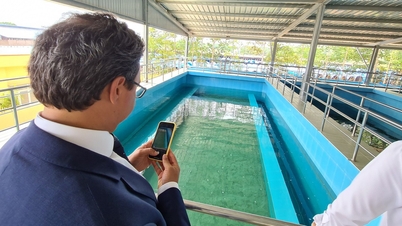
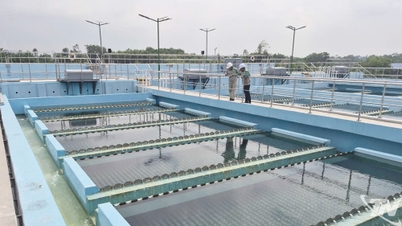
To date, 31 out of 63 (former) provinces and cities have established Provincial Steering Committees for Safe Water Supply. Many provinces and cities, such as Hai Phong, Hue City, Ba Ria - Vung Tau (former), and Dong Nai (former), have taken the lead in announcing the assurance of safe water supply. The average rate of clean water loss nationwide has decreased to 15% in urban areas. Furthermore, after implementing the program, the management capacity of water sector officials has improved, and the community has become more aware of protecting water resources and using water economically.
Mr. Tran Hoai Anh also pointed out existing limitations such as: limited financial resources for safe water supply, especially in rural areas and small businesses. Pollution of raw water sources and the impact of climate change are becoming more complex than predicted. The water supply sector is facing many major challenges from water pollution, climate change, saltwater intrusion, and system safety incidents to planning issues and water supply projects located within road safety zones… Implementing safe water supply and preventing water loss and revenue loss is also difficult due to its involvement with many different laws and the fact that many ministries, departments, and localities have not yet issued safe water supply plans, and localities have different sets of indicators and metrics…
In the coming period, according to Mr. Tran Hoai Anh, the Ministry of Construction will develop and finalize the Law on Water Supply and Drainage and its guiding decrees to submit to the Government and relevant ministries and agencies to create the highest legal basis, clearly define responsibilities in the implementation process, and resolve difficulties in investment and risk management. From there, various forms of investment will be encouraged, socialization will be promoted, and private resources will be optimally mobilized for the development of water supply infrastructure; a national information system and database on water supply will be built to improve the effectiveness of monitoring and incident response.

To meet new development requirements, during the period 2026-2035, the Ministry of Construction will always consider the program for safe water supply, reducing water loss and revenue loss from clean water as a key, long-term, and continuous program. The Ministry will also improve institutions, enhance governance capacity, promote the application of science and technology, and digital transformation; mobilize resources and strengthen the review and assessment of the quality of key factors to successfully implement these two National Programs.
According to a representative from the Department of Construction Infrastructure (Ministry of Construction), the National Program for Ensuring Safe Water Supply and the National Program for Combating Water Loss and Revenue Loss, issued by the Prime Minister, were implemented due to rapid urbanization and industrialization, leading to a sharp increase in water demand in both scale and quality requirements. Meanwhile, water supply systems in many localities remain outdated, with investments spanning multiple stages; high rates of water loss and revenue loss in many urban areas increase production costs, reduce investment efficiency, and waste water resources; and traditional water supply management methods still reveal many limitations.
During the period 2026-2030, the program aims to ensure the supply of safe, continuous, and adequately pressurized clean water that meets quality standards; proactively manage risks from water sources to users; and enhance the resilience of the water supply system to climate change, environmental pollution, and water security and safety risks.

The program aims to ensure that by 2030, at least 90% of centralized water supply systems and 40% of decentralized water supply systems have safe water supply plans that have been developed, assessed, approved, and implemented. The rate of water loss and revenue loss in centralized water supply systems will be below 15%; in decentralized water supply systems, it will be below 20%; and 100% of centralized water supply systems will have contingency plans for water supply incidents and water source pollution.
By 2035, the goal is to have 100% of centralized water supply systems and at least 80% of decentralized water supply systems with safe water supply plans that have been developed, assessed, approved, and implemented. The rate of water loss and revenue loss in centralized water supply systems will be below 13%, and in decentralized water supply systems below 18%.
To achieve this goal, according to representatives from the Department of Construction Infrastructure (Ministry of Construction), it is necessary to improve mechanisms, policies, and laws on ensuring safe water supply; manage and protect water sources for domestic water supply; strengthen monitoring and supervision of water quality; develop and implement a safe water supply plan; implement risk management throughout the water supply chain; apply science and technology in the management, monitoring, and operation of water supply systems; and strengthen communication to raise public awareness about ensuring water supply, using water economically, and protecting water sources.

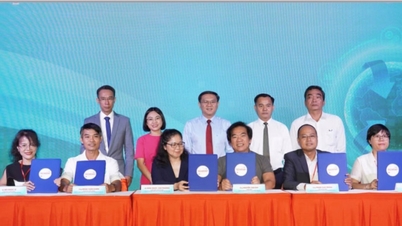
At the workshop, delegates also discussed various aspects of the two programs, such as: ensuring safe water supply and preventing water loss and revenue loss in the new phase; difficulties and obstacles in implementation in localities after the merger and implementation of the two-tiered government system…
Source: https://baotintuc.vn/xa-hoi/dan-so-do-thi-duoc-cung-cap-nuoc-sach-dat-khoang-95-20251225090807907.htm




























































































Comment (0)