Thien Cam Mountain, formerly part of Ky La, is described in numerous ancient texts from the 15th to 19th centuries. Standing 108 meters tall, its shape resembles a lute (a type of Vietnamese stringed instrument). Its base extends close to the sea, while the remaining part lies inland, dividing the mountain into two sections, popularly known as Cum Nay and Cum Con. Cum is a beautiful mountain. Looking out over the sea, the water meets the sky; at high tide, the waves resemble playful green dragons. The early morning sun shines down, illuminating the mountainside with a dazzling array of colors. The strangely shaped rocks are given various names by locals, such as "Roof Rock," "Wine Kiln Rock," "Pig Rock," "Fairy Playing Chess Rock," "Drum Rock," "Gong Rock," etc. There are also caves that penetrate deep into the mountain, their passages creating melodious sounds of wind. Thien Cam Mountain is also associated with many fascinating legends and myths. Legend has it that King Hung XIII, while touring the South, ascended a mountain and was struck by the breathtaking scenery. He also saw many large footprints imprinted on the stone slabs and heard the melodious sound of a musical instrument in the air. The king was surprised and summoned the local people to inquire about it. The elders said, "Those footprints were left by celestial beings descending from heaven to play on the mountain, and the sound of the lute was played by celestial beings from heaven." The king then named the mountain "Thien Cam" – "Heavenly Lute." Besides, Thien Cam Mountain is also associated with a dark period in the nation's history and the tragic end of the Ho Dynasty (1400-1407). At this mountain, after the Ho Dynasty's defeat in the resistance against the Ming invaders, Ho Quy Ly and his son fled to Ky La and were captured at Thien Cam Mountain. Therefore, the name Thien Cam – Heavenly Lute – is interpreted as Thien Cam – Heaven's Capture. Today, in this area, there is a well called "Chinese Well," traditionally said to have been dug by the Ming army, and the "Capture Road" where Ho Quy Ly was captured. Currently, in Yen Tho hamlet, there is a shrine dedicated to "Capture Road" where annual ceremonies are held, but it is unclear who is worshipped. As for "Ho Quy Ly Cave," no one knows exactly where the entrance was in the past, whether it is the same cave entrance on the north side of the mountain today. Legend That's right.
On Thien Cam Mountain, there used to be a shrine dedicated to the mountain god to the west, a shrine to the Holy Mother (commonly known as Nha Ba Temple) to the south, and Cam Son Pagoda to the east. Le Huy Tiem's book "Cam Xuyen Local History" (1930) records: "There is an ancient pagoda on the mountain." However, the earliest record of this pagoda is by King Le Thanh Tong, in his poem "Ky La Hai Mon Lu Thu," where he wrote: "To the left of Ky La sea gate stands a majestic and beautiful mountain. On the mountain is a pagoda." Thus, Cam Son Pagoda dates back at least to the 15th century. The pagoda was renovated for the third time in the year of the Pig (1875) during the reign of Emperor Tu Duc. After the revolution (1945), the Buddha statue was moved to Yen Lac Pagoda and Gon Pagoda in Cam Phuc commune, while the large bell "Cam Son Tu Chung" was stolen by Chinese pirates.



Thien Cam Mountain has always been a picturesque landscape, offering panoramic views of the tourist area and nearby islands such as Hon En and Hon Booc in the distance. At the foot of Thien Cam Mountain lies Thien Cam Beach, with its smooth white sand and clear blue water. Since ancient times, the sounds of the waves and wind echoing against the cliffs have blended together to create a magnificent symphony of nature. The mountains, the sea, and the mysterious legends have given Thien Cam an enchanting and captivating allure, attracting visitors from near and far.

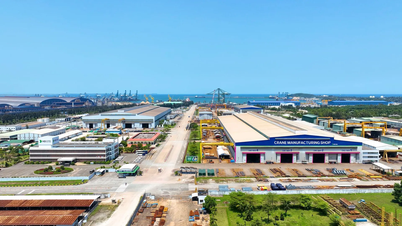
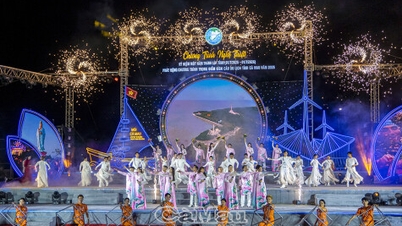
Adjacent to Thien Cam Pagoda and Thien Cam Mountain is the Thien Cam National Tourist Area, approved by Ha Tinh province in Decision No. 4210/QD-UBND dated December 25, 2009, with a scale of approximately 1,557 hectares. Currently, the Thien Cam Tourist Area has a system of 20 hotels and guesthouses with more than 800 rooms, meeting the requirements of domestic and international tourists visiting and relaxing. Thien Cam has been gradually establishing itself as a national-level coastal tourist area. Tourists visiting and relaxing at Thien Cam beach not only enjoy the beautiful scenery and historical sites of pagodas and mountains but also learn about the unique folk art of "Ho Cheo Can" (a traditional folk singing style) and participate in the unique Cau Ngu Festival held annually in the fourth lunar month of this coastal region.
Author of the article: Vo Dinh Thi



Source: https://dulichhatinh.com.vn/news/tin-tuc-su-kien/danh-thang-chua-va-nui-thien-cam-755/

![[Photo] Strengthening character and expertise: Intense training for artillery soldiers.](https://vphoto.vietnam.vn/thumb/1200x675/vietnam/resource/IMAGE/2026/06/30/1782815602541_lu-368-1875-4571-jpg.webp)