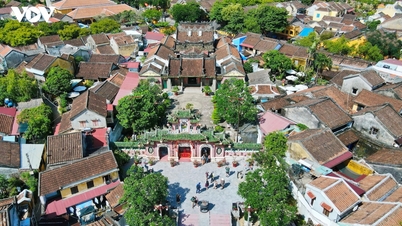
Nam Gioi – Quynh Vien is located near Cua Sot, one of the four major seaports of Ha Tinh province. Cua Sot is situated at coordinates 18°27'54'' North latitude and 105°55'30'' East longitude. In the past, Cua Sot was called Duong Luat estuary because the river flowed through Duong Luat village (Thach Hai) between Nam Gioi mountain and Moc hill. About 200 years ago, the Sot River changed course, flowing down to Kim Doi (Thach Kim), creating the Cua Sot of today. Cua Sot is also referred to in some documents as Nam Gioi estuary (Nam Gioi Hai Mon), a seaport 700m wide with majestic natural scenery and many legends and myths associated with it. The Nam Gioi mountain range, shaped like an inverted boat, is popularly known as Ru Sot or Ru Be. In the past, this area served as the border between Dai Viet and Champa, holding significant strategic importance in the 10th century. On top of Nam Gioi mountain is Long Ngam peak, extending far out to sea like a screen guarding the northeast of Ha Tinh city. Each rocky outcrop and stream here has its own unique shape, leading people to create numerous names for the landscape, such as: Drum Rock, Clam Rock, Pointed Rock, Bed Rock, Chicken Egg Rock, Am Rock, Lo Rock, and Sunken Horse Rock, etc., along with fascinating stories passed down through generations since the time of the Hung Kings. To the west of Long Ngam mountain is the temple of Chieu Trung Dai Vuong Le Khoi, formerly known as Linh Co (Sacred Drum) Temple. In front of it is a shrine dedicated to the Holy Mother. On the mountain itself is Hoa Hieu peak, formerly used as a signal fire to warn of enemy attacks. Later, a lighthouse was built on the mountain to guide ships at sea. Below the mountain is a shrine dedicated to the Whale God. To the east of the mountain lies the ancient Quynh Vien Pagoda, said to be the place where Chu Dong Tu and Tien Dung attained immortality during the Hung Dynasty. The place name Quynh Vien or Quynh Son is the oldest name of Nam Gioi Mountain: "Danh son do thuyet co Quynh Vien" (meaning: This famous mountain was formerly called Quynh Vien). It is evident that on a single mountain with limited space, there are four historical sites: Chieu Trung Temple, Thanh Mau Temple, Ngu Ong Shrine, and Quynh Vien Pagoda, demonstrating the rich history and culture of this land.
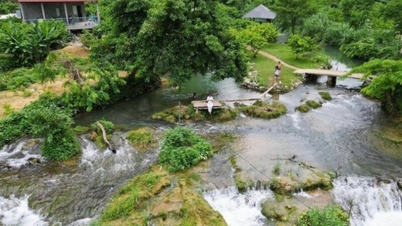
The scenic Nam Gioi – Quynh Vien boasts picturesque landscapes that rival the most renowned mountains of Hoan Chau. This land, where the sea, mountains, and streams blend seamlessly, is also a historical site, having witnessed the footsteps of emperors, armies marching north and south, as well as renowned poets, scholars, and intellectuals such as King Le Thanh Tong, Bui Duong Lich, Luu Cong Dao, and the poet Tan Da. They visited this legendary place and left behind immortal verses. King Le Thanh Tong, during his tour of the South, set foot in Nam Gioi and, overwhelmed with emotion, wrote two lines of poetry, both romantic and majestic, in his poem "Nam Gioi Hai Mon Lu Thu" (Traveler's Journey to the South).
"Last night I awoke from my wandering dreams."



"Riding on a raft, one longs to reach the gates of heaven."

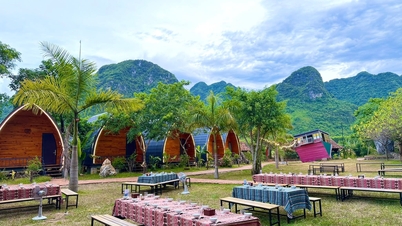
Visiting Nam Gioi - Quynh Vien, tourists not only get to immerse themselves in the majestic and beautiful natural scenery of a famous landmark but also experience a land rich in history and culture that has been recorded in history books. Currently, at the foot of Long Ngam mountain, a resort complex called Quynh Vien Resort has been established with unique, modern architecture harmoniously integrated with nature, along with many perfect services to ensure that tourists from near and far come to visit and relax.
- Contact Quynh Vien Eco-tourism Area : Phone: 0868 355 755 – 0868 355 855
- Email: quynhviengd@gmail.com
Author of the article: Vo Dinh Thi



Source: https://dulichhatinh.com.vn/news/tin-tuc-su-kien/danh-thang-nam-gioi-quynh-vien-750/





![[Photo] Strengthening character and expertise: Intense training for artillery soldiers.](https://vphoto.vietnam.vn/thumb/1200x675/vietnam/resource/IMAGE/2026/06/30/1782815602541_lu-368-1875-4571-jpg.webp)