

Assessing the Vietnamese economy over the past year, Dr. Tran Thi Hong Minh, Director of CIEM, stated that although the COVID-19 pandemic has been brought under control, its consequences remain severe and are negatively impacting the global economy, including Vietnam. Geopolitical tensions and increased technical barriers from key Vietnamese markets related to green products and green manufacturing have posed significant difficulties and challenges for the Vietnamese economy in 2023 and beyond.
Commenting further, Ms. Ramla Khalidi, Resident Representative of the United Nations Development Programme (UNDP) in Vietnam, stated that 2023 was a difficult year for the economies of many countries. Therefore, central banks raised interest rates to control inflation. This led to negative consequences for market demand growth as well as global economic growth.
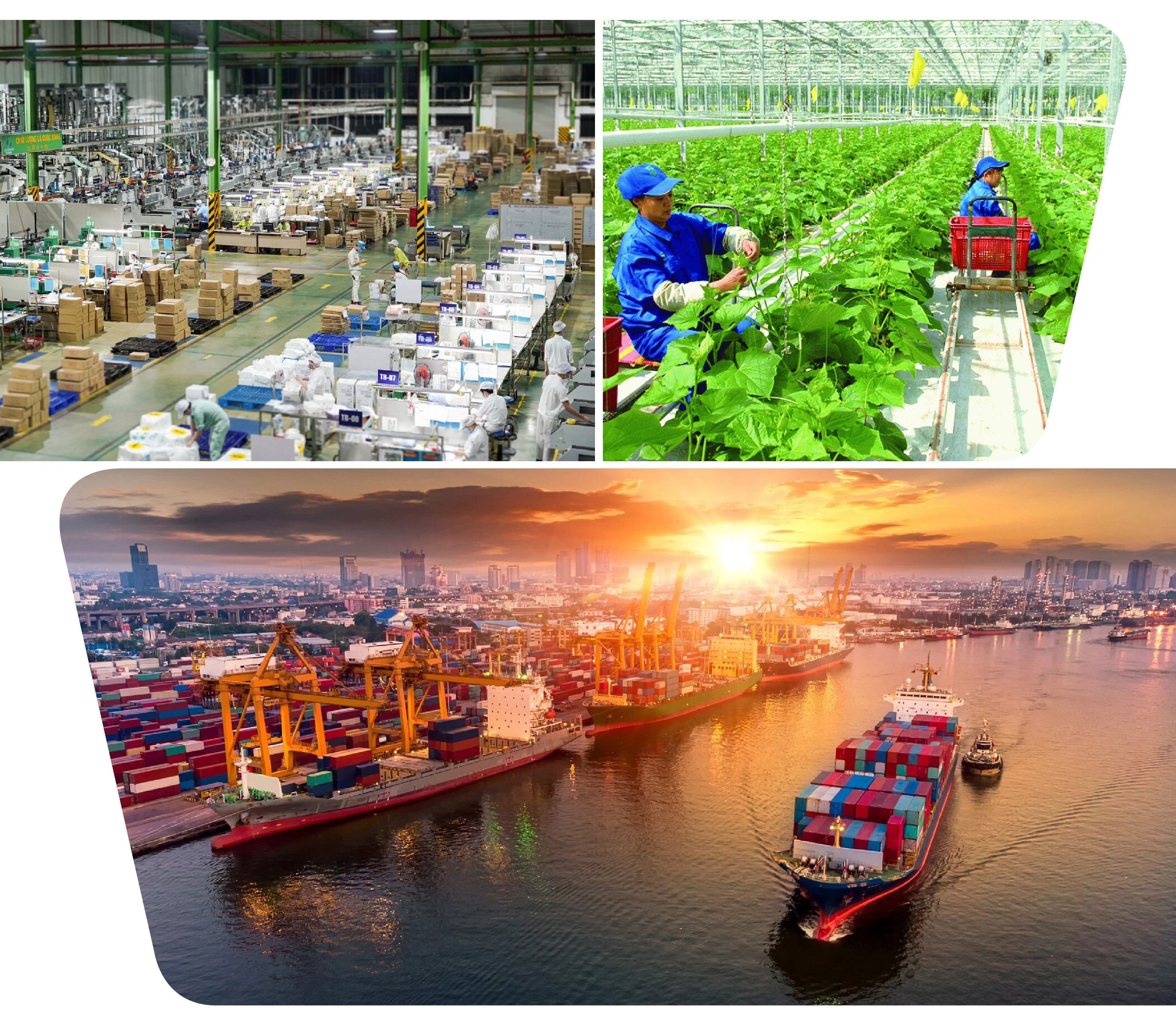
Against this backdrop, the Government has strived to alleviate difficulties and control inflation. As a result, Vietnam's economic growth in 2023 is projected to be higher in each subsequent quarter than the previous one. Accordingly, several macroeconomic indicators have met the capital needs for development well, especially the public investment indicator. In the first 11 months, 461,000 billion VND was disbursed, 6.7% higher and 122,600 billion VND higher in absolute terms compared to the same period in 2022.
In the first 11 months, Vietnam attracted an estimated $28.8 billion in registered FDI capital. Of this, implemented capital reached $20.2 billion, the highest level of implemented capital in the past 5 years. Simultaneously, Vietnam also controlled inflation well, remaining within the target of 4.5% as set in Government Resolution 01.
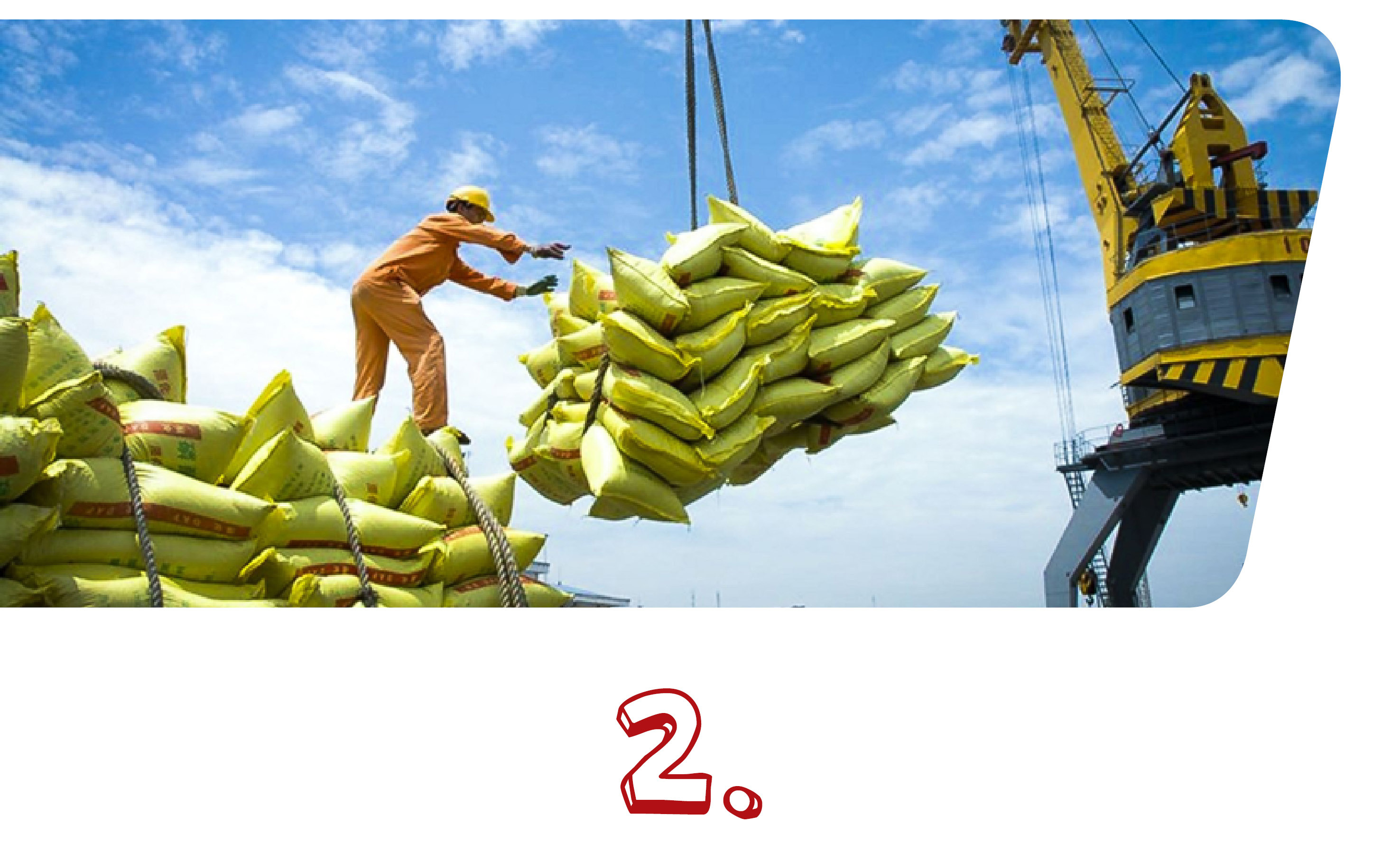
According to experts, the Vietnamese economy has "basically" weathered the "headwinds." In particular, regarding the recent increase in rice exports, Dr. Nguyen Minh Khuong, a lecturer at the Lee Kuan Yew School of Public Policy in Singapore, emphasized: " Vietnam is very resilient, and the world is praising it. We are not just doing this for ourselves, but for the whole world."
With challenges posed by geopolitical conflicts and increasing strategic competition among major powers, the risk of inflation in Vietnam's key markets remains, the domestic market is weak, and private sector investment has not yet recovered…; however, the bright spots of the economy in 2023 and the current growth drivers will create momentum for growth in 2024 and subsequent years.
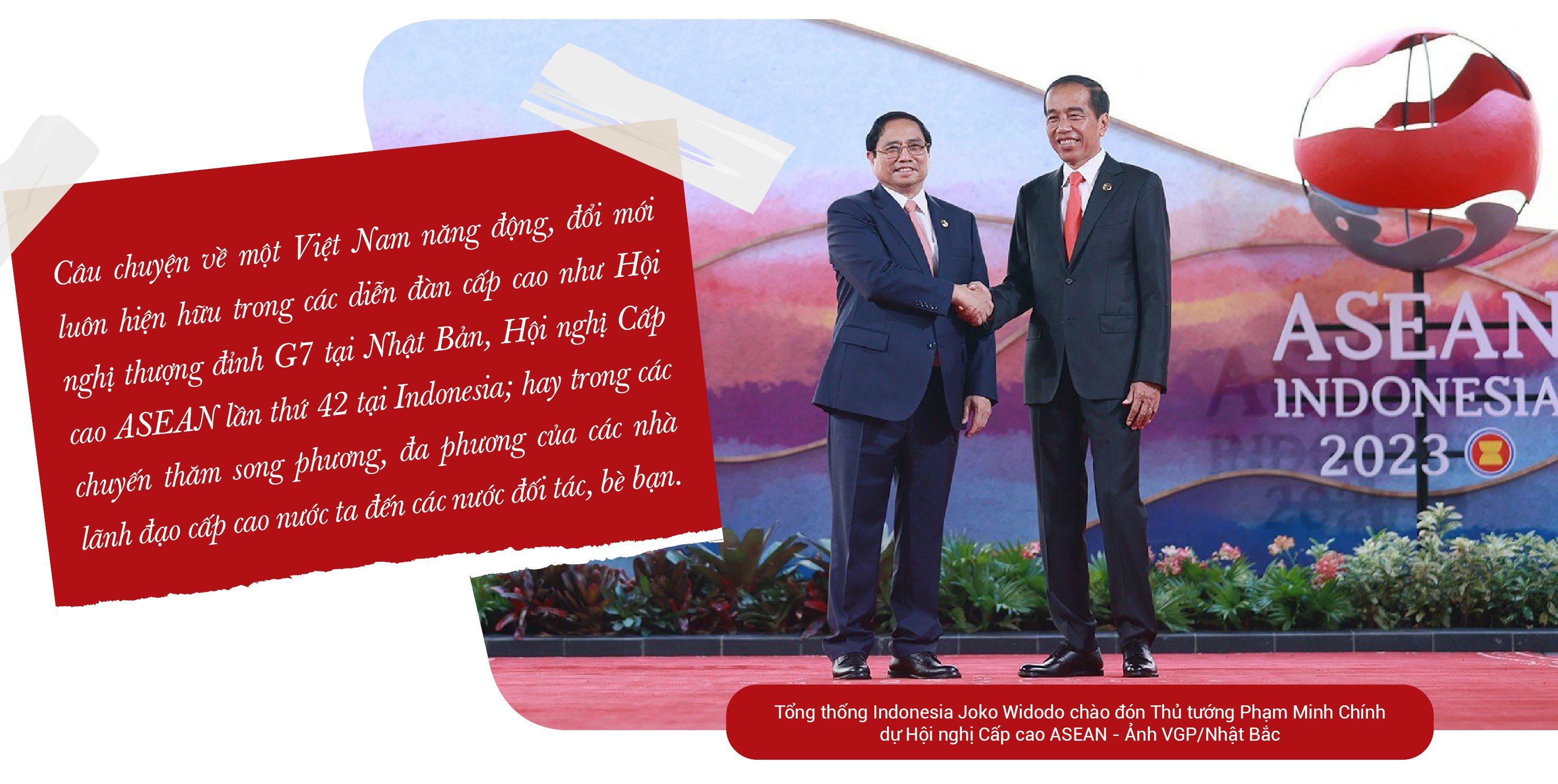
The year 2023 has passed and is considered by many to be a "bumper year" for Vietnamese diplomacy, with numerous visits, working sessions, and talks involving many heads of state and international delegations. The story of a dynamic and innovative Vietnam was ever-present in high-level forums such as the G7 Summit in Japan, the 42nd ASEAN Summit in Indonesia; and in bilateral and multilateral visits by our high-ranking leaders to partner and friendly countries.
" A dynamic, innovative, and internationally integrated Vietnam, working together with the world to address global issues," that is the prominent message from these important foreign affairs activities. All of this demonstrates a new position for Vietnam in the context of a rapidly changing global geopolitical landscape.
Nearly 50 years after emerging from war and facing countless difficulties, Vietnam has a voice on the international stage, and major powers have changed their attitudes towards Vietnam. This is because Vietnam has known how to create its own advantage. This advantage lies in its correct political, domestic, and foreign policies, which General Secretary Nguyen Phu Trong has summarized with the metaphor of "bamboo diplomacy": rigid, resolute, and persistent, yet flexible in its implementation.
This foreign policy is based on two important foundations. Firstly, it prioritizes national and ethnic interests as the ultimate goal and foundation. This is also a continuation of Ho Chi Minh's ideology. Secondly, Vietnam's foreign policy and diplomatic approach are based on righteousness. While there are many different viewpoints, tendencies, and political theories in the world, all nations look at a country's diplomacy to see if that country's actions are righteous in order to support it.
Vietnam's flexibility in thinking and diplomatic approach over the past period has also proven effective. For example, the concept of independence, which we have always emphasized, has changed in meaning due to changing times and approaches.
In the past, independence meant "no one can touch me" and "I'll do things my own way." However, in today's era of globalization, independence cannot be achieved in that way. The approach must be to balance interdependent relationships. These are relationships of overlapping interests, both bilateral and multilateral, that are interwoven. This is the art of diplomacy to elevate one's position. Vietnam is doing well in this, and because of this, while Vietnam needs other countries, other countries also need Vietnam.
In today's volatile world, the high-level foreign affairs activities of our Party and State leaders have continued to strongly promote the independent, self-reliant, peaceful, friendly, cooperative, and developmental foreign policy, multilateralism, diversification, proactive and positive international integration, for the benefit of the nation, as set forth by the 13th National Congress of the Party.
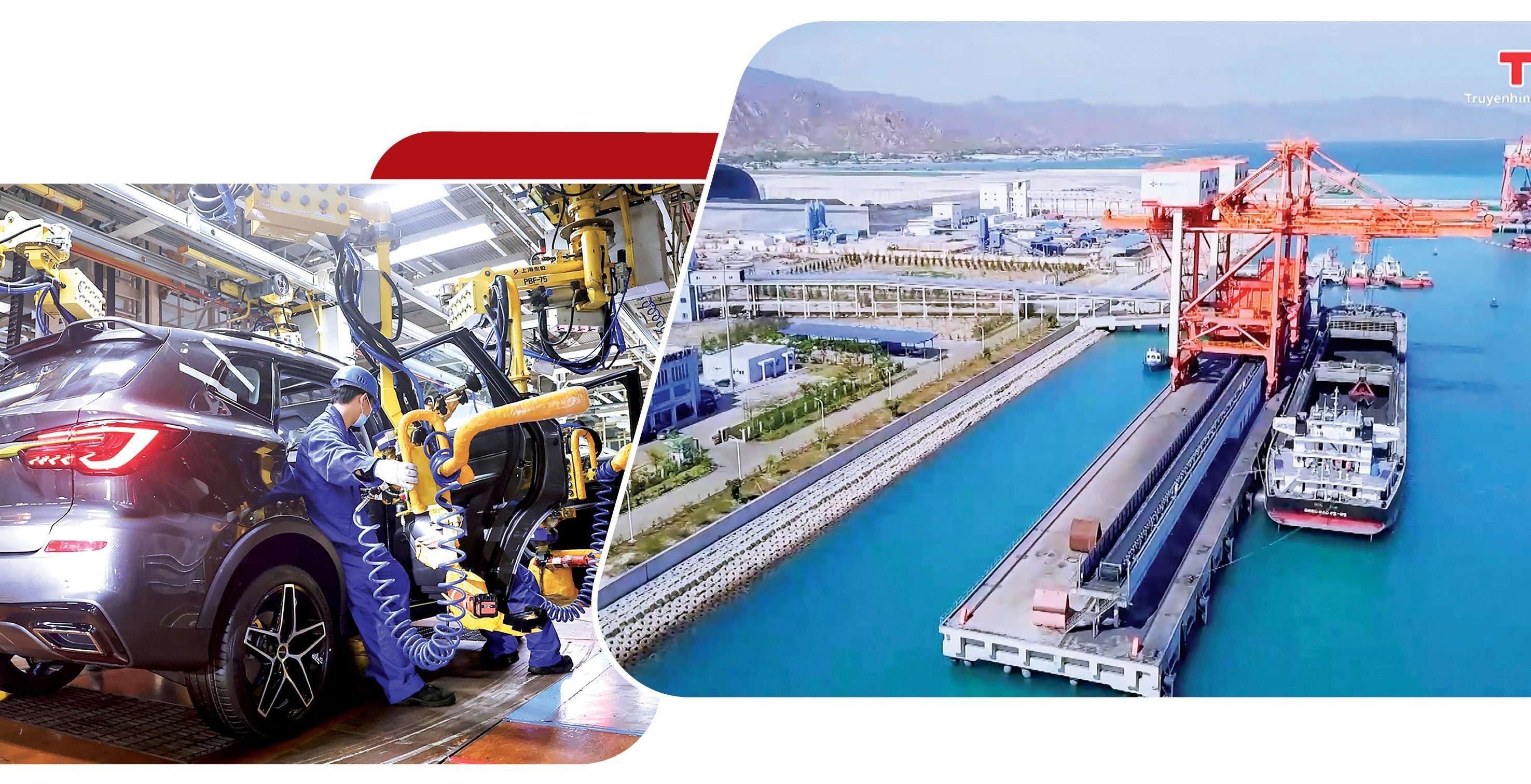
With over 500 bilateral and multilateral agreements; with the ratification and effective implementation of the Vietnam-EU Free Trade Agreement (EVFTA); participation in the Regional Comprehensive Economic Partnership (RCEP); and with over 70 countries recognizing Vietnam as a market economy... Vietnam has also become a crucial link in many economic linkages through the signing of free trade agreements, thereby creating tremendous impetus for development. This is also why Vietnam has become a popular destination for welcoming many heads of state, national leaders, and leaders of international organizations.
Typically, when discussing a nation's strength, people immediately think of its economic potential, defense, and security. Vietnam, however, is different; our position is enhanced by "soft power." This includes our cultural values, socio-political values, state model, and domestic and foreign policies. Alongside these are our glorious historical traditions, our sense of justice, and our nation's aspiration for independence and unity, linked to the aspirations of other nations for peace, freedom, equality, and fraternity.

While browsing social media, I've come across more and more photos and videos of a country beautiful in its scenery, harmonious in its people, a small country but full of resilience. And it's not difficult to find shared stories full of pride in their homeland from generations Z and Y.
Every citizen can clearly feel each step forward of the nation. Vietnam's position is not something that came naturally. It has been built and nurtured through countless historical changes. It is like the initial small waves, stirring, spreading, and creating momentum for larger waves, for rising tides. Vietnam's position began to emerge from the time when "Mother led her children to the forest, Father led his children to the sea." Year after year, centuries have passed, and the nation's form and strength have grown, learning to conquer nature, to defeat enemies to preserve its lineage, and to hold onto every inch of land, every stretch of sea that our ancestors bequeathed to us.
Vietnam's position has steadily improved over nearly 40 years of reform. The 13th National Congress of the Party officially stated in its documents: " With all humility, we can still say that our country has never before possessed such a foundation, potential, position, and international prestige as it does today ."
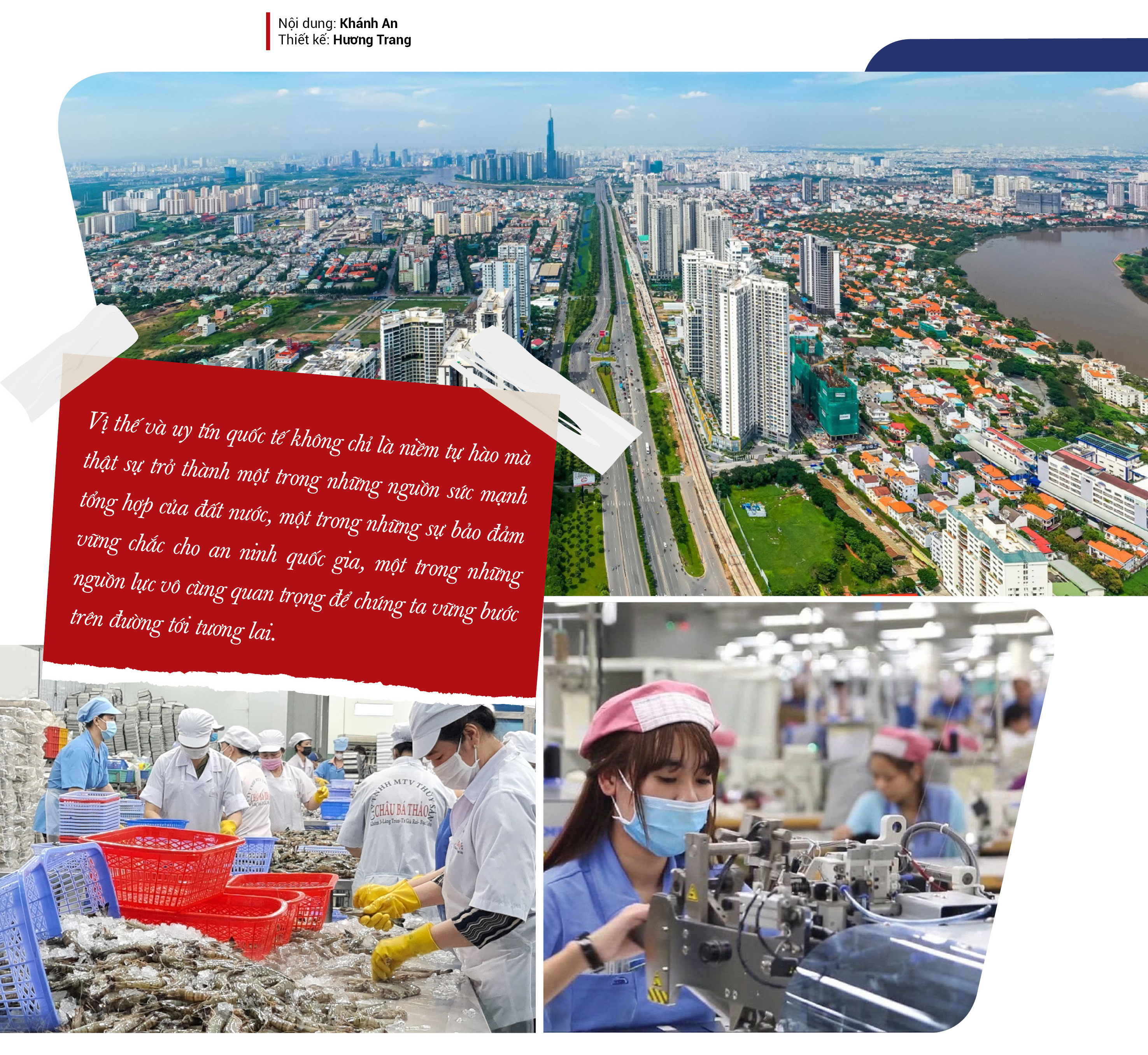
International standing and prestige are not only a source of pride but truly become one of the country's combined strengths, one of the solid guarantees for national security, and one of the extremely important resources for us to move steadily forward on the path to the future, with the goal of becoming a developed, high-income country by 2045, the 100th anniversary of the nation's founding.
Source





































































Comment (0)