

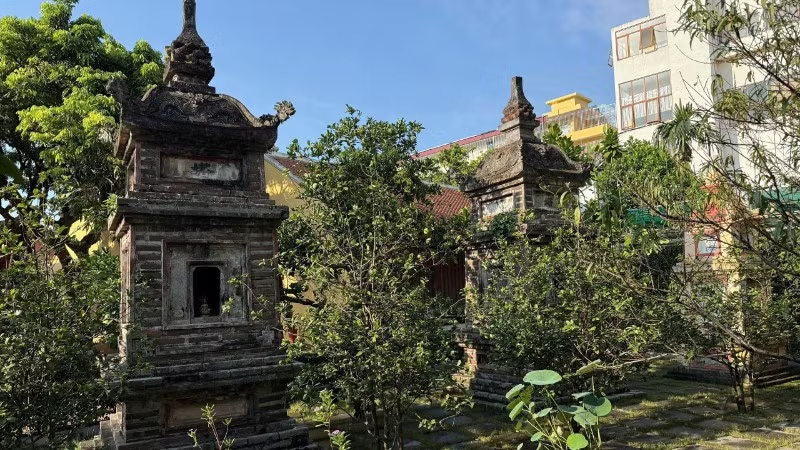
Remnants of an ancient Buddhist center
The ancient village of Dong Trach, formerly known as Tay Phu Liet, was once the stronghold of the warlord Nguyen Sieu in the 10th century. During the Tran dynasty, this area was called Long Dam (Dragon Pond), and during the Ming occupation, it was changed to Thanh Dam (Clear Water Pond). During the Le Trung Hung period (16th-17th centuries), due to the taboo against using the name of King Le The Tong (1573-1599), the name Thanh Dam was changed to Thanh Tri.
According to genealogical records, after the warlord's power weakened, a portion of the population, including descendants of Luu Kha Cong, followed him to the Tay Phu Liet area, settling at Song Wharf (now Ba Xa Temple), and then forming Dong Ba village. The statement by the official Nguyen Dong Bien to Luu Van Diem: "Thanh Tri, Dong Ba, Thanh Hoa, where geese return" shows that the name Dong Ba appeared very early.
Located adjacent to the ancient Thang Long citadel, Dong Ba village is surrounded by the Red River and a system of ponds and swamps, creating a fertile land. However, due to the lack of a solid dike system, the area is frequently affected by floods. Historical records show that during the Le Dynasty, a major dike breach occurred in the year of Quy Ty, the birth year of Venerable Thich Tri Thuy (Luu Dinh Tinh), sweeping away the village's temple, pagoda, and houses. The villagers subsequently rebuilt the dike many times and constructed a protective barrier called the "Ho Nhat Giai road," but still could not withstand the natural disaster. Ultimately, the entire area was left as a strip of sandy land, now part of Chua hamlet, Nam Phu commune.
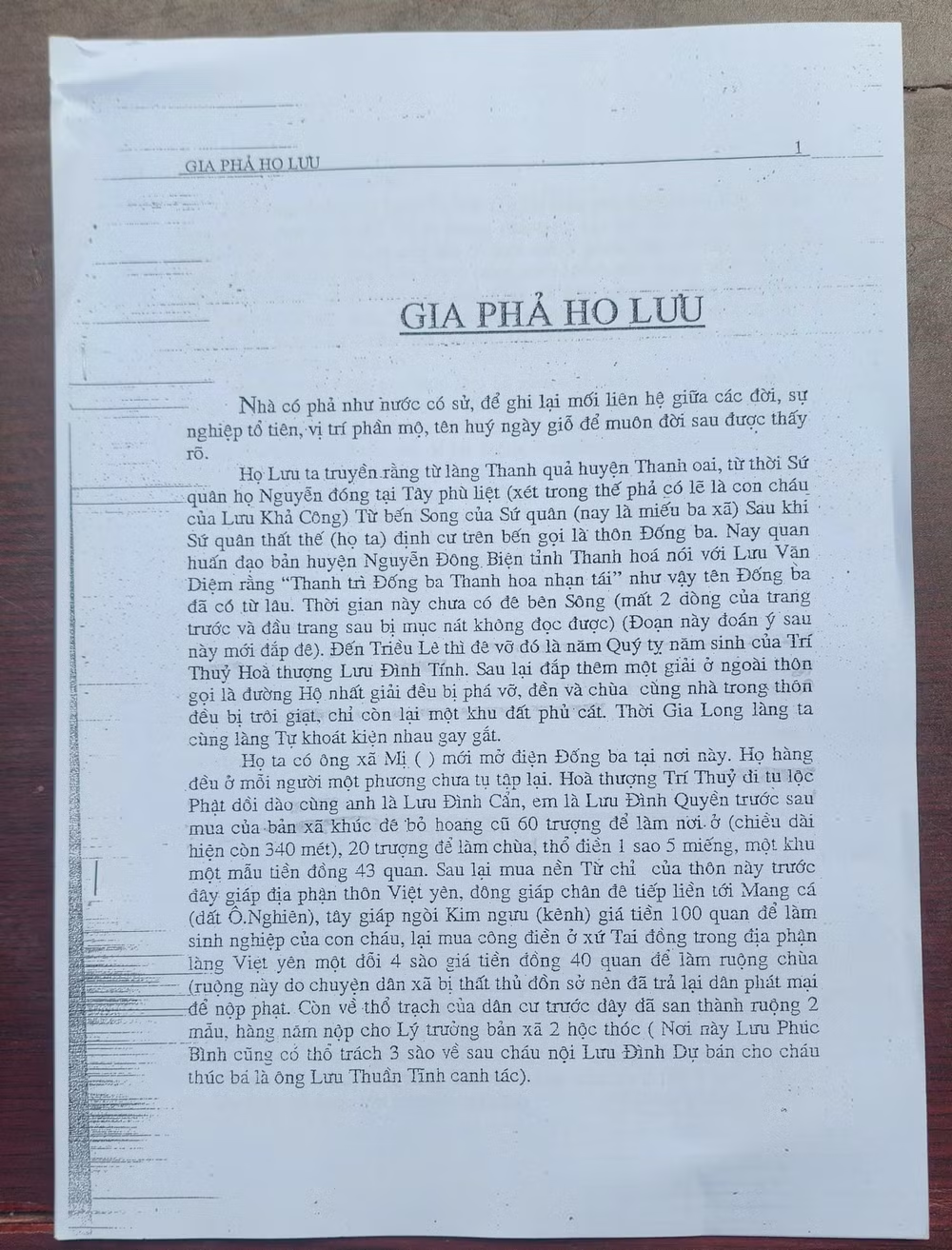
According to the Lưu family genealogy, on that land, Venerable Thich Tri Thuy, along with his brother Luu Dinh Can and younger brother Luu Dinh Quyen, purchased the abandoned old dike of the village, approximately 60 trượng (now about 340m remaining), to use as a residence, and also allocated 20 trượng to build a temple. In addition, the family also bought more rice fields and the ancestral shrine land of the neighboring Viet Yen village, expanding their livelihood and creating land for the temple's worship. Thanks to this, Dong Trach Temple gradually took shape, becoming closely associated with the religious life of the local residents.
Mr. Luu Van Tinh, a resident of Dong Trach village, recounted: “I was born and raised here. When I was young, I saw some traces of the historical site, but they gradually faded over time. Rebuilding this site is the wish of the people who have lived here for generations. If rebuilt, this historical site will not only be a religious place but also hold great historical, cultural, and educational significance for future generations to remember their ancestral origins and the contributions of those who pioneered this land.”
Although the site of the ancient temple no longer has clearly visible architectural structures, hindering identification efforts, scientific evidence has confirmed the solid existence of this relic. Mr. Nguyen Van Sung, Vice Chairman of the People's Committee of Nam Phu Commune, Hanoi City, said that the locality is focusing on preparing sufficient scientific arguments to restore the relic complex: "There are many historical relics in the commune. Some documents indicate that Dong Trach Temple is an ancient relic. However, to restore this relic complex, we need to prepare sufficient documentary evidence and scientific arguments."
During our research, we received many opinions from scholars such as Associate Professor, Dr. Chu Van Tuan (Director of the Institute of Religious Studies), Dr. Nguyen Van Uy, researcher Pham Van Trieu, Tran Ngoc Thieu… In addition, Buddhist documents from Hanoi city also confirm the existence of Dong Trach Pagoda from the 17th to 18th centuries. Based on the existing documents, as well as the legitimate wishes of the local people, the authorities will acknowledge and proceed with the next steps in accordance with regulations.”
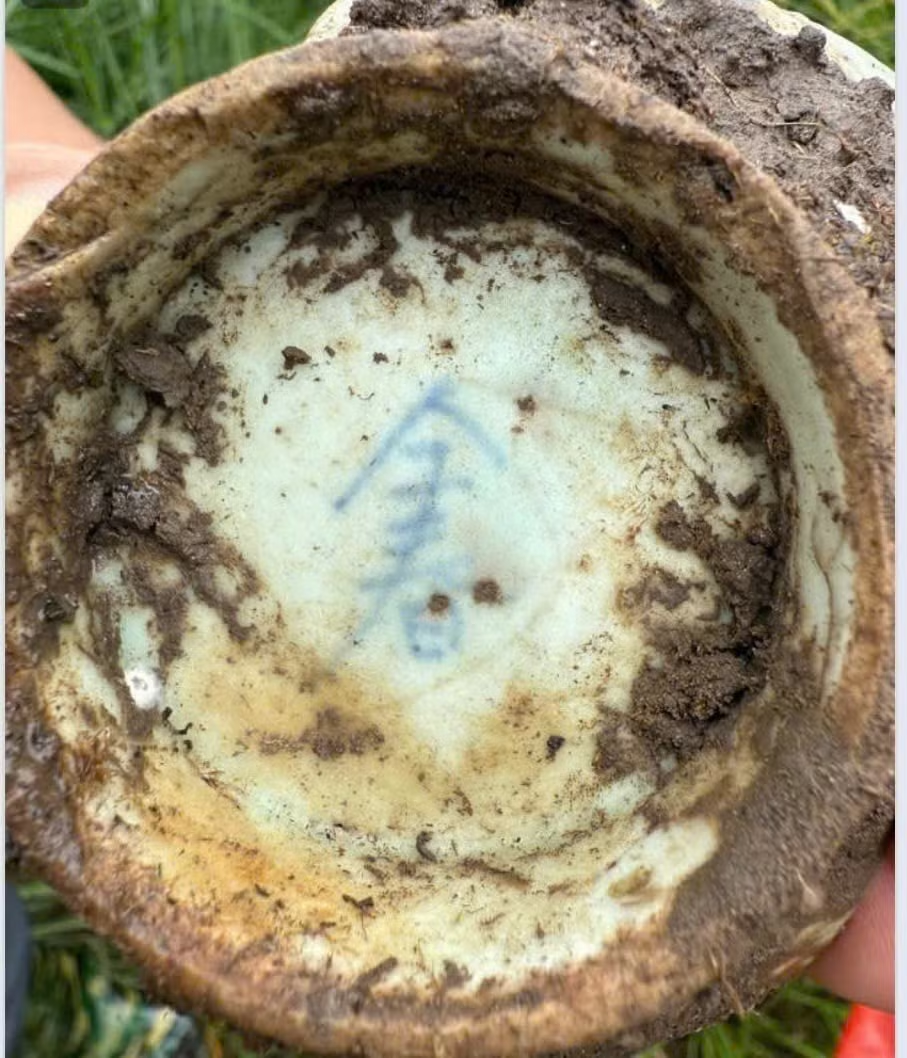
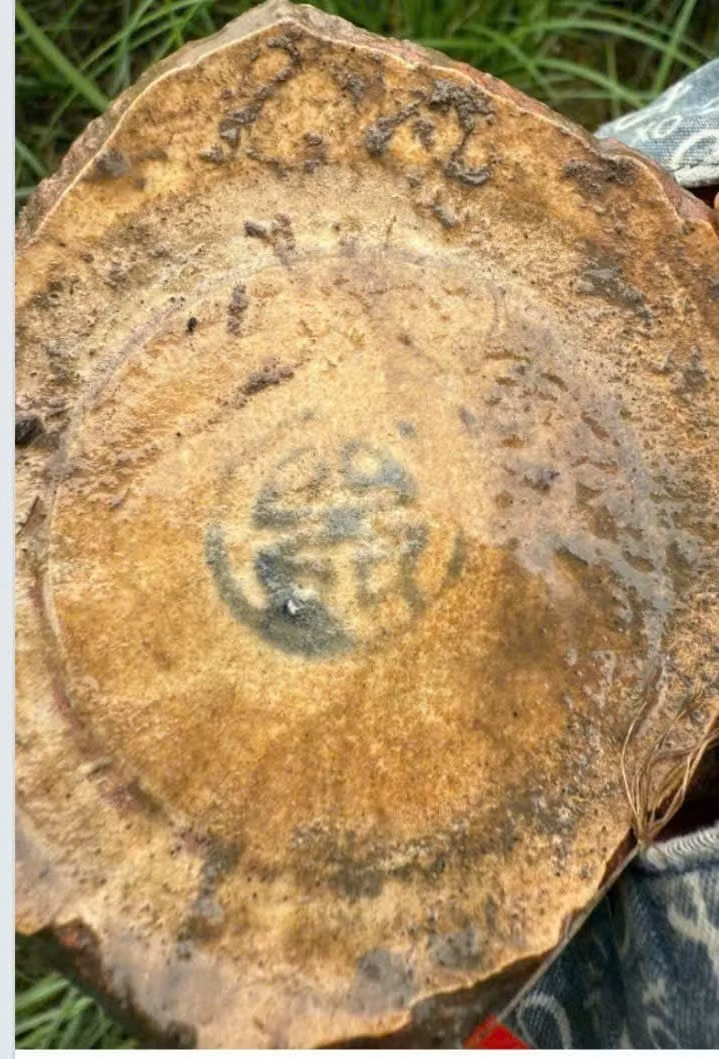
Furthermore, sources from Hanoi Buddhism and preliminary archaeological surveys establish the temple's age and historical value as dating back to the 17th-18th centuries, during the Le Trung Hung period. Due to various objective changes, the relic gradually deteriorated. With the published results of the archaeological survey, providing material evidence of the temple's existence, Mr. Pham Van Trieu's research team assessed: "The collected materials about the relic are quite significant for the history and culture of this region. However, the remaining artifacts we have collected are not numerous. We believe that restoring the temple to its original values is necessary, not only for the lives of the people but also for the historical and cultural research value of one of the most turbulent periods in the country's history."
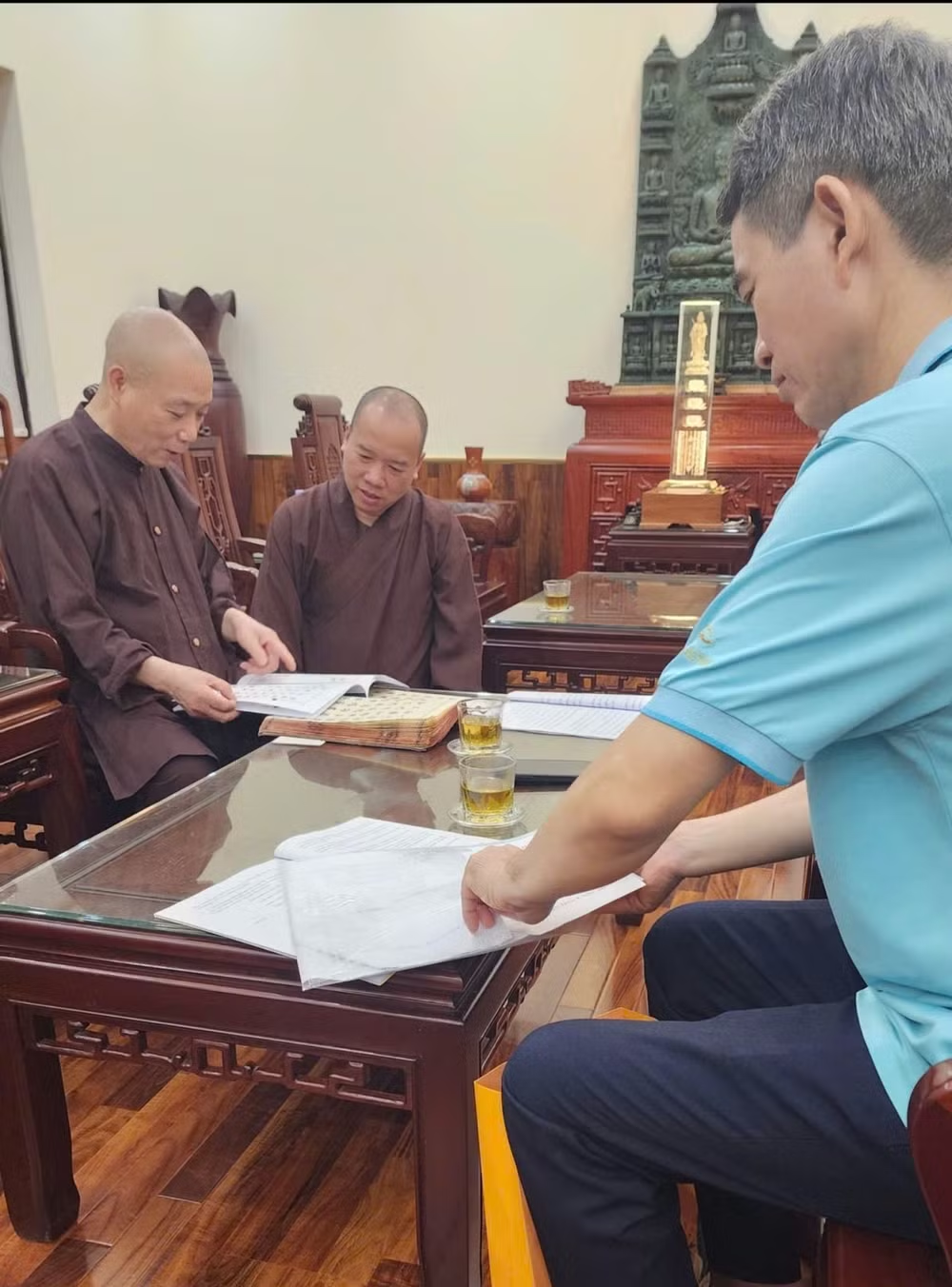
Meanwhile, according to Venerable Thich Chi Nhu, Standing Member of the Executive Board of the Vietnam Buddhist Association of Hanoi City, and Deputy Head of the City's Education Department: “Dong Trach is an ancient place name. Many famous monks of the past have mentioned the presence of Dong Trach Pagoda in Buddhist documents of the Thanh Tri area. Therefore, restoring this complex is significant in adding a spiritual element for the local people, while enriching the cultural and historical values of the nation. Venerable Thich Chi Nhu also shared that recently, many experts, scientists, and local people have expressed their desire to restore the relic. This is a legitimate aspiration and needs to be seriously considered by all levels and sectors.”
The aspiration to revive heritage
The restoration of Dong Trach Pagoda is currently being carried out within a strict legal framework and under the new strategic direction of the Party and the State. Law No. 45/2024/QH15 on Cultural Heritage, enacted by the National Assembly on November 23, 2024, regulates cultural heritage, its management, protection, and promotion. The rights, obligations, and responsibilities of agencies, organizations, communities, and individuals in the management, protection, and promotion of cultural heritage values, including intangible and tangible cultural heritage passed down from generation to generation, and Decree 67/2022/ND-CP regulating the authority, procedures, and processes for the establishment, appraisal, and approval of plans and projects for the preservation, restoration, and rehabilitation of historical and cultural relics and scenic spots, serve as a guiding principle, requiring all restoration and rehabilitation activities to be based on authenticity and rigorous assessment by specialized councils. The implementation of this project also concretizes the spirit of Resolution No. 80-NQ/TW dated January 7, 2026, of the Politburo on the development of Vietnamese culture, emphasizing the awakening of aspirations for national development and the promotion of heritage values as a foundation for the nation's intrinsic strength.
In Nam Phu commune, the process of compiling scientific records is being carried out systematically. The documentation is being systematically organized from multiple perspectives, ranging from the Lưu family genealogy and ancient texts to rituals performed at nearby temples such as Tam Huyen Temple, Sung Phuc Temple, and Bang Temple (Linh Tien Tu). This evidence clarifies the lineage connection between renowned monks like Venerable Thich Tri Thuy and Venerable Thich Tri Dien, and establishes Dong Trach Temple's position as a thriving center of Buddhist learning that lasted from the Le Trung Hung period to the Nguyen dynasty, spanning from the 17th to the 20th centuries.
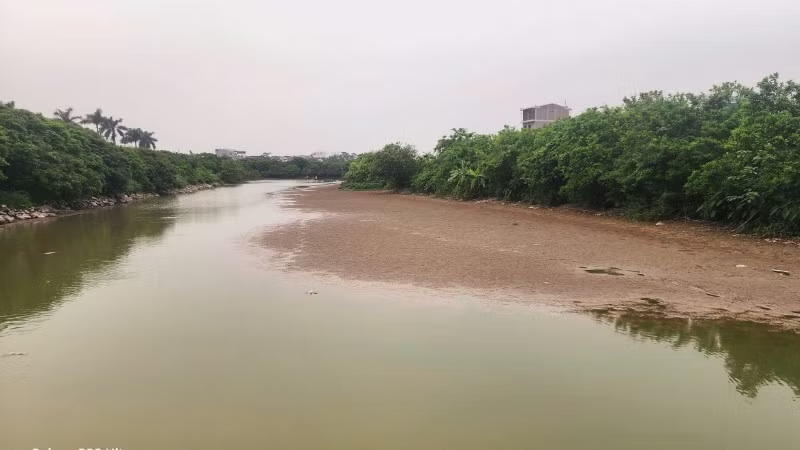
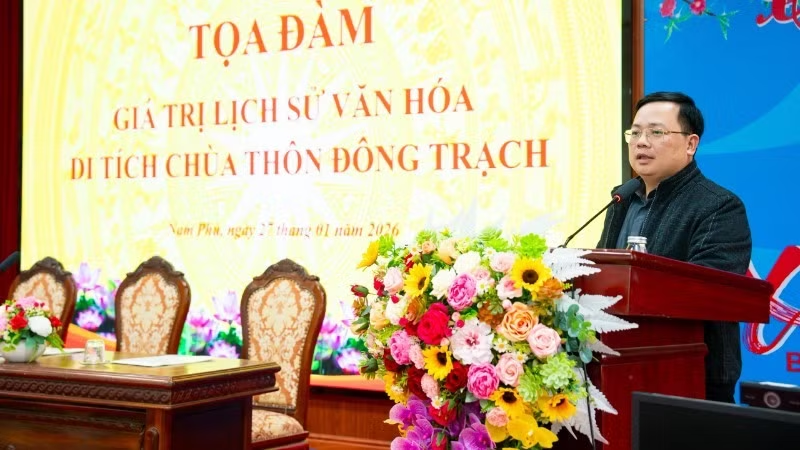
The recent seminar in Hanoi titled "The Historical and Cultural Value of Dong Trach Village Pagoda Relics" fostered a high degree of consensus among scientists and local authorities. Experts meticulously analyzed the remaining archaeological artifacts around the pagoda's pond area, such as stone pillars and glazed pottery fragments, thereby establishing a solid foundation to prove the existence of the pagoda-shrine complex before its destruction by the 1773 flood.
Ms. Pham Bao Khanh, Head of Department 2 (Hanoi City Department of Ethnic Minorities and Religions), confirmed: “The documents provide a solid basis for the existence of the pagoda. The management agency will consider and facilitate the process in accordance with the law when the locality completes the proposal dossier. Dong Trach Pagoda is currently on the list of proposed locations for planning consideration according to the report reviewing the system of religious establishments that the locality submitted to the Hanoi City People's Committee in 2024. The Department of Ethnic Minorities and Religions supports and will facilitate the development of the locality, religious establishments, and cultural institutions as community cultural centers to develop spiritual tourism values.”
For the local people, the desire to restore the temple is a legitimate religious need, reflecting the principle of remembering one's roots. Rebuilding this space provides an opportunity to express gratitude to their ancestors, while also creating a deeply ingrained traditional educational environment for future generations.
The revival of Dong Trach Pagoda is a testament to the people's shared aspirations and the responsibility of those involved in conservation efforts. In the context of the entire nation striving to achieve the strategic goals of Resolution 80-NQ/TW, the restoration of a centuries-old relic like Dong Trach Pagoda becomes a shining example of preserving cultural identity. Once rebuilt, the pagoda will stand firm as a historical witness, connecting the cultural heritage of Thang Long-Hanoi, creating a pure spiritual space, and contributing to the comprehensive development of socio-cultural life in the locality. This is a practical action to ensure that the heritage not only exists in memory but truly comes alive and shines in the flow of the new era.
Source: https://nhandan.vn/danh-thuc-di-tich-chua-dong-trach-post956916.html

![[Photo] General Secretary and President To Lam meets with National Assembly delegates from ethnic minorities.](https://vphoto.vietnam.vn/thumb/1200x675/vietnam/resource/IMAGE/2026/04/20/1776696701056_a1-bnd-8331-3342-jpg.webp)


![[Image] National Assembly discusses the implementation of the socio-economic development plan.](https://vphoto.vietnam.vn/thumb/1200x675/vietnam/resource/IMAGE/2026/04/20/1776696707422_ndo_br_img-20260420-185419-jpg.webp)












![[Photo] General Secretary and President To Lam meets with National Assembly delegates from ethnic minorities.](https://vphoto.vietnam.vn/thumb/402x226/vietnam/resource/IMAGE/2026/04/20/1776696701056_a1-bnd-8331-3342-jpg.webp)
























































Comment (0)