Flower village in season
Nong Tien Ward is considered the "peach blossom capital" of Tuyen Quang , with approximately 160 households cultivating nearly 13 hectares, transforming residential areas like 8, 9, and 10 into "nursery gardens" of exquisite Vietnamese Tet (Lunar New Year) flowers. From early morning to late afternoon, the footsteps of peach growers fill the air amidst the densely packed gardens of spring blossoms. From ancient, moss-covered trees bearing the marks of time to exquisite bonsai pots, the gardeners meticulously arrange the trees, orienting them to catch the sunlight, carefully tending to each branch and bud. "To have a beautiful peach blossom garden, growers must be on high alert, adapting to the changing weather, sometimes subtly 'slowing down' the trees, other times urgently 'boosting' them with water and nutrients to ensure the flowers bloom at the right time and on the right day," shared Ms. Nguyen Thu Hien from residential area 9.
 |
| The rose garden in Bo Lach village, Quan Ba commune, opens up a livelihood opportunity for the local people through commercial flower cultivation. |
In the highlands of Bo Lach, Quan Ba commune, over 1.5 hectares of roses belonging to the family of Mr. Nhu Viet Bac are blossoming amidst the harsh weather conditions. Mr. Bac likens rose cultivation to an "adaptation problem" against frost and severe cold, requiring precise calculations in every pruning and irrigation cycle. Thanks to strict control over each technical step, his family's French roses and other colored roses maintain a stable yield of 120,000 blossoms per month, sufficient to supply the market and boost production for the peak Tet season.
These days, other traditional flower villages in Tuyen Quang such as Ly Nhan (Minh Xuan ward), My Tan (Tan Quang commune), Pho Bang commune, and Ban Cuom (Ngoc Duong commune)... are also simultaneously entering the Tet flower season with a bustling pace of work. It is no coincidence that in the heart of Tuyen Quang, these endemic flower regions thrive so strongly. The crisp cold of the highlands, where clouds embrace the rocky mountains, combined with the fertile alluvial soil along the Lo and Gam rivers, has crystallized the unique appearance of Tuyen Quang's flowers. Each blooming flower is not only the result of nurturing from Mother Earth, but also the embodiment of profound Tet cultural layers. The pale pink peach blossoms, carrying the warmth of reunion, dispel the highland cold to bring blessings and good fortune; the marigold, a symbol of resilient vitality, conveys wishes for longevity and well-being; and the elegant gladiolus represents filial piety...
Livelihoods are flourishing.
Behind every blooming flower lies an economic problem solved by the hard work, intelligence, and dedication of the farmers.
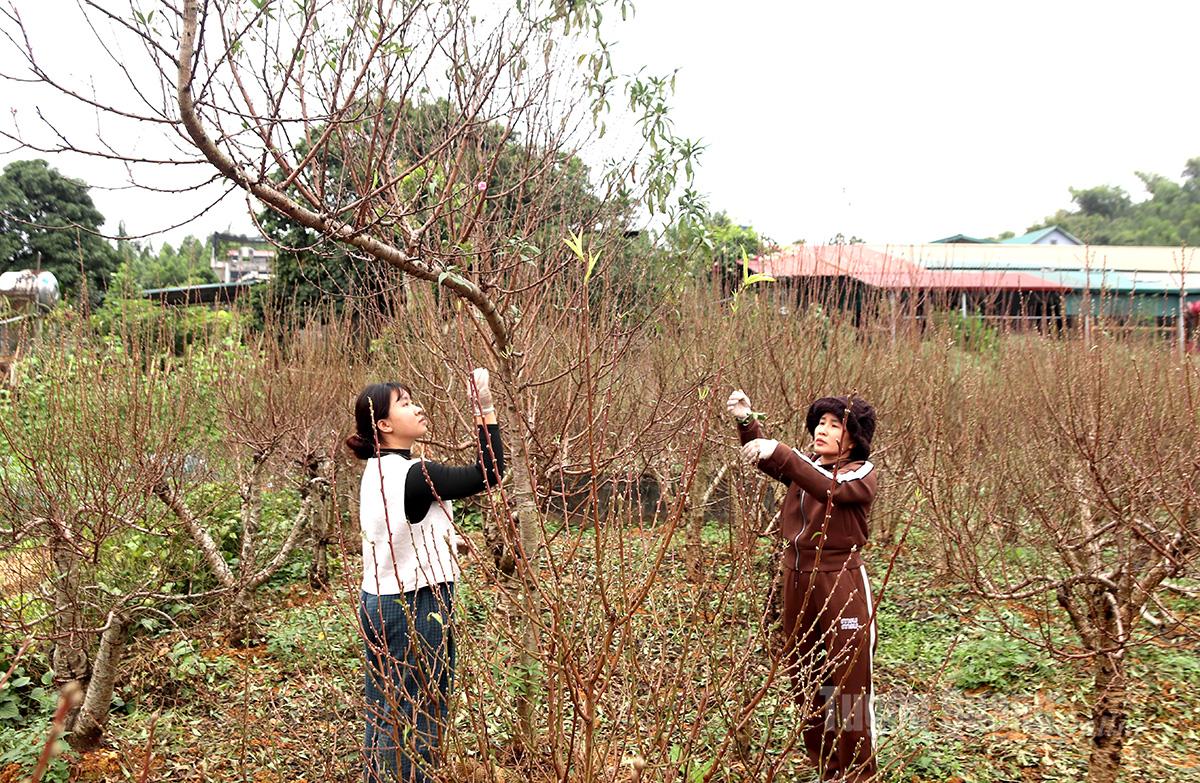 |
| Residents of residential area 9, Nong Tien ward, are tending to their peach trees for the Tet holiday. |
From a purely agricultural village, in 2005, the people of My Tan hamlet (Tan Quang commune) boldly switched to growing flowers and ornamental plants. After 15 years of persistently establishing their brand, in 2022, My Tan became a craft village specializing in the production and trading of flowers and ornamental plants. The product structure is diverse, ranging from traditional flowers to high-value ornamental plants; among them, ornamental peach trees and Podocarpus trees achieved OCOP 3-star certification. Village head Tran Van Giang said: “Currently, My Tan maintains a specialized production area of 20 hectares with more than 70,000 flower and ornamental plant trees of various types, generating nearly 5 billion VND in economic value each year.” This breakthrough not only helped the people of My Tan get rich from the land but also created stable jobs for 45 workers with an average income of 7 million VND per person per month.
In Ban Cuom 2 village, Ngoc Duong commune, the family of Mr. Vuong Van Quyet is a clear example of the economic benefits of "changing crops, changing mindset." Mr. Quyet shared: "With an area of only 0.2 hectares, each Tet season my family sells about 20,000 chrysanthemums of various types to the market, bringing in more than 60 million VND, three times higher than growing vegetables before." Not only does it increase income, growing chrysanthemums also helps Mr. Quyet's family manage their time effectively, make good use of their land, meet the market demand for Tet flowers, and open up an effective and sustainable business direction right on their homeland.
No longer confined to agricultural production, the flower-growing regions in the highlands are expanding their livelihood value through tourism strategies that promote the local flower seasons. Events such as the Buckwheat Flower Festival (Dong Van commune), the Cherry Blossom Festival (Lung Cu commune), the Kapok Flower Festival (Meo Vac and Lam Binh communes), and the Wild Sunflower Festival (Ha Giang 2 ward)... have brought these native flowers out of their natural habitats to become economic levers. This, in turn, activates a chain of accompanying services, from accommodation and experiences to the consumption of local agricultural products.
According to compiled data from specialized agencies, the province currently has nearly 170 hectares dedicated to flower cultivation. By 2025, the total value of flower production is expected to exceed 100 billion VND. Notably, the sunflower cultivation model combined with tourism in Dong Van and Meo Vac communes achieved 155 million VND/ha/season, including 30 million VND from entrance fees and field check-ins, and 125 million VND from seed sales. After deducting expenses, the profit reached 37.5 million VND/ha/season, 7.5 times higher than growing hybrid corn on the same area. Similarly, the buckwheat flower cultivation model yielded an economic value of approximately 60 million VND/ha/season, combining revenue from seed sales and tourism/experiential services.
Preserve the beauty of the flowers.
According to expert assessments, flower production in key areas is shifting strongly towards in-depth development, using technology as a leverage to realize unique cultural values. In specialized cultivation areas, greenhouse and polytunnel systems integrated with IoT, temperature and humidity sensors, etc., have become "technical shields," helping to reduce input costs by 40-50%, labor costs by 50-60%, and improve flower quality. This is the essential foundation for Tuyen Quang flowers to not only be beautiful in color but also of high quality when entering the larger market.
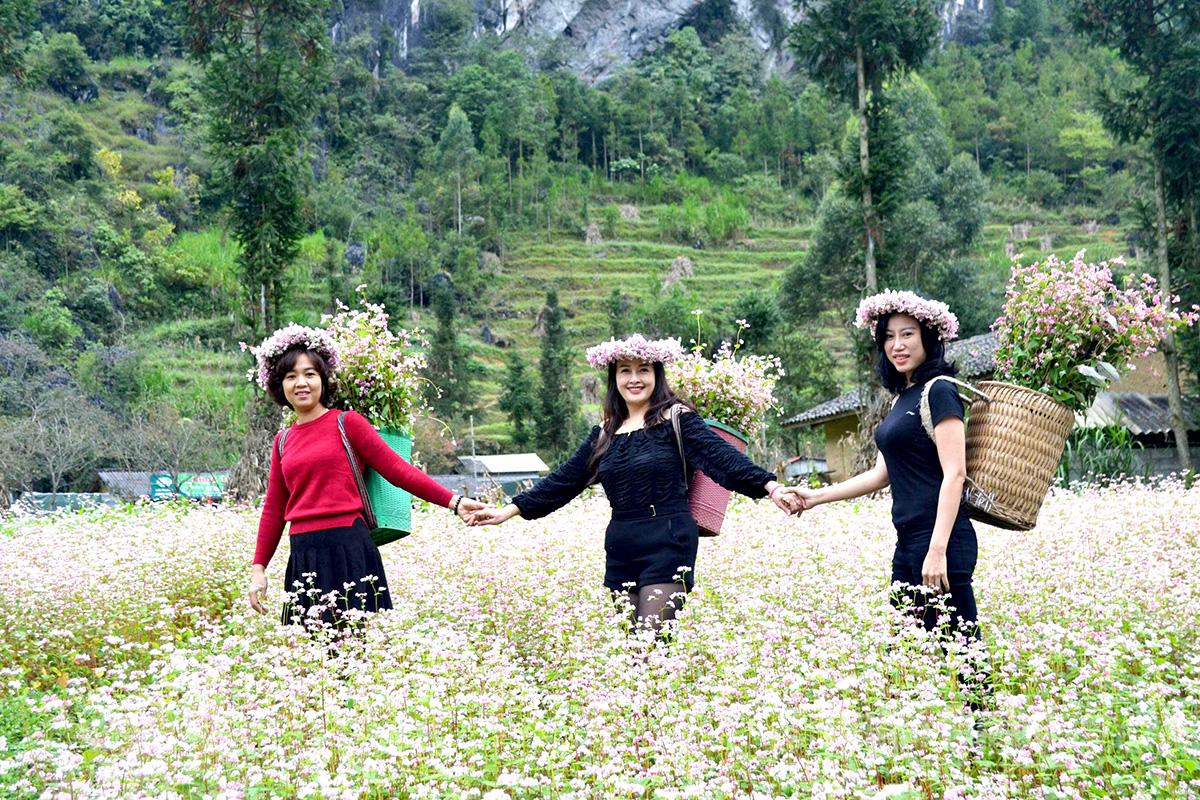 |
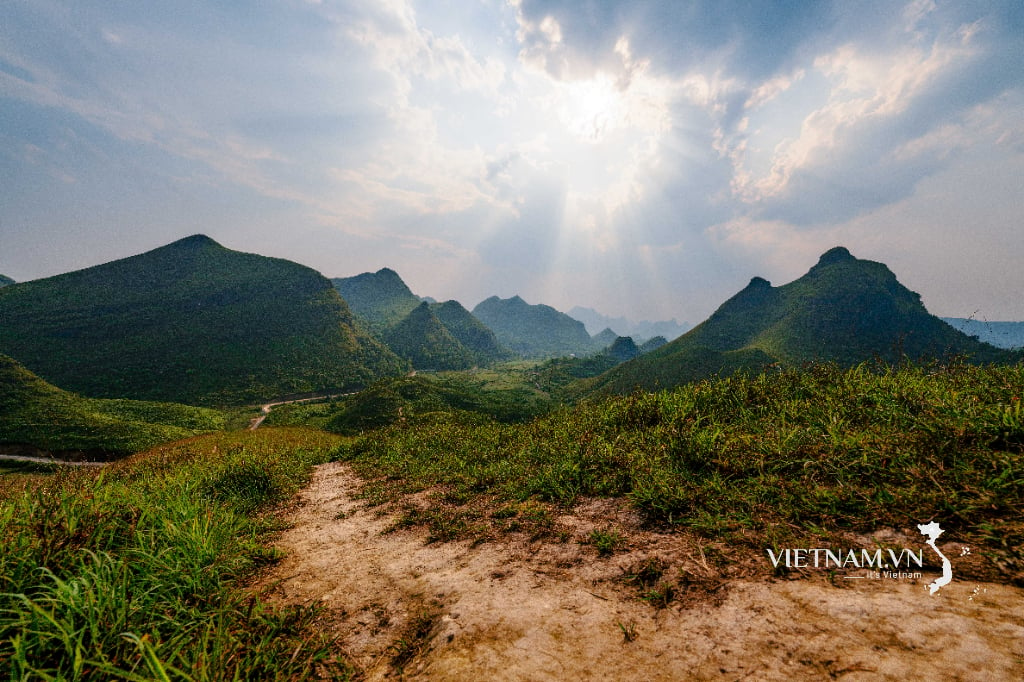
| Buckwheat flowers on the Dong Van Stone Plateau have become a highlight attracting tourists to visit and experience. |

However, behind the vibrant blossoms lies a challenging sustainable development problem. Traditional flower villages are facing double pressure from climate change, rising input costs, and competition from industrial and imported flowers; if production remains small-scale and relies on experience, the "beauty" of the flowers is easily lost to market forces and weather changes. In 2024, My Tan village (Tan Quang commune) suffered three historic floods in just four months, wiping out more than 5 hectares of ornamental peach blossoms. In 2025, the value of peach blossoms throughout the province is estimated at 27.5 billion VND, a decrease of nearly 20 billion VND compared to the previous year, reflecting the severe impact of climate change. In response to this reality, many localities have implemented spatial planning based on land elevation, moving high-value crops to higher areas or raised beds, converting low-lying land to flood-resistant crops, and expanding the cultivation of potted peach blossoms to proactively cope with natural disasters.
In reality, flower production, aiming to maintain its beauty and longevity, cannot do without a comprehensive strategy and guidance from specialized agencies. According to Nguyen Van Tu, Deputy Head of the Provincial Department of Crop Production and Plant Protection: The department has advised on restructuring growing areas according to ecological zones: highland areas develop high-end flowers such as lilies, orchids, and tulips; lowland areas prioritize short-day chrysanthemums and potted roses. Simultaneously, it promotes linkages among the "four stakeholders" (farmers, scientists, businesses, government, and scientists), builds flower brands, develops value-added products (dried flowers, flower tea), and connects flower villages with festivals and community tourism to extend the growing season, stabilize output, and enhance competitiveness.
Preserving the beauty of flowers, therefore, is not just about the technique of ensuring they bloom at the right time for Tet (Lunar New Year), but about maintaining the connection between traditional customs and contemporary life. The sustainability of the craft village is rooted in the land, but nurtured by a visionary plan, the power of science and technology, and the harmonious integration of production, market, and tourism. When these elements converge, the flower villages of Tuyen Quang province fulfill their mission of awakening spring while persistently sowing the seeds of prosperity for the countryside in the new development flow.
Source: https://baotuyenquang.com.vn/xa-hoi/202601/danh-thuc-mua-xuan-03f6f76/