

William Cuthbert Faulkner (1897-1962) was a master of the modern Western novel. He wrote short stories and novels and was awarded the Nobel Prize in 1950.
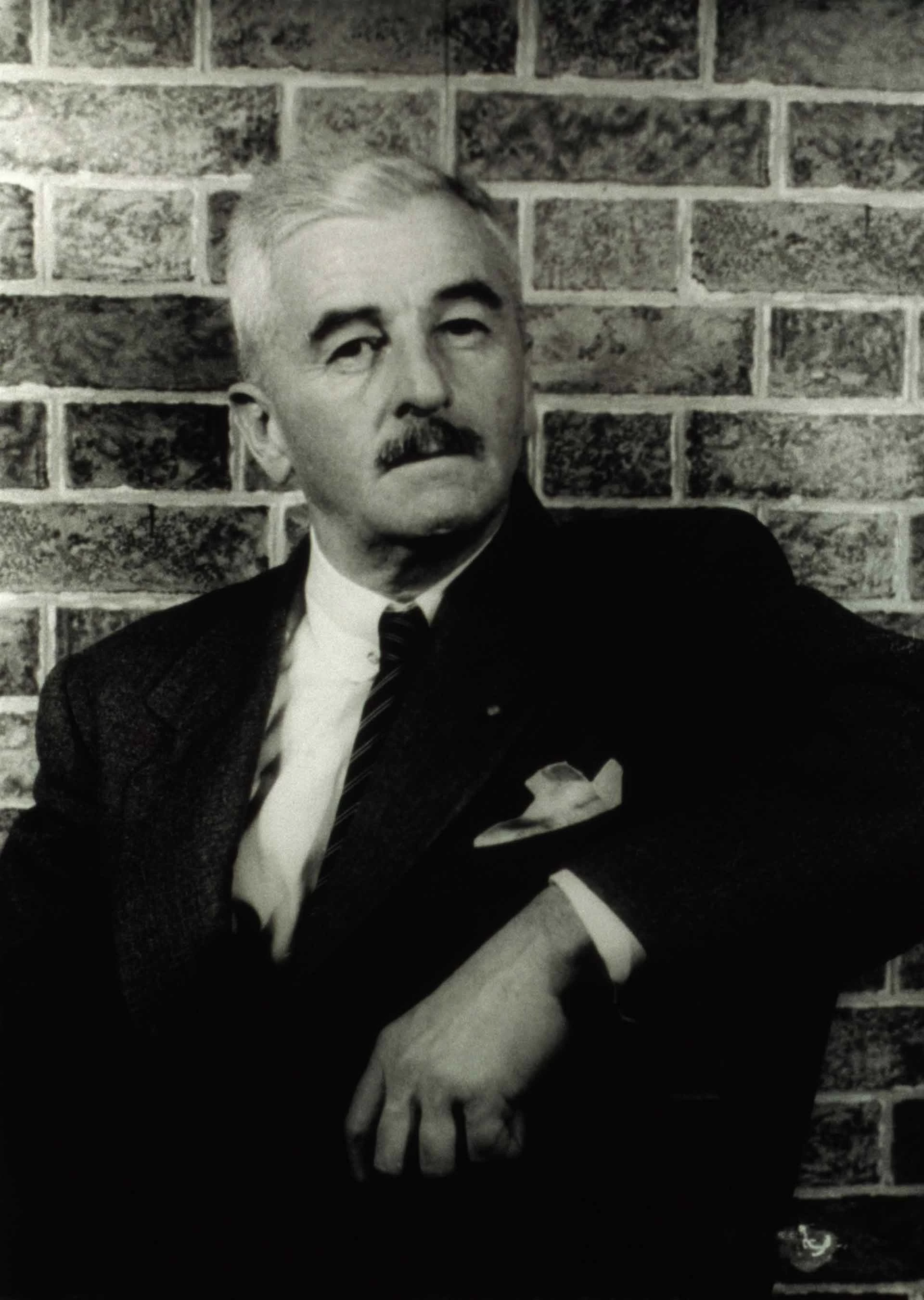 |
| The writer William Cuthbert Faulkner. |
He came from a Southern aristocratic family that had fallen on hard times due to the Civil War (1861-1865). He served in the Canadian Air Force during World War I but did not fight directly.
His early works received little attention. He rose to prominence with *The Sanctuary* (1931). Most of his themes concerned the changes in the American South after the Civil War. *Sartoris* (1929) depicted the decline of the Southern aristocracy and the rise of a bourgeois business class. In 1931, he moved to his own ranch in Rawanoak and wrote *The Light of August* (1932), addressing the relationship between Black and white people and condemning extreme acts of racial discrimination. On the other hand, he had a somewhat patriarchal and condescending attitude towards Black people. He lived like an aristocratic rancher, unwilling to consider himself a writer.
Faulkner wrote many macabre stories with unique nuances: *The Sound and the Fury* (1929), *As I Die* (1930), *O Absalom! O Absalom!* (1936). *Unbreakable* (1938) presents many scenes and characters from the Civil War era. In his Nobel Prize acceptance speech, he declared his opposition to war and affirmed the humanitarian ideals of a writer. Towards the end of his life, his humanitarian ideals went further: *An Allegory* (1954), against war; *The Building* (1959), against fascism. Faulkner's thought is fundamentally pessimistic. His characters are all victims of fate, all must pay some kind of karmic debt from a past life.
Faulkner's works feature characters with distinctly American characteristics: Confederate colonels, resigned Black people, and big-time sycophants. Faulkner's metaphysical philosophy stems from the concepts of guilt and divine grace, perfectly aligning with the guilt-ridden psychology of a culture after a devastating five-year war. The tragedy of humanity, brutally resurfacing during the war, evokes a sense of shared empathy among a community of "guilty" individuals seeking redemption, each repenting in their own way—a shared sin, perhaps one they didn't participate in but were even a victim of.
Faulkner interwoven themes of human alienation and loneliness in the 20th century with themes of the American South (the burdensome consequences of slavery, white-black relations, the inability of the aristocracy to meet the demands of modern life). Faulkner also connected antiquity with modernity by incorporating Greek tragedy—the role of fate—into his detective stories.
Faulkner's writing style is sometimes "quirky": complex structures, narratives that begin with the ending, assigning one name to multiple characters, avoiding naming and describing important events, throwing readers into convoluted situations that they must unravel themselves, telling at least two stories at once, specializing in using verbs in the present tense to revive the past, layering descriptive words, stretching a sentence to sometimes pages, deliberately blurring time to express a "stream of consciousness" that often mixes present, past, and future.
The Sound and the Fury is considered one of Faulkner's five-six masterpieces. The novel, a radical experiment in form and technique, tells of the disintegration of a Southern aristocratic family. Joyce's influence is quite evident on this work.
The Sanctuary is a pessimistic and profound investigation into the spontaneous nature of evil. The story follows Temple, a 17-year-old schoolgirl controlled by Popeye. Temple's provocative actions lead Popeye to rape her and kill someone who tried to protect her. Popeye is a scum of urban culture, yet in some ways, a product and victim of his social environment. Temple, meanwhile, is both terrified and thrilled: Popeye takes her to a brothel, and later, at the trial for the rape and murder she witnessed, she sides with Popeye, giving false testimony and framing an innocent man, Goodwin. In court, Benbowe Horace, a bootlegger, tries to defend Goodwin but fails, and is tragically executed by the public for a murder he didn't commit.
August Light, the novel addresses a theme that Faulkner often focused on: society categorizing people according to racial, religious, and origin prejudices. The protagonist, and also the victim, is Joe Christmas, who outwardly appears white but is actually of mixed Black ancestry. He has an affair with Joanna, an unmarried woman whom the locals suspect and dislike because she comes from the far Northeast. Ultimately, Joe kills her and burns down her house. He is arrested, castrated, and then killed by the townspeople. Joanna is thus transformed into a white martyr, attacked and murdered by a Black man.
"O Absalom! O Absalom!" is a truly unique work, typical of Faulkner's style, creating symbolic and metaphysical echoes reminiscent of Anglo-Saxon symbolist novels (like Conrad's). The quest delves deep into time, sometimes reminiscent of a detective novel, with many heavy scenes "materializing" the thoughts, emotions, and feelings in that hesitant search.
This novel can be seen as a story of the downfall of the Sutpen family; it evokes many biblical stories, especially the story of Absalom, a prince who plotted against his father, fled, his hair caught in a branch, and was killed, his grieving father crying out, "Oh Absalom! Oh Absalom!". This is the story of a personal fate intertwined with the history of the American South under slavery.
The central character is Thomas Sutpen, the son of a poor white man, who aspires to become a Southern nobleman and build a wealthy family. During the Civil War, he is elected lieutenant colonel in the Union army. Upon returning home, he finds his plantation in ruins. His daughter Judith has had a child with her lover, Bon, who is her half-brother and of mixed race; his son has killed Bon and fled.
Source: https://baoquocte.vn/dao-choi-vuon-van-my-ky-16-280241.html








































































































Comment (0)