

Education is the foundation.
Recently, society has been shaken by numerous incidents involving businesses: the head of a national-scale corporation exploiting consumer trust and defrauding them of thousands of billions of dong; a real estate conglomerate illegally misappropriating funds, leaving tens of thousands of investors in dire straits; a pharmaceutical company manufacturing counterfeit drugs to profit from the suffering of patients; and "fake philanthropic entrepreneurs," disguised financial investments, and multi-level fundraising schemes...
Authorities also uncovered numerous establishments producing counterfeit goods, businesses selling unsafe food, and those engaging in false advertising... Among them were once reputable businesses, or celebrities who were trusted and loved by the public.
The series of scandals seems to be shaking public trust. People are bewildered as seemingly enduring values suddenly collapse. The question is: how can every individual entering the business world carry an honest heart? How can ethical businesspeople become the standard in this new era? How can business ethics become the most important criterion, placed on par with profit and revenue? Perhaps, starting now, we need to begin with education, with monitoring mechanisms and timely recognition to cultivate a generation of honest entrepreneurs and foster a healthy business environment.
Speaking about business ethics education, one expert commented: we are too focused on teaching students how to make money and too little on teaching them how to make money ethically. This is a major gap in education.
In many of the world's leading business schools, business ethics is not a minor subject, but a crucial part of the entrepreneurial training program. Students learn how to make decisions in situations where there is a conflict between self-interest and ethics, and how to analyze real-world scenarios to identify the boundaries between right and wrong, ethical and unethical.
In recent years, many universities in Vietnam have included courses on business ethics and social responsibility in their main curricula. However, a significant number of universities specializing in business and management still underestimate the role of ethics in their programs.
We need more than that: an educational philosophy that values integrity, fosters a sense of community, and inspires a spirit of commitment to social progress instead of chasing achievements or a "get rich quick" mentality.
According to experts, in addition to focusing on business ethics education in schools, entrepreneurship training centers and national startup programs should also supplement their curriculum with content on professional ethics, business law, and the social impact of business decisions, thereby fostering a generation of young entrepreneurs with a solid ideological foundation.
Monitoring and honoring businesses with integrity.
To create a fair business environment, we cannot rely solely on voluntary compliance. In a business environment lacking effective oversight mechanisms, where unscrupulous individuals can easily circumvent the law for personal gain, honest businesses will struggle to survive and thrive. Building a transparent, fair, and deterrent legal system is a prerequisite for protecting ethical businesses.
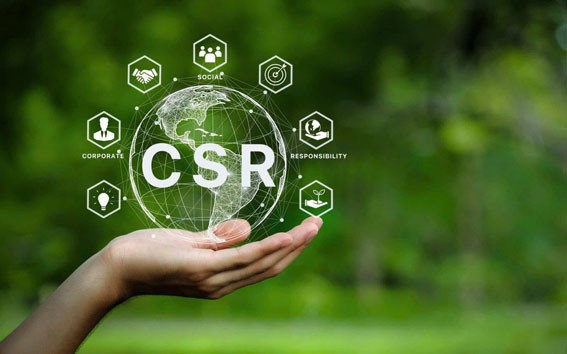 |
Ethical businesses, in addition to focusing on business success, also need to uphold social responsibility. (Source: CSR) |
In fact, Vietnam has made significant progress in tightening supervision of business activities, from combating transfer pricing and tax evasion to strictly handling acts of commercial fraud, environmental destruction, and cracking down on counterfeit goods. However, there remains a "gap" in the supervision of business ethics: how to clearly distinguish between businesses with legitimate profits and those with unethical profits?
This is where business evaluation metrics based on ethical standards, social responsibility, and transparency come in handy. Tools like Corporate Integrity Certification, Corporate Social Responsibility Rankings, or the "Good Business" award, if seriously implemented and effectively communicated, will be valuable "passports" that help reputable businesses gain the trust of consumers and investors.
In 2023, the Vietnam Chamber of Commerce and Industry (VCCI), in collaboration with Transparency International, launched the Vietnam Business Integrity Initiative (VBII), creating a network of businesses committed to avoiding bribery and corruption, and ensuring transparency in governance.
Resolution 68-NQ/TW dated May 4, 2025, also established a set of criteria for evaluating private enterprises according to international standards: compliance with the law, job creation, contribution to the state budget, and participation in social welfare activities. These are key indicators for creating a foundation for building a transparent and ethical business environment.
In the journey to build a ethical business environment that upholds business values, media coverage is an extremely important factor. It's easy to see that the media still overly favors praising corporate achievements through "huge" revenue figures. Social media is flooded with young "entrepreneurs" who are promoted not for their efforts and contributions to society, but for things like "supercars," lavish parties, and dating famous beauties. This information is inadvertently distorting the perception of the business community, glorifying materialism and hedonism.
We need more ethical media coverage, not just sensationalist news that attracts views, but also stories that sift through the good and contribute to nurturing a model of responsible entrepreneurs. These include stories of business owners treating their employees with kindness, those who accept reduced profits to maintain stable prices, and entrepreneurs who choose the difficult path of providing quality and safe products to consumers. This is the kind of content that needs to be communicated to strongly inspire future generations of entrepreneurs and help society define the standards of a true business person.
The media also needs to be stronger in its role as a "gatekeeper" of ethics, saying no to promoting ostentatious businessmen who "polish" their image through opaque or hypocritical charitable schemes under the guise of CSR (corporate social responsibility).
In an era where consumers are increasingly choosing products from transparent, green, clean, and healthy businesses, ethics is not only a desirable trait but also a sustainable competitive advantage.
No longer just a slogan, many large corporations around the world are now required to publish social impact reports and ESG (environmental, social, and governance) responsibilities as a condition for accessing investment capital and global partners.
In Vietnam, businesses are gradually realizing that ethical business practices are the only way to succeed in the long run. We are fortunate to have many generations of ethical, honest, and talented entrepreneurs who have built a "national brand" in various fields. They not only enrich themselves and their families, contributing to the creation of millions of jobs, but also demonstrate social responsibility by providing quality products and services and engaging in charitable activities. Their business activities contribute to the country's wealth. They are living "role models" for the ethical business lessons that schools should teach and the media should highlight.
In the new era, entrepreneurs not only bear the responsibility of creating wealth, but also of co-building society. This new era demands a new standard, and entrepreneurial ethics is the foundation for building a Vietnam that is not only developing, but also developing in the right direction and in a humane way.
During his lifetime, President Ho Chi Minh paid great attention to the business community. He met with and advised them on how to conduct business in a way that benefits the nation and the people. He always valued business ethics. He emphasized that the business community must build a strong and prosperous economy through honesty, legality, and for the benefit of the country and the people. He called on entrepreneurs to "invest capital in projects that benefit the nation and the people," meaning not just for profit, but for the common prosperity of the nation. This is the first principle of business ethics: entrepreneurs cannot be separated from social responsibility; they cannot enrich themselves at the expense of the community's hardship.
Source: https://baophapluat.vn/dao-duc-kinh-doanh-can-duoc-vun-boi-tu-goc-post551049.html


![[Photo] Prime Minister Pham Minh Chinh presides over the conference announcing the establishment of the International Finance Centre in Vietnam.](/_next/image?url=https%3A%2F%2Fvphoto.vietnam.vn%2Fthumb%2F1200x675%2Fvietnam%2Fresource%2FIMAGE%2F2025%2F12%2F21%2F1766309817714_ndo_br_dsc-3400-jpg.webp&w=3840&q=75)

![[Photo] Prime Minister Pham Minh Chinh presides over a meeting on private sector economic development.](/_next/image?url=https%3A%2F%2Fvphoto.vietnam.vn%2Fthumb%2F1200x675%2Fvietnam%2Fresource%2FIMAGE%2F2025%2F12%2F20%2F1766237501876_thiet-ke-chua-co-ten-40-png.webp&w=3840&q=75)











































































Comment (0)