

Rapid growth journey
According to statistics, the total area of passion fruit cultivation nationwide reaches over 12,600 hectares, with a production of nearly 180,000 tons, placing Vietnam among the top 10 passion fruit suppliers in the world . Of this, the Central Highlands region accounts for over 88% of the area, mainly concentrated in Gia Lai, Dak Lak, Lam Dong, and Quang Ngai provinces. Gia Lai alone currently has approximately 5,650 hectares of passion fruit, with an average yield of over 430 quintals/hectare, nearly double the national average.
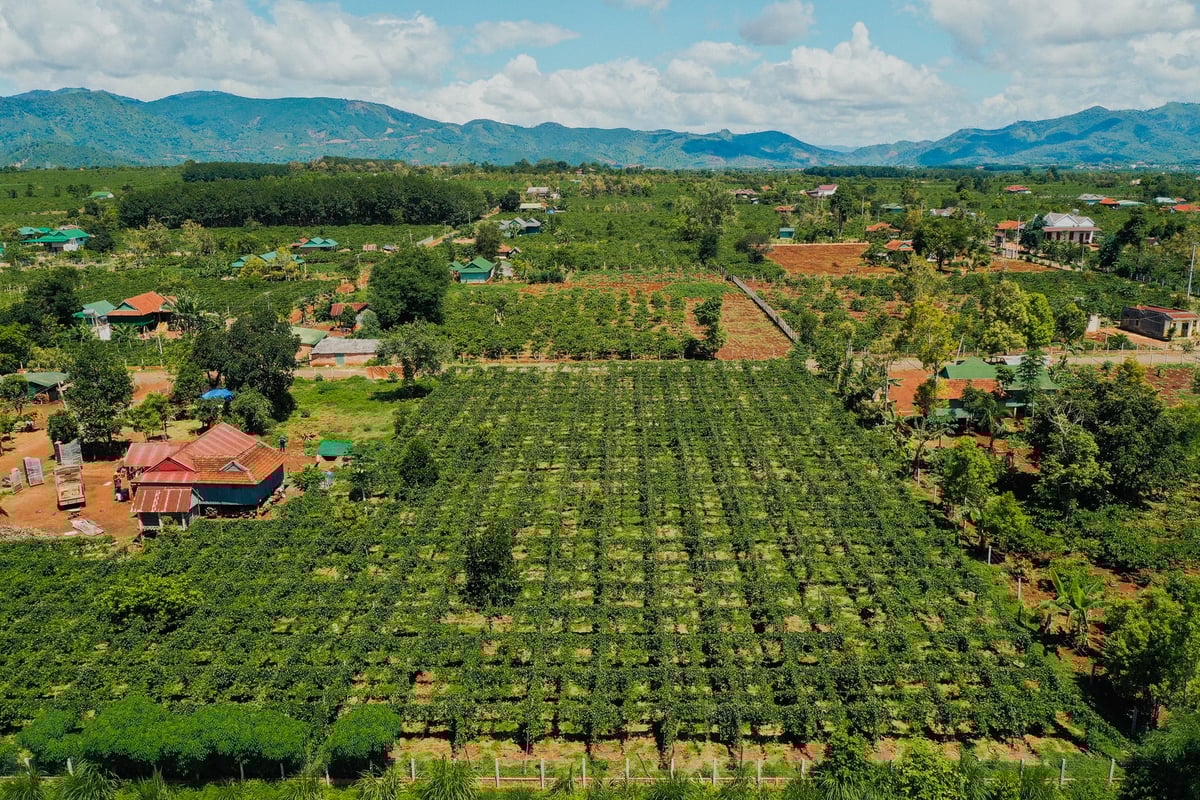
Gia Lai province is considered the "passion fruit capital" of the country. Photo: Tuan Anh.
In Gia Lai province, passion fruit was introduced around 2012, initially on a small-scale trial basis. However, by 2015, with continuously rising passion fruit prices and expanding export markets, the planted area increased rapidly.
However, the rapid and uncontrolled development soon led to negative consequences. In 2018, when supply exceeded demand, the price of passion fruit plummeted, forcing many households to cut down their orchards. By 2023, the passion fruit "craze" resurfaced when a series of processing plants came into operation, leading to a massive expansion of cultivation areas. Within just a few months, the purchase price plummeted from 17,000 VND/kg to 3,000-5,000 VND/kg, leaving many farmers in dire straits.
After nearly two years of volatility, the passion fruit industry in Gia Lai is gradually stabilizing. Farmers are becoming more cautious, no longer expanding cultivation areas indiscriminately, but instead intercropping in coffee and pepper gardens to reduce risks and move towards safer and more sustainable production.
Concerns about disease outbreaks and seed quality.
Despite signs of market recovery, passion fruit growers still face many challenges, especially diseases and seed quality issues. Observations in many passion fruit orchards show healthy, green plants but failing to flower, set fruit, or producing very little fruit.
Mr. Nguyen Van Hoang (village 6, Nghia Hung commune) said that his family's passion fruit garden is still being cultivated normally, the plants are growing vigorously but are hardly flowering. Even when flowers do appear, they are all yellow, most likely due to unfavorable weather conditions this year.
According to Mr. Hoang, the fruit setting rate is currently only about 10%, which is very low compared to expectations. Nevertheless, the family continues to invest in and care for the orchard, waiting for warmer, more favorable weather so that the passion fruit plants can bear more fruit.
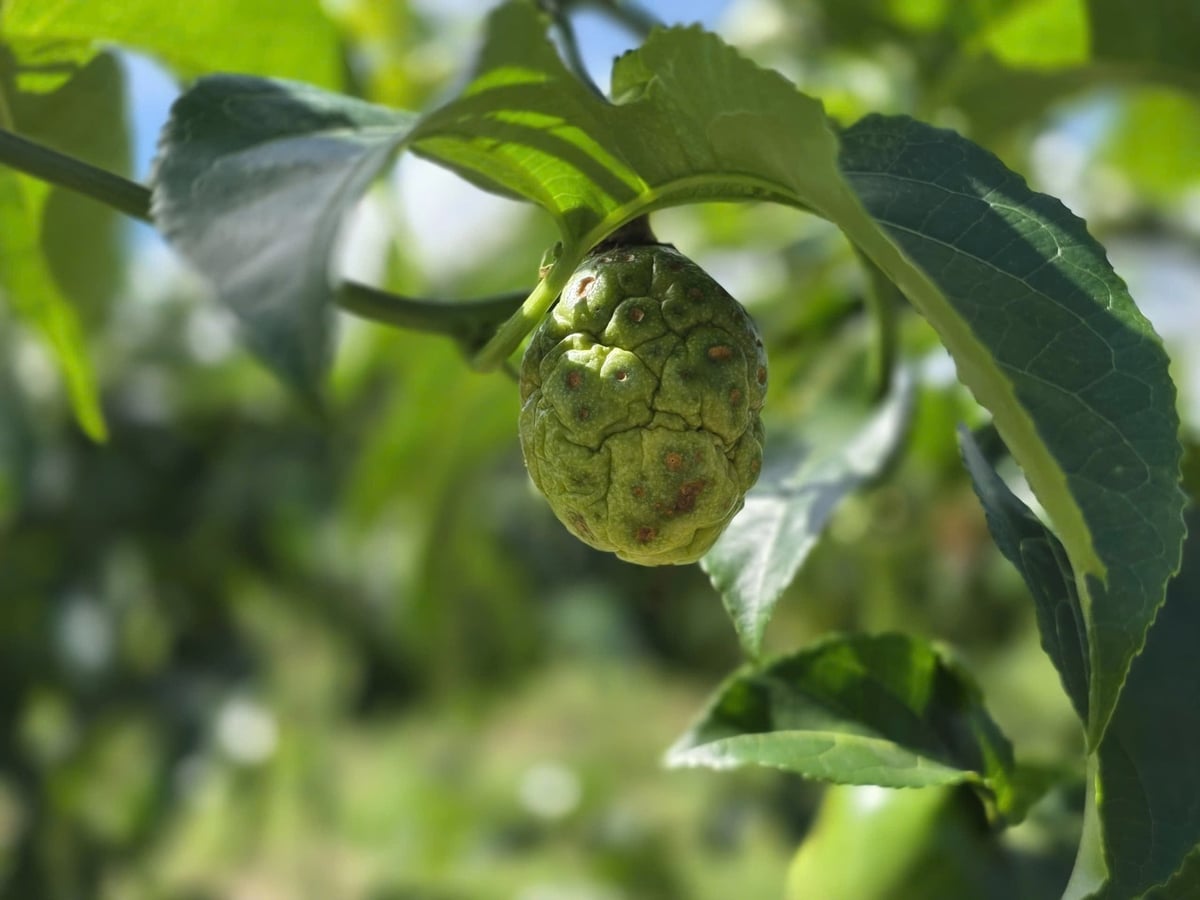
Brown spot disease is rampant on passion fruit plants. Photo: Tuan Anh.
Besides the problem of passion fruit plants failing to bear fruit, brown spot disease is rampant, causing severe damage to many orchards. Mr. Tra Huy Hieu (Hamlet 7, Nghia Hung Commune) said that recent heavy rains have caused a strong outbreak of the disease on passion fruit plants, resulting in serious damage. Some orchards have had to remove up to 50% of their crops. His family's orchard has been pruned and trimmed, so the disease has decreased somewhat, but it is still not completely under control.
"Passion fruit growers urgently need to share experiences and receive specific technical guidance. Medications only help alleviate the disease to some extent, but there is no clear cure. Farmers almost have no experience in dealing with it completely," Mr. Hieu said.
According to Mr. Le Van Thanh, Director of the Ia Mo Nong Agricultural Production - Trade - Service - Tourism Cooperative (Ia Ly commune), besides weather factors, the poor quality of seeds is a major reason for the strong outbreak of diseases.
"Brown spot disease appears right from the early stages due to disease-free seeds. If seed management is not tightened, the risk of the disease continuing to spread is very high," Mr. Thanh warned.
Chain linkage - the inevitable direction
While many passion fruit growers are facing difficulties, effective production models are still emerging thanks to participation in value chain linkages.
According to Mr. Nguyen Manh Hung, General Director of Nafoods Group Joint Stock Company, the company recognizes that sustainable development must begin with disease-free, traceable seedlings.
“Nafoods invests in a high-tech seed production system and strictly controls quality before supplying seeds to growing regions. At the same time, Nafoods accompanies farmers from the technical stage to purchasing, processing, and exporting,” Mr. Hung shared.
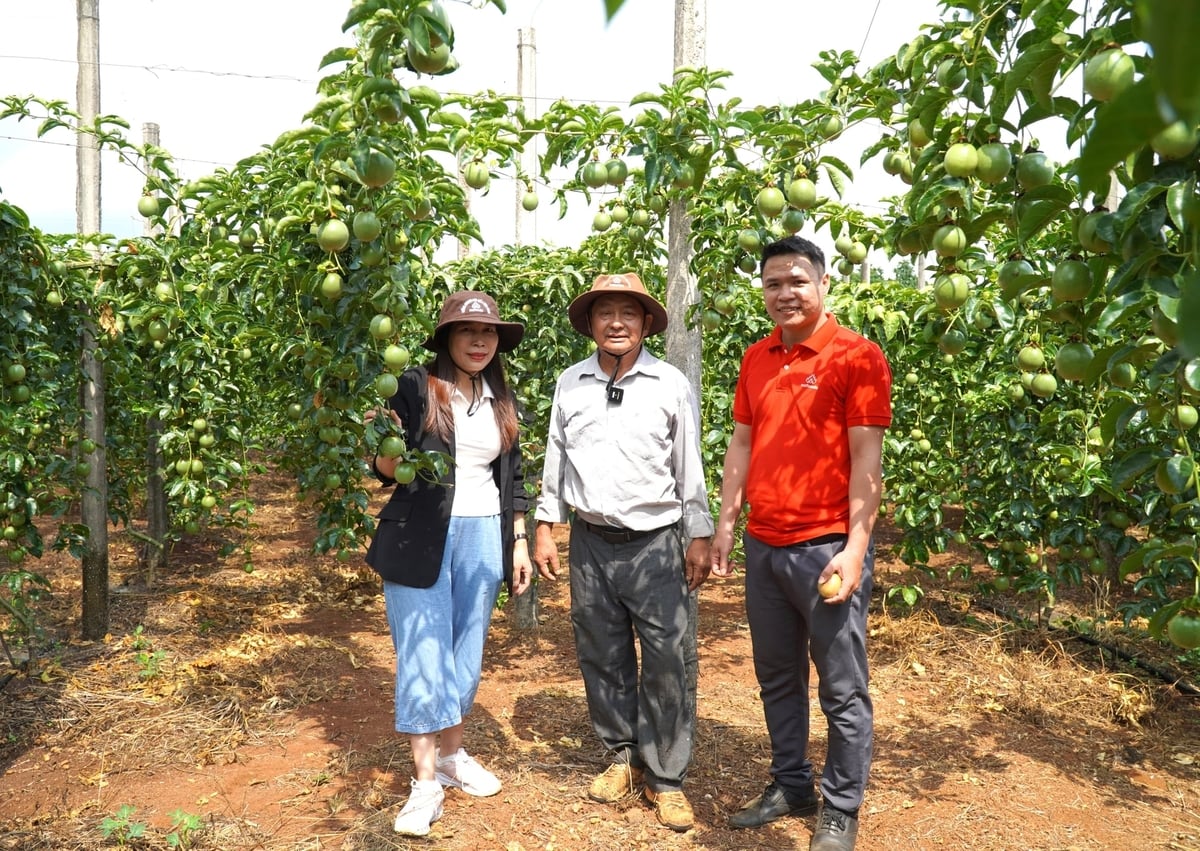
It's time to rebuild the passion fruit industry in a more sustainable direction. Photo: Tuan Anh.
Currently, Nafoods has partnered with approximately 50 cooperatives and over 5,000 farming households, covering an area of over 5,000 hectares, and aims to expand to over 10,000 hectares by 2030. The Nafoods Central Highlands factory acts as a "support system" for consumption, helping farmers feel secure in investing and committing to passion fruit cultivation in the long term.
Furthermore, deep processing is considered the "key" to increasing added value. In Gia Lai, many modern processing plants have come into operation, diversifying products from fruit juices and concentrated juices to products for medicinal purposes, cosmetics, and food.
Mr. Tran Xuan Khai, Head of the Department of Crop Production and Plant Protection of Gia Lai province, said that the agricultural sector's stance is to always accompany and support businesses, cooperatives, and people, but resolutely limit development based on trends.
"Instead of chasing after expanding the area, we are focusing on reorganizing production according to plan, linking the supply chain, standardizing processes, and improving quality to meet market demands," Mr. Khai said.
Amid climate change and declining passion fruit supply in South America, Vietnamese passion fruit still has many opportunities to expand its market share. However, only by addressing bottlenecks in varieties, diseases, and production mindset can the passion fruit industry truly regain its sustainable momentum and become a long-term economic pillar for farmers in the Central Highlands.
Source: https://nongnghiepmoitruong.vn/dat-lai-nen-mong-cho-nganh-hang-chanh-leo-d789283.html
![[Image] National Assembly discusses the implementation of the socio-economic development plan.](https://vphoto.vietnam.vn/thumb/1200x675/vietnam/resource/IMAGE/2026/04/20/1776696707422_ndo_br_img-20260420-185419-jpg.webp)

![[Photo] General Secretary and President To Lam meets with National Assembly delegates from ethnic minorities.](https://vphoto.vietnam.vn/thumb/1200x675/vietnam/resource/IMAGE/2026/04/20/1776696701056_a1-bnd-8331-3342-jpg.webp)













![OCOP during Tet season: [Article 4] Elevating local products](https://vphoto.vietnam.vn/thumb/402x226/vietnam/resource/IMAGE/2026/01/29/1769652810578_2935-z6982071462129_649e82db06fb2f2ea701388b1f5f5b0b-173322_176-185229-202804_457.jpeg)
















































Comment (0)