

The Thượng Trụ area along the Nghèn River has changed considerably today, but the imprints of events associated with the founding of the Can Lộc District Party Committee and the Hà Tĩnh Provincial Party Committee remain.
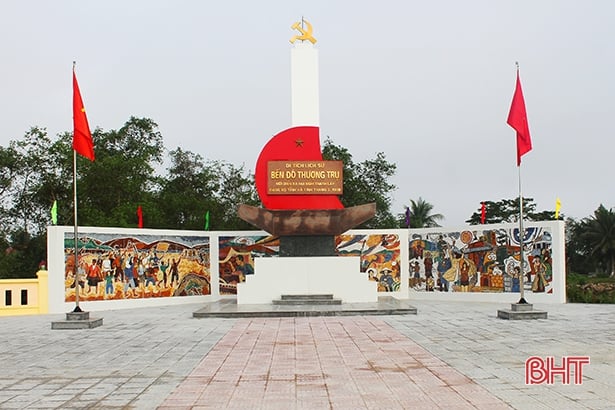
The historical site of Thuong Tru Ferry Terminal in Thien Loc commune (Can Loc district) has been upgraded and renovated in time for the 90th anniversary of the founding of the Communist Party of Vietnam (Photo: Dat Vo).
Like many rural areas across our beloved Vietnam, Ha Tinh province also has numerous ferry crossings, rivers, and mountain ranges closely intertwined with the lives of its inhabitants. Along the Nghen River lies Thuong Tru village and the Thuong Tru ferry crossing, a place that evokes pride whenever it is mentioned, as it marks many historical events, particularly those related to the founding of the Can Loc District Party Committee and the Ha Tinh Provincial Party Committee.
Every place name, village name, river, mountain range, and ferry landing has its origins and profound meaning. The name Thuong Tru is no exception. Thuong Tru is named after the title of the Grand Chancellor Thuong Tru Quoc (whose name is unknown).
Legend has it that in 1470 and 1471, he accompanied King Le Thanh Tong on a campaign against Champa. Upon reaching the Nghèn River, encountering a shallow, winding section, he mobilized local manpower and resources to dredge and straighten the river's course, making it easier and more convenient for boats and rafts to navigate. This achievement also opened up 75 acres of rice fields on both banks of the river. The king granted him these fields as a reward, known as "land of meritorious officials." Later, the Grand Chancellor Thuong Tru Quoc transferred these fields to his grandson. The section of the river that was straightened and the fields that were reclaimed and developed became the first place named Thuong Tru.
Over time, the local people diligently built up the area, gradually establishing hamlets and villages, which became part of Huu Ngoai commune (now Thien Loc commune, Can Loc district). Huu Ngoai commune is quite large, stretching from the southern foothills of Hong Linh mountain down to the left bank of the Ha Vang river. Locals often call this area the "Golden River - Red Mountains" region, with folk songs and songs expressing deep affection for the land, water, and homeland.
Why is the green forest called the red forest?
Why is the water so clear and blue all year round in the Golden Summer?
In the early days of settling in this riverside region, besides weaving hammocks and mats, salting shrimp and pickling jellyfish, many households also owned boats to transport goods back and forth, enjoying the pleasure of taking passengers back and forth. The ancient Thượng Trụ area was within the Nam Hồng Lĩnh war zone of Lord Hai during the uprising against the Tang dynasty's rule. Even now, the old folk song still resonates:
From Twilight to Shoulder to Shoulder
The flag is still there, remembering who planted it...
The folk song mentions the Flag Tower peak on Hong Linh mountain, recalling Lord Hai, son of King Mai Hac De, who organized a base to resist the Tang Dynasty invasion. Thuong Tru was also a reliable base for the Duy Tan, Quang Phuc, Tan Viet movements and the movement against high taxes. Notably, Thuong Tru - Huu Ngoai was one of the five Indochinese Communist League branches in Can Loc established in November 1929. This period saw three prominent events, closely linked to the history of the Can Loc District Party Committee and the Ha Tinh Provincial Party Committee.
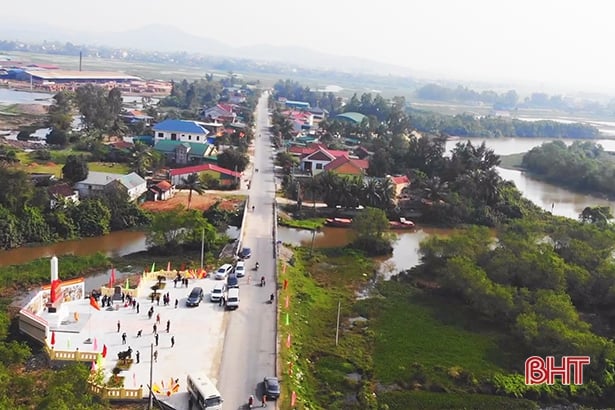
Thuong Tru ferry terminal is a significant landmark for many generations of people in Ha Tinh.
The first event occurred on January 1, 1930, when the Thuong Tru - Huu Ngoai Party Branch arranged a ferry (disguised) under the supervision of Comrade Le Lam to serve a meeting to discuss the decision to reorganize the Tan Viet Party and establish the Indochinese Communist Federation. The meeting on this "historic ferry" included Le Tien, Ngo Duc De, Vo Que, and several other comrades. The content of the meeting was unanimously approved by the members and documented in a written resolution.
The success of the meeting marked a significant milestone, a historically important event in the reform of the Tan Viet Party and the establishment of the Indochinese Communist Federation. The boat drifted downstream. It seemed as peaceful as the poetic La River, but upon reaching the Do Trai bridge, all members were searched and arrested. Only the documents, carefully hidden, avoided falling into the hands of the secret police and garrison. Upon arriving in Nghen, seizing the opportunity to request a rest and drink water, Comrade Ngo Duc De quickly handed over the documents to the secret network established earlier. Comrade Le Lam was subjected to intense interrogation, but due to lack of evidence, he was released.
Comrade Le Lam, formerly a member of the Tan Viet Party, was transferred to become a member of the Communist Party of the Federation. The Party branch entrusted him with the responsibility of setting up the printing department and also managing the ferry and communication hub of Can Loc district, ready to serve whenever the Party assigned or deployed him.
During the demonstration in Nghèn on May 1, 1931, Comrade Lê Lâm was captured by the enemy and later died in Vinh Prison. A memorable event was the establishment of the Indochinese Communist Federation and the Indochinese Communist Party – two communist organizations that existed before the founding of the Hà Tĩnh Provincial Party Committee and the Provisional Hà Tĩnh Provincial Party Committee.
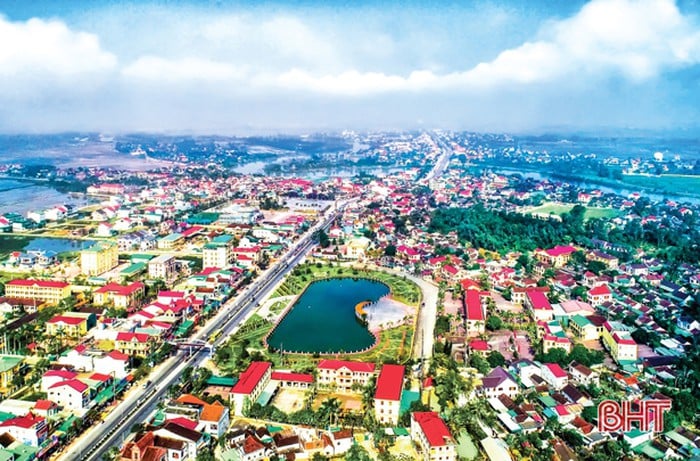
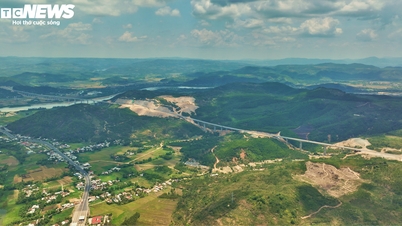
The bustling town of Can Loc (Photo: Nguyen Thanh Hai).
The second event occurred in early 1930, when Comrade Tran Huu Thieu (alias Nguyen Trung Thien) was sent by the Central Vietnam Regional Party Committee to establish a Party base in Ha Tinh. Faced with the urgent and important demands of this new task, Comrade Nguyen Trung Thien went to the Huu Ngoai - Thuong Tru Party Branch, established contact with Comrade Vo Que, actively propagated and disseminated revolutionary guidelines, and simultaneously organized the establishment of three more Party branches. The newly admitted members were mostly exemplary and progressive comrades of the Tan Viet Party. By the time the Provisional Provincial Party Committee of Ha Tinh was established, there were already seven Indochinese Communist Federation Party branches in Can Loc district.
The third event was that, under the authorization of the Central Committee of Vietnam, at the end of March 1930, Comrade Nguyen Trung Thien convened delegates from the branches of the Indochinese Communist Party and the Indochinese Communist Federation (which had been established) to hold a conference at Thuong Tru Ferry.
The conference unanimously voted to elect a provisional Provincial Party Committee with Comrade Nguyen Trung Thien as Secretary, while also carrying out other important tasks. When the Party went underground, many meetings, conferences, and training sessions were held in Thuong Tru village. This marked a new turning point. Under the leadership of the Party, the struggle of the people of Ha Tinh reached its peak with the Nghe Tinh Soviet Movement - considered a rehearsal for the successful August Revolution of 1945.
The Thượng Trụ area along the Nghèn River has changed considerably today, but the imprint of past events remains. The historical site of the Thượng Trụ ferry landing has been invested in and renovated to be worthy of its status as a significant historical landmark, educating the people of this heroic Soviet homeland about the patriotic and revolutionary traditions.
Xuan Bau
Source



























































































Comment (0)