

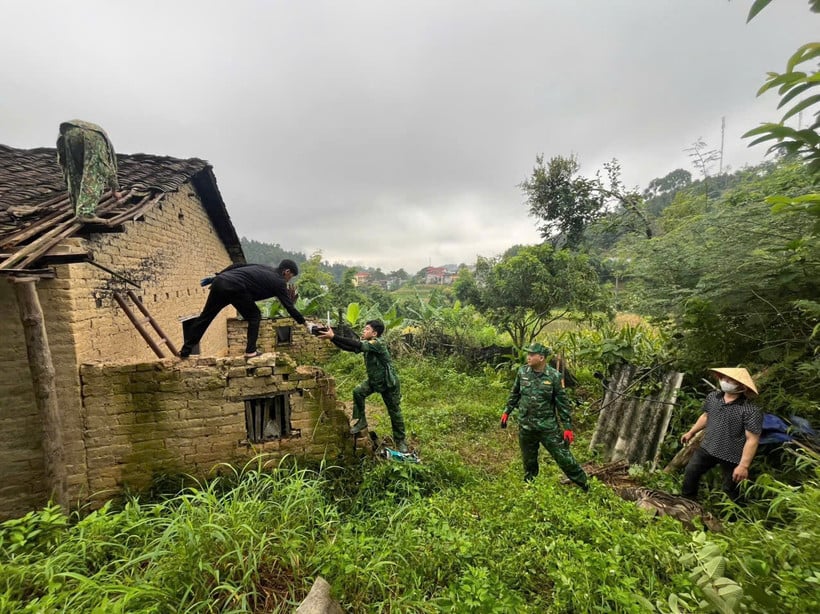
Border guards are helping local people build and repair houses.
Positive change
The guidance provided by the Steering Committee for National Target Programs from the provincial to the commune level is timely and in accordance with regulations. Based on assigned tasks, members proactively advise Party committees and authorities at all levels on leadership and guidance in allocating funds, organizing implementation, and monitoring the implementation of projects and sub-projects.
With the determined, decisive, creative, and flexible leadership and direction of the Lang Son Provincial Party Committee, Provincial People's Council, and Provincial People's Committee, and the involvement of the entire political system; Party committees and governments at all levels, many programs and plans for the 2021-2025 period and annually have been issued to innovate poverty reduction efforts, awaken the aspiration for a prosperous life among the people, and leverage the comprehensive strength of the entire political system in poverty reduction in the new context. Specialized departments and agencies have actively and proactively advised the Provincial People's Committee to issue plans for implementing resolutions and poverty reduction programs, mechanisms, and policies as prescribed. Central government policies were fully and promptly implemented, along with the issuance of resolutions, programs, plans, and specific provincial policies, contributing to the timely resolution of fundamental issues for poor households, near-poor households, and poor villages and communes regarding housing, land for residence and production, healthcare, education, access to loans, and infrastructure.
The mobilization of resources has been focused. Despite challenging economic conditions, Lang Son province has prioritized allocating a portion of its budget to implement matching funds such as credit, infrastructure development, and especially specific support policies. The use of mobilized capital has ensured that it is used for the right purposes and targets the right beneficiaries, contributing to the effective implementation of social welfare policies and improving the lives of a segment of the population, including poor households, people in particularly difficult areas, and those in border and security zones.
The dissemination, understanding, and implementation of the National Target Program for Sustainable Poverty Reduction giai đoạn 2021-2025 have received attention, with a focus on replicating and introducing exemplary individuals, groups, and households with the will to overcome poverty. The awareness of the political system and the people in the area regarding poverty reduction has been enhanced, creating consensus, support, encouragement, and motivation for many households to strive to escape poverty. Regular reporting, monitoring, and evaluation have been implemented seriously and effectively, thereby providing a basis for timely adjustments and additions to targets and tasks, and resolving difficulties and obstacles arising during implementation.
Policies supporting the poor have been well implemented, such as: providing health insurance cards for the poor and ethnic minorities, subsidizing electricity costs, etc. Famine relief efforts during lean seasons have been effective, contributing to helping the poor stabilize their lives, feel secure in boosting production to increase income, and reduce poverty.
The total planned capital for the National Target Program on Poverty Reduction for the period 2021-2025 is 1,149,183 million VND. The total disbursed capital for the period 2021-2024 is 680,231 million VND, and the estimated disbursement for 2025 is 273,421 million VND, reaching 100% of the planned capital.
Some notable highlights during the 2021-2024 period include investment in socio-economic infrastructure development in the (formerly) poor districts of Van Quan and Binh Gia, with 120 projects in areas such as transportation, irrigation, electricity, education, healthcare facilities, cultural centers, and sports fields. Nearly 300 livelihood models have been implemented to enable poor and near-poor households to participate, improve their income, and enhance their living standards. Typical examples include livestock farming (buffaloes, cows, pigs, goats, horses); fish farming (fish, chickens, ducks); and various agricultural and forestry models. It is projected that average income from livestock farming will increase by at least 30%, with annual profits ranging from 30 to 50 million VND per household.
Through the Vocational Education and Sustainable Employment Development Project, the provision of labor market information, diversification of job placement activities, connection between labor supply and demand, and support for creating sustainable jobs for workers from poor and near-poor households have yielded positive results.
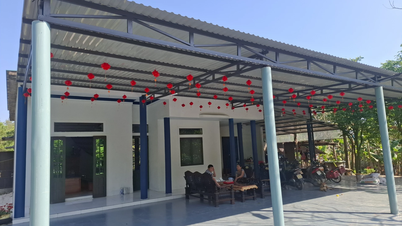
During the period 2021-2024, 922 houses were newly built or renovated for poor and near-poor households. Ms. Hoang Thi Ti in Loc Binh commune was delighted to receive support for building a new, spacious house, no longer worrying about her dilapidated, leaky home and the risk of collapse during storms. The effective implementation of poverty reduction policies has contributed to building people's trust in the Party and the government, contributing to social stability and ensuring national defense and security. Inspection and supervision have been strengthened, and poverty reduction policies have been effective; any errors found in the poverty household review process have been corrected and appropriate guidance has been provided.
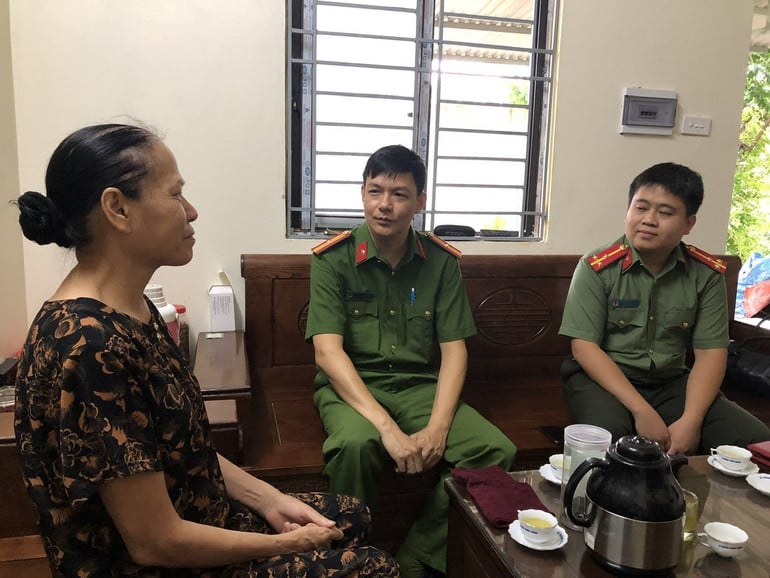
Ms. Hoang Thi Ti from Loc Binh commune shared her joy at being in her new house.
There are still difficulties and limitations.
The annual poverty reduction rate has basically met and exceeded targets and plans, but it is not sustainable and uneven across communes and towns. Indicators of basic social service deficiencies remain high, especially those related to housing, sanitary toilets, and employment directly linked to people's income. The rate of reduction in near-poor households remains low, posing a high risk of re-poverty.
The disbursement rate of projects and sub-projects remains low due to the lack of implementation of some activities, fewer beneficiaries than allocated funds, and overlapping beneficiaries. The use of preferential capital to support production development, credit, job creation, and the replication of poverty reduction models is scattered, lacking focus, and has not fully achieved its potential. Coordination, mobilization, and integration of programs, projects, and resources are insufficient, failing to effectively utilize local resources for the implementation of programs and projects.
Propaganda efforts lack focus, focus, and flexibility. A segment of poor households are slow to change their mindset and practices, still clinging to the idea of waiting and relying on state support, and not actively and proactively striving to escape poverty and achieve legitimate wealth. The ability of ethnic minorities to receive support policies and their awareness of adopting and applying scientific and technological advancements in production remains limited; they have not yet broken free from the practice of small-scale, purely agricultural production in their development.
Furthermore, the direction and implementation of poverty reduction tasks and solutions at the grassroots level in some areas have not been truly decisive, lacking thoroughness, proactiveness, and creativity. Some regulations and guidelines issued by the Government and ministries are not detailed enough, are delayed, and do not suit the actual conditions of the localities, requiring amendment, supplementation, and replacement, causing difficulties in implementation. On the other hand, due to the impact of weather, the complex situation of animal diseases, and the outbreak of Covid-19, the number of participants remains limited, affecting the results of the poverty reduction program in the province.
Lessons in success
The positive results of poverty reduction efforts in Lang Son province demonstrate that success stems from the leadership role of the Party committee and government; the mobilization of the entire political system and society as a whole. This success is achieved through decisive implementation from the general planning stage as well as for each project, with clear assignment of responsibilities to agencies and individuals in charge; and timely allocation of detailed funding for each project and content at the beginning of the year. To achieve sustainable poverty reduction, it is necessary to awaken the self-reliance of the poor themselves, combined with support policies from the State and the community.
State resources play a decisive role and need to be allocated promptly, prioritizing more disadvantaged areas; at the same time, there should be mechanisms to mobilize support resources from the community, businesses, international organizations, and the poor households themselves in achieving poverty reduction goals.
In reality, areas where Party committees and authorities pay attention to directing and coordinating closely with the Fatherland Front Committee and local political and social organizations, implementing decentralization and expanding people's participation, achieve high effectiveness in poverty reduction, and vice versa. Regular inspection and evaluation of program implementation is necessary, from identifying beneficiaries to implementing policies, thereby limiting negative practices and abuses, and identifying limitations and inconsistencies to propose timely amendments and additions.
Furthermore, it is essential to regularly organize diverse and appropriate forms of communication on poverty reduction to ensure that the Party and State's poverty reduction policies reach the poor, raising awareness and creating high social consensus. Effective poverty reduction models and best practices should be identified and disseminated for wider application; negative phenomena and resistance to poverty should be criticized. Emphasis should be placed on training, developing, and improving the skills and knowledge of cadres at all levels, especially those at the commune, village, and hamlet levels. The pioneering and exemplary role of cadres and Party members should be promoted; the principles of democracy, openness, and transparency in the management, supervision, and evaluation of the Program's implementation results at the local level should be strictly adhered to.
In 2021, Lang Son province had 23,511 poor households, accounting for 12.2%, and 23,247 near-poor households, accounting for 12.06%; in 2024, the multidimensional poverty rate is projected to be 3.36% (a decrease of 2.66% compared to 2023).
TAM ANH
Source: https://nhandan.vn/dau-an-giam-ngheo-o-lang-son-post927534.html


![[Photo] Trial run of the election process at polling stations in Dong Da ward (Hanoi)](https://vphoto.vietnam.vn/thumb/1200x675/vietnam/resource/IMAGE/2026/03/12/1773306146728_ndo_br_van-hanh-thu-to-bau-cu-4070-755-jpg.webp)
![[Photo] Hanoi is ready for the "National Festival"](https://vphoto.vietnam.vn/thumb/1200x675/vietnam/resource/IMAGE/2026/03/12/1773305846167_ndo_br_z7612336508628-14627dc7d18cc27532ffea5d4089713b-4105-jpg.webp)













![[Video] Can Tho completes preparations for the March 15th election.](https://vphoto.vietnam.vn/thumb/402x226/vietnam/resource/IMAGE/2026/03/12/1773333158253_1-8572-png.webp)






















































Comment (0)