

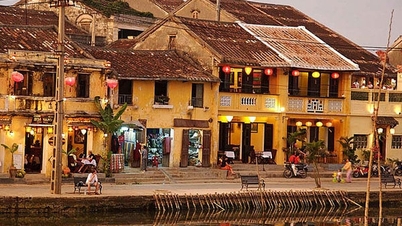
From the late 16th to early 17th centuries, Hoi An became the largest trading port in the southern region of Vietnam, a place where Vietnamese culture converged and interacted with other regions of the world . Merchants from all over the country gathered here to trade, and among them, Japanese merchants were favored by the Nguyen lords and given many important positions in the Hoi An trading port.
A long-standing, close relationship.
The Japanese merchant community established their own district, built commercial establishments, and lived according to their own customs and traditions. They gradually became important figures participating in cultural, social, and especially economic and commercial activities in the urban-port of Hoi An, and were appointed as the Chief Administrator (Mayor) of Hoi An.
During this period, the Japanese held a dominant role in the port city of Hoi An and had extremely close ties with the Nguyen Lords, to the point that European merchants viewed Hoi An as a Japanese seaport. In the 30 years under the Shogunate (1604-1634), Japanese merchant ships (Shu Yin ships) were granted licenses to trade in 19 ports of Southeast Asian countries. Of these, 86 ships arrived in Hoi An out of a total of 130 ships that came to Vietnam.
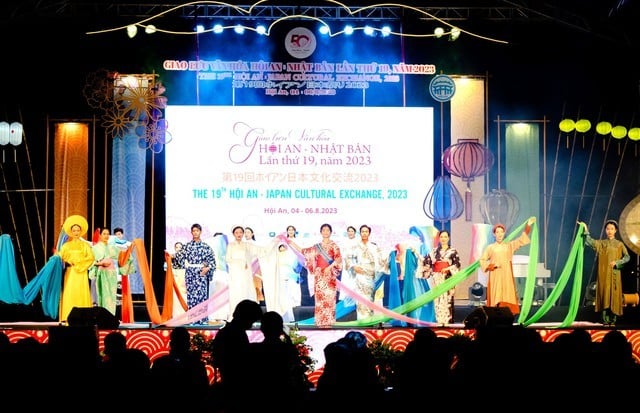 |
| The 19th Hoi An - Japan Cultural Exchange Event 2023 took place from August 4-6, 2023 in Hoi An, Quang Nam. |
Historians highly appreciate the role of the Japanese in promoting the prosperity of the Hoi An trading port throughout the early 17th century, paving the way for the rise of Hoi An city in subsequent centuries. Although they only appeared for a few decades, the Japanese left behind many relics and traces in Hoi An that vividly demonstrate the deep cultural exchange between Vietnam and Japan.
Archaeologists have found numerous extremely valuable artifacts related to the Japanese. Besides architectural styles of houses, ancient tombs, copper coins, bronze mirrors, and Hizen ceramic household items, there are also many folk tales, legends, and dishes believed to have Japanese origins. Particularly noteworthy is the Japanese Bridge – also known as the Japanese Bridge – which is said to have been built by the Japanese and is now a symbol of the Hoi An World Heritage Site. The Japanese Bridge is associated with a "world legend" about a creature with its head in India, its tail in Japan, and its body in Hoi An…
Always preserving, continuing, and developing that good relationship, Hoi An has continuously promoted friendly exchanges, cooperation, and friendship with partners and localities in Japan in many fields such as culture, economy, and people-to-people exchanges.
Continuously promote exchanges and cooperation.
Japanese organizations and experts have come to Hoi An to collaborate on scientific research, monument restoration, organize workshops, training courses, provide technical advice, transfer technology, and conduct many other activities aimed at preserving and sustainably promoting Hoi An's cultural heritage. Japan also regularly provides financial support for tourism development, environmental protection, and heritage preservation projects in Hoi An, such as restoring ancient houses and the Japanese Bridge, implementing waste sorting at source, and ensuring livelihoods for people in Tan Hiep island commune (Cu Lao Cham)...
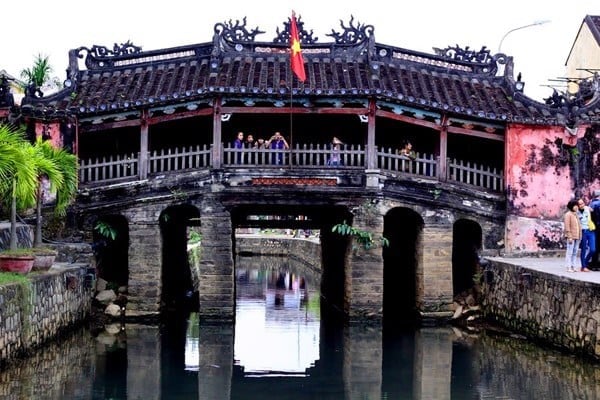 |
| The Japanese Bridge, also known as the Bridge Pagoda, is a symbol of diplomatic relations between Japan and Hoi An. |
In recent times, local exchanges and cooperation have been one of the areas that Quang Nam province has promoted with Japanese partners. Hoi An has been selected as a friendly destination for Japanese localities through the international friendship exchange program of the Japan External Trade Organization (JETRO).
In November 2017, within the framework of the APEC High-Level Week in Vietnam, the Vietnam-Japan Cultural Space was inaugurated in Hoi An Ancient Town, contributing to promoting cultural exchange and the good traditional friendship between Hoi An city, Quang Nam province, and Japanese organizations and localities in particular, and between the two countries and peoples of Vietnam and Japan in general. Since then, the Vietnam-Japan Cultural Space has been maintained and developed with many interesting and unique activities, attracting millions of tourists to visit and experience it each year.
In Hoi An, the relationship between Vietnam and Japan is further strengthened through the annual "Hoi An - Japan Cultural Exchange" event. First held in 2003, the event has since gained significant popularity and attracted widespread public attention. The programs presented have left many positive impressions on participants, contributing to the consolidation of friendly relations between the people of Hoi An, Quang Nam, Vietnam, and Japan.
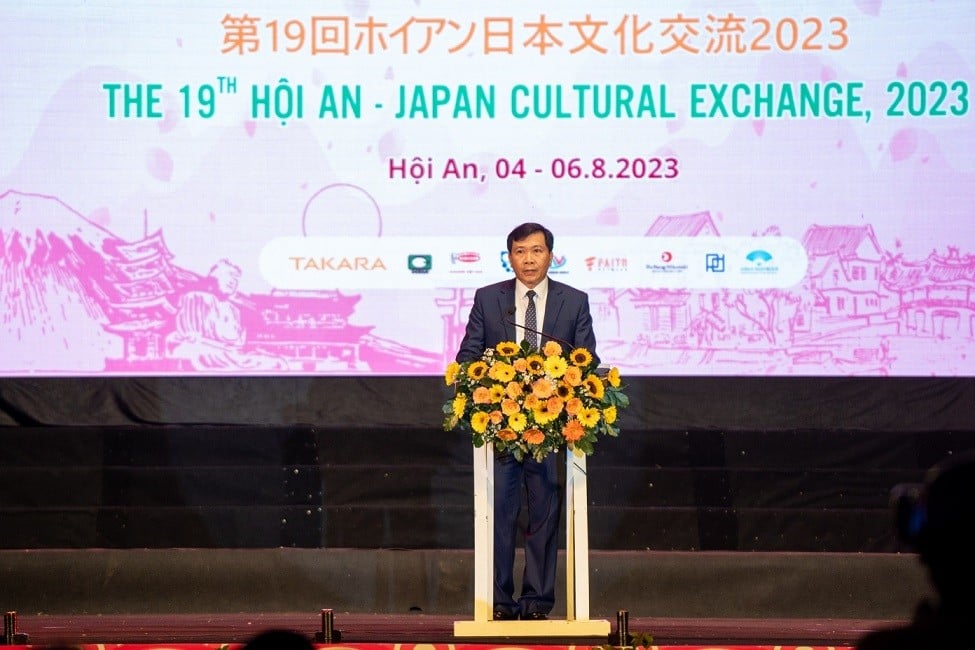 |
| Mr. Nguyen Van Son – Chairman of the People's Committee of Hoi An City, speaking at the "Hoi An - Japan Cultural Exchange" event in 2023. |
The 19th Hoi An - Japan Cultural Exchange Event in 2023, held from August 4-6, 2023, coinciding with the 50th anniversary of diplomatic relations between Vietnam and Japan, is even more significant, contributing to enhancing mutual understanding and strengthening the close and affectionate relationship between the two countries and peoples.
It can be said that, building on the solid foundation of a warm and friendly cooperative relationship in the past, combined with the highly effective cooperation over the past period, we are confident that the cultural exchange and friendship between Vietnam and Japan in Hoi An will certainly continue to flourish with new achievements.
Source
![[Photo] Standing Committee member of the Party Central Committee Tran Cam Tu working with the Central Inspection Committee](https://vphoto.vietnam.vn/thumb/1200x675/vietnam/resource/IMAGE/2026/05/28/1779969579668_ndo_br_bnd-2495-jpg.webp)





























































Comment (0)