

 |
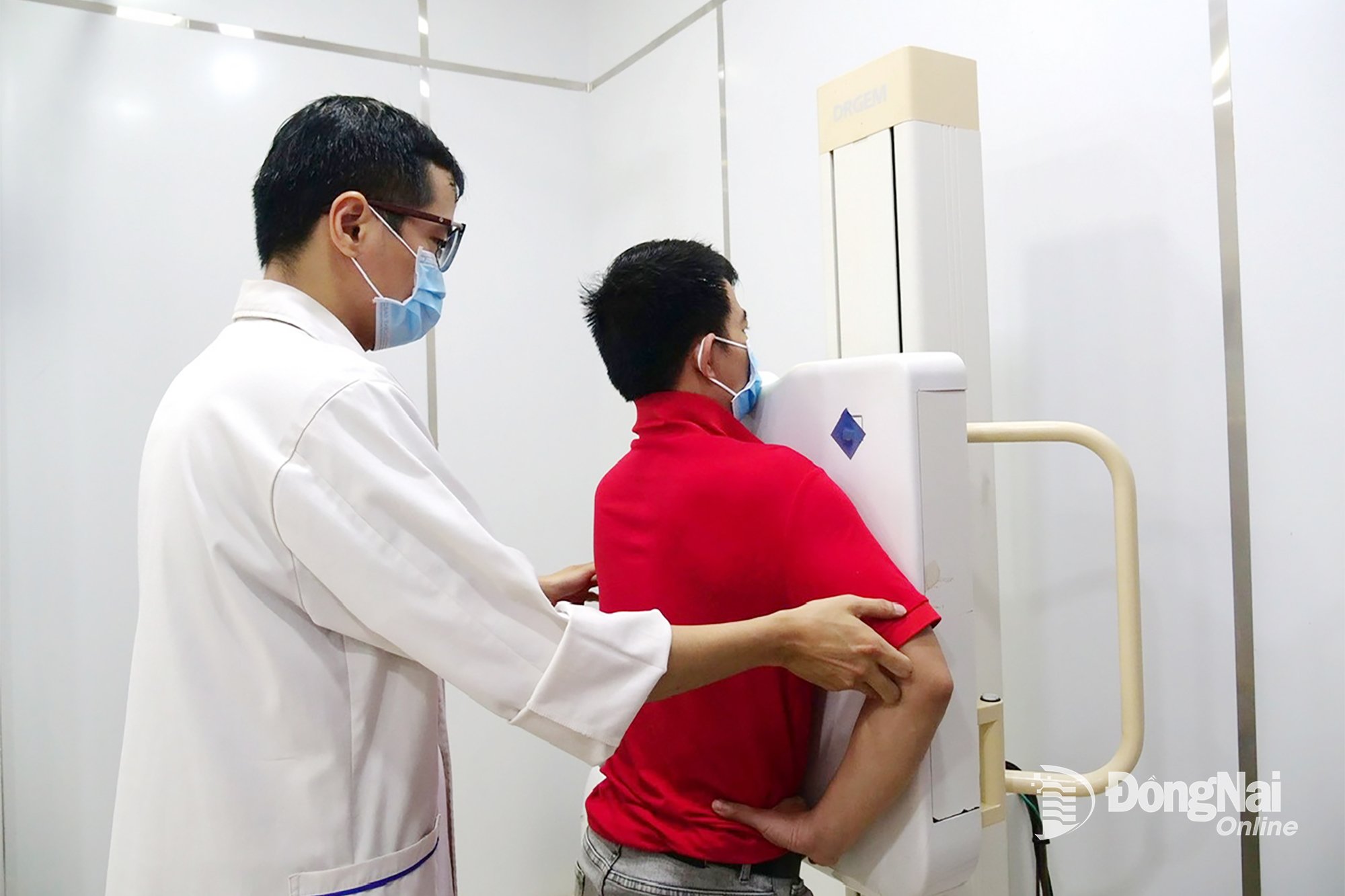
| Chest X-rays are taken to check the health of patients with risk factors at Thuan My ITO Hospital in Dong Nai . Photo: Hanh Dung |
One notable issue is that approximately 75% of patients are diagnosed at a late stage, resulting in a 5-year survival rate of only about 14.8%.
4 stages of lung cancer
Four years ago, Mr. NTG (68 years old, residing in Trang Dai ward, Dong Nai province) was diagnosed with lung cancer after a general health check-up. Mr. G. shared that he had been smoking since he was 16 years old. Before being diagnosed, Mr. G. suffered from a persistent cough, sometimes coughing up blood, which did not improve with medication. His son took him to the hospital for a general health check-up, and the doctor informed him that he had lung cancer and needed surgery and radiation therapy. Since then, Mr. G. has quit smoking, regularly attends health check-ups, and takes medication as prescribed by his doctor.
A few days ago, Mr. PHN (46 years old, residing in Tam Phuoc ward, Dong Nai province) felt pain and discomfort in his abdomen and right side, so he went to a private multi-specialty clinic for examination.
Dr. Pham Van Thuan, Specialist I and Director of Professional Services at Tam Phuoc Multi-Specialty Clinic (An Phuoc commune, Dong Nai province), thoroughly investigated the patient's condition. According to the patient, a few days before the examination, he began experiencing unusual symptoms such as abdominal pain, dull aching pain in the lower back, and a mild aching sensation in the right flank. The pain was not related to movement or breathing, but tended to gradually worsen.
Dr. Thuan ordered a CT scan of the patient's chest and abdomen. The results showed a tumor in the lower lobe of the right lung, measuring 2.5cm x 3.5cm, suspected to be a lung tumor. The doctor advised Mr. N. to go to a specialized hospital for further examination and necessary tests to accurately diagnose the condition and receive early treatment.
At Dong Nai General Hospital, an average of 20-30 lung tumor patients are admitted each month. Notably, the majority of these patients are admitted late, past the indications for radical surgery.
According to Dr. Vo Tuan Anh, Head of the Thoracic and Cardiovascular Surgery Department at Dong Nai General Hospital, depending on the degree of invasion, tumor size, lymph node metastasis, and distant metastasis, lung cancer is divided into four main stages, from 1 to 4. Patients diagnosed from stages 1 to 3A can undergo radical surgery, extending their 5-year survival rate to 54% (stage 1), 35% (stage 2), and 15% (stage 3), respectively. Cancer from stages 3B to 4 is no longer curative, and the 5-year survival prognosis for patients gradually decreases.
People with the following factors should get screened for lung cancer: age 50-80, smoking the equivalent of at least one pack per day for 20 years, still smoking, or having quit smoking within the last 15 years.
Symptoms and risk factors
Explaining why most lung cancer patients are diagnosed at a late stage, Dr. Pham Van Thuan said: Lung cancer does not have dramatic symptoms. Therefore, when experiencing the following symptoms, people should quickly go to a medical facility for early examination. These include: dry cough, coughing up blood, persistent cough that does not respond to cough suppressants; shortness of breath, feeling breathless, chest tightness, rapid breathing, or having to exert themselves during light exercise; pain or discomfort in the chest, back, or shoulders; persistent headaches. The pain is persistent, dull, and increases with coughing or deep breathing.
In addition, people should be cautious if they experience fatigue, loss of appetite, or rapid, unexplained weight loss.
There are many risk factors for lung cancer. Among them, people who smoke regularly or are frequently exposed to secondhand smoke have a higher risk of developing lung cancer. Additionally, having a family history of lung cancer or living or working in polluted environments with fine dust also increases the risk of lung cancer.
To avoid missing any illnesses, doctors recommend that people undergo regular health checkups to detect diseases early. If suspicious symptoms appear, such as coughing up blood or a persistent cough that doesn't respond to cough suppressants, it's crucial to seek immediate medical attention at reputable healthcare facilities. Early detection of diseases improves treatment effectiveness, enhances quality of life, and extends the lifespan of patients.
To prevent lung cancer, people should quit smoking cigarettes and pipe tobacco if they are currently smoking; pay attention to their living and working environments; and maintain a suitable and healthy diet, lifestyle, and exercise routine.
Hanh Dung
Source: https://baodongnai.com.vn/xa-hoi/202509/dau-hieu-nhan-biet-benh-ung-thu-phoi-92615e2/




































































































Comment (0)