What does pain feel like in liver cancer?
According to Medical News Today , pain from liver cancer can be sharp, stabbing, or a dull, persistent ache. The pain doesn't usually come and go and can vary depending on the size and location of the tumor, as well as how much it affects surrounding tissues.
In liver cancer, pain may occur near the liver—in the upper right quadrant of the abdomen—or it may occur in the right shoulder blade or back. Liver cancer pain is often chronic, persistent, and not intermittent. The intensity of the pain depends on the location of the tumor.
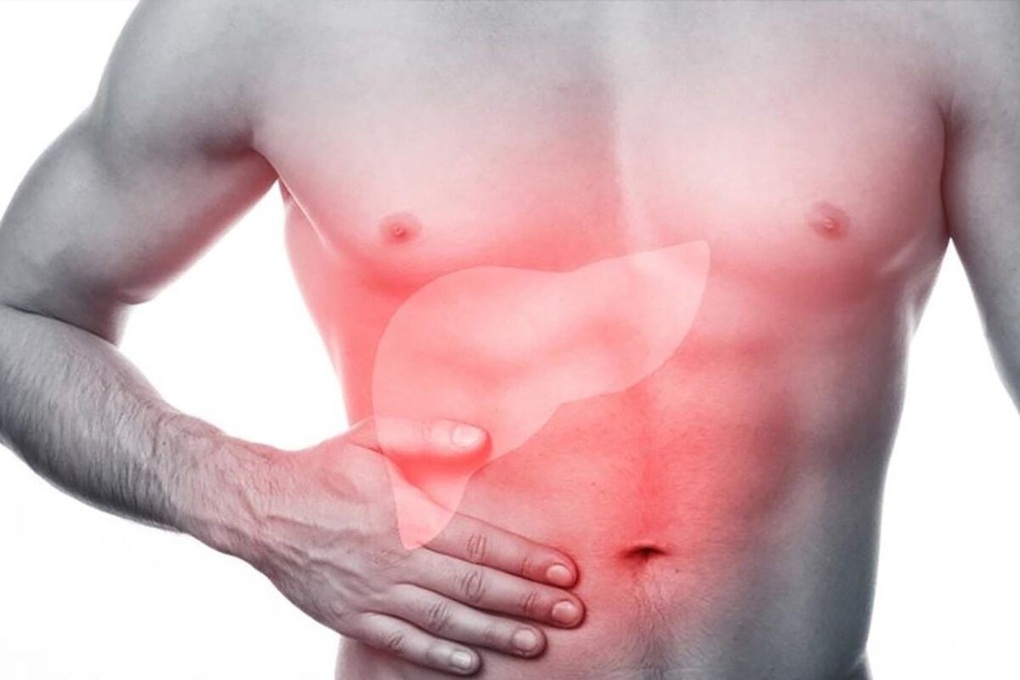
Liver cancer is cancer that begins in the cells of the liver (Illustrative image: Mayoclinic).
When tumors grow on organs or tissues, they can damage soft tissue, leading to throbbing pain. Tumors can also compress nerves, causing nerve pain that feels like a sharp, stabbing sensation.
In some cases, liver cancer metastasizes to the bones, causing a dull, constant pain that can become severe. Initially, the pain may worsen at night and lessen with movement. Later, the pain may become constant and more intense with activity.
If the tumor compresses blood vessels or other ducts, this can also cause pain.
Location of pain due to liver cancer
Pain from liver cancer typically occurs in the upper right abdomen (right hypochondrium). The pain may also radiate to the right shoulder or lower back. This is called radiating pain, which occurs when nerve compression in one part of the body causes pain in another.



Liver cancer can cause visceral pain or abdominal pain. Visceral pain occurs in the spaces between organs due to pressure from the tumor. Patients may experience dull aches, persistent pain, or cramping-like pain.
Abdominal pain occurs when the liver is distended due to swelling. This can cause sharp, localized pain.
Pain relief for patients with end-stage liver cancer.

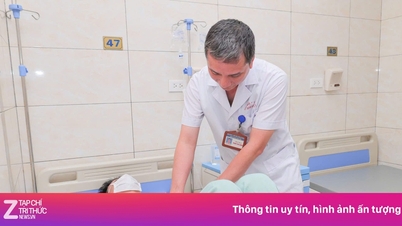
Dr. Trinh Tu Tam, Head of the Department of Diagnostic Imaging and Interventional Radiology, Hong Ngoc - Phuc Truong Minh General Hospital (Photo: Manh Quan).
Dr. Trinh Tu Tam, Head of the Department of Diagnostic Imaging and Interventional Radiology at Hong Ngoc - Phuc Truong Minh General Hospital, said that treatment for pain caused by late-stage cancer is extremely difficult. This is because, even with the correct treatment protocol, approximately 70-90% of patients still experience pain in the late stages.
The reason is that, in addition to the tumor developing locally, cancer can also invade and metastasize to nearby organs and nerve plexuses, causing extremely severe pain. Many patients, even with the use of strong painkillers, including addictive painkillers, still cannot control the pain.
For patients with end-stage liver cancer who are already taking pain medication, the first step is for the doctor to assess the type of medication being used, the dosage, and the duration of effectiveness after each dose. Only then can the next course of treatment be determined.

Cancer pain relief is a humane technique performed by interventional radiology (Photo: BVCC).



According to Dr. Tam, interventional radiology is also a suitable option for cancer patients in the upper abdominal region, such as the lower third of the esophagus, liver, gallbladder, pancreas, stomach, or adrenal glands.
These organs are innervated by the celiac plexus. If the patient does not respond to medical treatment, including strong painkillers, the doctor may perform a procedure involving the injection of absolute alcohol into the celiac plexus.
This is the center for transmitting pain signals from the upper abdominal organs to the central nervous system. By destroying this plexus, pain signals are no longer transmitted to the brain, significantly reducing pain and improving the patient's quality of life in their final days.
Source: https://dantri.com.vn/suc-khoe/nhan-dien-con-dau-trong-ung-thu-gan-20260124163515409.htm