

A gift from Vietnam
After graduating, I was invited to stay at the university to work for the international student office, where I managed and ran both short-term and long-term exchange projects from the US to other countries. This opportunity also brought me into contact with a professor of Education at the university.
She expressed her desire to visit Vietnam and design an exchange program here. After discussing with her, we arranged a schedule for her to visit Hanoi , Ninh Binh, and finally Hoi An. She and I agreed to meet after she returned to the US to talk about her first time in Vietnam. She also agreed to stay in touch with me throughout her trip.
Her nearly two weeks in Vietnam flew by. We arranged to meet at a Vietnamese restaurant near the school in the middle of a cold January in Minnesota.
She brought me some mung bean cakes, a bag of coconut-flavored sunflower seeds, and especially lots of coconut cookies, and a notebook with a picture of Vietnamese coffee on the cover. Having been away from home for five years, receiving my hometown's specialties as gifts from a foreigner filled me with emotion.
In Minnesota, there's no shortage of Asian food, and certainly no shortage of Vietnamese food, but the specialties of Quang Nam are hard to find everywhere. The last time I ate coconut cake was five years ago – when I first arrived in the United States. Little did I know then that five years later, a blonde, white woman would travel all the way from Vietnam to bring me coconut cake. What a strange twist of fate!
Hidden beauty
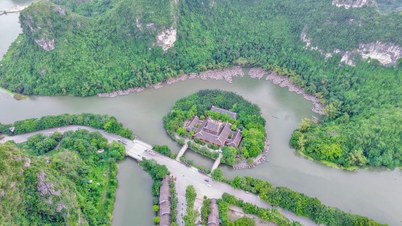
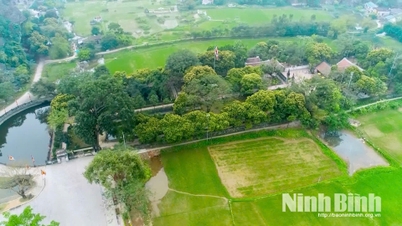
I asked her about Vietnam and her experiences. She said she liked the bustling yet old-fashioned charm of Hanoi, and she also loved the landscapes of Hoa Lu - Ninh Binh. But as for Hoi An, she said she loved it in her own unique way.
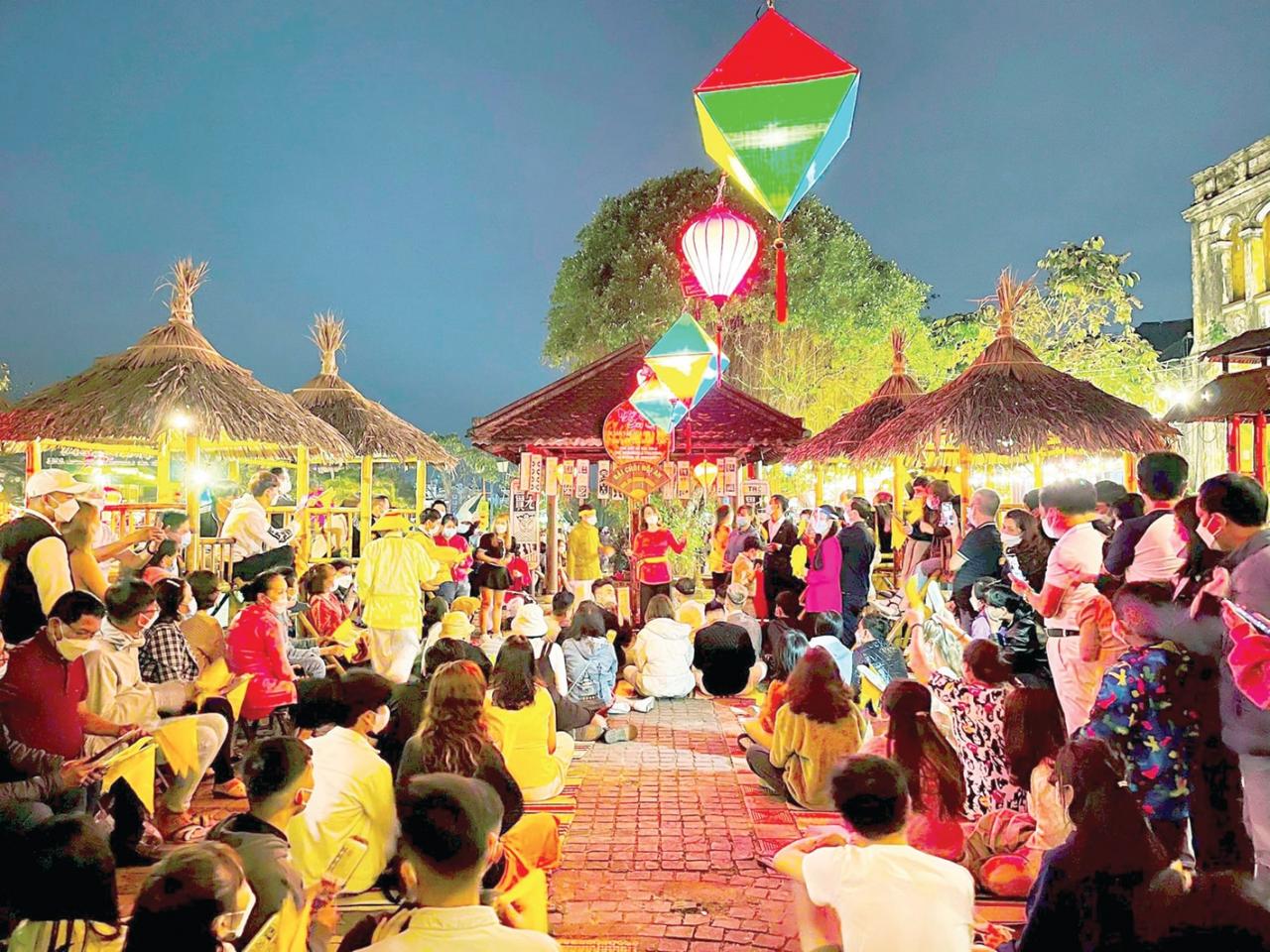
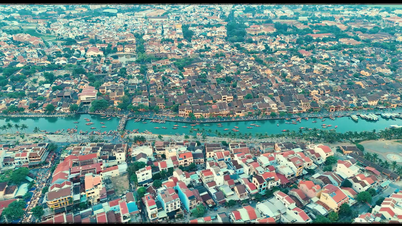
Hoi An Old Town is truly beautiful to her, but that beauty has been commercialized and commercialized by tourism. What she wants to find is the soul of Hoi An, the ancient culture preserved in its old houses. A bygone era of Hoi An is etched in memory on countless ships carrying merchants from all over the world, from China and Japan to as far as Egypt. The echoes of Hoi An's past lie in these cultural exchanges, leaving this land fertile not only economically but also in the soul of its people – generous, friendly, and approachable.
For this reason, the cafes that spring up like mushrooms and the souvenir shops that are packed closely together every few steps don't appeal to her. The commercialization of Hoi An may easily satisfy tourists who want beautiful photos, but it cannot satisfy those who want to discover the hidden beauty of this once-precious gem of Annam.
She decided to venture outside the Old Quarter to better understand Hoi An – much like how she sought out egg coffee at a street stall to understand Hanoi. What surprised me was that she found her love for Hoi An in its simplest, most ordinary things!
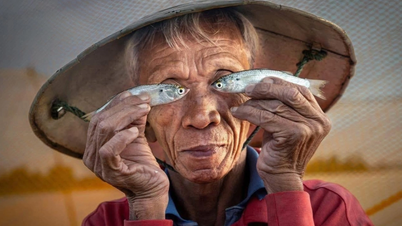
She rented a bicycle and left the city, crossing bustling streets to the outskirts of Hoi An. Ordering an iced milk coffee, she sat at a roadside stall, watching the children in shorts and barefoot chasing kites in the vast meadows. She enjoyed the buffalo herding work of the local people, and most of all, she loved the worn-out conical hat weathered by wind and rain.
She told me that it seemed only after leaving the Old Quarter did she rediscover the true Vietnam – the gentle and peaceful Vietnam with its rice paddies and herons that she had always imagined when reading about my country.
Fragile memories of Hoi An
The old town has... Westerners have visited it many times. For a Westerner like her, this has become too familiar and boring. For her, Hoi An has the old image of a cultural exchange port, bustling and cheerful, but without losing the inherent rustic charm of Central Vietnam.
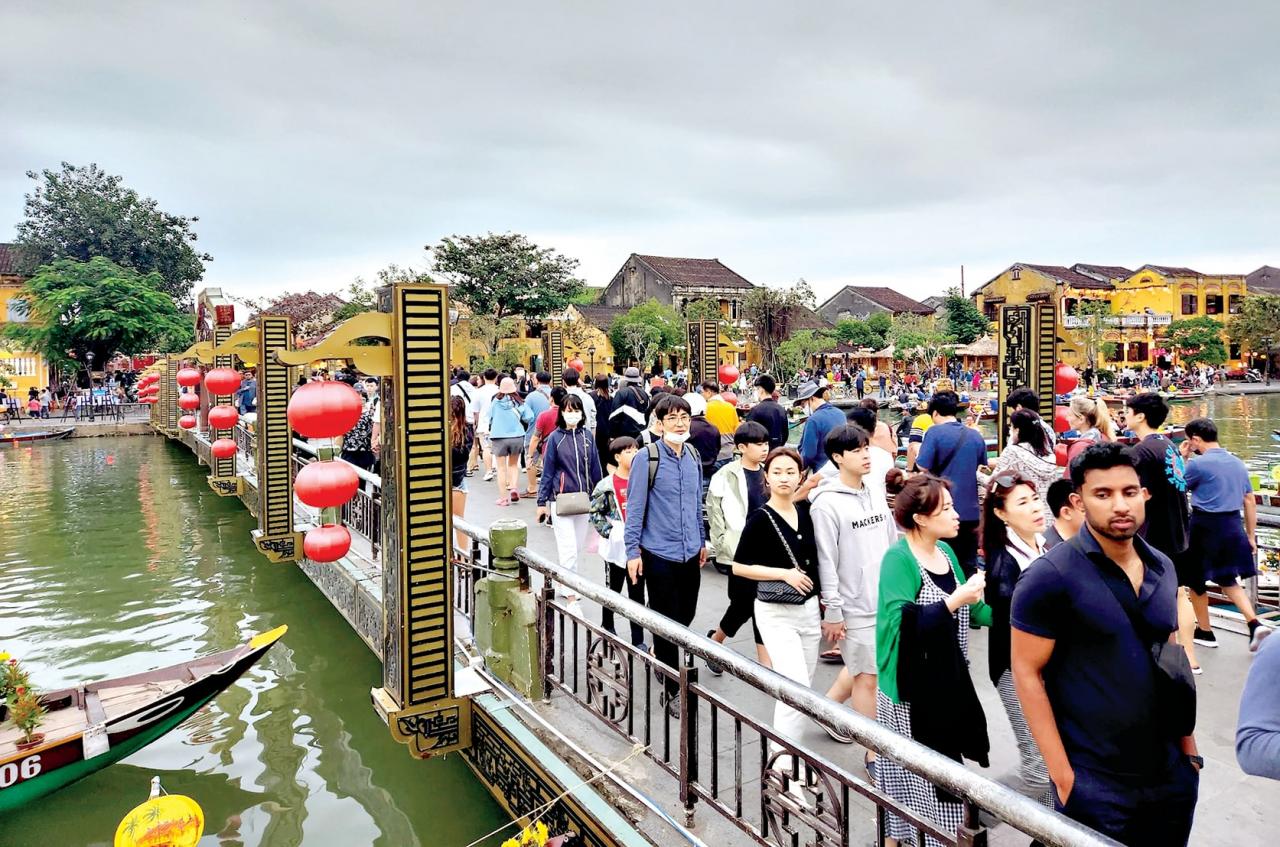
She told me that she agreed that Hoi An's old houses, markets, and temples still retain the moss-covered memories of Faifo – the old name of Hoi An. But the cultural story of Hoi An should be told more than just mentioning the cafes for young people or tourists to check in and the souvenir shops that are constantly popping up every day.
Hoi An's culture lies in the farmers who still toil in the fields, in the children who still run barefoot chasing kites on a breezy afternoon. It makes one temporarily forget the ancient town full of tourists and the relentless commercial activity day and night.
Listening to her, I wondered to myself, since when has Hoi An become so impoverished for tourists seeking the soul of Hoi An's culture?
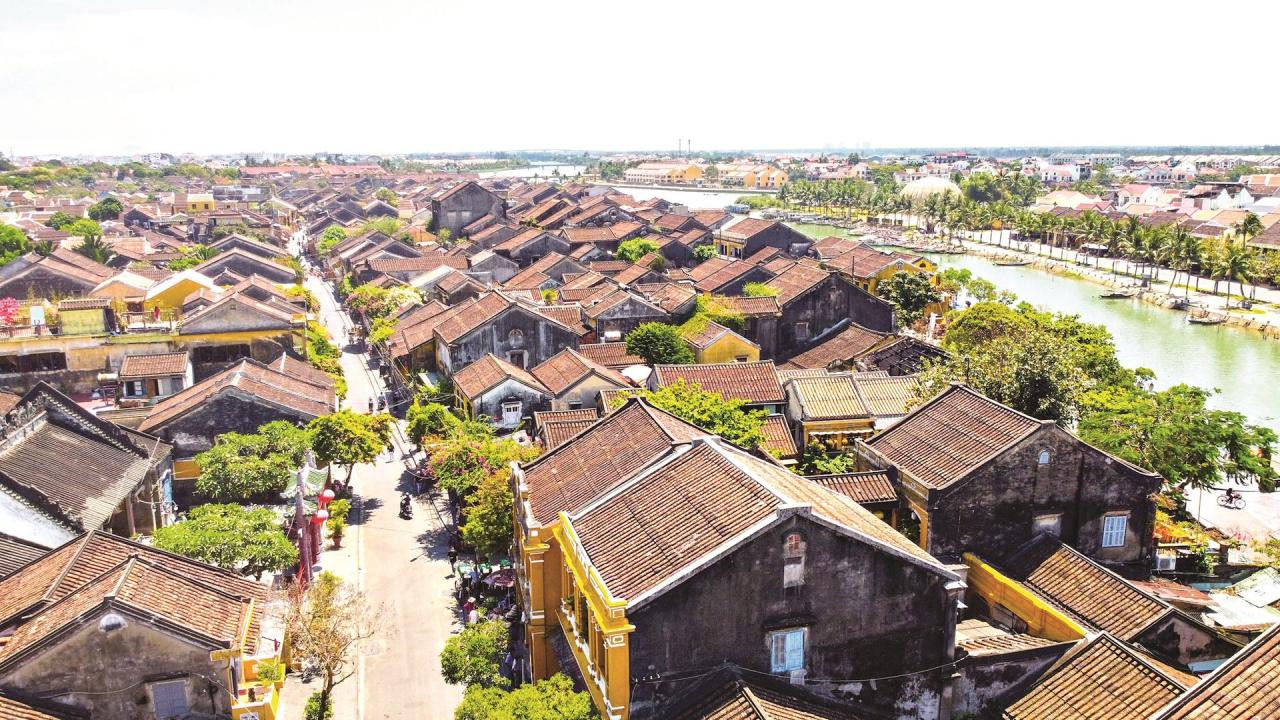
Amidst the countless cafes, restaurants, and hotels, the ancient houses of Hoi An seem lost in the crowd. The soul of Hoi An, preserved in these old houses and assembly halls, is overshadowed by the construction of overly flashy souvenir stalls. Where have the memories of old Hoi An gone when commerce and tourism encroach upon and suppress the familiar footsteps of a bygone era?
I pondered that question until the day I returned home. Walking along the ancient streets of Hoi An, I reminisced about the 17th and 18th centuries of this land where people and water meet. Then I lingered longer by a doorway of an old house, letting my heart fall silent...
Source: https://baoquangnam.vn/dau-hon-xua-pho-cu-hoi-an-3145696.html


































































Comment (0)