


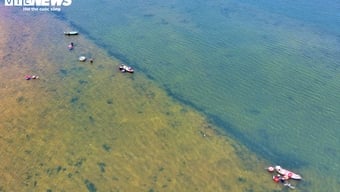
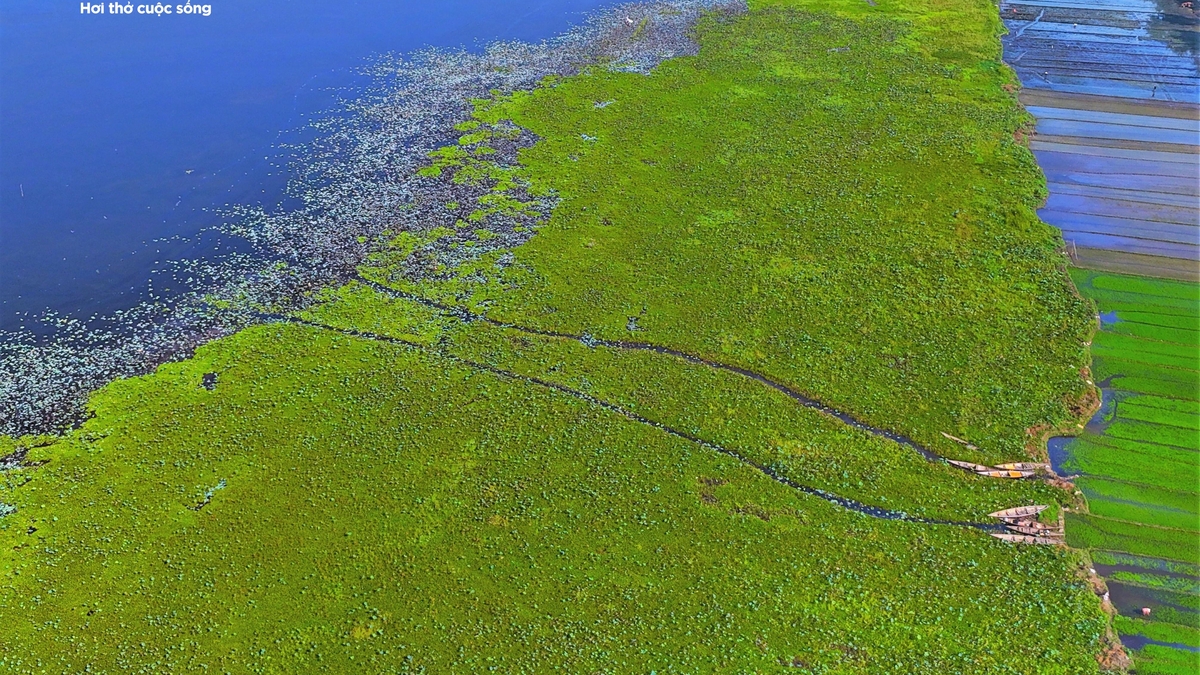
My Khanh Tourist Village is one of Can Tho's attractions. In the photo: Tourists rowing boats in My Khanh Tourist Village. Photo: KIEU MAI
During a meeting with constituents on December 24th, National Assembly and City People's Council representatives, voters requested that the city invest in the construction of regional-scale entertainment complexes similar to Suoi Tien and Dam Sen, and that this be included in the city's currently revised master plan. This raises the question: why does Can Tho need regional-scale entertainment complexes?
The Mekong Delta is a densely populated region with a rapidly expanding urban network. As people's incomes improve, the demand for high-quality entertainment and leisure services also increases. Without a regional entertainment center in Can Tho – the central city of the region – this spending would continue to flow to Ho Chi Minh City or other domestic and international destinations. This would not only fail to increase budget revenue and people's income but also lead to missed opportunities for development.
Building entertainment, recreation, and cultural zones, coupled with investment in high-quality, safe, civilized, and modern regional-level service facilities, is also a way to "boost" the development of the night-time economy and develop distinctive tourism products that reflect the unique cultural identity of the Southwestern Mekong Delta. This is an important prerequisite for the city to transition to a new service-based economic structure: making tourism a "key industry"—a service sector that creates high added value with an attractive experiential ecosystem through integrated entertainment, recreation, culture, and event complexes.
Can Tho is repositioning itself as a high-end riverine ecological city, developing its urban areas in conjunction with the river and the sea. Therefore, having chosen the riverine identity as the city's essence, large-scale entertainment and recreation complexes need to be designed in the spirit of "riverine civilization." This means creating experiences based on water spaces, seamlessly integrated into the landscape, festivals, cuisine, floating markets, performing arts, water sports, etc. This is an advantage that Can Tho possesses, which many other cities in the country do not easily have.
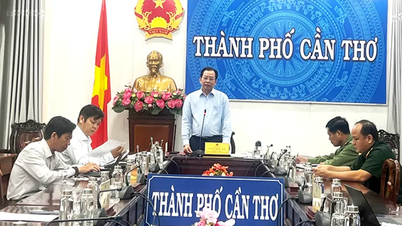
The question is how to fulfill the people's demand for a regional-scale entertainment and recreation area in Can Tho? This question was answered by the Chairman of the City People's Committee, Truong Canh Tuyen, at the meeting with voters of National Assembly and City People's Council representatives on December 24th. He stated that the city is currently in the process of adjusting its integrated planning for the period 2021-2030, with a vision to 2050, to serve as a basis for inviting several large corporations to act as consultants in the formation of regional-scale entertainment, recreation, and sports areas. This is also a necessary condition: investors cannot and dare not decide to invest in entertainment and recreation projects worth tens of thousands of billions of dong if the land designated for these purposes has not been properly named in the planning, if the connecting infrastructure has not been integrated into transportation corridors, and if the legal procedures for takeoff have not been established…
If adjusting city planning is a "necessary condition," then entertainment and recreation complexes can only emerge when this "necessary condition" is transformed into "sufficient conditions." To achieve this, it is first necessary to clearly define in the planning the land allocation for the construction of large-scale regional entertainment and recreation areas (including: location, area, construction standards, green corridors - waterfront areas, etc.), prioritizing locations that can create iconic waterways for the city. From there, design a model of a "mega-project" for entertainment, recreation, culture, and sports in the Mekong Delta based on the logic of local experiences: water parks, water sports, riverine festival spaces, performance stages, living museums about the civilization of the Mekong Delta, floating markets, pedestrian streets with night food stalls, traditional music and dance performances, etc., to create differentiation and increase competitiveness.
Connecting and technical infrastructure must also be "one step ahead." Large-scale projects can only succeed if access is convenient, with well-connected and integrated public transport, water tourism, and drainage systems, wastewater treatment, flood control, and fire prevention. This is where the city government needs to lead through public investment and establish inter-sectoral coordination mechanisms. A "one-stop shop" for large-scale service, entertainment, and recreation projects is essential to facilitate investors in handling complex procedures such as planning, land, construction, environmental, and fire prevention documentation.
In short, for Can Tho to become a world-class riverside city, it needs "iconic landmarks" and a corresponding "experiential ecosystem." Therefore, adjustments to the city's planning should focus on creating the necessary legal framework to soon establish large-scale entertainment and recreation areas capable of transforming Can Tho's unique riverside identity – the Mekong Delta – into a distinctive experiential economy that is both modern and preserves the "soul" of the Western region.
SONG GIA
Source: https://baocantho.com.vn/de-can-tho-hap-dan-tu-vui-choi-giai-tri-a196468.html
![[Photo] Capturing each moment at the "People We Meet" photography exhibition.](https://vphoto.vietnam.vn/thumb/1200x675/vietnam/resource/IMAGE/2026/04/15/1776245695648_1-8944-jpg.webp)
![[Photo] National Assembly Chairman Tran Thanh Man concludes official visit to Italy, departs for IPU-152](https://vphoto.vietnam.vn/thumb/1200x675/vietnam/resource/IMAGE/2026/04/15/1776253436109_vna-potal-chu-tich-quoc-hoi-ket-thuc-tham-chinh-thuc-italy-len-duong-du-ipu-152-tai-tho-nhi-ky-8702876-7969-jpg.webp)
![[Photo] General Secretary and President To Lam and his wife, along with General Secretary and President Xi Jinping and his wife, attending a tea party.](https://vphoto.vietnam.vn/thumb/1200x675/vietnam/resource/IMAGE/2026/04/15/1776245678527_vna-potal-tong-bi-thu-chu-tich-nuoc-to-lam-va-phu-nhan-cung-tong-bi-thu-chu-tich-nuoc-tap-can-binh-va-phu-nhan-du-tiec-tra-8702812-9829-jpg.webp)
![[Image] Current status of the land area of over 5.5 hectares that Ho Chi Minh City is considering reclaiming.](https://vphoto.vietnam.vn/thumb/1200x675/vietnam/resource/IMAGE/2026/04/15/1776245690095_1-3102-8409-jpg.webp)
![[Photo] General Secretary and President To Lam and General Secretary and President Xi Jinping meet with youth from both countries.](https://vphoto.vietnam.vn/thumb/1200x675/vietnam/resource/IMAGE/2026/04/15/1776245687540_vna-potal-tong-bi-thu-chu-tich-nuoc-to-lam-va-tong-bi-thu-chu-tich-nuoc-tap-can-binh-gap-go-thanh-nien-hai-nuoc-8702371-jpg.webp)
![[Image] Overview of the Tam Trinh-Giai Phong connecting road section after land clearance is completed.](https://vphoto.vietnam.vn/thumb/1200x675/vietnam/resource/IMAGE/2026/04/15/1776245679644_ndo_br_dji-0195-jpg.webp)











![[Photo] Mrs. Ngo Phuong Ly meets and exchanges views with Mrs. Peng Li Yuan](https://vphoto.vietnam.vn/thumb/1200x675/vietnam/resource/IMAGE/2026/04/16/1776277858080_phu-nhan-1-jpg.webp)
![[Photo] My Son at night: A thousand-year-old heritage site amidst the Milky Way](https://vphoto.vietnam.vn/thumb/1200x675/vietnam/resource/IMAGE/2026/04/15/1776261039184_ndo_br_chon6-jpg.webp)
![[Photo] The General Secretary, President and his wife meet with Vietnamese-Chinese friendship leaders.](https://vphoto.vietnam.vn/thumb/1200x675/vietnam/resource/IMAGE/2026/04/15/1776264829725_vna-potal-tong-bi-thu-chu-tich-nuoc-to-lam-gap-mat-nhan-sy-huu-nghi-viet-nam-trung-quoc-8703641-3130-jpg.webp)
![[Photo] National Assembly Chairman Tran Thanh Man arrives in Türkiye to attend IPU-152](https://vphoto.vietnam.vn/thumb/1200x675/vietnam/resource/IMAGE/2026/04/15/1776261003665_tnk10-jpg.webp)
![[Photo] National Assembly Chairman Tran Thanh Man attends the opening session of IPU-152](https://vphoto.vietnam.vn/thumb/1200x675/vietnam/resource/IMAGE/2026/04/16/1776277863731_ctqh5-jpg.webp)





























Comment (0)