


Tourists take souvenir photos at an entrance gate to the ancient city of Dali.
Ancient architecture, a cultural hallmark of the Bach ethnic group.
In mid-December 2025, while accompanying a tourism survey team from Vinh Hy Resort, Khanh Hoa province, we had the opportunity to visit and explore the ancient city of Dali – a city with a long history and culture in Yunnan province, China.
According to observations, the architecture of Dali Ancient City is quite unique, a blend of Han Chinese style and the distinctive architectural features of the Bai minority – a well-known ethnic minority group that mainly lives here.

Dali Ancient City
The ancient citadel is surrounded by a system of sturdy walls and four large gates. The most prominent is the majestic South Gate, built of stone with a traditional arched roof, symbolizing the citadel's enduring existence.
The Three Pagodas of Chongsheng Temple are the most famous spiritual and architectural symbol of Dali. The three ancient pagodas, the tallest of which is the Tianxun Pagoda, built in the 9th century, are a testament to a flourishing period of Buddhism.
Along the cobblestone streets, visitors can admire traditional wooden houses built in the "Tam Phong Nhat Chieu Bich" style (Three houses surrounding a screen wall).

An ancient wall of the Old City of Dali.

A street lined with old houses with curved roofs.
These houses are typically painted predominantly white (symbolizing the Bai ethnic group) combined with black tiles, intricately carved windows, and decorative screen walls adorned with patterns, nature paintings, or calligraphy, showcasing the sophistication of local art and culture.
Unique culture and traditional way of life
According to international tour guide Kim Hy (from China): Dali not only boasts beautiful scenery, but visitors can also experience the vibrant culture of the Bai people. Fuxing Road, a bustling main street, is where visitors can stroll past shops selling handicrafts, brocade, silverware, and local products.
Especially at night, the old town becomes even more romantic and lively with its bars, tea houses, and traditional folk music .
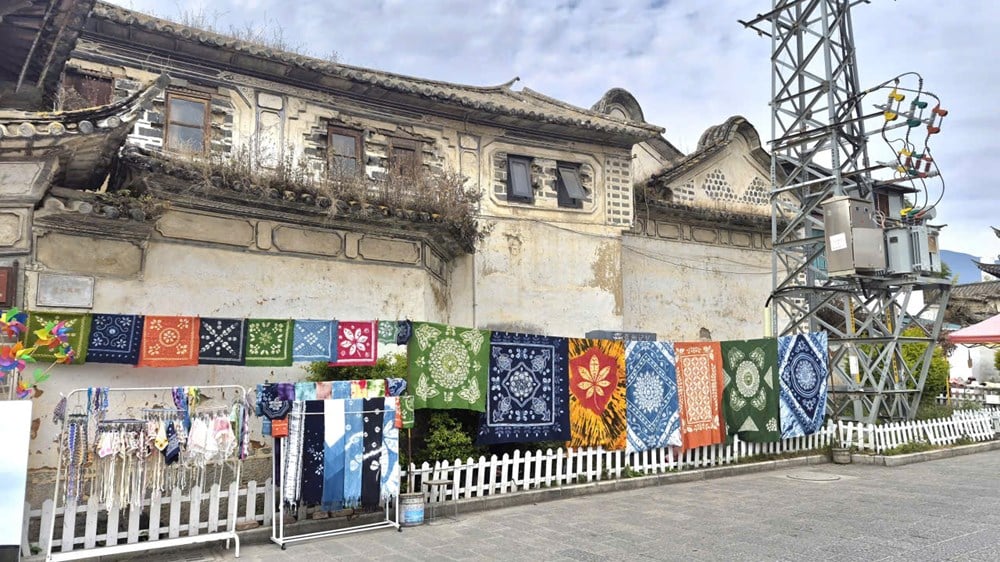

The street is lined with stalls selling brocade fabrics with patterns.
Besides the Three Pagodas, Dali is also a center of Buddhist culture. Many ancient temples and shrines, such as the Chong Sheng Temple and the Chaoyang Pagoda (the mini Tiananmen Square of Yunnan), are still preserved, offering a tranquil and mystical atmosphere.
"If you visit Dali in the spring (around March-April in the lunar calendar), you'll have the chance to participate in the March Street Fair, one of the biggest traditional festivals of the Bai people, with activities such as horse racing, archery, folk singing and dancing, and a goods exchange fair," said tour guide Kim Hy.

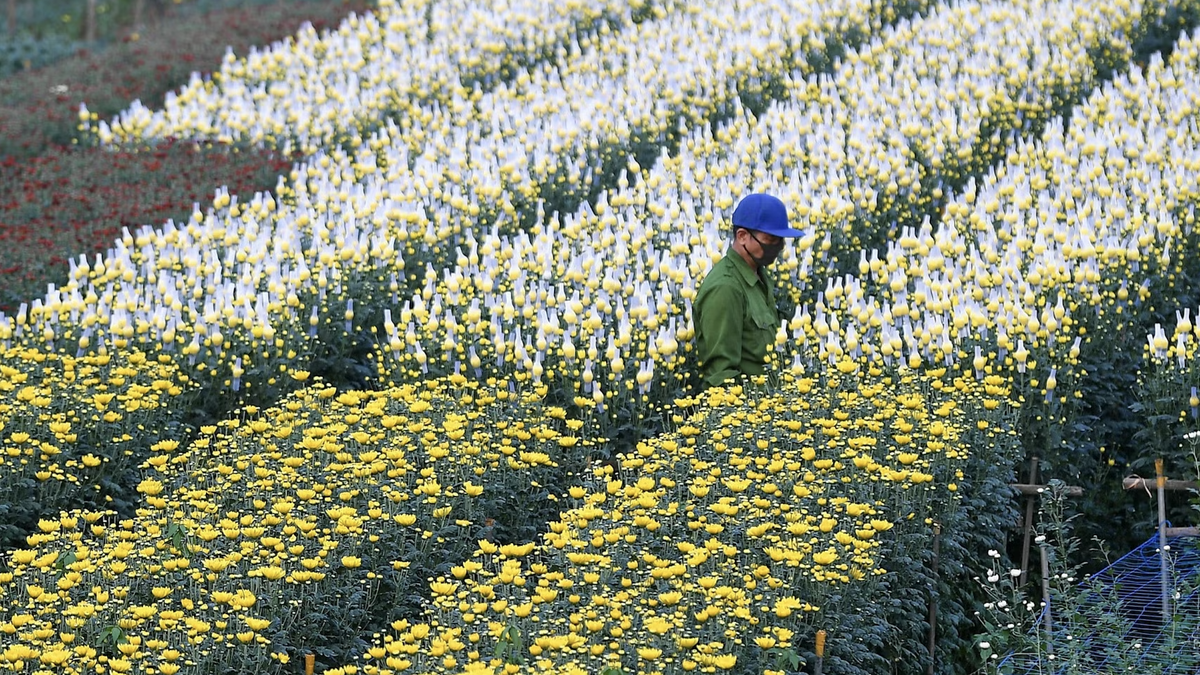
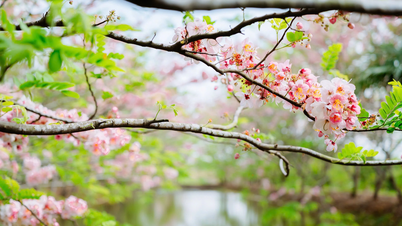
The agency is also famous as the land of roses.

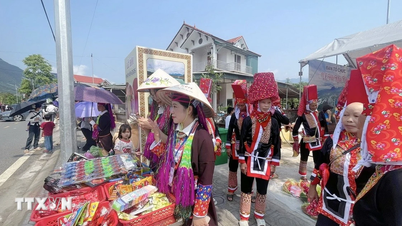
Traditional costumes of local ethnic groups are sold on the street.
The beauty of "wind, flowers, snow, and moon"
Dali is often described as the land of "wind, flowers, snow, and moon," thanks to its poetic and magnificent natural scenery.
Nestled at the foot of the majestic Cangshan Mountains and overlooking the picturesque Erhai Lake, the ancient city of Dali boasts a prime location. Erhai Lake, with its crystal-clear waters, is known as the "jewel of the plateau," offering a romantic and tranquil setting. Visitors can cycle around the lake to enjoy the fresh air and the idyllic scenery.
The ancient city of Dali became even more widely famous when it served as the main setting for the classic television series "Tian Long Ba Bu" (adapted from Jin Yong's novel), leading many fans to visit and "travel back in time" to the romantic martial arts world .

Dali Ancient City

Wooden houses have always been a highlight that attracts tourists.
The ancient city of Dali is a blend of millennia-old beauty, the diverse culture of the Bai people, and the bounty of nature. Visit Dali to experience a vibrant atmosphere where every street and every rooftop tells the story of an ancient kingdom that once flourished.
Source: https://baovanhoa.vn/du-lich/den-van-nam-kham-pha-van-hoa-lich-su-thanh-co-dai-ly-188963.html












































































Comment (0)