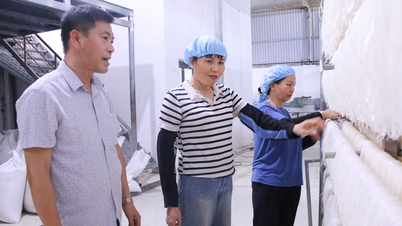
For decades, whenever Vietnam embarked on a new development model, Ho Chi Minh City was often the first to do so. From the first export processing zone to pioneering the attraction of foreign investment, developing the private economy , and piloting the urban government model, many important policies were tested here before being replicated nationwide.
But if we had to choose the greatest value that Ho Chi Minh City has left behind after half a century of development, would it be those models?
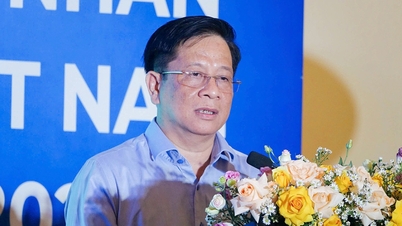
On the occasion of the 50th anniversary of Ho Chi Minh City being named after President Ho Chi Minh (July 2, 1976 - July 2, 2026), Associate Professor Dr. Do Phu Tran Tinh, Director of the Institute for Policy Development , Vietnam National University Ho Chi Minh City, School of Economics and Law, shared with Tri Thuc - Znews his perspective on the city's greatest "legacy," as well as the driving forces for Ho Chi Minh City to continue playing a pioneering role in the new development phase.

|
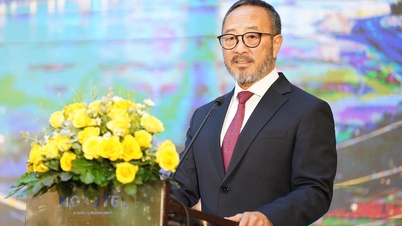
Associate Professor Dr. Do Phu Tran Tinh, Director of the Institute for Policy Development, Vietnam National University Ho Chi Minh City, School of Economics and Law. Photo: Provided by the interviewee. |
According to him, Ho Chi Minh City's greatest "mark" lies not in a specific model, but in its pioneering spirit, its willingness to experiment, and its courage to pave the way for new development ideas.
In the context of increasingly global competition based on innovation, AI, and digital transformation, Ho Chi Minh City needs to be given a new "institutional operating system" with greater autonomy, a wider testing ground, and mechanisms that are sufficiently secure to continue maintaining its pioneering role in the country.
Pioneering spirit of reform
- During Ho Chi Minh City's 50 years of development, many of the city's pioneering models have become national policies. In your opinion, what has contributed to the city's leading role over the past 50 years?
In my opinion, the most significant achievement of innovation that Ho Chi Minh City has left for the whole country does not lie in any specific model, whether it be an export processing zone, attracting foreign investment, developing the private economy, or urban governance.
Throughout various stages of the country's development, Ho Chi Minh City has not only generated growth but also served as a testing ground for new policy ideas. Whenever practical circumstances demanded a departure from established frameworks, the city proactively sought solutions. Many initiatives, initially controversial and even considered audacious, later proved effective and became the basis for the central government to refine policies and replicate them nationwide.
This demonstrates Ho Chi Minh City's unique role, not only in creating economic value but also in its ability to forge institutional lessons. If China has Shenzhen as a "laboratory" for reform, then in Vietnam, Ho Chi Minh City has repeatedly taken on a similar pioneering role.
The most enduring value that the city leaves behind is its pioneering spirit in institutional reform and its forward-thinking attitude.
Assoc. Prof. Dr. Do Phu Tran Tinh
In the context of rapidly accelerating digital transformation, AI, green transformation, and global competition, Vietnam increasingly needs localities capable of testing new policies.
Therefore, what we need to inherit from Ho Chi Minh City is not only the successful models of the past, but also the spirit of daring to innovate, the capacity for experimentation, and the courage to take responsibility for new challenges. In my opinion, that is the most sustainable "legacy" of the city.
Maximizing the effectiveness of special mechanisms
- The special mechanisms under Resolution 98 are giving Ho Chi Minh City more autonomy in management and development. So, what are the priority areas for implementation to create the most significant changes for citizens and businesses, sir?
The greatest value of Resolution 98 lies not in the number of special mechanisms, but in its ability to create substantive change in people's lives and the business environment. Therefore, the city should not implement it in a scattered manner but should focus on removing bottlenecks with the greatest ripple effect.
First, there's the issue of planning. For many years, overlapping planning regulations, lengthy adjustment procedures, and a lack of foresight have stalled numerous projects, increased social costs, and reduced the efficiency of resource utilization. When planning is more transparent and stable, people will feel secure in their homes, businesses will have a basis for long-term investment, and the government will improve its management efficiency.
You may also like

The dilemma behind the weakening yenThe yen's fall to its lowest level in nearly 40 years against the dollar highlights the growing challenges facing the Japanese economy, as Tokyo must balance the goals of maintaining growth and stabilizing its currency. Next, it is crucial to promote transportation-oriented urban development (TOD). By effectively leveraging the added value of land around metro lines, the city can reinvest in infrastructure, transportation, and public spaces, creating a positive cycle between land, urban finance, and quality of life.


|
Associate Professor Dr. Do Phu Tran Tinh proposed that the city should strongly implement the TOD (Transit-Oriented Development) model in conjunction with the metro and public transportation. Photo: Quynh Danh. |
Attracting strategic investors into high value-added sectors such as high technology, semiconductors, AI, finance, logistics, high-quality healthcare, and creative industries also needs attention. Ho Chi Minh City should not continue to attract investment broadly but should prioritize projects that have the potential to spread technology, improve productivity, and develop the business ecosystem.
Finally, there is the reform of administrative procedures on a digital platform. For citizens and businesses, the effectiveness of reform is measured by the time taken to process applications, compliance costs, transparency, and accessibility to public services. If Resolution 98 helps shorten processing times, reduce costs, and improve service quality, that will be the most obvious result.
- Regarding the draft Law on Special Urban Areas for Ho Chi Minh City, in your opinion, what are the most important powers for the city to fully realize its potential?
The Law on Special Cities should not be viewed merely as a set of preferential mechanisms, but rather as an "institutional operating system" for a megacity with its unique scale, role, and development pressures.
First and foremost is genuine autonomy in governance. A leading metropolis cannot operate effectively if important decisions still have to go through too many layers of review. Ho Chi Minh City needs stronger decentralization in investment decisions, planning, spatial development organization, and governance model selection to avoid missing development opportunities.
Secondly, there is the issue of financial autonomy. The city has enormous investment needs for transportation, flood control, healthcare, education, digital infrastructure, and green transformation. The law needs to allow Ho Chi Minh City more flexibility in using tools such as infrastructure bonds, development investment funds, exploiting added value from land, public-private partnerships, and new financial models.
Thirdly, there is the issue of managing multi-layered urban space. In the context of increasingly limited land resources, Ho Chi Minh City needs to shift from horizontal expansion to efficiently utilizing space above ground, on the ground, and underground to develop metro systems, underground infrastructure, compact urban areas, and modern urban models.
Finally, there is the right to experiment with policies. Cities need sufficient legal space to pilot new models in technology, finance, digital economy, urban governance, green transformation, and regional connectivity, while also having mechanisms to monitor and protect those who dare to innovate for the common good.
If four elements converge—governance autonomy, financial autonomy, proactive organization of development space, and proactive policy experimentation—the Law on Special Urban Areas will truly become the foundation for Ho Chi Minh City to enter a new phase of development.

|
The Law on Special Urban Areas is expected to become the foundation for Ho Chi Minh City to enter a new phase of development. Photo: Duy Hieu. |
Paving the way for a new decade.
- In the past, many ideas that were once considered audacious were tested by Ho Chi Minh City before becoming national policies. In your opinion, what are the areas where the city should continue to be empowered to "take the lead" in the next 10 years?
In my opinion, over the next 10 years, Ho Chi Minh City needs to continue to be empowered to "take the lead" in areas that can create new development models for the whole country.

Vietnam encourages US businesses to expand investment in high technology.On the morning of June 26th, at the Government Headquarters, Deputy Prime Minister Ho Quoc Dung received Mr. Jeff Place, Supply Chain Director of Coherent Group (USA). During the meeting, the Deputy Prime Minister affirmed that Vietnam encourages US businesses to expand investment, especially in high-tech, innovation, and semiconductor industries. First and foremost are the digital economy, data, AI, and financial technology (fintech). These are rapidly developing fields with the potential to restructure the city's growth model. If Ho Chi Minh City lags behind or continues to manage with traditional thinking, it will struggle to maintain its competitive advantage in the global technology race.
With its large market size, high-quality human resources, and innovative ecosystem, Ho Chi Minh City has many advantages to become a testing ground for sandbox mechanisms in AI, data, digital assets, fintech, and digital public services before scaling them up nationwide. However, technology always moves faster than the law. Therefore, the city needs to be empowered to build controlled testing mechanisms, instead of waiting for the legal framework to be perfected before implementation.
Ho Chi Minh City is not lacking in ambition and potential. What the city needs is an institutional framework that is broad enough, stable enough, and secure enough to continue leading the way.
Assoc. Prof. Dr. Do Phu Tran Tinh
Of course, experimentation does not mean loosening control. What is needed is a legal framework that is flexible enough but still ensures oversight, clear evaluation criteria, risk limits, and mechanisms to protect implementers. In particular, a distinction must be made between violations for personal gain and risks arising from innovation carried out according to proper procedures.
Another crucial area is the International Financial Center. To effectively connect global capital flows with domestic and regional development needs, Ho Chi Minh City requires special mechanisms regarding foreign exchange, taxation, trade dispute resolution, cross-border financial services, and new financial products. This would enable the city not only to attract capital but also to participate more deeply in the regional financial network.
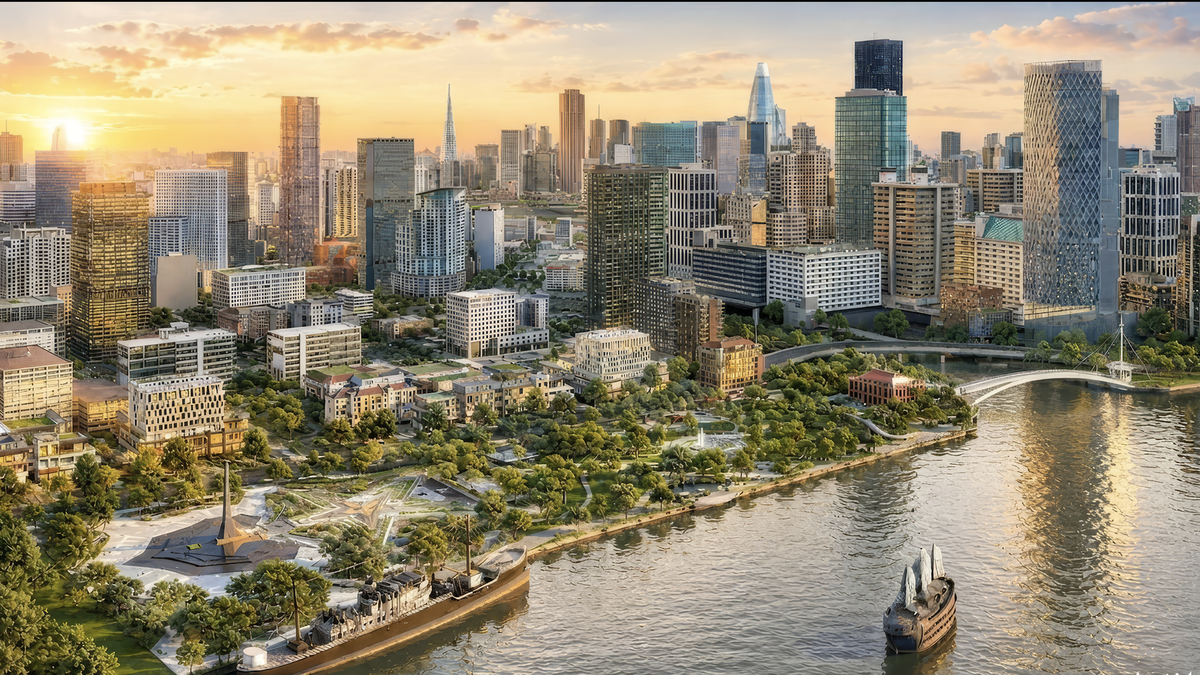
In addition, there are new-generation urban models such as TOD (Transit-Oriented Development), compact urban development, underground space management, circular economy, smart city, night-time economy, and the development of the Saigon River corridor. These are all new growth spaces that help address the pressures of a megacity while creating additional value in terms of economy, culture, tourism, and quality of life.
Ultimately, however, the area where Ho Chi Minh City needs to take the lead is institutional reform. Because any breakthroughs in technology, finance, or urban development can only be realized on an institutional foundation that is flexible enough to embrace new ideas.
In my opinion, the special mechanism for Ho Chi Minh City is not a special privilege, but rather a condition for the city to continue fulfilling its pioneering role for the whole country.
Overall, what defines Ho Chi Minh City's position is not just its economic scale or growth rate, but also its spirit of daring to think differently, daring to act first, and daring to take responsibility. This is the greatest "legacy" the city has built over the past 50 years, and it will continue to be the foundation paving the way for new reforms in Vietnam in the coming decade.
Thank you, sir!
Source: https://znews.vn/di-san-lon-nhat-cua-tphcm-post1663780.html








![[Photo] Strengthening character and expertise: Intense training for artillery soldiers.](https://vphoto.vietnam.vn/thumb/1200x675/vietnam/resource/IMAGE/2026/06/30/1782815602541_lu-368-1875-4571-jpg.webp)