Heritage brings it closer to the public.
As the lights gradually illuminate the grounds of the Ho Chi Minh City Museum, the space, which is familiar during the day, takes on a different appearance.
The sounds of traditional Vietnamese folk music, blended with the melodies of classical opera and shadow puppetry, resonate amidst the ancient architecture, attracting many locals and tourists to stop and enjoy the experience.
Interspersed between the artistic performances were traditional craft experience areas with stalls painting conical hats and Lai Thieu pottery, always packed with participants.
The series of activities is part of the "Connecting Heritage" Week, taking place from June 27th to July 5th, commemorating the 50th anniversary of the official renaming of Saigon - Gia Dinh City to Ho Chi Minh City.
Between 7 PM and 9 PM each day, the museum opens its doors to the first 100 registered visitors to tour the galleries, experience traditional crafts, and enjoy artistic performances.
On the opening night (June 27th), the artistic program was elaborately staged with many performances such as traditional folk music, shadow puppetry, classical opera, and songs about the homeland and country.
The museum stage also featured traditional costume performances with the participation of Mr. World 2024 Tuan Ngoc, Miss World Vietnam 2023 2nd Runner-up Minh Kien, Miss Grand Vietnam 2023 1st Runner-up Bui Khanh Linh... creating a highlight for the opening night of the "Connecting Heritage" Week.
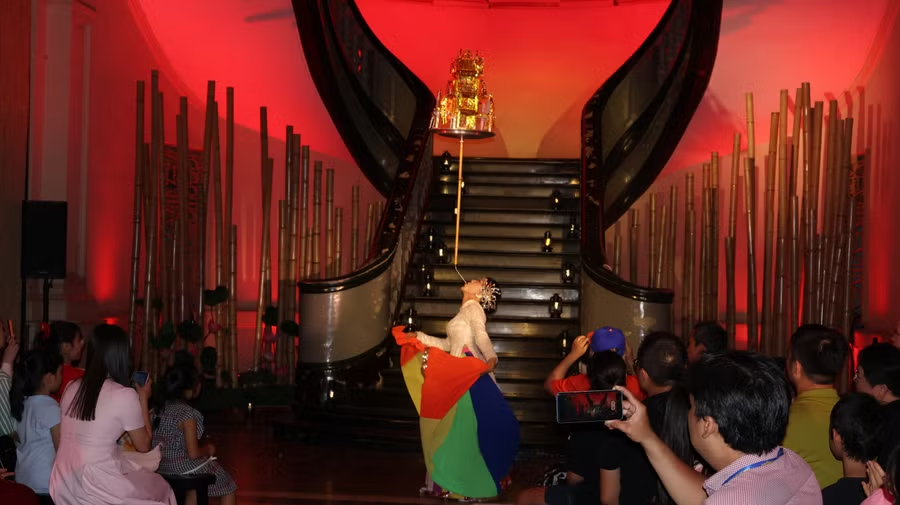
Tony My Tai (30 years old, Dong Nai City), an artist performing the shadow puppet dance in the program, said: "I feel very honored to be invited to perform at such a major event in Ho Chi Minh City. Seeing the audience's enthusiastic reception gives me more motivation to continue preserving, developing, and helping this art form."
Besides attracting art lovers, the program is also a destination for many families. Having learned about the event through social media, Ms. Nguyen Thi Thuy Linh (34 years old, Go Vap ward) brought her young child to the museum to experience it.
"The performance space here creates a sense of intimacy for the audience, and all the performances are meticulously prepared. I've noticed that many art forms today haven't reached a wider audience. Therefore, I hope that activities like this will be expanded further," she expressed.


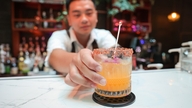
Instead of simply viewing artifacts in the traditional way, visitors have the opportunity to interact directly with the heritage through music, performances, and stories told by the artists themselves. This also helps museums become more accessible to the public, especially young people.
From viewing to experiencing firsthand.
Besides the art stage, the traditional craft experience area was also bustling with participants. The two activities, "Painting and decorating Lai Thieu pottery" and "Painting and decorating conical hats," created a creative space for children, students, and international tourists alike.
To serve the participants, the artisans prepared many ceramic samples with diverse designs and directly guided them through each step. From plain ceramic plates, cups, and vases, each person could create their own designs according to their preferences before taking the product home as a souvenir.
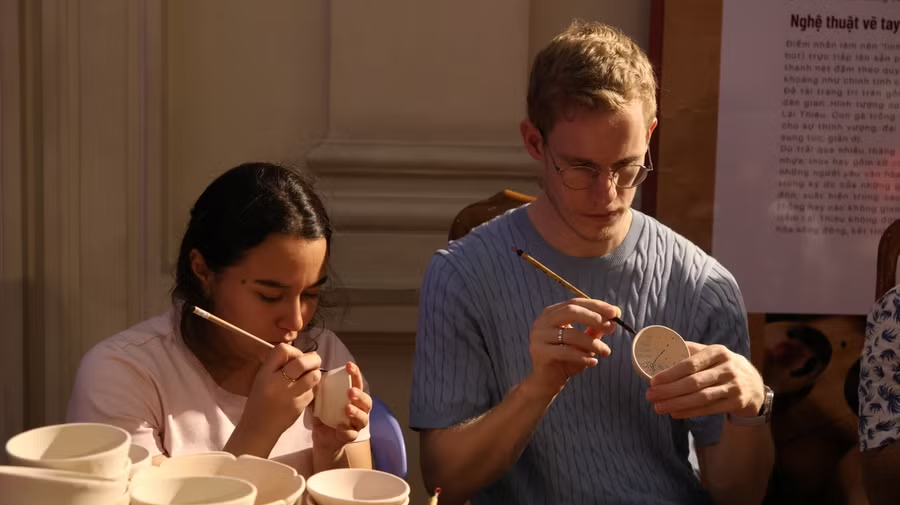
According to artisan Pham Nguyen Anh Thi (43 years old, Dong Nai City), the most difficult step in Lai Thieu pottery making is carving and painting patterns on the pottery body.
"The craftsman must carefully monitor the soil's moisture level and paint directly onto the product, requiring meticulousness, a steady hand, and years of experience to create a finished product," the artisan explained.
According to her, for Lai Thieu pottery to continue to be widely known, in addition to preserving traditional techniques, it is necessary to enhance the application of the products in daily life and develop designs that suit modern needs. When traditional crafts are more present in daily life, cultural values will naturally spread to the community, especially the younger generation.
In the area where conical hats are painted, many young people are engrossed in perfecting each brushstroke on their hats. Many children are also guided by their parents in coloring and drawing patterns, transforming the familiar conical hat into a personalized gift.
Pham Khanh An, a third-year student majoring in Fine Arts Education at the Ho Chi Minh City University of Fine Arts, said: "Directly drawing and decorating conical hats helps participants approach the craft from an artistic perspective, while also better appreciating the beauty of a traditional product."
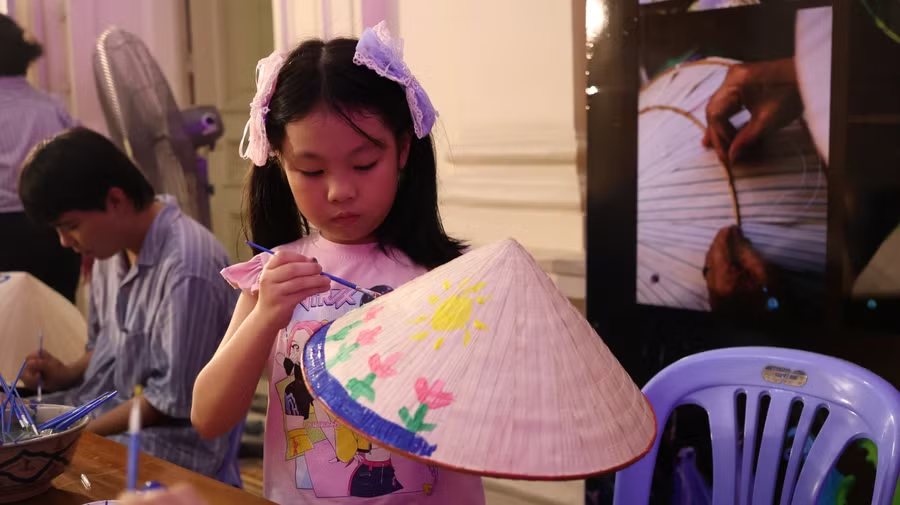
More than just a familiar everyday item, the conical hat is also a cultural symbol deeply connected to many generations of Vietnamese people. Creative activities using this traditional material contribute to a renewed approach to heritage, helping the image of the conical hat continue to be present in contemporary life.



Notably, many international tourists are also enthusiastic about participating in hands-on activities. The opportunity to decorate pottery, paint conical hats, or enjoy various forms of folk art provides a firsthand perspective on Vietnamese culture, rather than simply observing exhibits.
Opening museums in the evening, combining tours, art performances, and hands-on craft experiences, demonstrates a new approach to promoting heritage values. Museum spaces are no longer just repositories of memories but are gradually becoming cultural meeting points after work, where the public can listen, observe, interact, and directly experience traditional values through multiple senses.
In the context of increasingly diverse cultural experience needs, models like the "Connecting Heritage" Week not only contribute to revitalizing museum activities but also open up more opportunities for heritage to be more present in daily life, attracting the public through authentic and vivid experiences.
July 2nd, 2026 marks the 50th anniversary of the official renaming of Saigon - Gia Dinh City to Ho Chi Minh City, as per a resolution of the National Assembly (July 2nd, 1976 - July 2nd, 2026).
The anniversary celebration was organized by the city with many political, cultural, and artistic activities to commemorate the journey of construction and development, while spreading pride in the traditions and identity of the city named after President Ho Chi Minh.
Source: https://giaoducthoidai.vn/di-san-thuc-giac-ve-dem-post783141.html
![[Photo] General Secretary and President To Lam works with the Party Committee of the Government on the work of preventing and combating storms, floods, extreme natural disasters and climate change.](https://vphoto.vietnam.vn/thumb/1200x675/vietnam/resource/IMAGE/2026/06/29/1782729441945_a1-bnd-0385-9454-jpg.webp)
![[Image] A look back at the capital's preparations for the century-long master plan.](https://vphoto.vietnam.vn/thumb/1200x675/vietnam/resource/IMAGE/2026/06/29/1782750453122_quy-hoach-100-nam-minh-duy-1-2118-jpg.webp)