

Since the day the patriotic young man Nguyen Tat Thanh set out to find a way to save the country and its people (June 5, 1911), that journey has never belonged solely to history.
Originating from the aspiration to save the country.
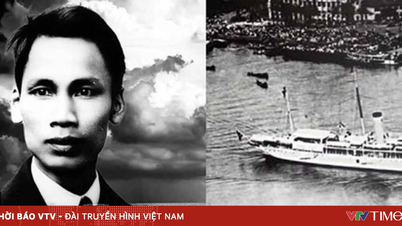
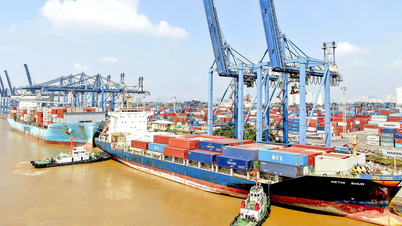
One hundred and fifty years ago (from June 5, 1911 to June 5, 2026), at the windy Nha Rong port in Saigon - Gia Dinh (now Ho Chi Minh City), the patriotic young man Nguyen Tat Thanh, then just 21 years old, quietly boarded the Admiral Latouche-Tréville ship, setting out to find a way to save the country and its people. Leaving his homeland under the name Van Ba, Nguyen Tat Thanh carried with him not only the aspirations of youth, but also the pain of losing his country and an unceasing concern for the fate of his nation.
The moment the Admiral Latouche-Tréville ship left port in 1911 was not simply the beginning of a voyage across the ocean; it was the starting point of a long journey to find a way to save the nation and its people; a departure carrying the burning aspirations of a nation living in a long night of slavery. From Nha Rong port, he began his arduous journey through many countries and continents, traversing unfamiliar lands to find the answer to the greatest question of the era: "How can the Vietnamese people regain independence and freedom?"
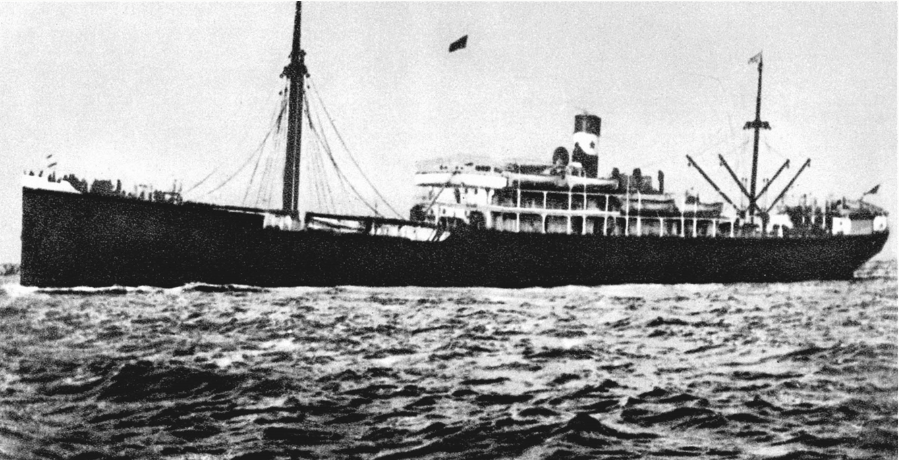
The Admiral Latouche-Tréville ship at Nha Rong port, June 5, 1911.
Following the ship's voyage, Nguyen Tat Thanh stopped at the ports of Marseille and Le Havre in France. From those early days in a country that had once claimed to "civilize" our nation, he realized a truth: not all French people were like the colonialists in Indochina. He witnessed the hardships of the poor laborers in France, recognizing that there were also those suffering similar to the misery of his compatriots back home. From this experience, his thinking became increasingly profound, objective, and progressive in his understanding of the world .
Regarding his reasons for leaving his homeland, in 1913, he confided to a Russian journalist: "When I was about thirteen years old, I first heard the three French words: 'Liberty, Equality, Fraternity.' To us, every white person was French. The French had said so. And from that time, I very much wanted to become acquainted with French civilization, to find out what was hidden behind those words." On another occasion, he expressed to an American writer: "The Vietnamese people, including my father, often wonder who will help them escape the yoke of French rule. Some think it's England, others think it's America. I feel I must go abroad to see for myself. After observing how they do things, I will return to help my compatriots."
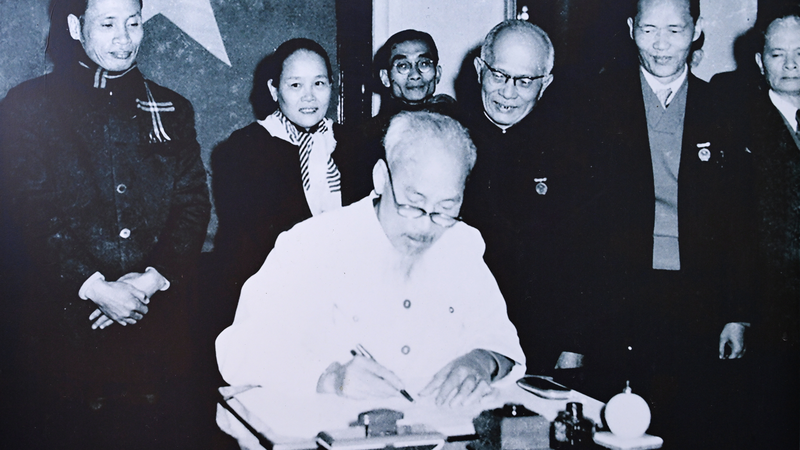
In his youth, Nguyễn Tất Thành embarked on a journey of wandering in foreign lands. From a young man filled with fervent patriotism and deep compassion for his people, he continuously learned, worked, experienced, and immersed himself in the struggles of oppressed workers around the world. With all the practical experiences gained through labor and participation in the revolutionary movements of the world's people, he embraced Marxism-Leninism, choosing the path for the Vietnamese Revolution: national independence linked with socialism – a correct revolutionary path, a historically significant choice that opened a new direction for the Vietnamese revolution, leading our nation from a state of slavery to masters of our country and our own destiny.
Turning the pages of history, Professor Miguel Destefano, advisor to the Institute for Asian Studies, once wrote: "Ho Chi Minh was the great author of the Vietnamese revolution, a revolution in its essence, in its origins, in its struggle and victory, always a source of inspiration and a guiding light. And ultimately, the name 'Uncle Ho' simultaneously expresses the feelings, respect, and meaning of that word. Uncle Ho's example continues to be a source of inspiration to not be weak in the struggle for the future, to not stop at what has been achieved, but always move forward."
Indeed, even today, that journey from the homeland on the Admiral Latouche-Tréville ship remains an event that inspires Vietnamese youth with its ideals, courage to take risks, self-learning spirit, determination to overcome difficulties, and desire to contribute. KC Tiagi, General Secretary of the Janatadal Party of India, once remarked about him: "He embodies the fine qualities of a revolutionary, a visionary, and a great humanist." It can be said that this "flame" has never been extinguished, continuing to illuminate the path of Vietnamese youth on their journey of building and defending the homeland in the new era.
Igniting the aspiration to rise higher.
Each era presents new demands and new missions for the nation and its younger generation. Continuing this historical journey, Vietnam is now facing a great opportunity to enter a new era of development – an era of national progress, as science, technology, and artificial intelligence are changing the way people live, learn, and work every day.
Against this backdrop, Resolution 57-NQ/TW identified the development of science, technology, innovation, and digital transformation as "the most important breakthroughs" to propel the country forward rapidly and steadily on the path of development. Along with this was a call for a widespread "digital learning" movement throughout society, aiming to popularize technological knowledge, awaken the spirit of self-reliance, self-strength, and national pride in every Vietnamese person.

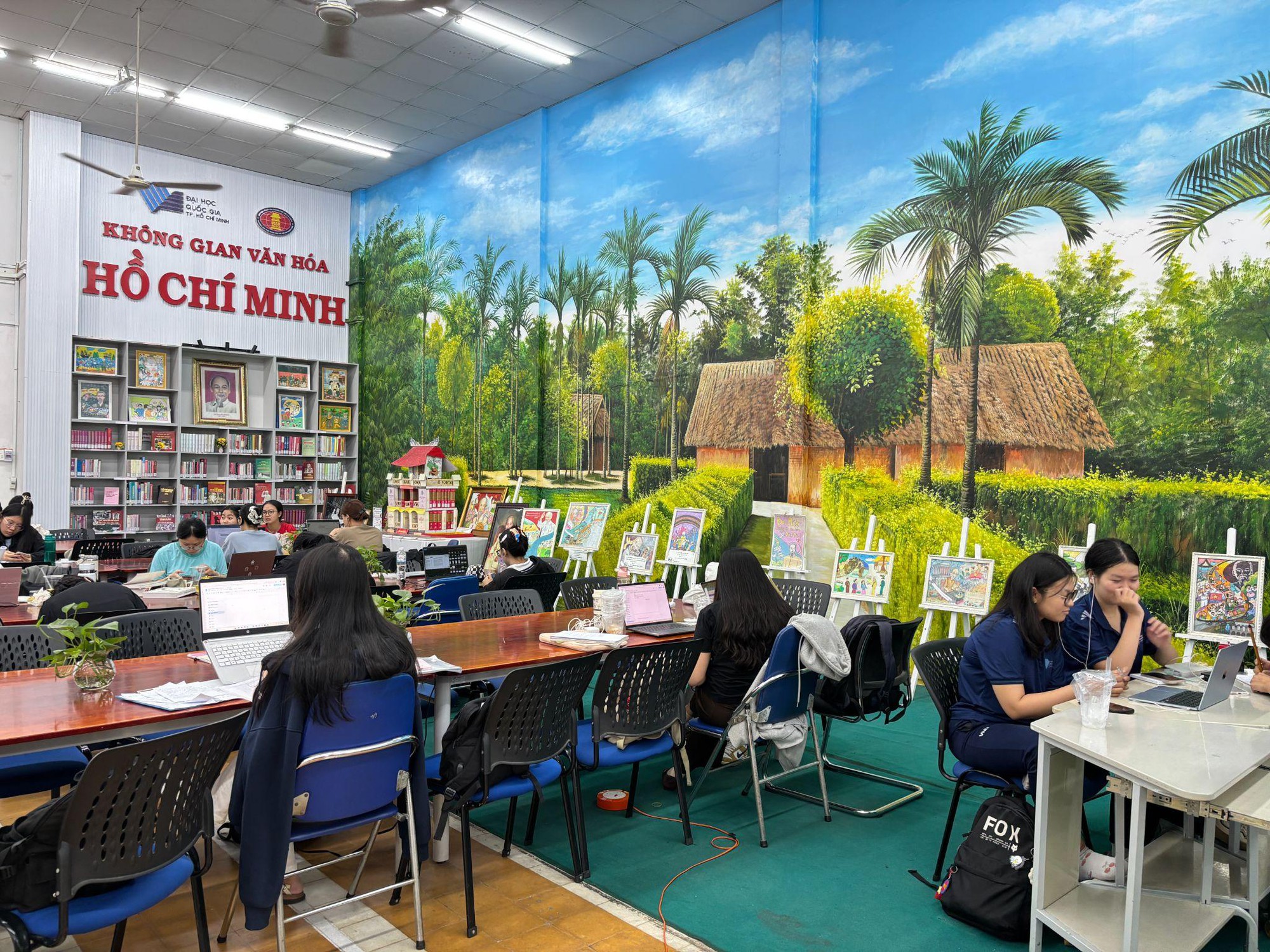
Students studying at the Ho Chi Minh Cultural Space, University of Social Sciences and Humanities, Vietnam National University Ho Chi Minh City.
It can be said that this is not only a national strategic direction, but also a message from the times for today's young generation. Because, as the country and its people strive for strong growth in the new era, each young person must first overcome their own limitations; they must step out of their comfort zone and conquer passivity, overcome complacency and apathy, and become active agents of change – builders of the future.
Looking back 115 years, the young man Nguyen Tat Thanh left his homeland from Nha Rong Wharf with nothing but the clothes on his back, yet carrying a great aspiration to find a path to national liberation. On that journey, his most valuable asset was not material possessions, but a spirit of relentless learning. He learned wherever he went; from books, from labor, from life, and from the very changes of his time. For Ho Chi Minh, learning was not only about expanding knowledge, but also about self-improvement and finding ways to serve the country and the people.
In reality, with the ever-changing landscape of human knowledge, the daily transformation of technology, and the pervasive influence of digital transformation on all aspects of life, self-learning has become an essential requirement for young people. Learning foreign languages, technology, artificial intelligence, digital media, or other new skills of the era is not only about finding better career opportunities, but also about equipping oneself with the capacity to solve practical societal problems, contribute to the overall development of the country, and create positive values for the community.
Reflecting on President Ho Chi Minh's journey, Nguyen Ham Viet Am (22 years old), a journalism student and Party member, expressed: "The journey of saving the country by President Ho Chi Minh and our forefathers was always linked to learning and literacy. On every step of the path to saving the country and its people, learning was always present as an important foundation. President Ho Chi Minh learned to understand the world, to understand his own people, and above all, to find the path to liberating the country. In today's era, young people cannot stand outside the flow of knowledge and technology. We must learn, innovate, and constantly improve ourselves. We should not only learn to establish ourselves and our careers, but also to have the capacity to contribute to the community and the country."
Beyond leaving behind a lesson in self-learning, Ho Chi Minh's life also reminds today's generation of the importance of resilience in the face of the vast ocean of information. Never before have people been able to access knowledge as easily as they are today, yet never before have they faced such a mix of true and false information. The digital age may not lack voices, but what society needs is not people who merely repeat, but citizens capable of independent thinking, critical analysis, and independent judgment. Learning from Uncle Ho means learning to look deeply into the essence of a problem, not passively accepting information, not following fleeting trends or aimless crowds. It can be said that this is the ability to maintain a clear mind amidst the flow of information, allowing reason to guide actions and responsibility to shape each choice.
Most importantly, Nguyen Tat Thanh's journey reminds young people of the true meaning of learning. For him, learning was not about accumulating knowledge for oneself, nor about seeking personal fame, but about serving the country and the people. Therefore, in the digital age, technological competence only truly becomes valuable when placed within the common good of the community and the nation. This could be creating positive content online, spreading beautiful images of Vietnam and its people, supporting disadvantaged groups in accessing technology; participating proactively in digital transformation at the grassroots level; or simply contributing to building a civilized, compassionate, and responsible online environment. When knowledge is used to serve the community, technology truly becomes the driving force of social progress.
From the life of President Ho Chi Minh, young people can learn a simple, disciplined, and practical lifestyle, where words are matched by actions. In the age of technology, contribution doesn't necessarily have to begin with grand gestures or flamboyant declarations. Sometimes, patriotism is expressed through very ordinary actions, such as verifying information before sharing it, proactively learning a new skill, completing assigned tasks well, keeping one's word, or applying technology to improve work efficiency and serve the community. It is from these simple things that a sense of responsibility is cultivated, a desire to contribute is nurtured, so that patriotism does not remain merely an emotion or slogan, but becomes concrete, practical actions in daily life.
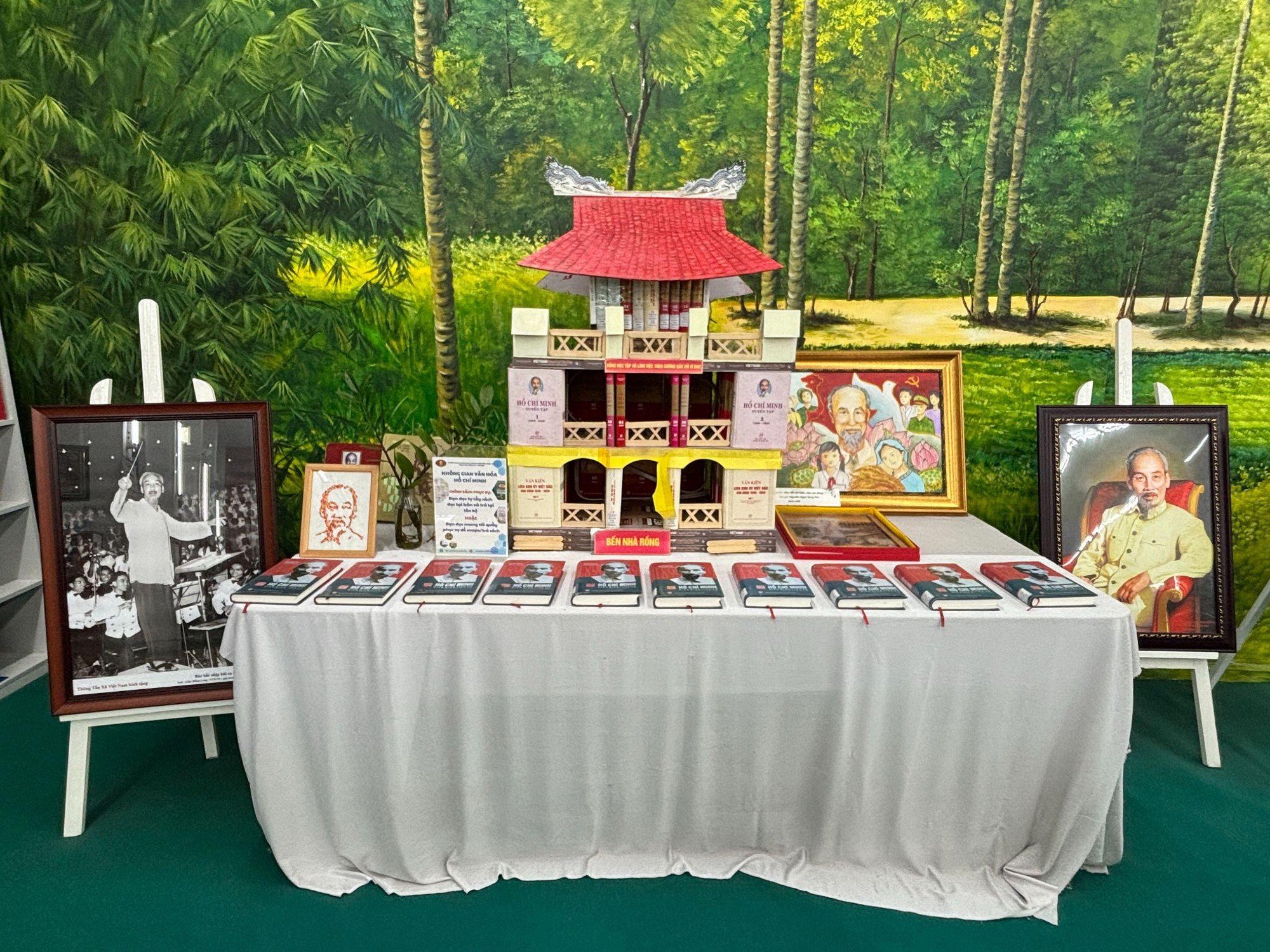
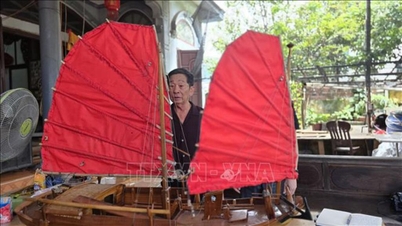
Model of Nha Rong Wharf at the Ho Chi Minh Cultural Space, University of Social Sciences and Humanities, Vietnam National University Ho Chi Minh City.
From the Nha Rong Wharf in 1911 to the digital space of the 21st century, there is a historical gap of over 100 years. However, the flame of aspiration for learning, the spirit of dedication, and the will to serve that President Ho Chi Minh left behind remain a powerful source of inspiration for Vietnamese youth. In the journey of leading the country into a new era of development, this is the invaluable baggage that enables each young person to confidently move forward with knowledge, courage, responsibility, and a desire to contribute to the nation.
Source:
Acomm (http://www.acomm.com.vn), Copyright(c) 2022. “Historical Milestones on Nguyen Ai Quoc's Journey to Find a Way to Save the Nation and Liberate the People.” Hochiminh.vn, hochiminh.vn/tu-tuong-dao-duc-ho-chi-minh/nghien-cuu-tu-tuong-dao-duc-ho-chi-minh/nhung-dau-moc-lich-su-tren-hanh-trinh-tim-duong-cuu-nuoc-giai-phong-dan-toc-cua-nguyen-ai-quoc-6949. Accessed 29 Sept. 2023.
Duyen, Minh. “Learning and Self-Studying Following the Example of President Ho Chi Minh to Enhance Knowledge and Work Capacity.” Vietnam+ (VietnamPlus), 18 May 2026, www.vietnamplus.vn/hoc-tap-va-tu-hoc-theo-guong-bac-ho-de-nang-cao-tri-thuc-nang-luc-cong-tac-post1110130.vnp. Accessed 2 June 2026.
“The Journey of the ‘Seeker of the Nation’ and Lessons for Today’s Youth.” Communist Magazine, 2018, tapchicongsan.org.vn/media-story/-/asset_publisher/V8hhp4dK31Gf/content/hanh-trinh-nguoi-di-tim-hinh-cua-nuoc-va-bai-hoc-cho-thanh-nien-hom-nay. Accessed 24 Nov. 2025.

“President Ho Chi Minh's Journey Abroad to Find a Way to Save the Nation and Liberate the People.” Https://Www.qdnd.vn, www.qdnd.vn/ky-niem-110-nam-ngay-bac-ho-ra-di-tim-duong-cuu-nuoc/chuyen-ve-nguoi/hanh-trinh-chu-tich-ho-chi-minh-ra-nuoc-ngoai-tim-duong-cuu-nuoc-giai-phong-dan-toc-661085. Accessed 13 Sept. 2022.
“The Journey of Those Who Seek the Image of the Nation and Lessons for the Young Generation of Vietnam.” Baotanghochiminh.vn, baotanghochiminh.vn/hanh-trinh-nguoi-di-tim-hinh-cua-nuoc-va-nhung-bai-hoc-cho-the-he-tre-viet-nam.htm. Accessed 28 May 2022.
Hoang Yen. “The Journey of Nguyen Ai Quoc - Ho Chi Minh in Search of a Path to National Salvation.” Dan Tri Online Newspaper, June 5, 2023, dantri.com.vn/thoi-su/hanh-trinh-tim-duong-cuu-nuoc-cua-nguyen-ai-quoc-ho-chi-minh-20230605081049400.htm. Accessed June 2, 2026.
Please tune in to HTV News at 8 PM and the 24-Hour World Program at 8:30 PM every day on HTV9.
Source: https://htv.vn/di-theo-anh-lua-nguoi-thap-222260603130527466.htm
































![[Video] Sunset at Lap An Lagoon – Where the sun sets over the fishing nets](https://vphoto.vietnam.vn/thumb/1200x675/vietnam/resource/IMAGE/2026/05/31/1780192137701_beach-landscape-sea-water-nature-grass-745871-pxhere-com.jpeg)


























Comment (0)