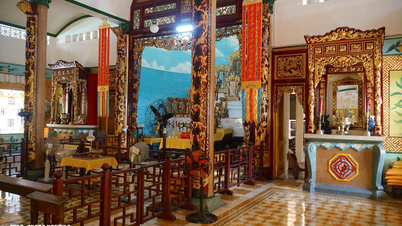
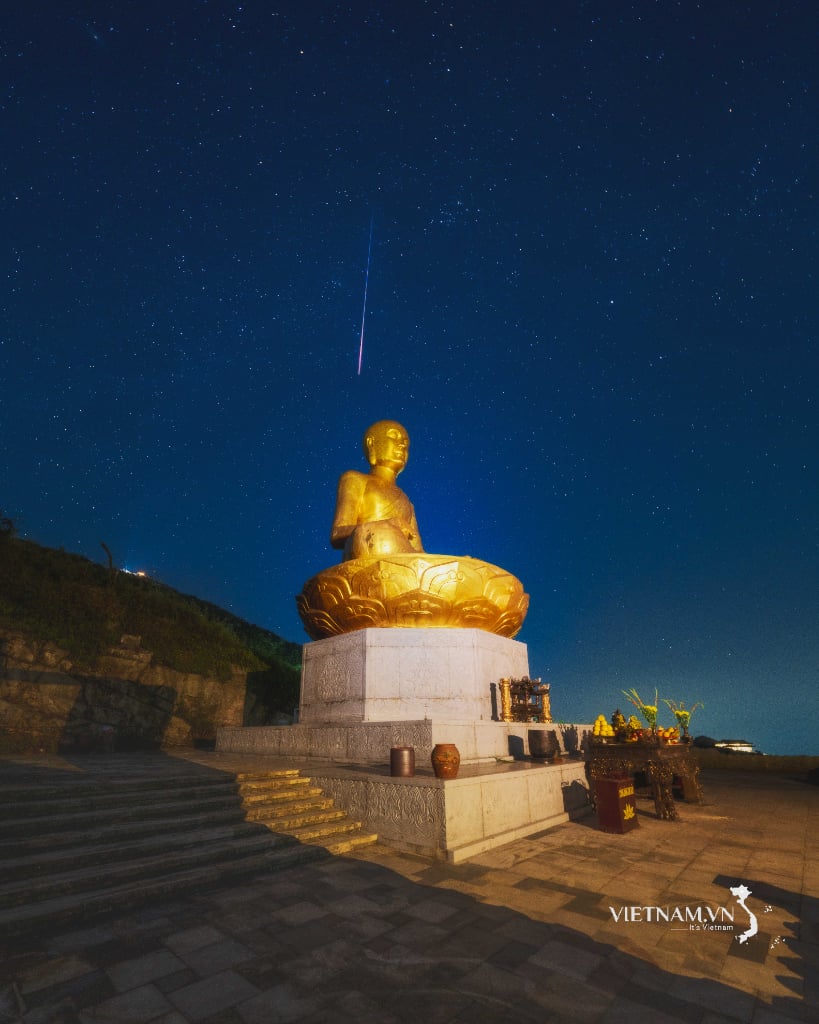
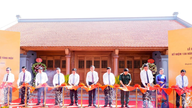
Memorial temple at the Soc Trang Provincial Party Committee Base Area National Monument.

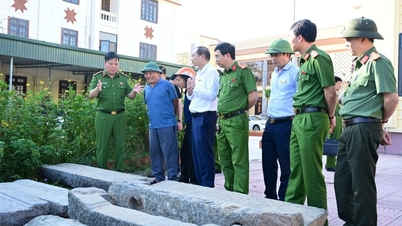
The delegation from the Department of Culture, Sports and Tourism of Can Tho City offered incense at the National Historical Site of the Soc Trang Provincial Party Committee Base.
During the resistance against French colonialism and the early stages of the resistance against the US, the My Phuoc melaleuca forest was chosen as a base for revolutionary forces. In January 1968, the Soc Trang Provincial Party Committee Base was moved from Gia Hoa commune, My Xuyen district (now part of Can Tho city) to the My Phuoc melaleuca forest. All the offices of the Provincial Party Committee Base, such as the meeting hall, offices, dining hall, and barracks, were constructed from readily available wood and leaves, scattered throughout an area of nearly 100 hectares.
The base area was surrounded by a complex network of canals and dense vegetation, perfectly suited to our guerrilla warfare tactics and effectively preventing enemy sweeps. Due to this strategic location, the enemy implemented a tight blockade and frequently organized large-scale sweeps. They dropped thousands of tons of bombs and ammunition in an attempt to destroy the Soc Trang Provincial Party Committee Base Area, but all their attempts failed. The base area remained safe and survived until the liberation of South Vietnam.

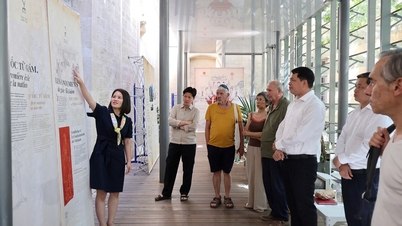
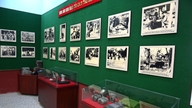
The exhibition hall displays many valuable historical images, artifacts, and documents.

The landscape within the historical site strongly reflects the rural, riverside atmosphere of the Mekong Delta.
The Soc Trang Provincial Party Committee Base Area National Monument covers a total area of approximately 310 hectares, divided into two zones. One zone, covering 281 hectares, includes the reconstruction of historical relics such as: the Standing Committee building, the Provincial Party Committee meeting hall, the canteen, the bomb shelter, the freshwater reservoir, the Liaison Office, the Cryptography Office, the Provincial Party Committee Office, the Chief of the Provincial Party Committee Office's office, and the Economic and Financial Office; the other zone, covering 20 hectares, is the administrative center, including: the memorial temple, the triple-arched gate, the stele house, the youth activity center, the exhibition hall, the administration building, and the staff quarters.

Tourists experience the beauty of riverine culture.

Immerse yourself in nature and the people of the lush green My Phuoc mangrove forest.
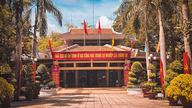
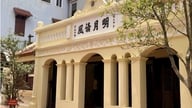
The historical site stands out with its lush, fresh natural environment and distinctive Southern Vietnamese countryside landscape, featuring a system of canals and waterways, and a natural ecosystem preserved under the canopy of melaleuca forests. This is a meaningful and attractive destination for tourists from near and far.
DUY LỮ
Source: https://baocantho.com.vn/dia-chi-do-va-khong-gian-xanh-a207134.html
![[Photo] Opening Ceremony of the 13th National Congress of the Ho Chi Minh Communist Youth Union](https://vphoto.vietnam.vn/thumb/1200x675/vietnam/resource/IMAGE/2026/06/24/1782286753905_ndo_br_1-8510-jpg.webp)
![[Photo] General Secretary and President To Lam attends the Central Public Security Party Committee Conference](https://vphoto.vietnam.vn/thumb/1200x675/vietnam/resource/IMAGE/2026/06/24/1782302063612_a1-bnd-9302-9166-jpg.webp)
![[Photo] The 13th National Congress of the Youth Union conducts personnel work.](https://vphoto.vietnam.vn/thumb/1200x675/vietnam/resource/IMAGE/2026/06/24/1782299943080_ndo_br_1-6868-jpg.webp)