

 |
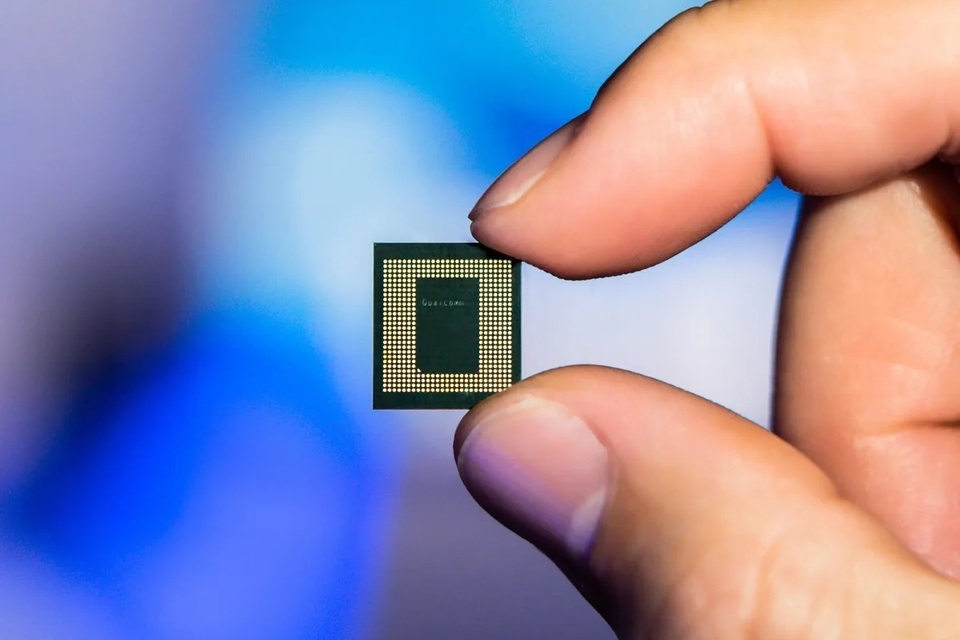
The iPhone 19 will most likely be the first device to feature TSMC's latest A14 chip. Photo: Qualcomm . |
Following the race to create 2nm chips, TSMC announced on April 24th the manufacturing process for its 1.4nm chip, codenamed A14. An improvement over the 2nm, or N2, manufacturing process, TSMC expects the A14 to significantly boost artificial intelligence in servers, as well as in smartphones like the iPhone.
The N2 process is expected to go into mass production by the end of 2025 and is rumored to be used in the iPhone 17 Pro launching in 2025. Compared to N2, the A14 process will deliver a 15% improvement in speed performance at the same power consumption level, or up to a 30% reduction in power consumption for comparable performance.
Additionally, according to AppleInsider , this chip also boasts a 20% increase in logic density — the number of transistors and miniature circuits that can be crammed into a space.
Although TSMC hasn't specified which customers will use the announced technology or processes, AppleInsider believes it's almost certain Apple will use this latest chip. Apple has historically been a major customer of TSMC and has consistently used the latest refinements in its A-series and Apple Silicon chips.
Based on TSMC's statement that chips using the A14 process will go into mass production in 2028, this means that the first Apple hardware to use it could be the iPhone 19 generation.
For decades, manufacturers have continuously sought to create chips with the smallest possible transistors. The smaller the transistors on a chip, the lower the power consumption and the higher the data transfer speed. Terms like "3 nm" and "5 nm," referring to transistor size, are used as shorthand for generations of chip technology, rather than the actual physical size of the chip.
Source: https://znews.vn/diem-dang-mong-cho-nhat-o-iphone-19-post1548612.html

![[Photo] The heat at the fireworks display site on the opening night of the Da Nang International Fireworks Festival 2026](https://vphoto.vietnam.vn/thumb/1200x675/vietnam/resource/IMAGE/2026/05/27/1779889741485_ndo_br_z7872039145157-fecaba5112f39e8352544099d7ef4738-5140-jpg.webp)

![[Photo] The courage of new recruits of Brigade 144 on the training ground.](https://vphoto.vietnam.vn/thumb/1200x675/vietnam/resource/IMAGE/2026/05/27/1779881651341_anh-man-hinh-2026-05-27-luc-18-32-52.png)

















































![[Photo] The courage of new recruits of Brigade 144 on the training ground.](https://vphoto.vietnam.vn/thumb/402x226/vietnam/resource/IMAGE/2026/05/27/1779881651341_anh-man-hinh-2026-05-27-luc-18-32-52.png)



























Comment (0)