


 |
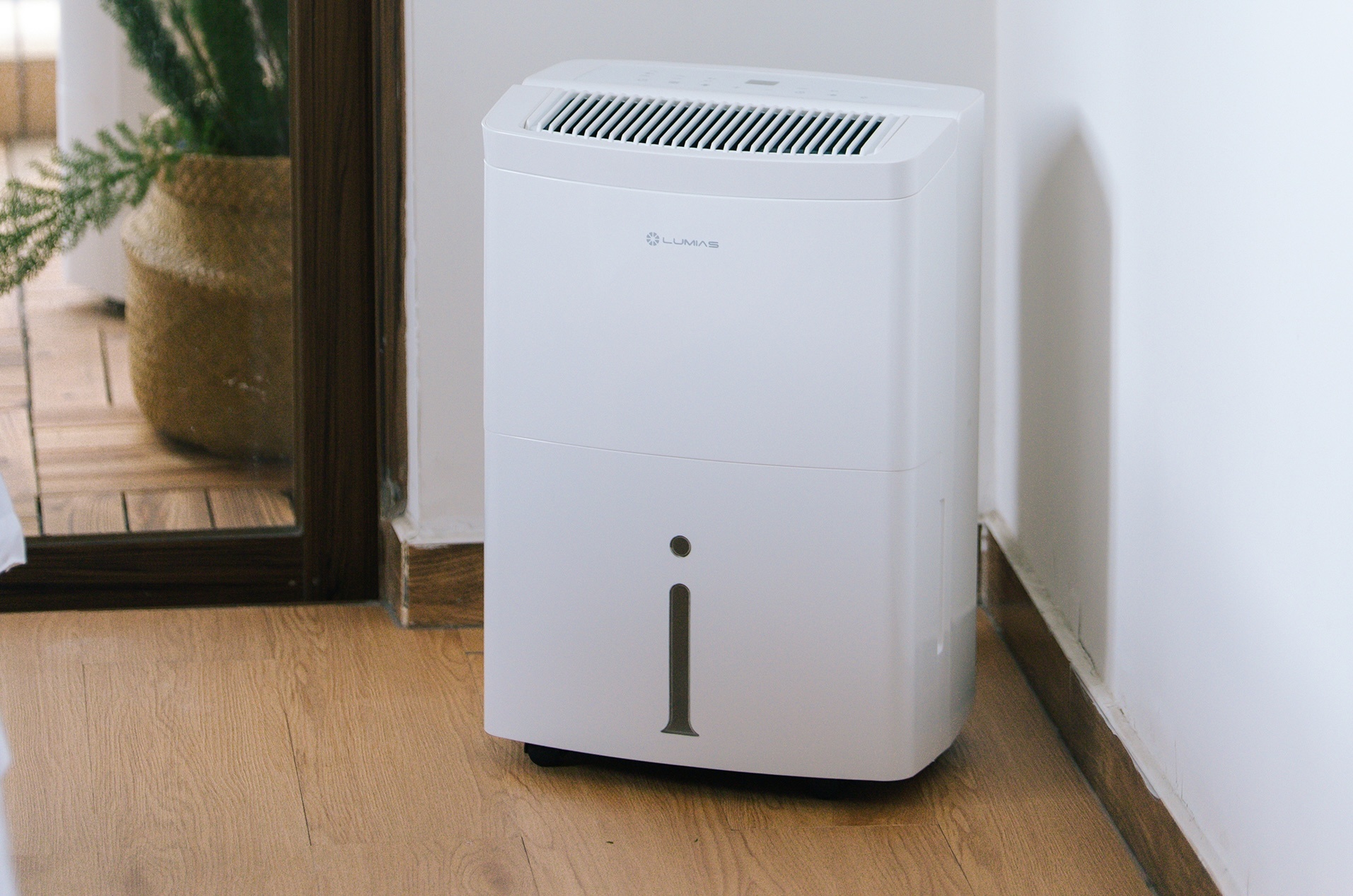
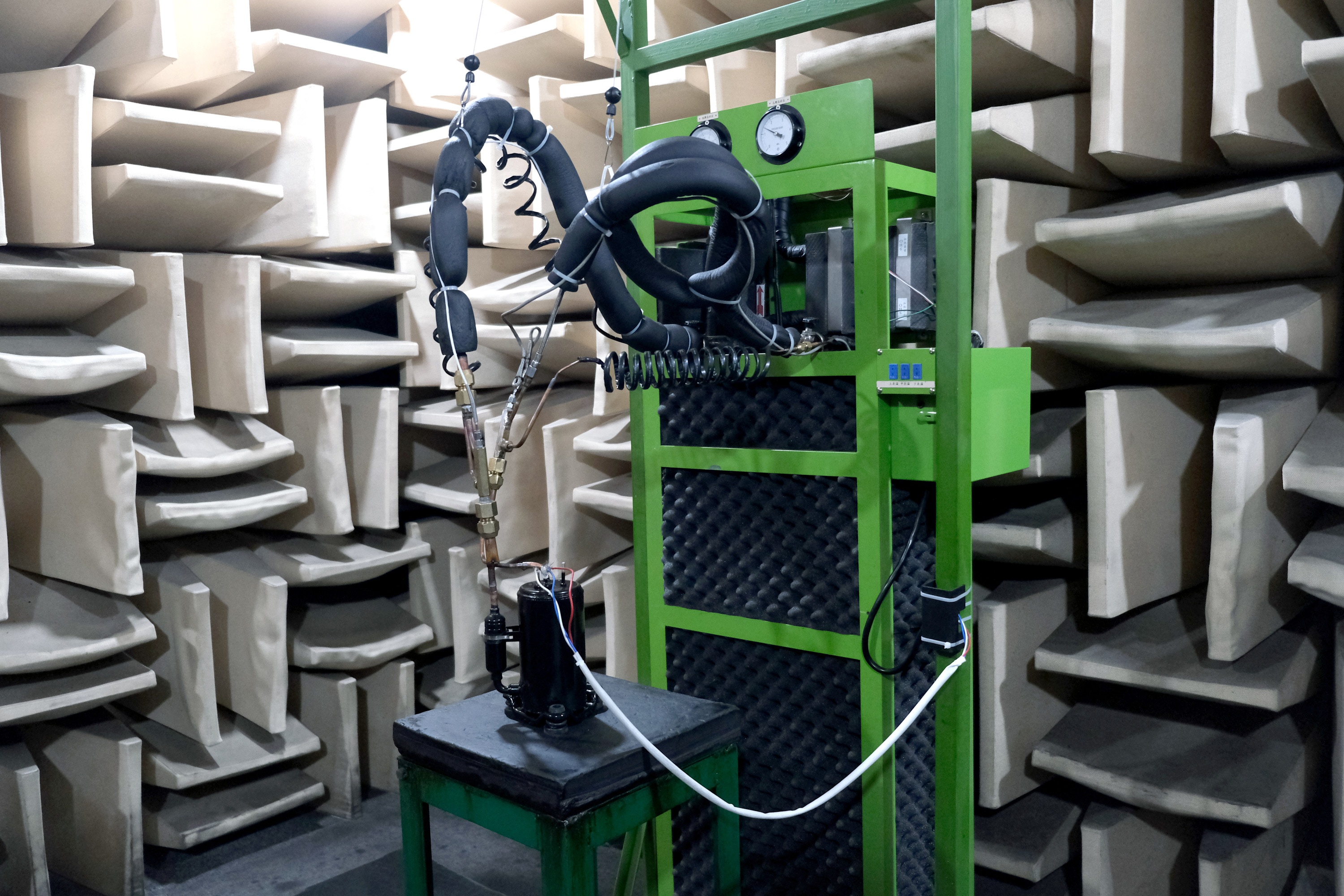
Despite their different functions, both dehumidifiers and air conditioners operate on the principle of using a compressor to change air pressure, thereby regulating temperature and humidity. While the goal of an air conditioner is to reduce or increase temperature, a condenser-type dehumidifier aims to cause water to condense on the cooling coil. |
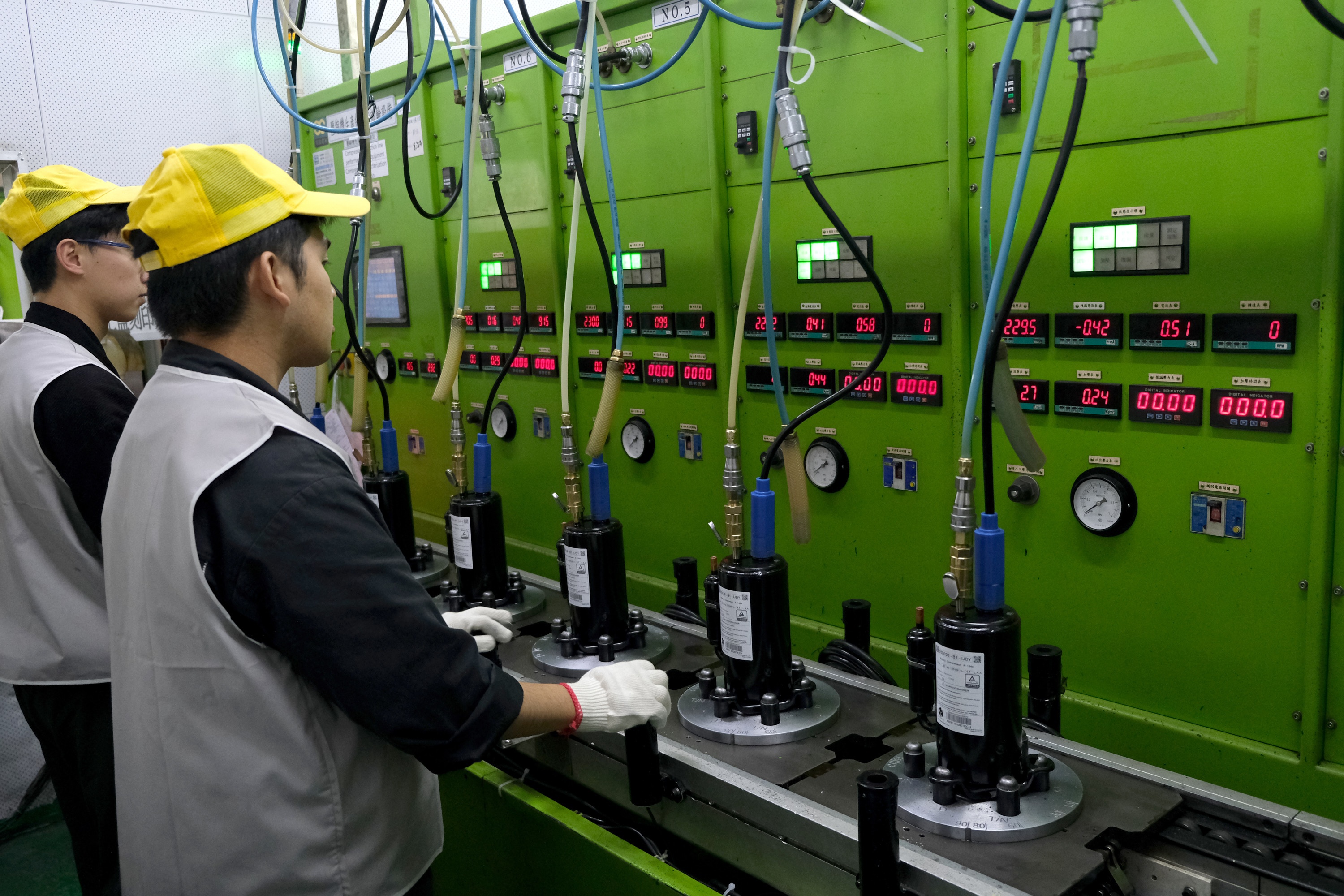 |
Therefore, the compressor is the central component, determining the performance and lifespan of the device. In a dehumidifier, the compressor accounts for 30-40% of its value. It is also the component that undergoes the highest quality testing standards. |
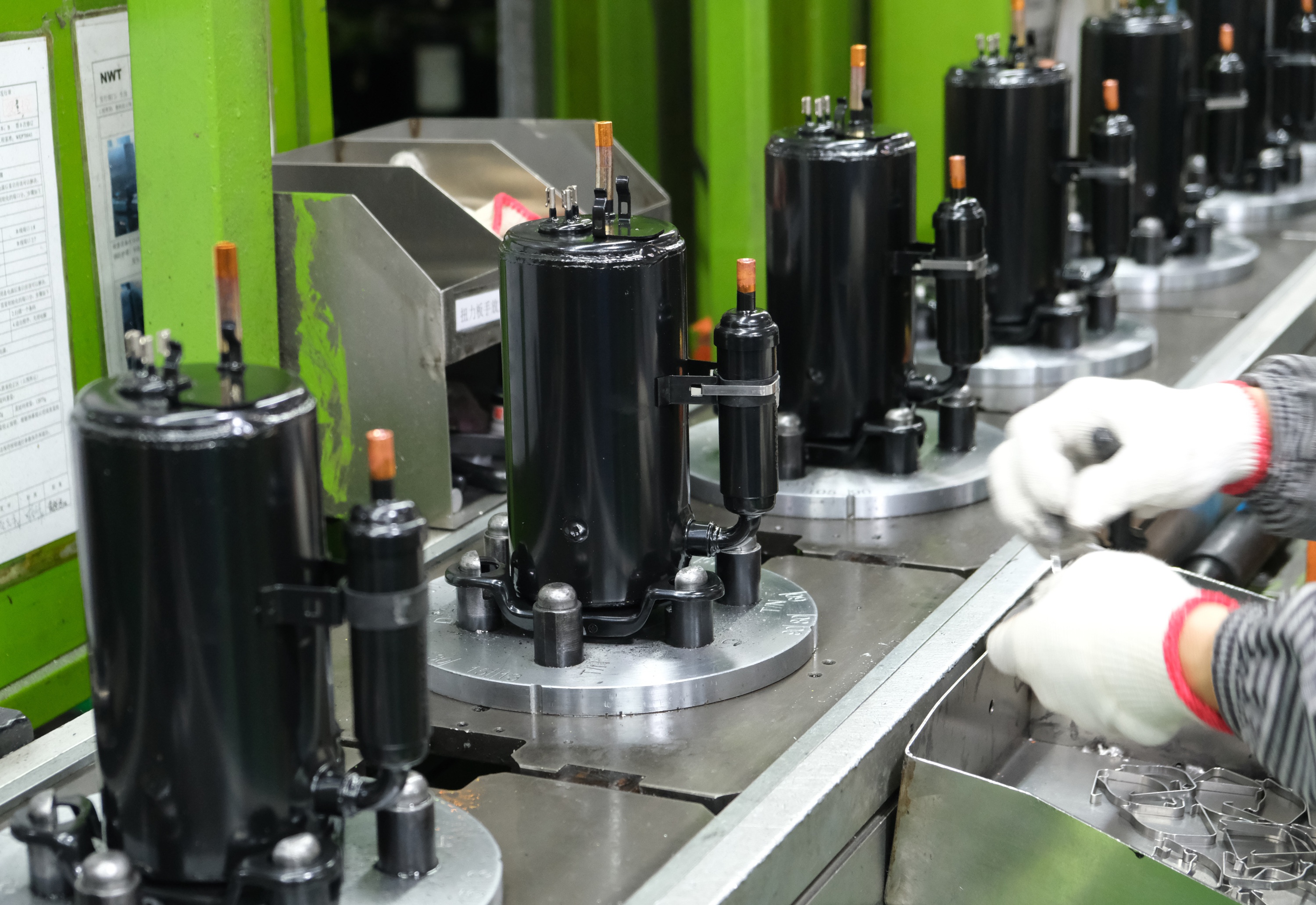 |
Pictured is a compressor at the New Wide Tech (NWT) factory in Kaiping City, Guangdong Province, China. According to the factory's engineers, the compressor casing is made of 3 mm thick iron, capable of withstanding a pressure of 100 kg, even at the welds. The production line combines manual labor and automated robots. |
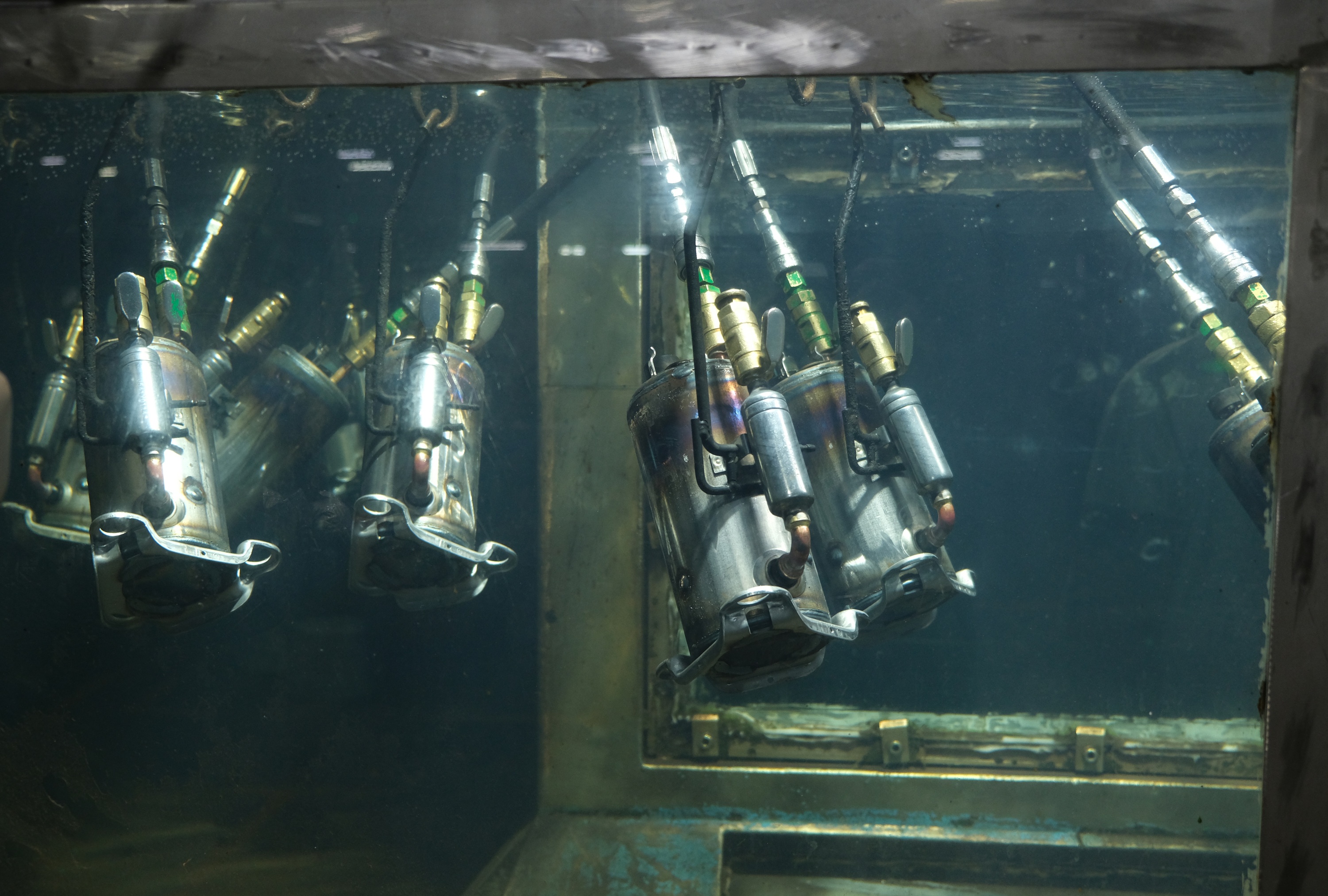 |
The average weight of a compressor is 6-8 kg, with some larger ones weighing up to 20 kg. After completion, each compressor is immersed in a water tank to inspect the welds, thoroughly rinsed, and dried to prevent rust before assembly. |
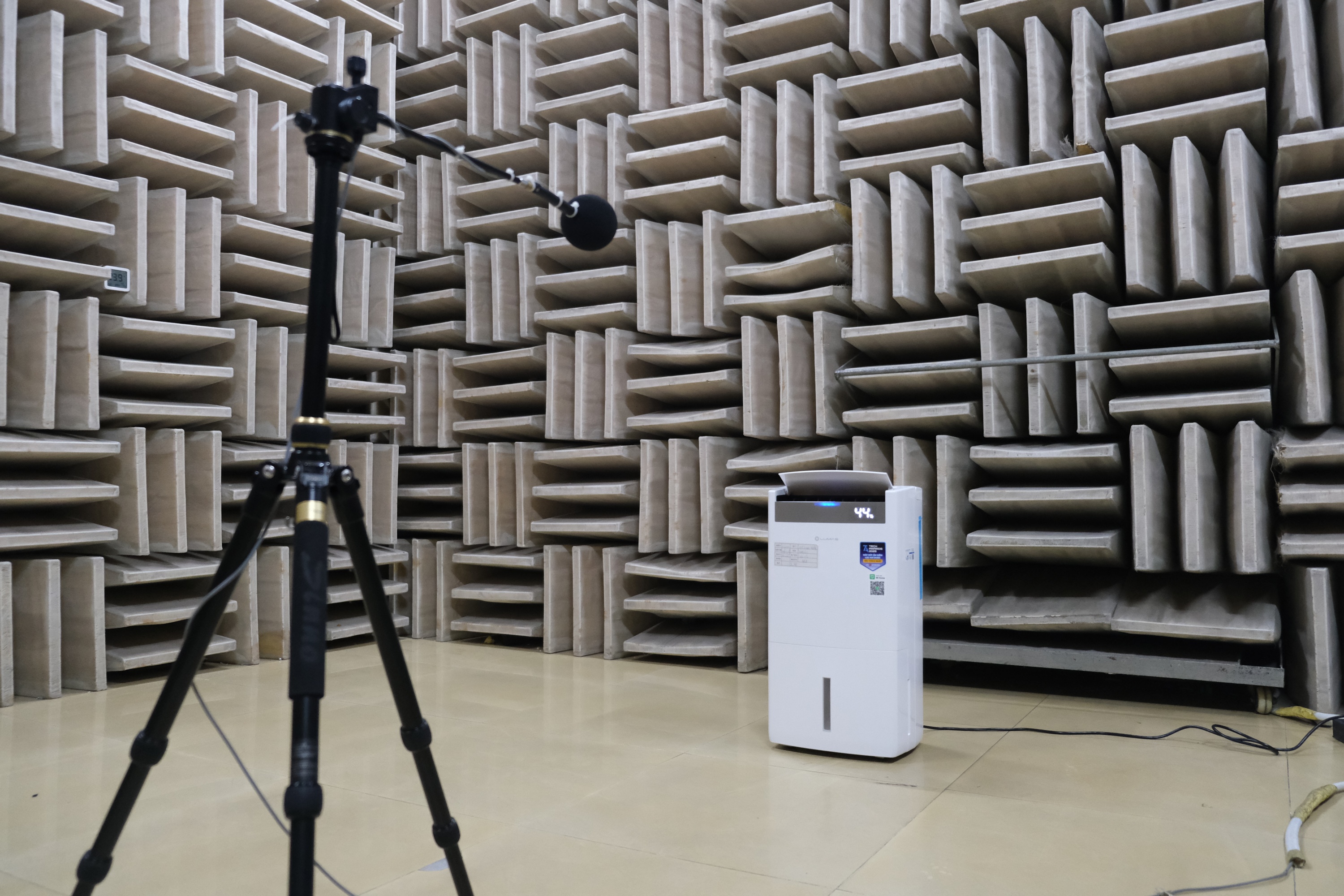 |
Noise is also carefully controlled right from the component manufacturing stage. Inside the million-dollar testing room, high-end microphones are set up to work with software that analyzes data in real time. The European-standard testing room even has a reflective wall system that simulates real-world environmental conditions. |
 |
The condenser is also manufactured in-house. Notably, this facility still uses pure copper refrigerant pipes, instead of switching to aluminum like some other Chinese manufacturers. According to the factory representative, copper conducts heat better, is more durable, and the welding process has been proven over decades. The cost of using copper pipes is about $5 higher per unit compared to using aluminum. Inside the copper pipes, there is also a textured layer that increases the heat exchange surface area, a detail not visible to the naked eye but contributing to improved moisture condensation efficiency. |
 |
The fan motors are manufactured on an automated production line worth nearly $6 million , requiring only one supervisor and capable of producing 5,000 motors per day. Each motor has a QR code for tracking quality information throughout its lifecycle, even after it reaches the customer. Factory standards require noise levels not to exceed 30 dB. |
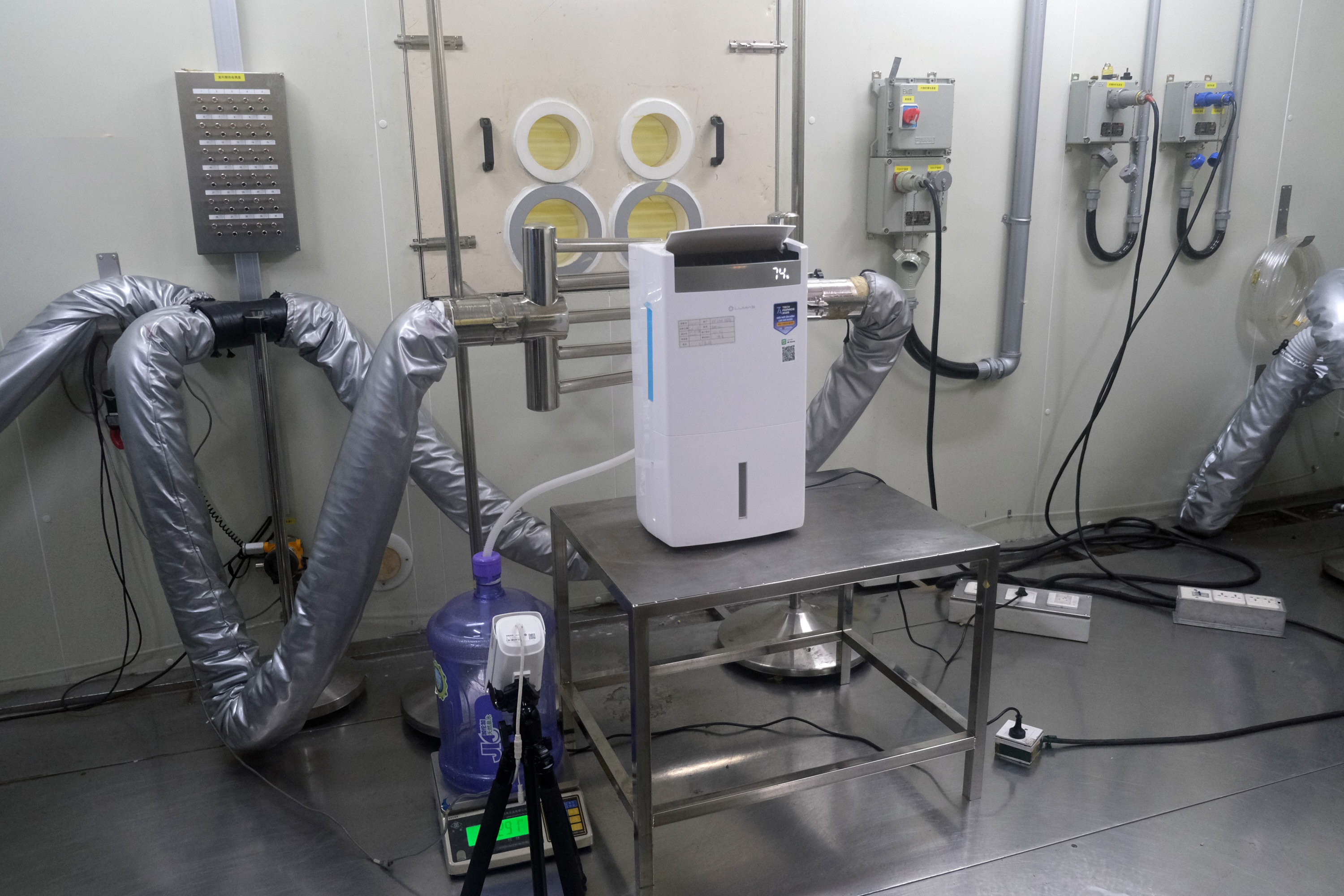 |
The factory also has a durability testing room where machines operate continuously for 5,000 hours at maximum capacity. Data is recorded daily for analysis and improvement. This room consumes approximately 500,000 kWh of electricity per year. According to the engineer in charge, the main goal is to detect minor remaining problems, as serious defects are usually addressed during the production process. |
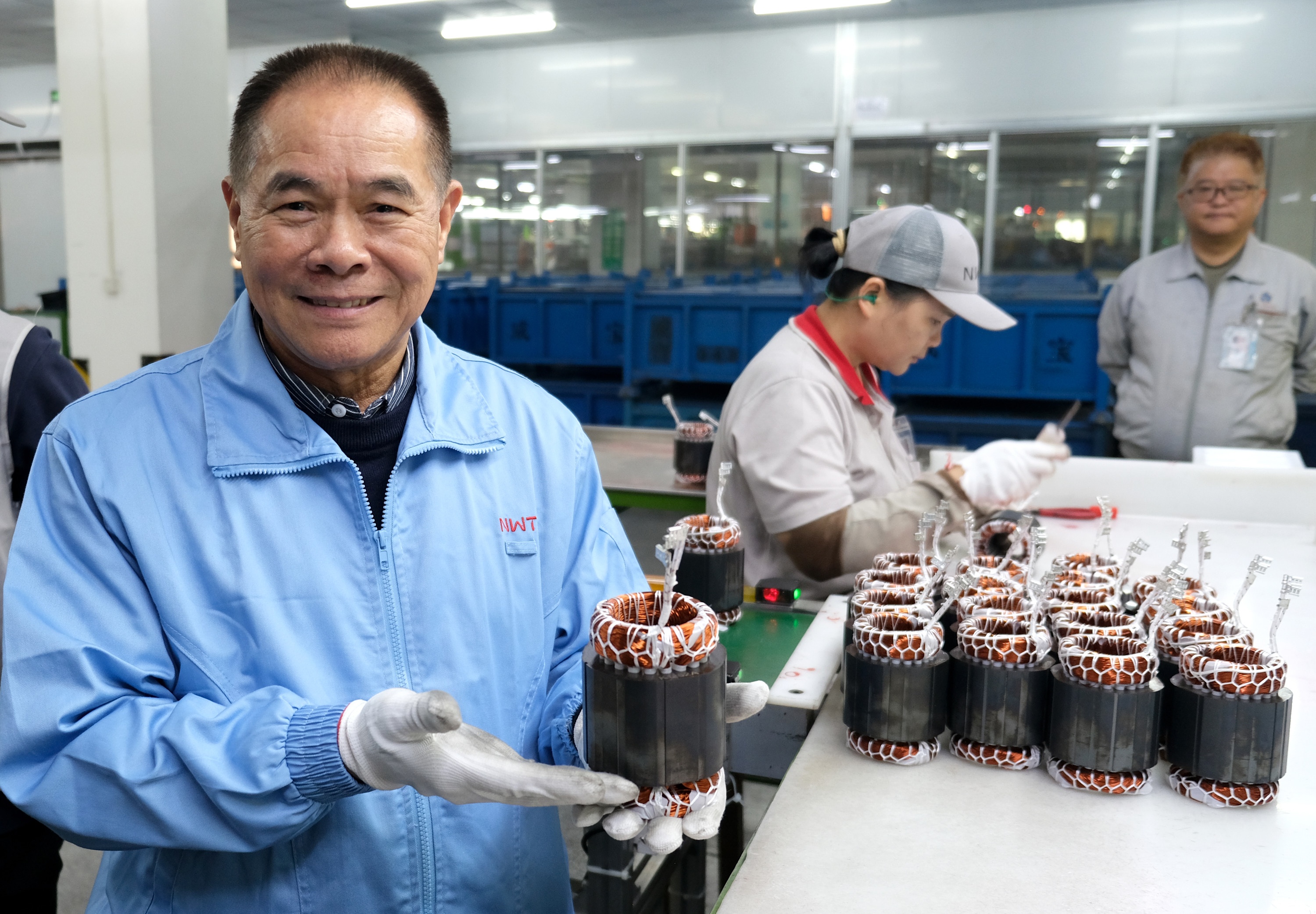 |
This is the production line for many familiar dehumidifier brands in the Vietnamese market such as Lumias, Sharp, and De'Longhi. Besides the production process, the factory ensures quality control and uses shared core components for the products. Mr. Khuong Tri Minh, Director of Production at NWT, said that with this model, the difference between brands on the same production line in the market usually lies in the design and external appearance. |
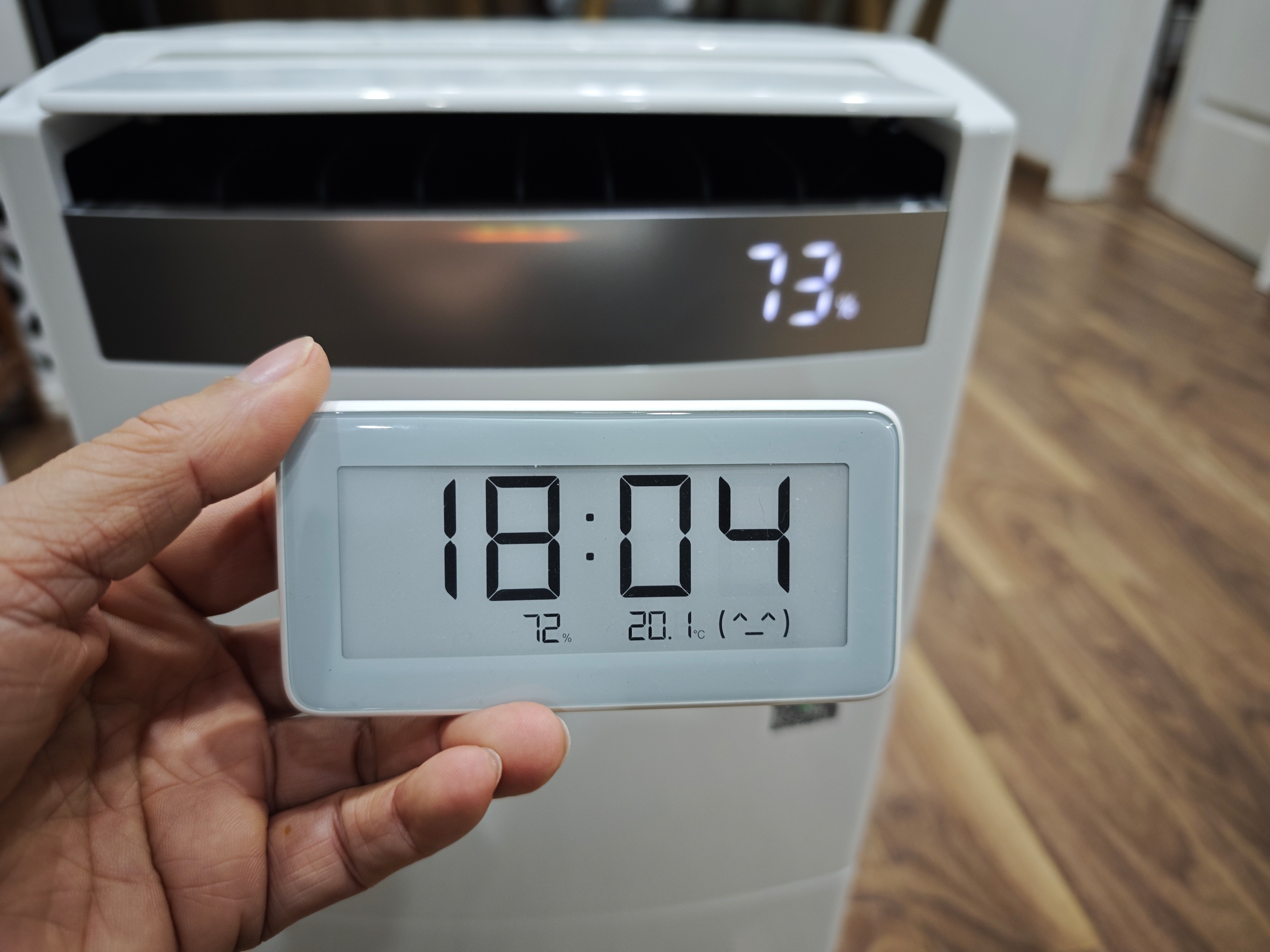 |
In Vietnam, dehumidifiers are becoming increasingly popular in the North, where humidity levels reach over 90% after the Lunar New Year. On February 24th alone, during the peak of the humid season, Hop Long and Giga Digital distribution systems recorded sales of nearly 5,000 units. Low-capacity models like 10-12 liter units remain the best-selling, while 20, 30, and 60-liter models are also gaining popularity. Besides dehumidifying, newer models include HEPA filters, which users utilize for drying clothes and shoes. |
Source: https://znews.vn/co-gi-ben-trong-may-hut-am-post1631305.html




























































































Comment (0)