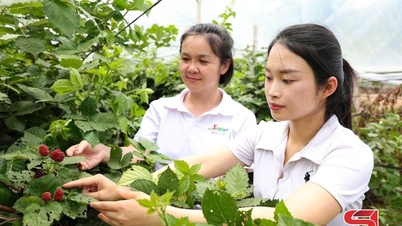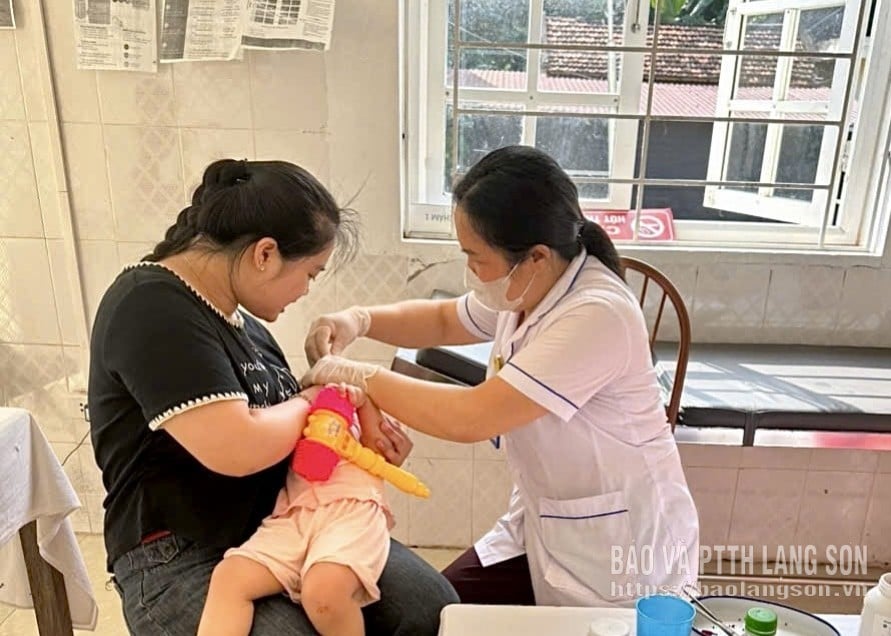
Having worried about her youngest daughter's slow weight gain compared to her peers, Ms. Hoang Hong Nga from Duc Hinh village, Van Quan commune, proactively sought out and participated in nutrition practice sessions organized by the local health station. Ms. Nga shared: "Previously, my daughter suffered from mild malnutrition, weighing only about 11.5 kg at the age of 3. After receiving guidance from health officials on a suitable diet for young children, I changed my approach to caring for her, limiting junk food, focusing on nutritious main meals, and supplementing her with micronutrients. As a result, her health and physical condition have improved significantly. Now, almost 4 years old, she weighs 13 kg, eats better, and is developing more healthily than before."
The changes in Ms. Nga's approach to childcare are not unique. Recently, many parents in the area have gained access to nutritional knowledge through counseling and practical guidance activities implemented by the health sector at the local level.
In Quoc Viet commune, a disadvantaged border area in Zone III, local health facilities regularly maintain activities to monitor growth, supplement micronutrients, and provide advice on childcare, aiming to gradually improve the nutritional status of children.

Ms. Tran Thi Tuyet, a nutrition officer at Quoc Viet Commune Health Station, said: "Every year, the health station maintains weight and height measurements, monitors children's growth, supplements Vitamin A, provides nutritional counseling for pregnant women and mothers with young children, and organizes nutrition practice sessions to help parents learn how to build balanced meals for their children. Through these efforts, people's awareness has gradually improved, contributing to the improvement of children's nutritional status. By 2025, the rate of underweight children in the area will be 14%, stunted children 19%, and wasting children 6.3%, all lower than the previous year."
Not only in Quoc Viet commune, but throughout the province, the work of caring for and improving nutrition for children has been implemented comprehensively. The health sector has promoted many activities to prevent malnutrition and micronutrient deficiencies in children. Annually, health facilities organize weighing and measuring, monitoring children's growth; supplementing Vitamin A and micronutrients; providing advice and guidance on nutritional practices; monitoring the health of mothers and children during the first 1,000 days of life; and strengthening communication to raise public awareness about proper nutrition and childcare in the early years.
According to Dr. Le Thi Kieu Oanh, Head of the Department of Non-Communicable Disease Prevention and Nutrition at the Provincial Center for Disease Control: To improve the nutritional status of children in the province, we annually coordinate the distribution of Vitamin A and nutritional products to pregnant women, breastfeeding women, and malnourished children under 5 years old; guide localities to monitor the growth of children under 2 years old monthly, weigh and measure children under 5 years old, assess their nutritional status, and maintain nutrition activities in the community. In addition, regular inspections, supervision, and professional guidance are carried out to improve the effectiveness of nutrition improvement programs, contributing to gradually reducing the rate of child malnutrition in the province.
By the end of 2025, the entire province will have 16,609 children under 2 years old whose growth and development are being monitored, reaching 99.7%; the rate of children under 5 years old being weighed, measured, and assessed for nutritional status will reach 99.7%. The campaign to supplement vitamin A for children aged 6 to 36 months will achieve a rate of 99.2%, exceeding the set target. This result is expected to be maintained in the first months of 2026. According to statistics up to the end of May 2026, the entire province will have 16,099 children under 2 years old being weighed and monitored for growth; the rate of children aged 6 to 23 months with a minimum required diet will reach nearly 80%.
Thanks to the synchronized implementation of solutions for care and improved nutrition, the rate of malnutrition among children in the province continues to decline. By 2025, the rate of underweight malnutrition among children under 5 years old will be 14.4%, a decrease of 0.4% compared to 2024; the rate of stunting malnutrition will be 21%, a decrease of 0.4%. This result demonstrates the effectiveness of nutritional intervention activities and creates an important foundation for children's comprehensive physical and intellectual development, contributing to improving the quality of the population in the future.



Source: https://baolangson.vn/dinh-duong-tot-tre-em-khoe-manh-5095537.html



![[Photo] "Hanoi Lotus Festival" honors the lotus flower that has been associated with Vietnam for thousands of years.](https://vphoto.vietnam.vn/thumb/1200x675/vietnam/resource/IMAGE/2026/06/27/1782516943048_sen-ha-noi-2026-minh-duy-1-jpg.webp)