

IMPLEMENTING RESOLUTION NO. 80-NQ/TW ON THE DEVELOPMENT OF VIETNAMESE CULTURE:

Culture – a “guiding mission” in the new era.
According to Associate Professor Dr. Nguyen The Ky, Vice Chairman of the Central Theoretical Council, Resolution No. 80 was issued not only to summarize the practical experiences of 40 years of reform but also to reposition culture within the national development structure of the new period. This is a step towards elevating thinking as culture is placed at the center of the strategy for rapid and sustainable national development.
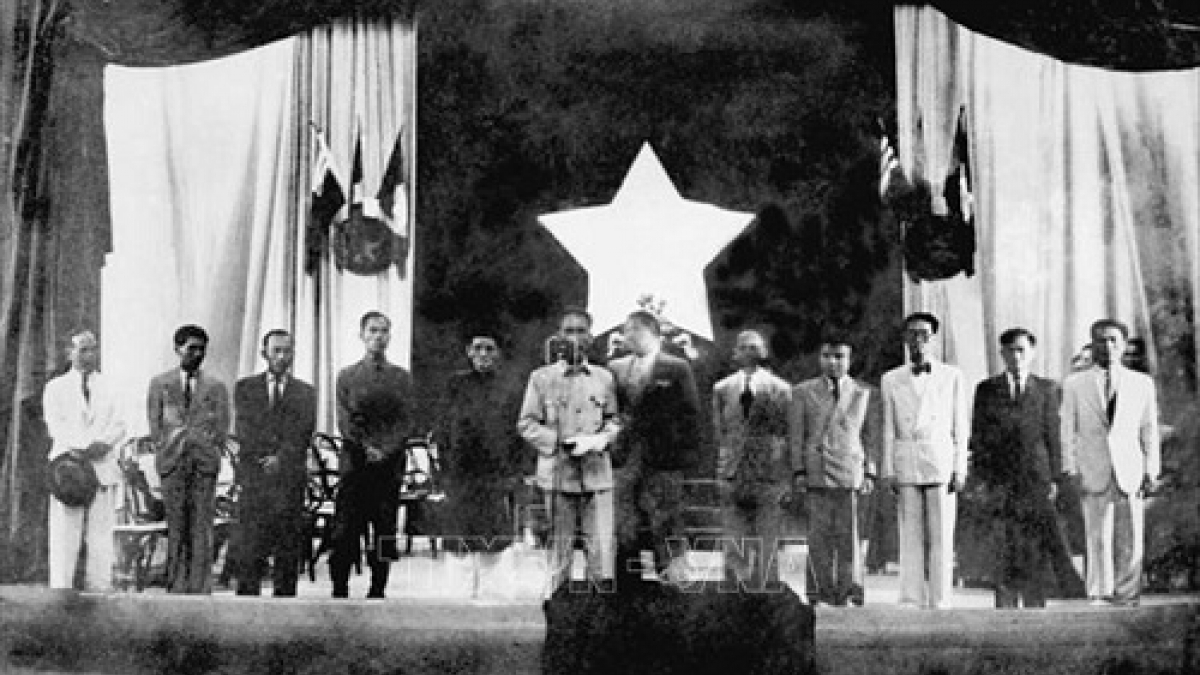
President Ho Chi Minh affirmed at the National Cultural Conference on November 24, 1946: "Culture must illuminate the path for the nation to follow." In the current context, the role of culture is even more strategically significant. Entering a new stage of development, alongside resolutions on science and technology, innovation, institutional reform, private sector development, education and training, etc., Resolution No. 80 on cultural development is the resolution with the "mission of illuminating the path," guiding the mindset, character, and resilience of the Vietnamese people in the new era.
The overarching guiding principle of Resolution No. 80 is: "Developing culture and human resources is the foundation, an important endogenous resource, a great driving force, a pillar, and a regulating system for the rapid and sustainable development of the country." While previously culture was defined as the spiritual foundation of society, a goal and driving force for development, this time the resolution emphasizes its role as an endogenous resource and a regulating system for development.
According to Associate Professor Dr. Nguyen The Ky, placing culture on par with economic and political factors in development strategies demonstrates a significant shift from perceiving culture as a "service" sector to viewing it as a pillar of development. Culture not only reflects social life but also guides, regulates, and motivates development.
Resolution No. 80 affirms that cultural development is for the perfection of the socialist human personality in the new era, while simultaneously building human beings to develop culture. This is a dialectical relationship in which human beings are both the creative subjects and the centers for enjoying and disseminating cultural values .
In particular, the Resolution places the comprehensive development of Vietnamese culture and people on the foundation of national values, cultural values, family values, and the standards of Vietnamese humanity. This shows that cultural development is not limited to preserving heritage or developing art, but rather involves building a foundation of morality, character, and national resilience in the context of globalization and digital transformation.
The cause of the entire people, the strength of the entire society.
Resolution No. 80 continues to affirm the consistent viewpoint: Cultural development is the undertaking of the entire people, led by the Party, managed by the State, with the people as the creators and beneficiaries; intellectuals, artists, cultural officials, and entrepreneurs play an important role; while also emphasizing the pioneering and exemplary role of cadres and Party members.
According to Associate Professor Dr. Nguyen The Ky, the highlight is the requirement to strongly and comprehensively promote the strength of Vietnamese culture and people; while also effectively addressing the internal relationships of culture such as "construction" and "combat"; tradition and modernity; national and international; preservation and development; popular and scholarly; real life and digital space; open data and ensuring security and sovereignty of digital culture. The establishment of these relationships shows that cultural governance thinking has entered a stage of integration and balancing interests, instead of a one-sided approach. Culture is viewed as an ecosystem, with interaction between the State - market - society - creative community. One of the points that gives Resolution No. 80 its stature is the transformation of the idea of cultural development into specific goals, targets, and solutions.
The resolution clearly defines milestones for 2030 and a vision for 2045. Accordingly, by 2030, the goal is to build an advanced Vietnamese culture rich in national identity; create a healthy cultural environment from family and school to society and the digital space; develop literature and art to a commensurate level; and preserve and promote cultural heritage. For the first time, the cultural industry is set with specific quantitative targets: Striving to contribute approximately 7% of GDP by 2030; forming 5-10 national brands in the cultural industry; building international-level cultural and artistic festivals; expanding the network of Vietnamese cultural centers abroad; and increasing the number of internationally recognized heritage sites.
The vision for 2045 is for the cultural and creative economy industries to contribute approximately 9% of GDP; Vietnam strives to be among the leading ASEAN countries in soft power. These goals not only have economic significance but also reflect the aspiration to enhance the nation's standing through culture. According to Associate Professor Dr. Nguyen The Ky, the most important "keyword" of this Resolution is the development of cultural industries. Culture is recognized as both a vital spiritual and material resource, contributing to the enrichment of the country and improving the lives of its people.
Institutional and resource breakthroughs
Resolution No. 80 goes beyond mere viewpoints and emphasizes the conditions for ensuring its implementation. A breakthrough is the commitment to allocating at least 2% of the total state budget to culture, along with preferential mechanisms for training and rewarding talent, applying science and technology, digital transformation, and commissioning the creation of high-value works.
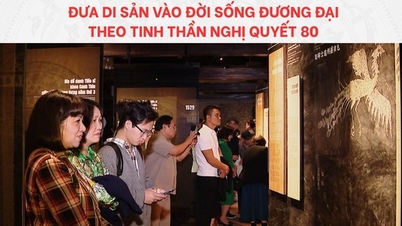
The resolution also outlines specific solutions: developing a national cultural index; establishing a statistical index for the contribution of the cultural industry; improving institutions; shifting from pre-approval to post-approval; promoting public-private partnerships; building cultural data infrastructure; and digitizing heritage.
According to Associate Professor Dr. Nguyen The Ky, for a resolution to be implemented effectively, the most important thing is awareness. Culture is primarily about thinking and the perspective of the entire political system. Only with correct awareness can it be institutionalized into specific policies and resources. He emphasized the need to build a team of cultural officials from the central to the grassroots level. Cultural development requires long-term investment in people, especially in training an elite workforce, including sending personnel for formal training abroad. Investment in culture also needs to be focused and targeted, avoiding a scattered approach. Popular culture and elite culture are not opposed but complement and support each other. The system of cultural institutions must improve the quality of its activities, avoiding situations where facilities exist but lack content and public appeal.
According to Associate Professor Dr. Nguyen The Ky, Resolution No. 80 has systematically integrated the core contents of previous resolutions on culture, while opening up new development directions suitable for the times. “Our journey behind us is a vast treasure trove of cultural heritage forged through the history of nation-building and national defense; ahead are the challenges of integration, digital transformation, and the risk of fading identity. In this context, cultural development must be based on national values, Vietnamese cultural values, family values, and the standards of Vietnamese people – these are the core values that make up national identity,” Associate Professor Dr. Nguyen The Ky emphasized.
According to Associate Professor Dr. Nguyen The Ky, all the goals, strategies, and solutions of Resolution No. 80 are directed towards people, for people, and because of people. When culture truly becomes a pillar, an endogenous resource, and a regulatory system for development, the country will not only grow faster but also more sustainably and humanely.
After 40 years of Doi Moi (Renovation), Resolution No. 80 can be seen as a strategic commitment to cultural development between the Party, the State, and the people in the new era. Associate Professor Dr. Nguyen The Ky emphasized: "If implemented synchronously, decisively, and creatively, Vietnamese culture will develop to its full potential, nurturing the national spirit and character while contributing to the creation of material wealth and enhancing the nation's position in the new era."
Source: https://baovanhoa.vn/van-hoa/dinh-hinh-tam-nhin-phat-trien-209122.html












![[Photo] New recruits happily exercise their right to vote at their unit.](https://vphoto.vietnam.vn/thumb/1200x675/vietnam/resource/IMAGE/2026/03/14/1773473286544_stug0337-6388-jpg.webp)




































Comment (0)