


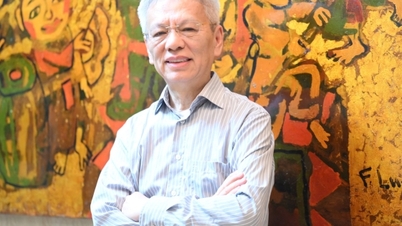
According to Associate Professor Dr. Le Hai Dang, Director of the Vietnam Museum of Ethnology, the solution of integrating technology and artificial intelligence (AI) into the museum's physical space aims to transform collections, which are typically displayed behind glass cases, into a multi-sensory exploration journey.
To prepare for accelerated digitalization, in recent years, the Vietnam Museum of Ethnology has focused on applying technology to transform static exhibition spaces into vibrant, immersive experiences. This roadmap has been systematically implemented year by year, starting in 2021 with the opening of a Children's Discovery Room using interactive screens. From 2022 to the present, the museum has continued to diversify with themed tours, "Fun Gift Hunt" games, and a QR code scanning system called "Treasure Hunt." Instead of passively viewing artifacts in glass cases, AI at the museum has helped to transform collections into multi-dimensional interactive experiences; turning the museum's visitor space into a multi-sensory journey of discovery. AI personalizes cultural quizzes, encouraging the younger generation to actively explore and "touch" the vivid artifacts instead of just looking at them behind glass.
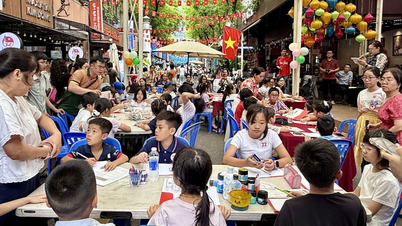
In particular, a groundbreaking and fundamental step was successfully tested during last year's Mid-Autumn Festival with the "AI Paper Doctor" model – a research result from collaboration between the Museum and a group of young volunteers (referred to as the Working Group). This combines cultural heritage and technology, offering a novel experience for children. This experiential activity is a test run to apply technology to explore and disseminate heritage values, targeting Generation Z and Generation Alpha. This special "Paper Doctor" can move, communicate, and participate in question-and-answer sessions with children, helping them better understand the Mid-Autumn Festival and the Museum's history.
AI-powered experiential activities have guided the public to specific groups of artifacts as intended by the Museum, creating opportunities to explore the fascinating stories behind the artifacts and giving them a "new life" in the 4.0 era. These activities at the Museum have attracted a large number of young people because they can connect with and explore cultural heritage through diverse interactive forms and gain a wealth of interesting cultural information in a short period of time. By integrating mechanical motors into the robot frame and loading specialized museum data, this model can move and engage in direct dialogue, helping students understand the meaning of the artifacts in the most natural way.
The application of AI helps personalize experiences, encouraging viewers to delve deeper into the stories behind the heritage. Instead of replacing humans, museums use AI as a tool to revitalize exhibition spaces and enhance public engagement. This approach has initially yielded results exceeding expectations, attracting a large number of young visitors to access authentic information in a short period of time.
The application of AI in the current context has raised crucial questions in shaping the digital future of the museum industry: What role will AI play in preserving collections, conveying cultural stories, and serving the community? Who benefits from AI applications in museums? Who is involved in creating AI applications that shape the future of museums? What will museums be like in the coming years? These are no longer theoretical questions but practical issues that require each cultural institution to proactively seek solutions through experimentation, innovation, and continuous learning.
Recent activities have shown that technology is posing new demands on the entire sector regarding the clear definition of AI's role in conservation, its target audience, and who will master the technology. Associate Professor Dr. Le Hai Dang emphasized that current cultural institutions cannot remain theoretical but must proactively change their mindset, step out of their comfort zones, and continuously experiment. This is a necessary condition to transform technology into an effective tool for preserving and promoting the value of national heritage sustainably in the future.
According to Dai Doan Ket newspaper
Source: https://bvhttdl.gov.vn/dinh-hinh-tuong-lai-so-tai-bao-tang.htm














































![[Video] Sunset at Lap An Lagoon – Where the sun sets over the fishing nets](https://vphoto.vietnam.vn/thumb/1200x675/vietnam/resource/IMAGE/2026/05/31/1780192137701_beach-landscape-sea-water-nature-grass-745871-pxhere-com.jpeg)
































Comment (0)