Although the EU has softened its green policy enforcement, this is only a temporary measure, and textile businesses still need to urgently meet regulations and standards.
'Softening' green policies
At the recent February 2025 trade promotion briefing, Mr. Tran Ngoc Quan, Vietnam's Commercial Counselor in Belgium and the EU, informed that, in light of new market developments, the EU has made fundamental changes to its green policy stance during the 2024-2029 period and is using more "flexible" tools to change business behavior. Currently, the European Green Deal program, with its many stringent environmental and sustainable development requirements, has gradually shifted towards more "lenient" policies.
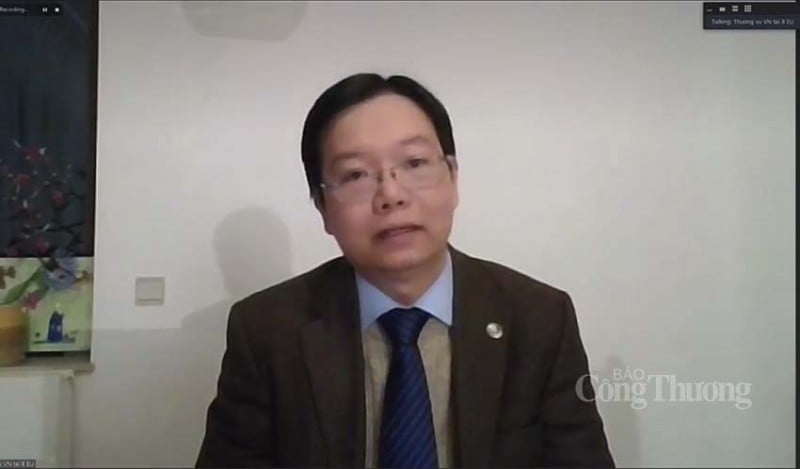 |
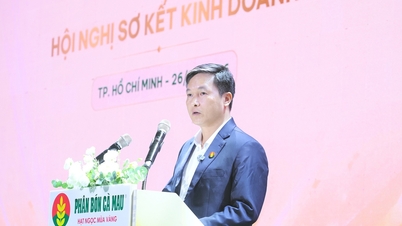
| Mr. Tran Ngoc Quan - Commercial Counselor of Vietnam in Belgium and the EU |
The EU is expected to implement comprehensive programs, such as focusing on simplifying administrative procedures, customs procedures, and green development based on business capabilities, instead of applying "rigid" methods.
Accordingly, Vietnamese businesses could benefit from the extension of the EUDR (Anti-Deforestation Regulation) deadline to December 2025; and the review of the CBAM (Carbon Border Adjustment Mechanism), which would reduce the number of businesses expected to be affected to 20%.
The EU is a very important export market, accounting for the second largest share of the total export turnover of the textile and garment industry. In the first two months of the year, Vietnam's textile and garment exports to several markets in the EU bloc maintained their momentum.
Specifically, the Belgian market reached $17.9 million in February 2025, and $50.3 million in the first two months of the year; Denmark reached $2.8 million and $10.6 million; Germany $40.8 million and $107 million; the Netherlands $64 million and $148 million; Italy $19.8 million and $47.5 million…
Mr. Tran Ngoc Quan also stated that the Vietnam-EU Free Trade Agreement (EVFTA) has been and continues to contribute significantly to Vietnam-EU trade.

Since the EVFTA agreement came into effect, Vietnam's market share in the EU's total textile and garment imports from outside the bloc has increased from 3.3% to 4.3%. Vietnam has risen to sixth place among the largest textile and garment suppliers to the EU, after China, Bangladesh, Türkiye, India, and Pakistan.
Promptly comply with regulations.
Although the EU tends to "soften" and extend the implementation of green policies, experts still advise that these measures are only temporary. In the long term, green policies will continue to be implemented by the EU. Therefore, meeting green standards and regulations is essential for domestic textile and garment businesses.
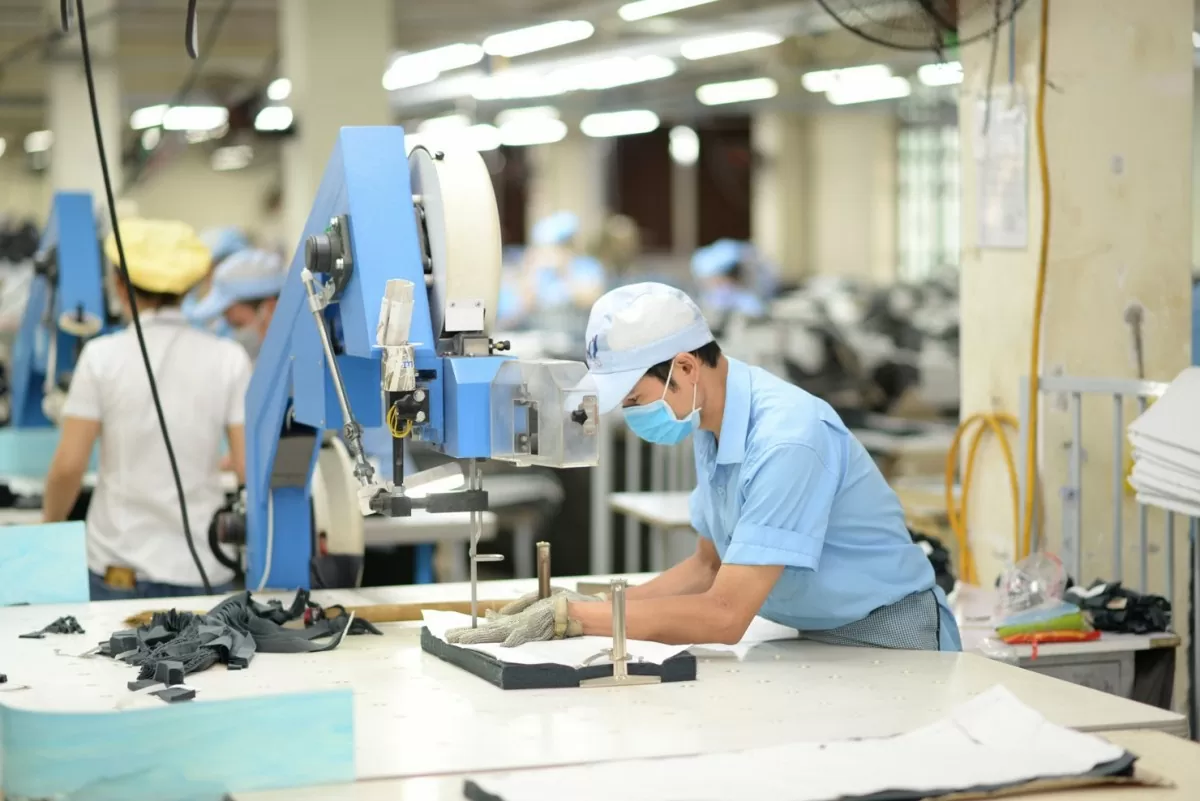 |
| Textile and garment businesses are advised to accelerate their efforts to meet EU green regulations in order to maintain and expand their market share. Photo: Nguyen Huyen |
On the other hand, in the context of the EU pushing forward with free trade agreements with many other countries, if Vietnamese businesses do not strengthen trade promotion and gain market share, in just one or two years they will face immense competitive pressure from countries that have trade agreements with the EU. " Many free trade agreements are expected to be concluded by the EU this year and next year ," said the representative of the Vietnamese Trade Office in Belgium and the EU.
Protectionist trends are increasing in many markets, including the EU. If Vietnamese businesses export goods without proper control or engage in trade fraud, or transship goods from EU countries that are restricting trade, it will directly affect their export activities.
Thus, it can be seen that the EU's policy adjustments are actually temporary measures, and there is no guarantee that the EU will not revert to applying environmental measures. Vietnamese businesses should take advantage of this time to comply with EU regulations.
“ The Vietnam Trade Office in the EU has received several requests from the EU Textile Association and some businesses asking the Ministry of Industry and Trade to discuss with the Ministry of Agriculture and Environment to consider including recycled fabrics in the import schedule for use in Vietnam. Currently, the Ministry of Agriculture and Environment has included some recycled items in the import schedule, but mainly iron, steel, plastic, and paper ,” said Mr. Tran Ngoc Quan.
Regarding this matter, the Swedish Syre Group recently held a meeting with the Ministry of Industry and Trade to propose investing in a complex factory project for recycling polyester fibers in Binh Dinh province.
Representatives from Syre Group also requested support regarding mechanisms and policies related to the implementation of the textile waste recycling project, guidance on procedures for importing recycled materials, and environmental impact assessment.



While affirming support for the investment project, Deputy Minister of Industry and Trade Truong Thanh Hoai also clearly stated that, in principle, the Ministry of Industry and Trade supports the project, but this is a special investment project, and according to Vietnamese law, a special resolution is required for this project.
" This is a special, pilot project, requiring a strict control mechanism for used materials. After the resolution is passed, the Ministry of Industry and Trade will amend Circular No. 08/2023 on amending and supplementing some provisions of the detailed list according to HS codes of exported and imported goods ," Deputy Minister Truong Thanh Hoai stated.
The successful implementation of Syre Group's polyester fiber recycling complex project will increase domestic fabric production capacity, helping Vietnam's textile industry meet traceability requirements under the EVFTA agreement. Simultaneously, it will meet EU standards for green production and the use of recycled materials.
| Green policies such as the EU Green Deal, product passports, eco-design, CBAM, etc., are considered difficult standards that require significant effort and resources for implementation by textile and garment businesses. |
Source: https://congthuong.vn/eu-noi-long-quy-dinh-xanh-doanh-nghiep-det-may-co-de-tho-377556.html
































































![[Photo gallery] Tens of thousands of tourists visit and enjoy local specialties at the Long Khánh Fruit Festival.](https://vphoto.vietnam.vn/thumb/402x226/vietnam/resource/IMAGE/2026/06/28/1782662218511_b_20260628224930.jpeg)