Famous for its simple, rustic dishes, the culinary culture of Laos delights Vietnamese diners with its unique and appealing flavors. Therefore, many Vietnamese people in general, and those in Quang Tri in particular, choose Laotian food during the Lunar New Year. Numerous restaurants and eateries specializing in Laotian cuisine have also sprung up in Quang Tri, attracting many diners who come to explore and enjoy the food.
The food is very spicy and hot.
When it comes to Lao cuisine, most people in Quang Tri have heard of it and have even tasted it a few times. During my nearly week-long business trip to the southern provinces of Laos, I was fortunate enough to be introduced to many local specialties by a Lao colleague. It's easy to see that Laotians enjoy grilled and fried dishes, but they must be prepared with a balanced combination of salty, sweet, sour, and spicy flavors. Generally, Laotian food isn't overly elaborate in terms of aesthetics, but it places great emphasis on flavor; every dish must be rich and savory, accompanied by a variety of elaborate dipping sauces.
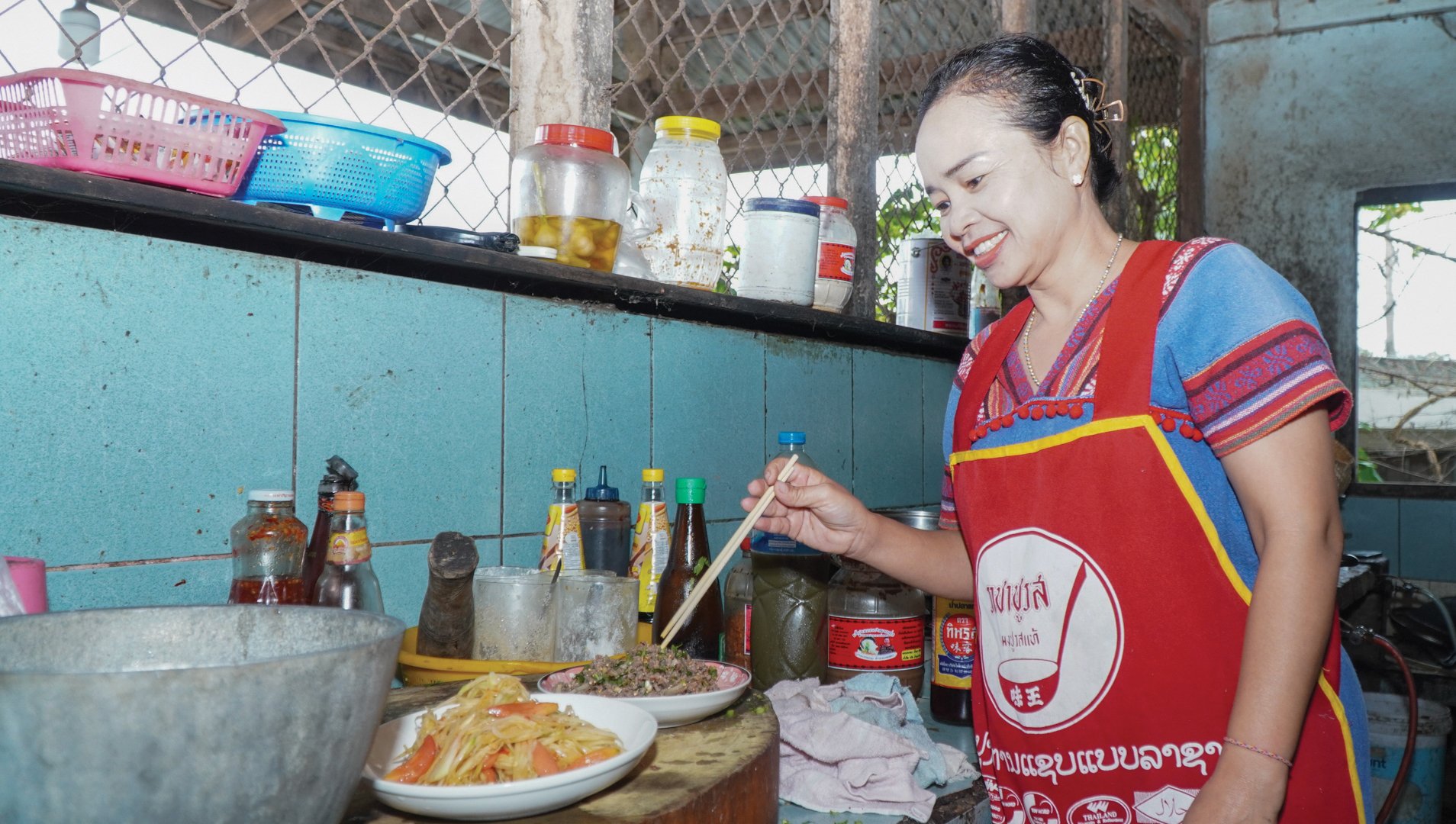
Ms. Xi Xuwen prepares Lao-style dishes like "xum" and "lap" for diners - Photo: LT
During a tour of Densavanh village in Sepon district, Savannakhet province, my friend took me to Loungaloun restaurant, which specializes in Laotian cuisine. Speaking with the reporter, Ms. Xi Xuwen, the owner of the restaurant, shared that compared to Vietnamese cuisine, Laotian food is simpler. The characteristic of the culinary culture here is the simplicity in preparation and the inexpensive ingredients. In addition, spiciness is a favorite flavor in the daily meals of Laotians. This is likely because most Laotians do quite strenuous work, so spicy food stimulates the taste buds and makes meals more enjoyable.
While nimbly peeling a papaya into strips for preparing Lao-style smut, Lit Ki Phong, Van's husband, shared his thoughts, explaining that in Lao culinary culture, fish sauce is the most commonly used condiment, and most dishes are prepared with it. Among them, the pà đẹc fish sauce, made from distilled and fermented fish and crab, is particularly noteworthy. This is the main ingredient that gives many Lao specialties their rich flavor, including smut.
In Lao, "tam mak hung" is a dish made by shredding papaya and mixing it with chili peppers, tomatoes, onions, lime, salt, sugar, and fish sauce to create a delicious meal. Tam mak hung best showcases the harmonious blend of sour, spicy, salty, and sweet flavors from the vegetables and the pungent, savory taste of the "pa dec" fish sauce. It is often served with sticky rice, hence the common name "xum sticky rice."
Laotians primarily eat sticky rice (khao niu), served in woven bamboo baskets to keep it warm and for convenience. They prefer to mold the sticky rice into small balls with their hands, dipping them in sauce or eating them with other food. According to Lit Ki Phong, this simple way of eating allows diners to fully appreciate the natural aroma and sweetness of each grain of sticky rice.
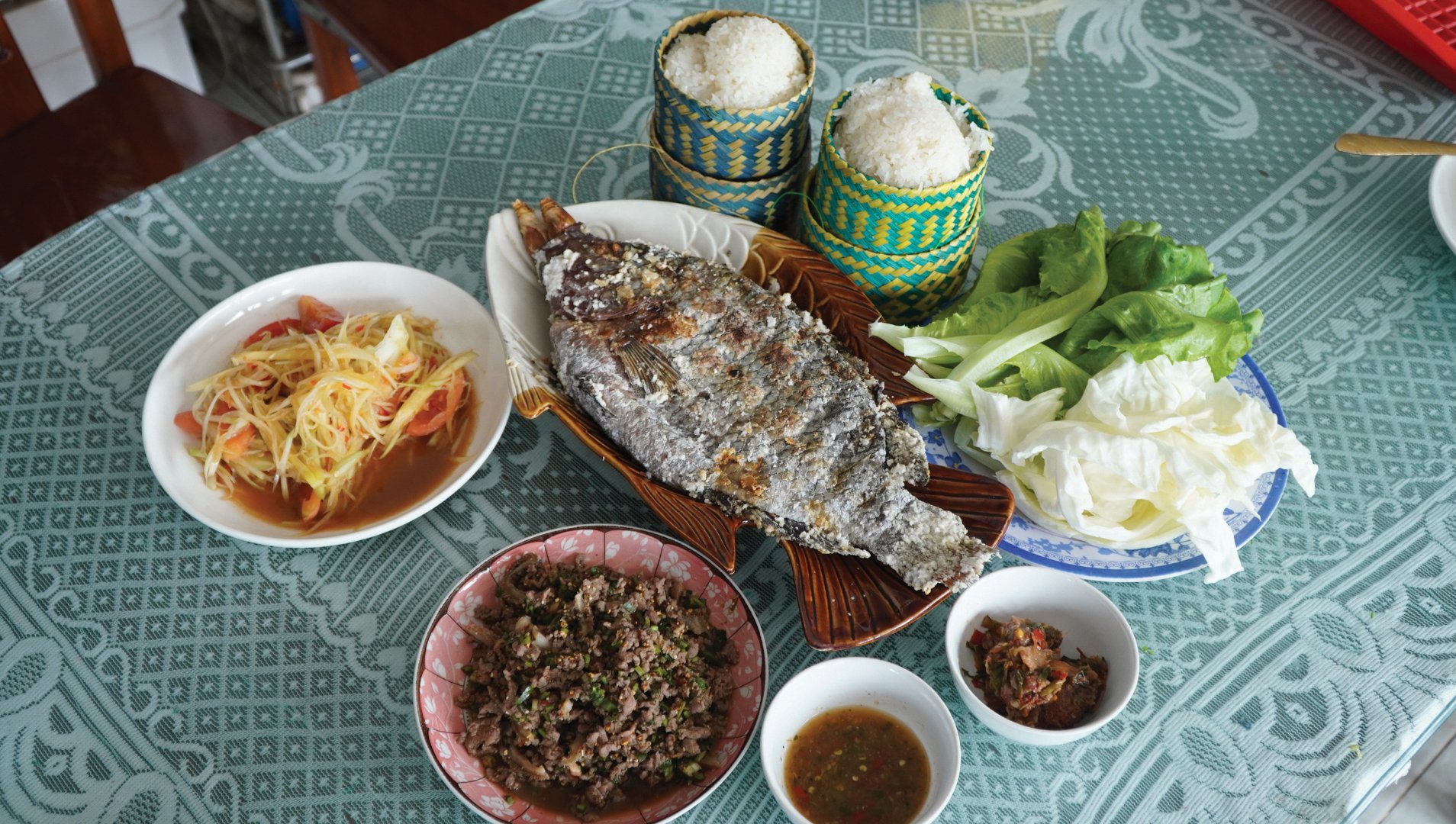
Lao dishes are not elaborately decorated but are flavorful and very spicy - Photo: LT
According to Ms. Xi Xuwen, because the restaurant is located in the border area, many Vietnamese people come to enjoy and buy Lao specialties to take home, especially during the Vietnamese Lunar New Year. Besides sticky rice, Loungaloun restaurant specializes in preparing laap (a type of Vietnamese sausage) made from minced meat mixed with fish sauce, lime, chili, and various herbs.

Laotians consider this dish to be auspicious and often give it as a gift during the Lunar New Year. Other dishes like or lam (spicy stew), originating from the ancient capital of Luang Prabang; steamed fish, grilled fish with salt... In addition, dishes such as siensavanh dried beef, sai oua Lao sausage, and Lao spring rolls are also very suitable as gifts. These are dried dishes that can be preserved for a long time, made from fresh pork, but unlike in Vietnam, they include lemongrass, kaffir lime leaves, galangal, and chili peppers.
After some observation, we began to enjoy the dishes prepared by Xi Xuwen and her husband. Indeed, judging by the presentation, the grilled fish with salt, sticky rice, and cured meats looked simple, but the flavors were rich and spicy.
Lao cuisine in Quang Tri province.
Quang Tri province shares a border with many localities in neighboring Laos, therefore, the culinary cultures of the two countries are quite strong. Because of this, the culinary cultures of the two nations blend and complement each other, creating a unique culinary characteristic of this border region.
To affirm the unique character of Lao cuisine in Quang Tri province, after a business trip to Laos, I visited Lao Bao town in Huong Hoa district – a border area – to learn more about Lao food. There are quite a few restaurants here that serve Lao dishes. These restaurants were established by local people who, through years of trading in Laos, have enjoyed and adapted to Lao cuisine, thus turning it into a thriving business.
When visiting Lao Bao and talking about Lao cuisine, locals will recommend Me Vat's restaurant. Born and raised in Savannakhet province, Me Vat, with her experience and culinary skills, has run a restaurant specializing in Lao dishes in Lao Bao town for over 10 years and consistently attracts a large number of customers.
According to Mother Vat, Laotian dishes are characterized by the use of spices such as ginger, tamarind, lime leaves, and many types of very spicy dried chilies. The main flavor in most dishes is a lot of chili, because chili is an indispensable part of Laotian cuisine, and its spiciness has become a cultural characteristic.
For Vietnamese diners visiting here, most enjoy grilled dishes, sticky rice, dried beef, and laap (salad), which are famous dishes in Laos. Because diners here don't usually like spicy food, the restaurant owners have to adjust the seasonings to suit local tastes, but the cooking methods and utensils remain exactly as traditional Laotian.
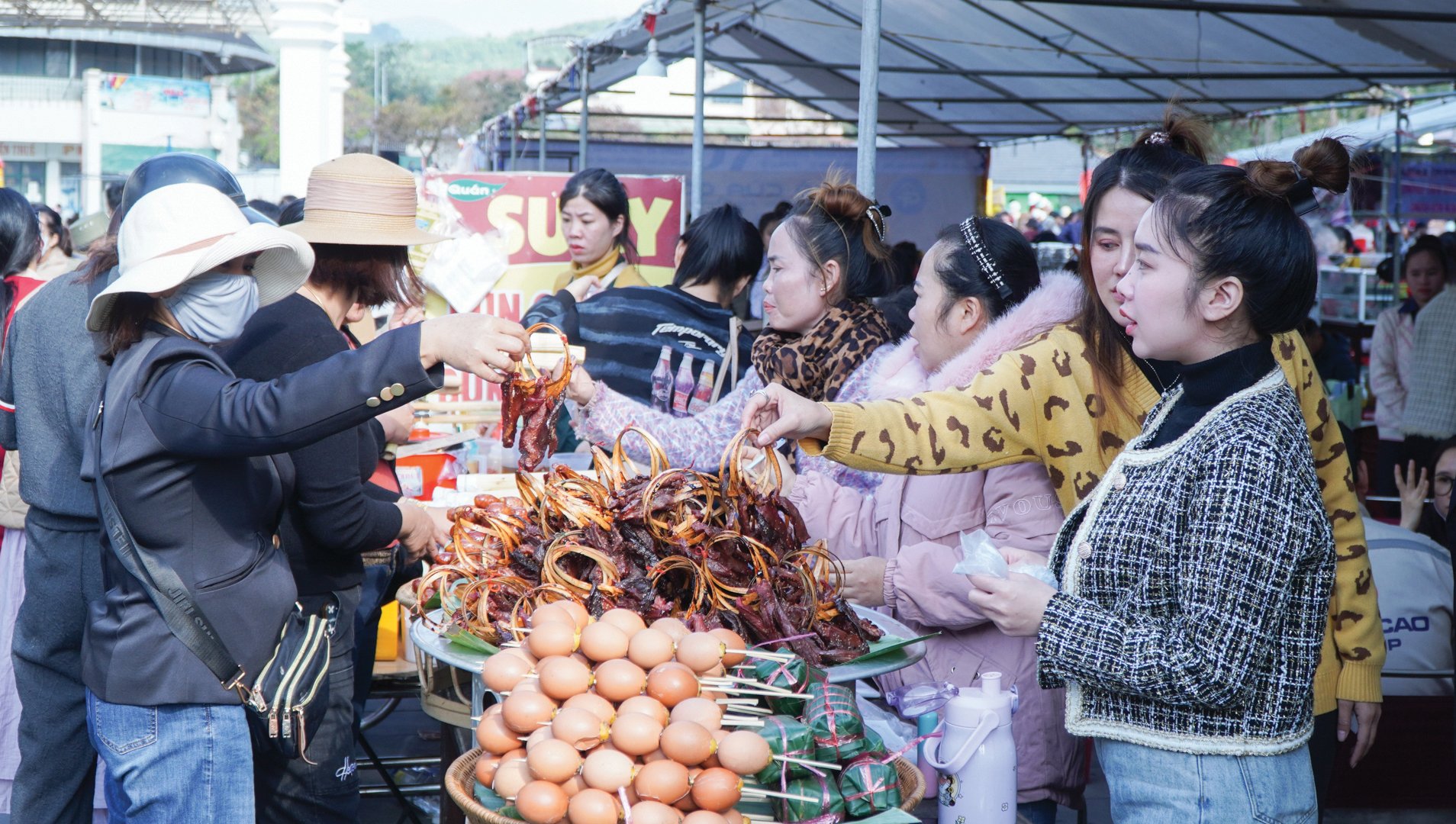
Many Lao dishes were showcased at the Lao Bao Border Market, attracting a large number of buyers - Photo: LT
When visiting Lao Bao, besides enjoying Lao dried dishes at Me Vat restaurant, you can't miss Lao rice porridge. This dish best exemplifies the culinary fusion between Vietnam and Laos. A bowl of porridge is made from two main ingredients: duck meat from Vietnam and Lao rice noodles. The difference with Lao rice porridge is that it uses thick, white, chewy, and fragrant Lao noodles. Most importantly, it's the secret recipe of the owner, learned from years of living in Laos.
Similar to "soup dishes" like Lao rice porridge, diners can enjoy a truly authentic Lao grilled hot pot right in this border town. With its distinctive hot pot design, grilled items are placed around a raised charcoal grill surrounded by water. Diners can enjoy the grilled food on top and the hot pot below.


When eating, many people will be amazed by the unique preparation method and unusual shape of this high-quality hot pot. And when enjoying it, diners will feel the aroma of grilled meat, the rich fat dripping from the grill into the broth, along with the "combo" of sour and spicy dipping sauces made from exotic Lao vegetables.
Not only in Lao Bao town, but now, many young people in Dong Ha City, Cam Lo, Vinh Linh... who love and are passionate about Lao cuisine have boldly opened restaurants and shops to do business, or started livestreaming sessions on social media to introduce, promote and sell products such as ingredients and utensils for preparing Lao dishes, attracting a large number of customers interested in learning about and enjoying them.
As someone who grew up in the mountainous district of Huong Hoa, with a Laotian mother and a Pa Ko ethnic father, Le Thi Chung Nhi, after graduating from university, always sought ways to spread Laotian culinary culture to a wider Vietnamese audience.
After much research, Nhi decided to shift her business focus to selling Lao food, ingredients, and cooking utensils by regularly livestreaming on Facebook and TikTok to introduce, promote, and sell her products. Currently, Chung Nhi's social media channels attract a large number of followers who come to learn about and purchase her products.
Although it's the same sticky rice, fish, vegetables, and dipping sauce, the Laotians have their own unique way of preparing it, making it a must-try for tourists, especially Vietnamese visitors. At the end of December 2024, the People's Committee of Lao Bao town, Huong Hoa district, organized the Lao Bao Border Market every Saturday at the Lao Bao Trade Center, featuring numerous stalls showcasing Laotian cuisine. Hopefully, this will become a place connecting those who love Laotian food to learn about and enjoy it.
Le Truong
Source: https://baoquangtri.vn/doc-dao-am-thuc-lao-191412.htm
![[Image] Schools organize meetings and introduce teaching models to students admitted to grade 10.](https://vphoto.vietnam.vn/thumb/1200x675/vietnam/resource/IMAGE/2026/06/25/1782368077271_ndo_br_z7970052192242-1ec8daeb77a6eed1a4e9f58c564ddd3e-jpg.webp)

![[Photo] General Secretary and President To Lam receives Palestinian Ambassador Saadi Salama](https://vphoto.vietnam.vn/thumb/1200x675/vietnam/resource/IMAGE/2026/06/25/1782365384740_a1-bnd-9423-8322-jpg.webp)


![[Image] Ho Chi Minh City: Ma Lang area, Chicken-Rice Market about to change its appearance](https://vphoto.vietnam.vn/thumb/1200x675/vietnam/resource/IMAGE/2026/06/25/1782377698627_ndo_br_m1-jpg.webp)