

Despite facing numerous economic hardships, ethnic minority groups with populations under 10,000 in Lai Chau, including the Lu people, have preserved many unique cultural features. This has created a distinct identity, blending seamlessly with the advanced Vietnamese culture and rich in national character.
The Lu people believe that all things have souls, and they think that the rulers, managers, and administrators of the world are invisible supernatural forces. Therefore, the Su Khon Khoai Festival (Buffalo Soul Worship) of the Lu people in Ban Hon commune (Tam Duong district) is usually held at the time of completing the rice planting season. Families perform the ritual of worshipping the buffalo souls to express gratitude and thanks to these animals for their hard work, companionship, and cooperation in agricultural production, which brings about bountiful harvests. This is an opportunity to honor the beauty and value of traditional cultural identity, raise awareness among the younger generation about preserving and protecting it, and promote and introduce the unique culture, customs, and traditions of the Lu ethnic group to people and tourists from within and outside the district. Besides the ceremonial part, the festival now includes many lively activities such as: cultural exchanges, culinary competitions, and sports competitions. Performing the processes of weaving brocade, sewing and embroidering clothing, and the traditional blackening of teeth of the Lu people.
Furthermore, the spiritual life of the Lu people also includes the Cam Lung Ceremony (Forest Worship Ceremony); the New Rice Ceremony (Kin Khau May)...; and the preservation and maintenance of traditional games such as throwing the ball, playing badminton with chicken feathers, playing stick games, playing spinning tops, and singing love songs between men and women... during festivals and holidays.
The Lu ethnic group is unique in its culture and arts. Notably, their folk songs are rich and diverse, composed during their daily lives and productive work. When performing, they often use traditional musical instruments such as drums, gongs, and double flutes.
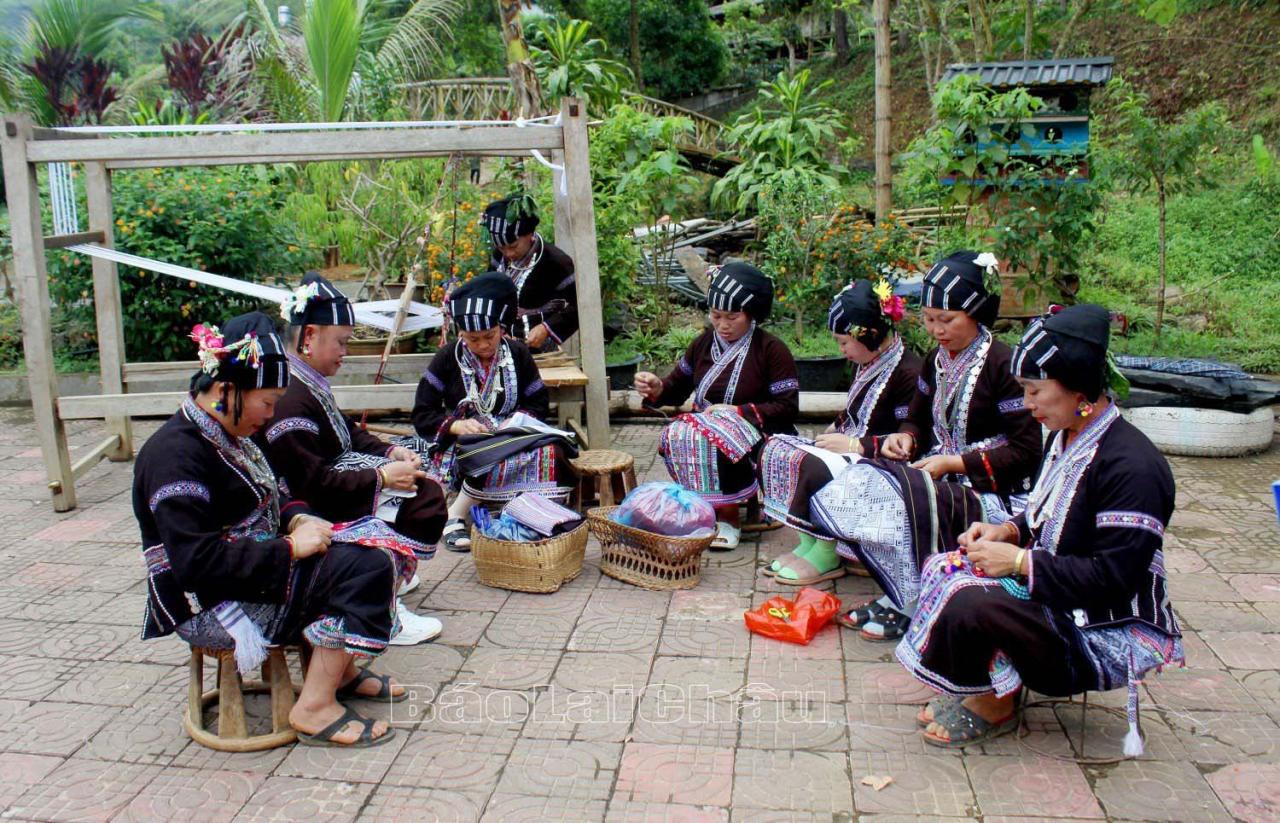
Lu ethnic women in Ban Tham (Ban Hon commune, Tam Duong district) weave brocade fabric and embroider traditional costumes.
At nearly 70 years old, artisan Lo Thi Son, a Lu ethnic woman from Na Khum village, Ban Hon commune, has been diligently teaching traditional culture for many years. In each class at the village cultural center, ancient dances and folk songs blend with the sounds of flutes and gongs, filling the entire village and surrounding areas with their melodies. Artisan Lo Thi Son said: “During the process of clearing land and cultivating fields, I composed songs and thought of new dances to teach to my children and grandchildren. At the same time, I teach and encourage people in the village, especially young people, to participate in practicing. For older people like us, the only concern is the fading of traditional culture; therefore, as long as we have the strength, we will pass it on and encourage our children and grandchildren to inherit and develop it. I am very happy that this task now has the active support of both the district and the commune.”
Joining hands to preserve and promote traditional cultural identity, the Women's Union of Ban Hon commune has established 8 performing arts groups with 80 members, including women from various villages, participating in rehearsals. To enrich and diversify the songs and dances, the members collect and stage folk melodies such as wedding songs, housewarming songs, lullabies, and call-and-response songs, with the motto "integrate" but "dissolve".
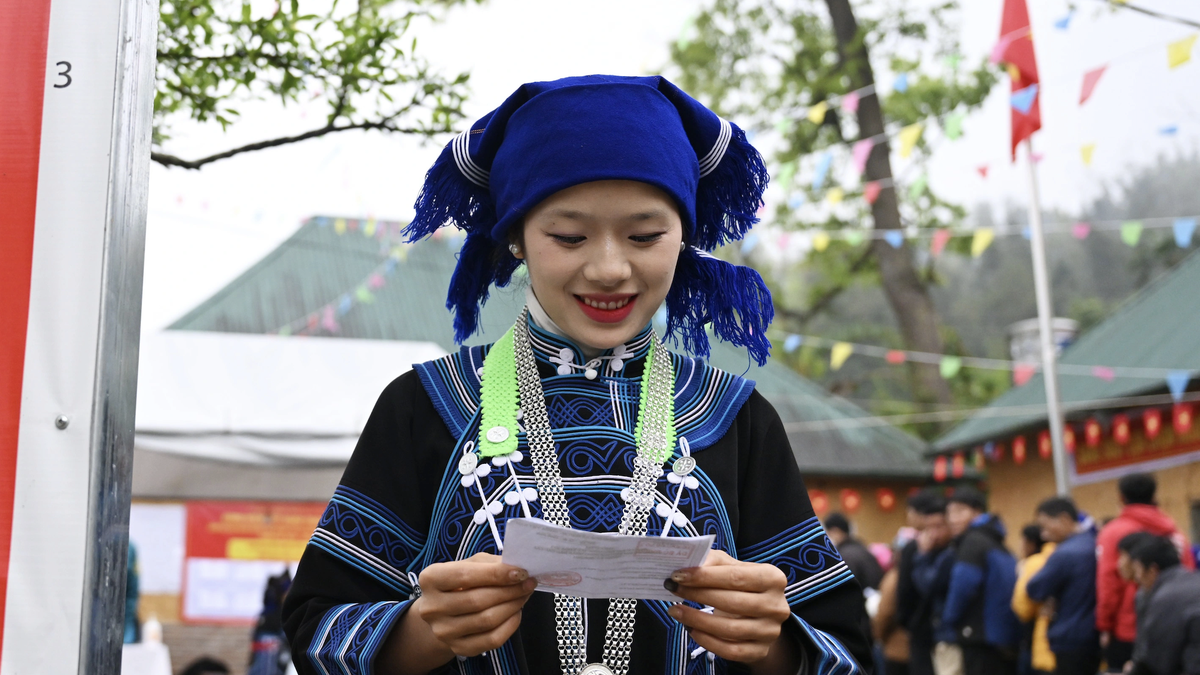
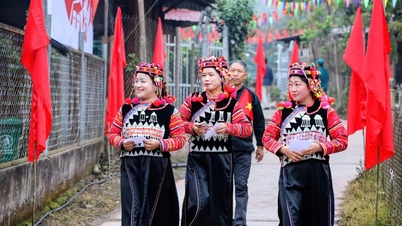
Besides the classes teaching intangible cultural heritage, it would be remiss not to mention the outstanding cultural features in the traditional costumes of the Lu ethnic group, handcrafted by the skillful hands of women with exquisite and unique patterns. In particular, women often wear indigo-colored blouses with a V-neck, the left flap overlapping the right, and tied with colorful tassels. Ms. Lo Thi Di, a cultural officer of the commune, said: "Every day, Lu women usually wear simple indigo-colored embroidered blouses for convenience. On holidays, festivals, or when the family has distinguished guests, women wear two-layered skirts with three tiers of eye-catching decorative patterns."
To effectively implement Resolution No. 04-NQ/TU, dated February 17, 2021, of the Provincial Party Committee on preserving and promoting the fine traditional cultural identity of ethnic groups associated with tourism development in the period 2021-2025, with orientation to 2030, the Party Committee of Ban Hon commune issued a Resolution on tourism development associated with the preservation of Lu ethnic culture. After 2.5 years of implementation, along with preserving tangible and intangible cultural values, Ban Hon has welcomed more than 30,000 visitors, with revenue reaching over 5 billion VND.
Located in the lowlands of the district, Nam Tam commune (Sin Ho district) has 10 villages with over 1,000 households and more than 4,400 inhabitants, of which the Lu ethnic group accounts for 40% of the population. Benefiting from the Project to support socio-economic development of very small ethnic minorities in the period 2016-2025, the material lives of the Lu people here have improved in recent years. As a result, they focus on preserving and promoting the traditional cultural identity of their ethnic group.
Among the 20 ethnic groups living in the province, Lai Chau has four ethnic groups with populations under 10,000 people: Cong, Mang, Si La, and Lu. Of these, the Lu people comprise over 1,300 households and nearly 7,000 inhabitants, concentrated in the districts of Tam Duong and Sin Ho. They have largely preserved many valuable traditional cultural values such as festivals, traditional stilt house architecture, handicraft weaving, costumes, language, and folk performing arts.
Mr. Tran Manh Hung, Deputy Director of the Department of Culture, Sports and Tourism, affirmed: “Currently, the festivals of the Lu ethnic group are included in the list of those receiving financial support for restoration and maintenance. Some cultural values such as costumes and some traditional crafts, and folk literature are being taught and passed on by the local authorities. Along with that, policies are being supported for community performing arts groups and folk culture clubs. The province is also focusing on building dossiers to honor people's artisans, outstanding artisans, and those who preserve and practice the heritage, continuing to promote their role in teaching and disseminating the traditional cultural values of the community. From there, we will preserve the unique cultural characteristics of the Lu ethnic group, creating a colorful cultural tapestry of Lai Chau in particular and Vietnam in general.”
![[Photo] Prime Minister Pham Minh Chinh presides over a dialogue with Japanese businesses.](https://vphoto.vietnam.vn/thumb/1200x675/vietnam/resource/IMAGE/2026/03/21/1774097547316_ndo_br_dsc-0448-jpg.webp)









































Comment (0)