


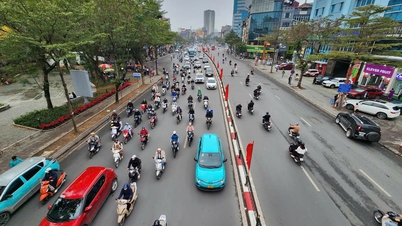
Traffic congestion hotspots are steadily increasing.
The Ho Chi Minh City Department of Transport has just issued a plan to coordinate the implementation of solutions to address 24 traffic congestion hotspots. Compared to the beginning of 2022, the number of congestion points has increased by 6, including: Hang Xanh intersection; Tran Quoc Hoan - Phan Thuc Duyet intersection; the Xang bridge area on Tran Van Giau road; Nguyen Van Linh - Pham Hung; Nguyen Thai Son - Pham Ngu Lao; and Pham Van Dong - Phan Van Tri.
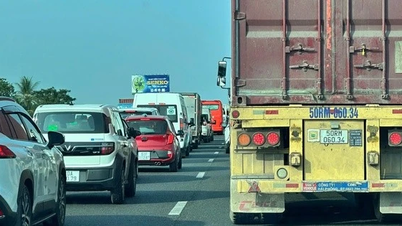
Of these 24 "traffic hotspots," only two areas have shown improvement recently: the intersection of National Highway 50 and Nguyen Van Linh (Binh Chanh District) and the intersection of Nguyen Oanh and Phan Van Tri (Go Vap District). The remaining eight areas show no improvement, and 14 points show some improvement but remain problematic, including several "familiar congested" routes for city residents such as the Ton Duc Thang - Nguyen Huu Canh - Nguyen Binh Khiem area (District 1), the Lang Cha Ca roundabout (Tan Binh District), the My Thuy intersection, the An Phu intersection (Thu Duc City), and the intersection of Nguyen Van Linh and Nguyen Huu Tho (District 7)...
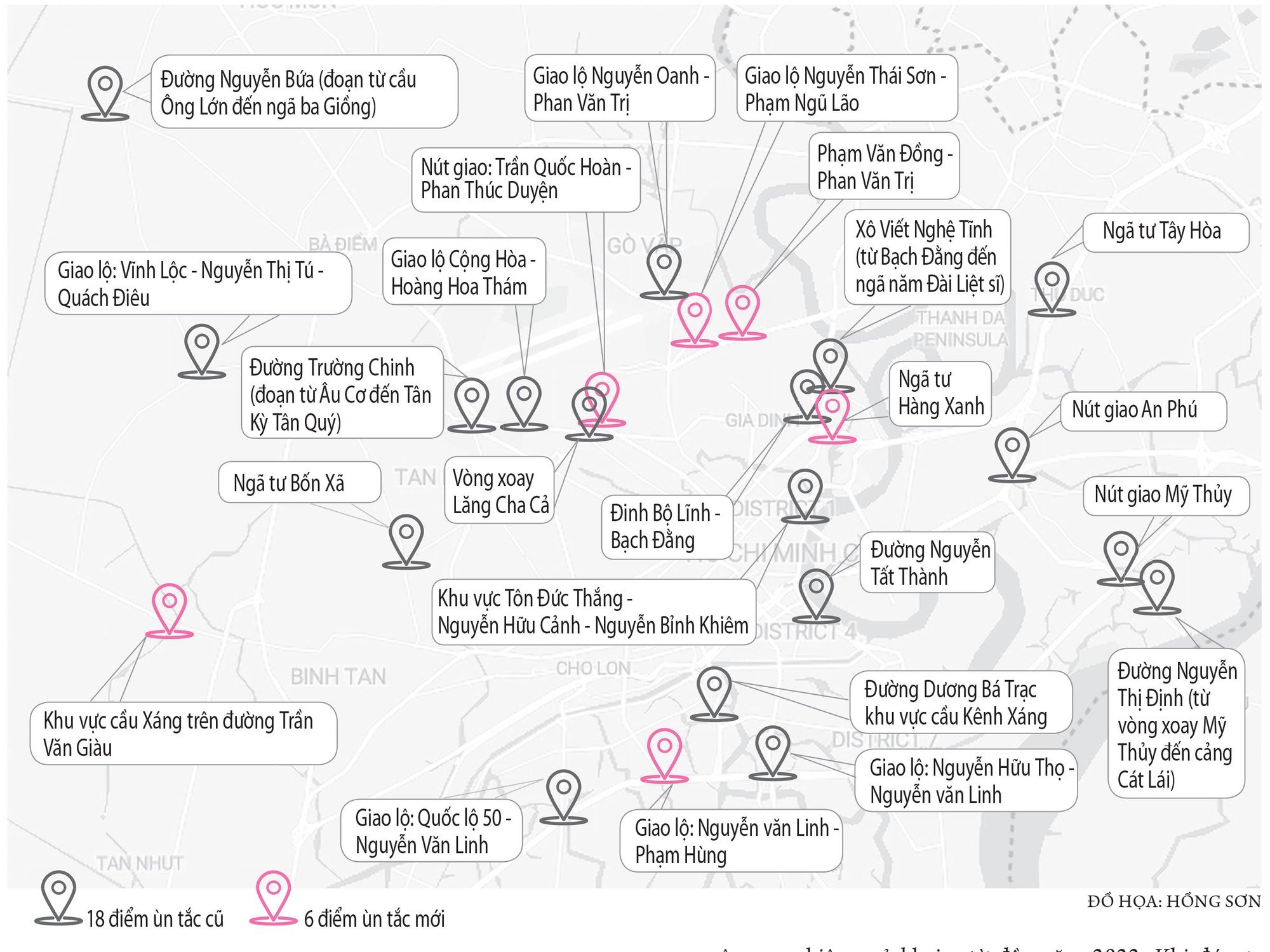
The Department of Transportation's list of traffic congestion points only "summarizes" them at 24, but many city residents who commute daily report numerous other "congested" routes. Among them is the Kenh Te Bridge connecting District 4 to District 7. While acknowledging that the Nguyen Van Linh - Nguyen Huu Tho intersection is the most serious congestion point due to the large number of container trucks, Mr. Thanh Huy (Nha Be District) questioned why the Kenh Te Bridge, a nightmare for residents in the southern part of the city, is absent from this list.
According to Mr. Huy, although the expansion project was completed more than two years ago, the added area is still insignificant compared to the volume of vehicles that regularly queue and crowd the Nguyen Huu Tho road. From the Kenh Te Bridge, congestion continues to spread to the Phuoc Kien area, especially at the section crossing the Rach Dia 2 Bridge. Connecting Phuoc Kien commune (Nha Be District) and Tan Phong ward (District 7), this bridge "bears" a large volume of vehicles pouring from the southern urban area of the city towards the city center.
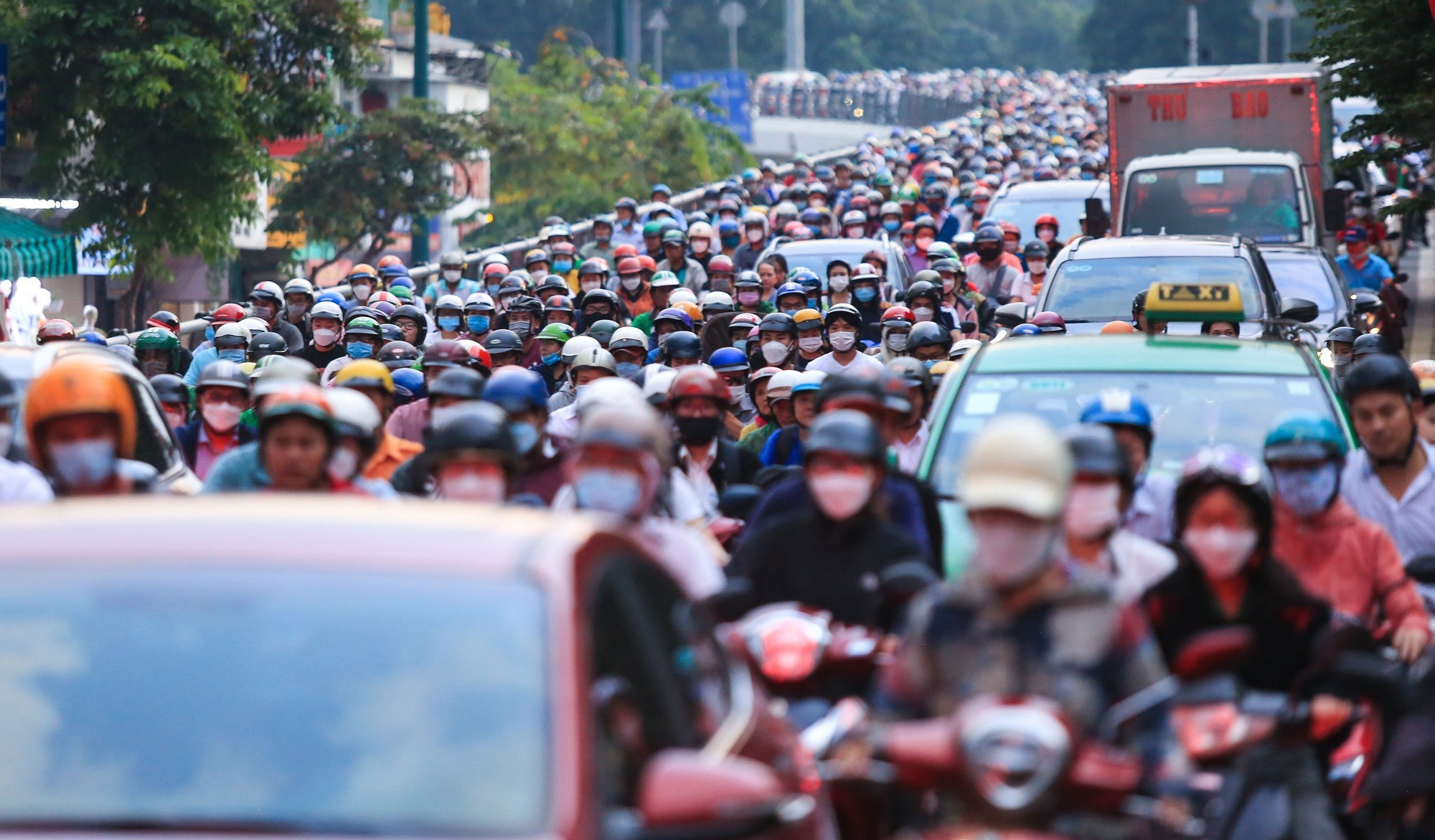
Ho Chi Minh City is making concerted efforts to implement various measures to reduce traffic congestion.
Moreover, many inner-city routes are gradually appearing on the list of "roads to avoid" for drivers. For example, vehicles traveling from District 4 to Tan Son Nhat Airport (Tan Binh District) to the Phu Dong roundabout (District 1) used to turn onto Ly Tu Trong Street, then onto Truong Dinh Street to avoid the traffic congestion on Cach Mang Thang 8 Street. However, for almost a year now, the section from Truong Dinh - Ly Tu Trong to Truong Dinh - Nguyen Dinh Chieu has been congested almost every morning.
Given this situation, the Department of Transport only "dares" to set a goal of improving traffic conditions, gradually reducing the number of traffic jams, and striving to eliminate at least one traffic congestion risk point, which is the Xáng Bridge area on Tran Van Giau Street, Binh Chanh District. To control the remaining 23 points, the Department of Transport plans to focus on accelerating the construction progress of key projects such as the Nguyen Van Linh - Nguyen Huu Tho underpass (District 7) and the An Phu intersection.
(Thu Duc City), the road connecting Tran Quoc Hoan and Cong Hoa streets (Tan Binh District). Simultaneously, expedite procedures to soon expand Hoang Hoa Tham street (Tan Binh District) and construct a steel bridge at the Bon Xa intersection (Binh Tan District). In parallel, improve the efficiency of existing transportation infrastructure by improving geometric dimensions, expanding visibility, reinforcing overhead gantries, painting roads, installing traffic signs, and installing traffic surveillance cameras and automatic speed measurement systems…
We can't wait for infrastructure to catch up with demand.
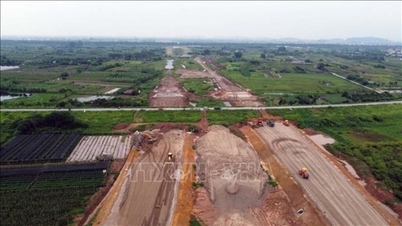
The reality is that despite widespread traffic congestion, the "remedy" projects mentioned by the Ho Chi Minh City Department of Transport have become commonplace on the list of key projects year after year. Every project has been delayed and its construction process has been sluggish. Even in the southern part of the city, according to the plan of the Ho Chi Minh City Investment and Construction Project Management Board for Transportation Works (Transportation Board), important projects to alleviate traffic congestion were supposed to be implemented from the beginning of 2022. At that time, the top priority mentioned was the Nguyen Khoai bridge and road project, which had completed all the necessary investment procedures and the city was awaiting the allocation of additional funds within the specified timeframe. Once completed, the project would connect the Him Lam apartment complex (District 7) to District 4 and then to Vo Van Kiet road.
In addition, the Binh Tien overpass, extending from District 6 across the Tau Hu - Ben Nghe canal and connecting to Nguyen Van Linh road, is expected to begin construction at the end of 2022, along with the National Highway 50 expansion project. Furthermore, the People's Committee of Nha Be District has proposed constructing the 15B axis parallel to Huynh Tan Phat road, connecting to the starting point of the Can Gio bridge. This is also a north-south axis route that will help alleviate congestion in the current traffic system, especially the Huynh Tan Phat - Nguyen Tat Thanh axis. However, all these projects, considered extremely urgent, have yet to show any progress.
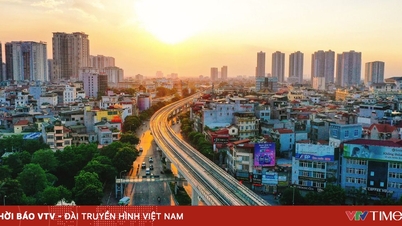
Responding to Thanh Nien newspaper, a leader of the Ho Chi Minh City Department of Transport informed that, starting from the second quarter of 2022, the Department of Transport and related agencies have focused on completing procedures to start construction on several key projects. Among them, the An Phu intersection with National Highway 50, and the road connecting Tran Quoc Hoan and Cong Hoa streets (Tan Binh District) are the most anticipated major projects. The particularly important inter-regional connectivity project, the construction of Ring Road 3, is also being focused on, recording many significant progress milestones, with a determination to essentially complete it between now and 2025. Metro Line 1 is also in its final stages of completion…
These important infrastructure projects, once completed, will undoubtedly help alleviate traffic congestion in the city. Simultaneously, they will promote inter-regional trade and connectivity, increase land utilization, and develop logistics services, giving Ho Chi Minh City the opportunity to make breakthroughs in transportation infrastructure and boost economic development in the coming period.
Complete 17 projects in the next 3 years.
According to the list of key projects of the Ho Chi Minh City Department of Transport, 17 projects will be completed in the period from 2022 to 2025 and 11 projects will commence in the next three years. Specifically, some projects to be completed in 2024 include Metro Line 1 (Ben Thanh - Suoi Tien); the Nguyen Van Linh - Nguyen Huu Tho underpass (District 7); 3 bridges: Long Kieng (Nha Be), Tang Long, Nam Ly (Thu Duc City)... Projects to be completed in 2025 include: 4 main roads in the Thu Thiem urban area; the new Ong Nhieu bridge; upgrading Luong Dinh Cua road; the North-South arterial road in the Thu Thiem new urban area; My Thuy intersection (Thu Duc City); Ho Chi Minh City Ring Road 3; Tan Ky Tan Quy bridge (Binh Tan District); Phuoc Long bridge (District 7 and Nha Be District)...
"After this period, traffic in Ho Chi Minh City will certainly improve. However, it must be understood that solving traffic problems in a megacity of over 13 million people cannot be achieved with the ambition of rapid transformation or the expectation of building enough roads to meet all the transportation needs of the people. A gradual process is needed, along with well-planned programs implemented in the medium and long term, building upon existing solutions so that the situation gradually improves. That is why the city is focusing on promoting the application of technology and adding many non-construction solutions to improve the situation on the foundation of the current limited infrastructure," the leader of the Department of Transport affirmed.
Make full use of technology.
Sharing more details about the digital transformation plan for Ho Chi Minh City's transportation sector, Mr. Doan Van Tan, Director of the Ho Chi Minh City Urban Traffic Management Center, said that in recent times, the city has put into operation a traffic simulation and forecasting model in urban traffic management and planning. This system controls traffic lights in the city center according to flexible scenarios suitable to the actual traffic situation, organizing "green wave" traffic to optimize traffic flow and resolve traffic congestion, especially at intersections. Currently, the camera system with direct data connection to the center is mainly concentrated in the central area including districts 1, 3, 5, and 10. In addition to monitoring, these areas will have a system to collect traffic volume and vehicle speed on the roads, input it into the model, and then adjust the traffic light system accordingly for each route at different times. In addition, it is necessary to analyze, measure, and proactively develop traffic congestion scenarios to have timely solutions.
For areas where this model has not yet been implemented, the central control center will promptly detect incidents and traffic congestion points through a surveillance camera system, notifying drivers via various communication channels and quickly alerting traffic police to regulate traffic and reduce congestion.
Traffic demand will reach over 41 million trips per day.
With the "green wave" traffic control scenario, vehicles traveling at an average speed of 30-35 km/hour will be able to move smoothly through numerous intersections on the roads under conditions of light traffic. According to the Department of Transportation, simulation models predict that by 2025, traffic demand in the city will reach over 41 million trips per day. The rapid increase in private motorized vehicles leads to serious overload on the urban road network, especially during peak hours.
"In the coming period, the center has reported and proposed to the Department of Transport to continue expanding the installation of more surveillance cameras and traffic flow measurement systems to analyze and create effective traffic signal system operation scenarios. It must be determined that to reduce traffic congestion in Ho Chi Minh City, many solutions need to be synchronized, combining infrastructure, technology, and many other non-construction solutions. However, technology will greatly assist in proactively regulating traffic quickly and easily," said Mr. Doan Van Tan.
Addressing traffic congestion in Hanoi and Ho Chi Minh City.
On May 25th, the Party Central Committee issued Directive No. 23-CT/TW on strengthening the Party's leadership over traffic safety and order in the new situation. The Party Central Committee noted that traffic safety and order have remained complex and caused public concern and anxiety. Traffic safety and order have sometimes been neglected in certain areas, and some violations have not been thoroughly addressed. Resolving traffic congestion in some major cities and urban areas remains a significant challenge…
The Party Central Committee Secretariat demanded a tightening of order and discipline, and strict handling of all violations of traffic laws by road users and those responsible for state management of traffic. Any interference or influence on the process of handling traffic law violations by relevant authorities is strictly prohibited.
The Party Central Committee Secretariat requested the completion of the legal system, the promotion of decentralization and delegation of power, and the clear delineation of responsibilities in state management of transportation. Accordingly, the focus should be on reviewing and comprehensively improving the legal system on transportation, clearly defining the responsibilities of state management in ensuring traffic safety and order, linking it with ensuring security, order, and social safety, building transportation infrastructure, and socio-economic development. "Develop and promulgate a Law on Road Traffic Safety and a Law on Roads to further concretize the above orientation," the directive stated.
In addition, the Party Central Committee Secretariat requested the fundamental resolution of traffic congestion in major cities, especially Hanoi and Ho Chi Minh City; strict implementation of urban and transportation planning; and attention to the development of underground and elevated transportation systems. It also called for strict implementation of the relocation plan for state administrative offices, academies, universities, colleges, vocational schools, large hospitals, and industrial zones outside the city center.
Le Hiep
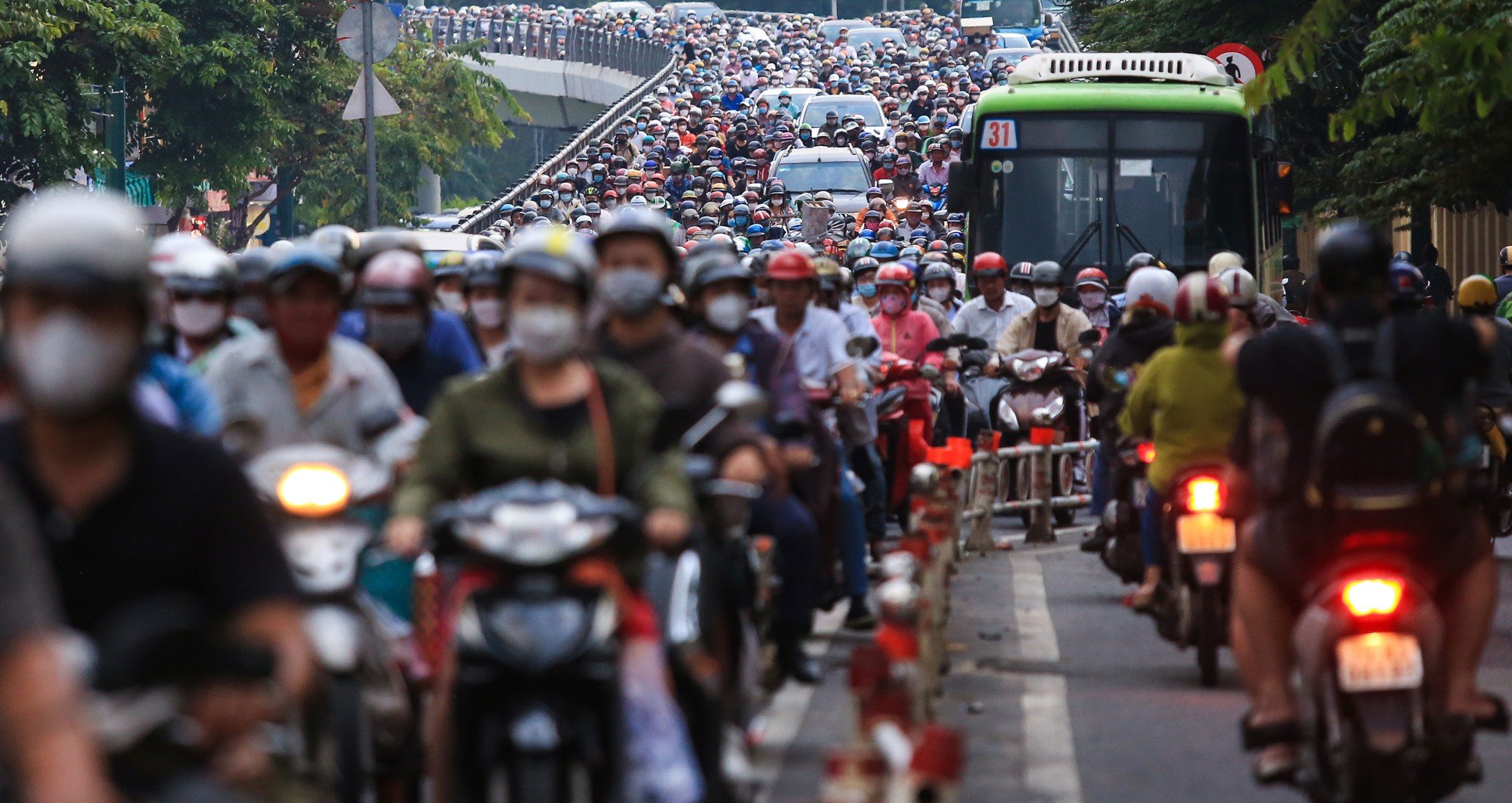
Traffic in Ho Chi Minh City is still congested.
Solutions to reduce traffic congestion at 8 locations show no improvement.
1. Nguyen Thi Dinh Street (from My Thuy roundabout to Cat Lai port - Thu Duc City):
Studying options for organizing separate one-way traffic flow in and out at the Nguyen Thi Dinh - Road A intersection in Cat Lai Industrial Park for the two land areas managed by Cat Lai Industrial Park and Ha Tien Cement Company; Studying options for prohibiting left turns and U-turns on Nguyen Thi Dinh Street at the Nguyen Thi Dinh - Road C intersection in Cat Lai Industrial Park; Studying the renovation of the Nguyen Thi Dinh - Road C intersection in Cat Lai Industrial Park (opening a lane for two-wheeled vehicles on the inside, separating it from the current car lane).
2. Nguyen Tat Thanh Street, District 4:
Study options to restrict certain types of vehicles from circulating (especially during peak hours); Study options to renovate and expand the traffic lanes on Tan Thuan 2 Bridge to ensure traffic flow towards District 7 is 6 meters and towards District 4 is 4 meters; Organize one-way traffic on Tan Thuan Bridge as before.
3. Cong Hoa - Hoang Hoa Tham intersection, Tan Binh District:
Study the overall traffic flow plan for the Tan Son Nhat airport area, especially traffic organization when projects such as the construction of Terminal 3 - Tan Son Nhat International Airport, the connecting road between Tran Quoc Hoan and Cong Hoa; and the expansion of Tan Ky Tan Quy road... are completed (especially the Cong Hoa - Tan Ky Tan Quy - Truong Chinh road area).
4. Tran Quoc Hoan - Phan Thuc Duyet intersection, Tan Binh District:
Strengthen monitoring and adjust traffic organization promptly to avoid traffic congestion caused by the construction of Package 9 (underpass at the Phan Thuc Duyet - Tran Quoc Hoan intersection) of the project to build a road connecting Tran Quoc Hoan Street and Cong Hoa Street; Accelerate the construction progress of the project to build a road connecting Tran Quoc Hoan Street and Cong Hoa Street.
5. Truong Chinh Street (section from Au Co Street to Tan Ky Tan Quy Street), Tan Binh District:
A pilot study is being conducted on the option of installing movable barriers to close the openings in the median strip of Truong Chinh Street, from Au Co Street to Ho Dac Di Street.
6. The intersection of Dinh Bo Linh and Bach Dang streets, Binh Thanh District:
The study proposes creating a continuous right-turn lane from Dinh Bo Linh Street into Bach Dang Street; strengthening enforcement against illegal parking violations during peak hours on Bach Dang Street within a 150-meter radius from Dinh Bo Linh Street towards Le Quang Dinh Street; and smoothing the road surface to facilitate traffic flow from alley 405 Xo Viet Nghe Tinh Street to the beginning of Son Bridge.
7. Xo Viet Nghe Tinh Street (from Bach Dang to the five-way intersection at the Martyrs' Monument), Binh Thanh District:
The study proposes prohibiting car traffic on D5 road (section from alley 42 Ung Van Khiem to Xo Viet Nghe Tinh road) in the direction from alley 42 Ung Van Khiem to Xo Viet Nghe Tinh road; and prohibiting parking during certain hours on D5 road (section from alley 42 Ung Van Khiem to Nguyen Gia Tri road).
8. Hang Xanh Intersection, Binh Thanh District:
The study proposes the following adjustments to the traffic organization in the area:
- Ung Van Khiem Street: Adjust the timing and direction of car traffic. Coordinate with the Public Transport Management Center to agree on a plan to adjust bus routes when implementing the plan to remove traffic lights at the Martyrs' Monument five-way intersection.
- Create a large roundabout to organize one-way traffic for all types of vehicles in the area of Dinh Bo Linh - Dien Bien Phu - Xo Viet Nghe Tinh - Bach Dang streets.
Ha Mai
Source link

![[Photo] General Secretary To Lam presides over a meeting with the Editorial Teams to summarize 100 years of the Party's leadership of the Vietnamese revolution and 40 years of implementing the National Construction Program.](https://vphoto.vietnam.vn/thumb/1200x675/vietnam/resource/IMAGE/2026/03/04/1772601288977_a1-bnd-8134-7576-jpg.webp)































































Comment (0)