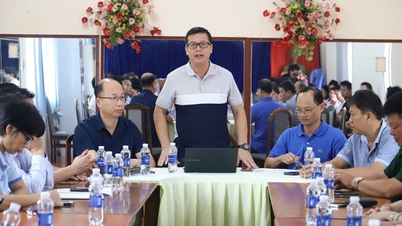
After a year of implementing the two-tiered local government model, the process of reorganizing and streamlining the political system's structure has initially shown positive progress. Many intermediate layers have been eliminated, and functions and tasks have been reviewed with a focus on "clear responsibilities, clear tasks, and clear accountability," contributing to overcoming the long-standing overlapping and fragmented nature of the system. This is not just an administrative organizational adjustment, but also a strategic step towards building a modern, efficient, and effective administration that meets the country's development requirements in the new era.
General Secretary and President To Lam once emphasized that restructuring and reorganizing the political system is the "key" for the country to enter an era of progress. This spirit reflects the Party's strong determination to innovate national governance methods and build a public service system that serves the people, instead of merely managing administration in the old way.
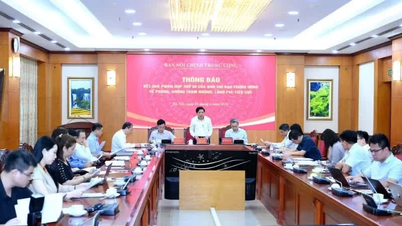
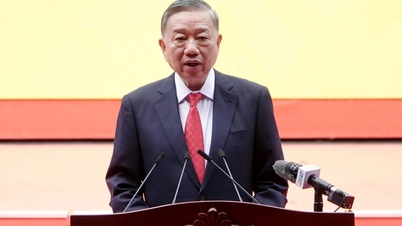
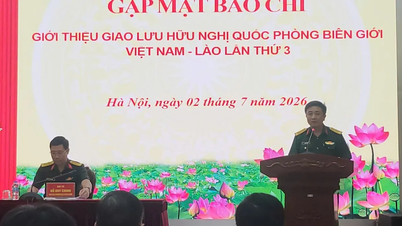
Presiding over and delivering a keynote address at the National Conference summarizing one year of operation of the overall organizational model of the political system and the three-tiered government model on July 1, 2026, the General Secretary and President acknowledged: Leadership, direction, and implementation have seen many innovations. Party committees, governments, agencies, and units have proactively issued working regulations, coordination procedures, meetings, assigned responsibilities, supported grassroots units, and resolved emerging issues. The work of arranging, assigning, and evaluating cadres has seen many innovations, focusing on competence and qualifications linked to job positions; management is linked to data, progress, and work results.
Recently, it's not uncommon to see a commune official simultaneously receiving citizens, processing electronic documents, participating in online meetings, and handling overlapping professional duties. In some places, one person has to take on multiple responsibilities. The administrative apparatus may be streamlined in form, but if the staff is not adequately prepared, that streamlining can easily turn into overload.
For many years, we have discussed the situation of a workforce that is both "overstaffed and understaffed." There's an oversupply in quantity, but a shortage of people who truly meet the job requirements. The real concern isn't the shortage of personnel, but the shortage of the right people for the right jobs. Meanwhile, the process of defining job positions – a solution once hoped to create a breakthrough in downsizing the workforce – is still being implemented using outdated thinking in many places. Instead of determining positions based on workload and practical requirements, many rely on existing staffing levels to maintain the old organizational structure. Therefore, the job position scheme, which should be a tool for screening and improving the quality of the workforce, has inadvertently become a barrier to reform in some areas. Consequently, downsizing the workforce has only reduced "quantity" in some places, not truly "quality."


Another bottleneck significantly impacting the efficiency of the system is the fear of responsibility, avoidance, and procrastination among some officials. As authority is decentralized, so too is the pressure of responsibility. However, in a context where many regulations are overlapping and mechanisms to protect officials who dare to think and act are not yet clearly defined, many choose the safe option: They avoid making decisions, signing documents, and taking initiative to prevent risks.
Furthermore, the digital transformation process is also creating a significant gap in the capacity of officials across localities. Many officials and civil servants are still not proficient in using digital tools and platforms in their duties, leading to low productivity and confusion when handling work according to the new model. Meanwhile, data infrastructure, digital platforms, and legal regulations are not synchronized in many places, leaving local officials overwhelmed by paperwork and lacking unified guidance.
On another aspect, compensation policies are also becoming a significant concern. As workloads increase and responsibilities grow, but income and working conditions remain limited, it becomes difficult to retain talented individuals for the long term. Some highly skilled professionals at the provincial and central levels are reluctant to transfer to local areas because the work environment is stressful, but opportunities for development and compensation are not commensurate. A strong system requires a capable workforce and mechanisms to motivate them to dedicate themselves wholeheartedly to their work.
At the National Conference summarizing one year of operation of the overall organizational model of the political system and the three-tiered government model, General Secretary and President To Lam frankly raised seven major issues that need to be addressed. Regarding personnel work, he pointed out: The capacity for implementation at the grassroots level, especially at the commune level, has not kept pace with new requirements. The volume of work transferred to the grassroots is very large, while there is a shortage of specialized personnel in land, planning, construction, finance, investment, information technology, inspection, urban management, and other complex fields. Many officials have to take on multiple responsibilities, face great pressure, and encounter official risks (according to assessments, only 53% of provincial-level officials and 30% of commune-level officials meet the job requirements).
To address the current bottlenecks in personnel management, it is necessary to drastically reform the evaluation of officials in a substantive manner. The achievements of officials should be measured by their work efficiency, the level of public satisfaction, the speed of processing documents, and their ability to solve practical problems. Simultaneously, it is crucial to resolutely weed out incompetent and irresponsible officials, while also establishing mechanisms to protect those who dare to think and act for the common good. A clear distinction must be made between self-serving misconduct and corruption, and the risks inherent in innovation and creativity. Without protecting those who dare to take responsibility, it will be very difficult to inspire a spirit of action within the system.
The training and development of officials must also change towards a more substantive approach, linked to job positions and practical requirements. Today's officials not only need to understand the law but also be proficient in using technology, possess inter-agency coordination skills, and have the courage to handle complex situations. It is necessary to promote the attraction of talent to the public sector, including from the private sector; strengthen the rotation of young officials to grassroots levels to gain practical experience, helping them understand the people, be close to the people, and grow through practical management experience. In the long term, the post-merger apparatus needs to be built on three pillars: competence - responsibility - compensation. Competence must be honed through training and practical experience; responsibility must be monitored by specific criteria; and compensation must be sufficient to create motivation for contribution and retain talented individuals.



After a year of implementing the two-tiered local government model, difficulties and shortcomings are inevitable. Streamlining the administrative apparatus is not the ultimate goal. The greater goal is to build a more efficient, modern administration that serves the people more effectively. To achieve this, personnel management must truly become the "key of keys." Only when each official is placed in the right position, their abilities are properly utilized, they are fairly evaluated, and they are motivated to contribute, will the reform of the administrative apparatus truly reach its ultimate goal: building a modern, effective, efficient, and people-serving national governance system.
Source: https://nhandan.vn/doi-moi-manh-me-cong-tac-can-bo-post973153.html