Although the news report explained that "if this scenario occurs, Vietnam risks facing higher-than-average temperatures, a decrease in the number of cold spells, and widespread rainfall shortages, increasing the risk of drought and water scarcity," some opinions suggest that such a forecast is still too academic, full of jargon and general information that is difficult for the average person to understand.
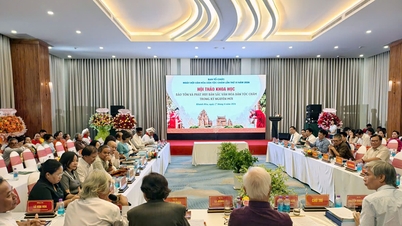
At the Conference on Forecasting and Early Warning of Meteorological and Hydrological Situation in 2026, organized by the Ministry of Agriculture and Environment on June 23, representatives of the Vietnam Meteorological and Hydrological Association stated that current El Nino forecasting still focuses on climate indicators and probability of occurrence, while what people and localities need most is an assessment of the impact on each region, each production sector, and each group of people.
"People aren't really concerned about whether El Nino is strong or weak, or what the probability of it occurring is. What they need to know is what risks their area will face if El Nino happens, which crops are vulnerable, whether their drinking water supply will be threatened, and what preparations they need to make," this expert said.
This expert argues that weather forecasting needs to shift from describing climate phenomena to predicting impacts. Instead of simply providing academic information, reports should address how extreme weather will affect people's lives and livelihoods. A durian farmer in the Mekong Delta would be concerned about when and how long saltwater intrusion might occur. People in the South Central region would want to know about the potential for water shortages during the upcoming dry season. Farmers in the Central Highlands need specific information about the prospects for water resources to irrigate long-term industrial crops.



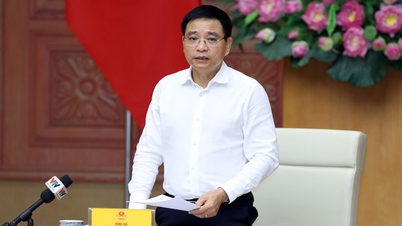
Concurring with this view, at the conference, leaders of the Ministry of Agriculture and Environment stated that the global climate is changing towards extremes under the impact of climate change. Therefore, weather forecasting not only needs to be more accurate, but also needs to translate scientific information into specific management decisions and response actions.
To achieve this, representatives from the Department of Meteorology and Hydrology stated that the participation of many specialized agencies is necessary. Specifically, the Department of Meteorology and Hydrology is responsible for forecasting weather and climate trends; units managing agriculture, livestock, irrigation, water resources, etc., will also participate in assessing impacts, developing risk scenarios, and proposing response solutions for each sector. By connecting data sources and expertise from multiple sectors, a sufficiently detailed risk map can be built, supporting management efforts and helping people proactively adapt.
At the conference, the Ministry of Agriculture and Environment assigned the Department of Meteorology and Hydrology to prepare a report assessing the impacts and risks of El Nino, to be submitted to the Government in July 2026. This report must clearly identify high-risk areas, vulnerable sectors, and recommend specific actions for each region and sector. With these perspectives and actions, we expect that the meteorological and hydrological sector, in coordination with other sectors, will soon produce increasingly practical, understandable, and accurate weather forecasts that will benefit everyone and contribute significantly to the socio-economic development of the country.



Source: https://baophapluat.vn/doi-moi-thong-tin-du-bao-thoi-tiet.html