On the evening of June 8th, Israeli Prime Minister Benjamin Netanyahu's Likud party posted a short but cryptic message on the social media platform X: "Without Gadi, there is no Tibi."
The video , created by AI, depicts former Chief of Staff Gadi Eisenkot standing next to Arab MP Ahmad Tibi in front of the Israeli Knesset building, shrouded in dark clouds. The caption at the end of the video states: "Eisenkot will not be able to form a government without Arab parties."
The message reflects two pillars of Likud's campaign ahead of the parliamentary elections scheduled for the end of October: viewing Eisenkot as Netanyahu's most formidable political opponent, according to CNN.
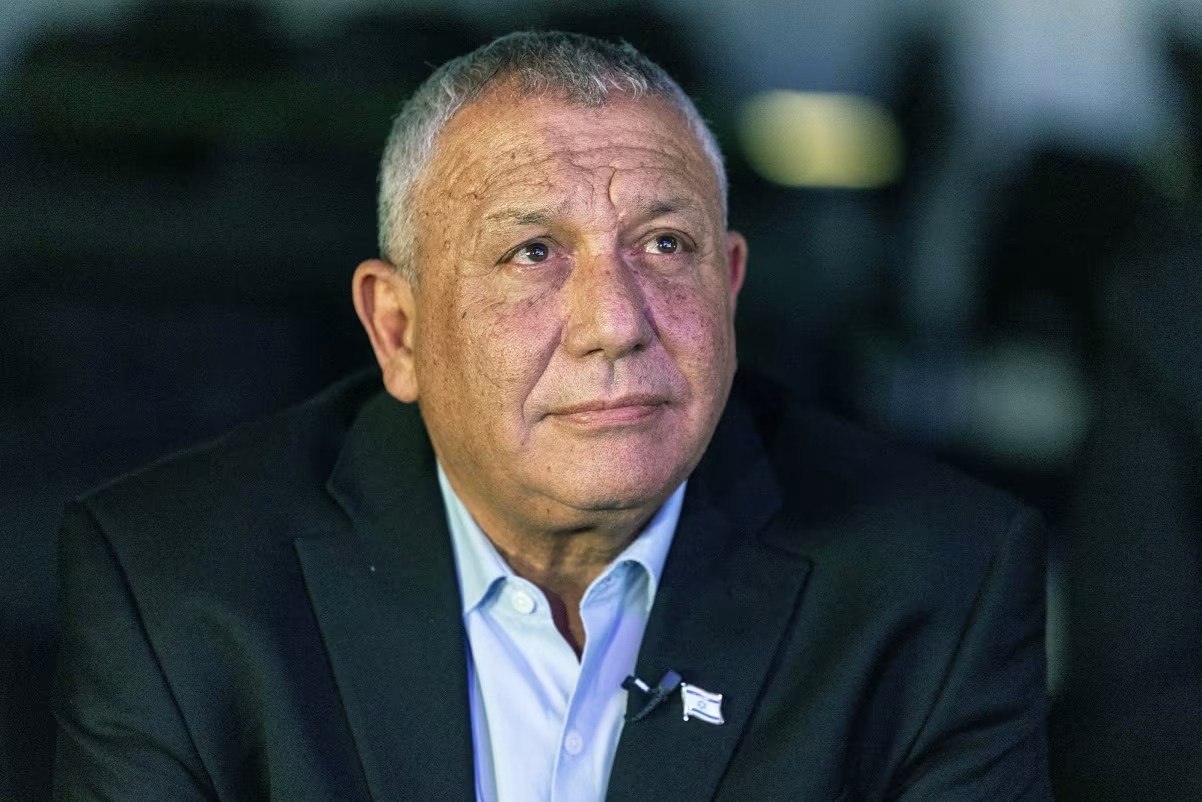 |
Former Israeli army commander Gadi Eisenkot, who is running for prime minister in the upcoming Israeli elections. Photo: Reuters. |
While former Prime Minister Naftali Bennett was previously considered the leading figure in the opposition, Eisenkot has now overtaken him in many polls.
The Yashar (Integrity) party, founded by Eisenkot less than a year ago, is now closely trailing Likud and ahead of the Bennett and Yair Lapid alliance in many polls.
Likud also continuously disseminated videos mocking Eisenkot's English speaking ability to contrast with Netanyahu's image. However, according to analysts, it was precisely this unpretentious and different style that became an advantage, helping Eisenkot gain favor with voters.
Two people, two leadership styles.
At 76 years old, Netanyahu is a seasoned politician, known for his oratorical skills, campaigning abilities, and media dominance.
Meanwhile, Eisenkot, 66, has a calm, unpretentious style and hardly cultivates a personal image like a professional politician. He is known more as a military planner than as a public speaker.
Netanyahu is the son of a renowned historian, grew up in Jerusalem's elite, and served in the prestigious Sayeret Matkal special forces unit.
Conversely, Eisenkot was the second of nine children in a family of Moroccan immigrants. He grew up in Tiberias and Eilat, outside of Israel's traditional centers of power.
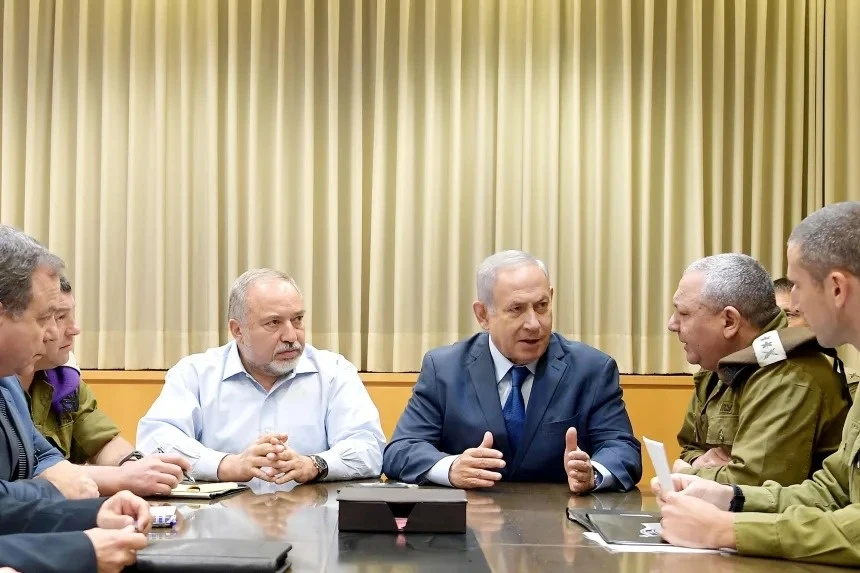 |
Israeli Prime Minister Benjamin Netanyahu (third from the right) meets with then-Chief of Staff of the Israel Defense Forces Gadi Eisenkot (second from the right) in November 2018. Photo: Office of the Israeli Prime Minister. |
From the Golani Brigade, Eisenkot rose steadily to become Chief of Staff of the Israel Defense Forces (IDF) from 2015 to 2019 – a position he was appointed to by Netanyahu himself.
At his retirement ceremony in 2019, Prime Minister Netanyahu praised: "Under your command, Gadi, the Israeli army has achieved many great accomplishments."



However, during his term, Eisenkot also faced considerable political pressure.
In 2016, he supported the prosecution of military medic Elor Azaria after the soldier shot and killed a wounded Palestinian. The case was highly controversial in Israeli society, but Eisenkot defended military justice, despite pressure from the right wing, including Netanyahu.
The Gaza War changed political careers.
In 2022, Eisenkot entered politics under the guidance of former Chief of Staff Benny Gantz. Following the Hamas attack on October 7, 2023, he and Gantz joined the wartime cabinet formed by Prime Minister Netanyahu.
Over time, Eisenkot became increasingly open in his criticism of the government's handling of the war, arguing that Israel lacked a clear strategy to achieve its long-term goals and bring the hostages in Gaza back.
In a letter to Netanyahu in February 2024, Eisenkot stated that the war had only produced "tactical gains" but lacked sufficiently large steps to achieve strategic goals.
The war also left a deep personal void for him. In December 2023, his youngest son, Gal Eisenkot, was killed in Gaza. Later, two of his grandsons also died in the war.
At his son's funeral, Eisenkot said: "We will continue to live in unity so that our son's sacrifice will not be in vain. We will do everything to be worthy of those who have fallen and of all the people of Israel."
In June 2024, Eisenkot and Benny Gantz left the wartime cabinet, believing the government lacked a clear plan to end the conflict. A year later, he broke away from Gantz to form the Yashar party, paving the way for political independence.
Journalist Nachum Barnea of Yedioth Aharonot noted that Eisenkot's appeal stemmed from many emotional factors: a former Chief of Staff, a father who lost a son in war, and an Israeli of Moroccan descent who grew up on the periphery.
Background is also considered politically significant. Mizrahi voters—a Jewish community with origins in the Middle East and North Africa—are traditionally supporters of Likud, but Israel has never had a prime minister from this community.
Even MP Likud David Bitan acknowledged that Eisenkot's background gave him "a very significant advantage".
Challenges
Despite his strong performance in the polls, Eisenkot still faces many challenges with the election still about four months away. Netanyahu still possesses the advantage of a seasoned politician with a powerful campaign apparatus.
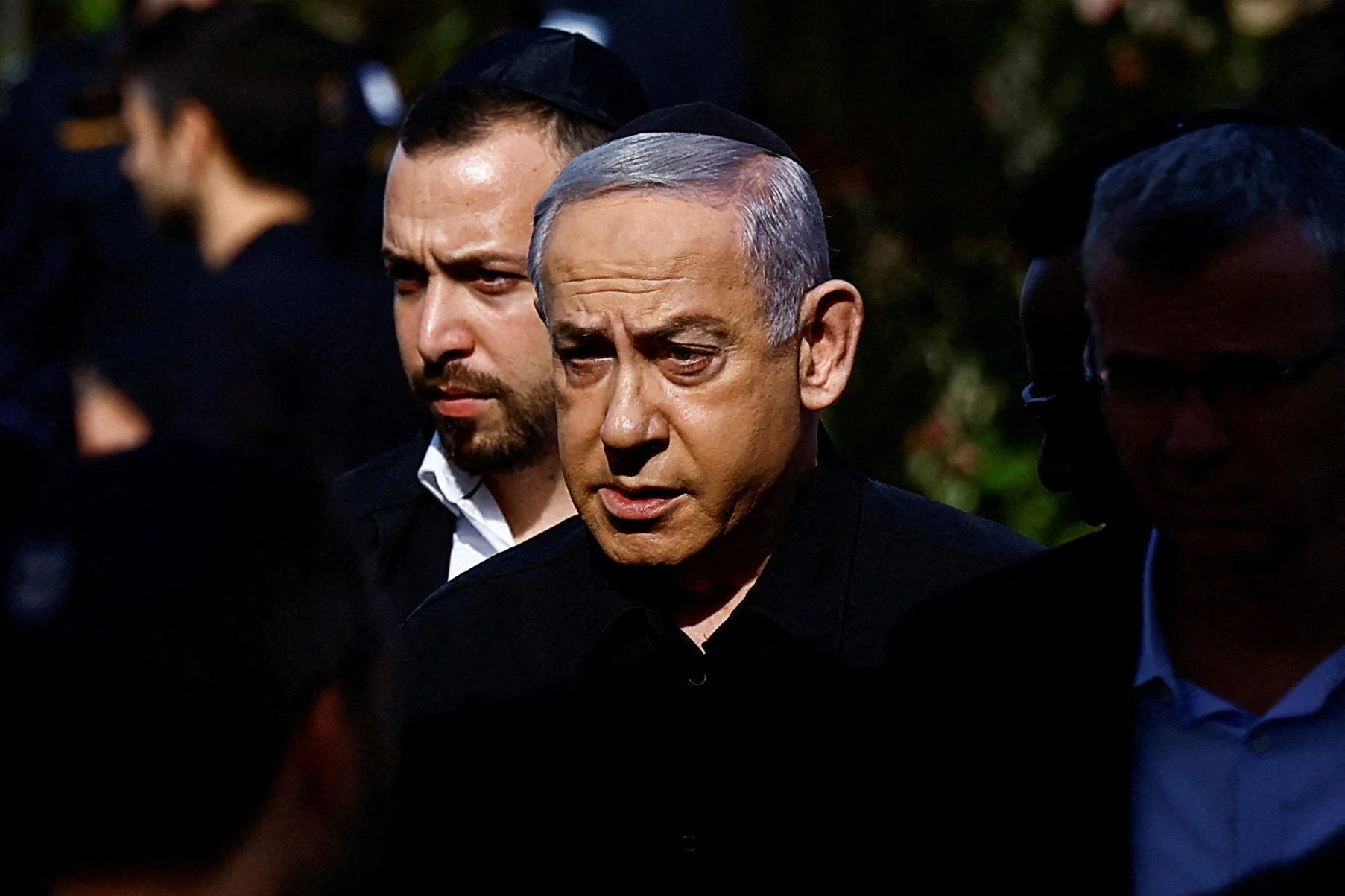 |
Eisenkot still faces many challenges from a seasoned politician like Netanyahu and his powerful campaign apparatus. Photo: Reuters. |
Furthermore, even if the opposition wins a majority of seats, forming a coalition government comprising left-wing, centrist, right-wing, and Arab parties remains an extremely difficult task.
According to Anshel Pfeffer, an Economist reporter and author of a biography of Netanyahu, Eisenkot is different from most of the Israeli Prime Minister's previous rivals.



"From 1996 to the present, Israel has almost always been searching for someone who could defeat Netanyahu. Those who succeed win because they are different, while those who fail often try to become a 'second Netanyahu'," he said.
According to Pfeffer, Eisenkot did not follow that path: "There is only one Netanyahu. Eisenkot is the first in years to try to defeat him through his opposition."
However, he also noted that the main difference lay in personal style. In terms of policy, Eisenkot was one of the architects of Israel's military strategy, including the Dahiyeh doctrine and strategic planning during the early stages of the Gaza War.
"In terms of personality, they are very different. But when it comes to policy, that gap may not be as big as many people think," Pfeffer observed.
Nevertheless, after years of witnessing his rivals fail one after another, Eisenkot remains the biggest challenge to Netanyahu, as more and more Israeli voters seek a different style of leadership.
Source: https://znews.vn/doi-thu-moi-noi-cua-ong-netanyahu-post1664502.html


![[Photo] Strengthening character and expertise: Intense training for artillery soldiers.](https://vphoto.vietnam.vn/thumb/1200x675/vietnam/resource/IMAGE/2026/06/30/1782815602541_lu-368-1875-4571-jpg.webp)