Tax incentives provide a strong boost.
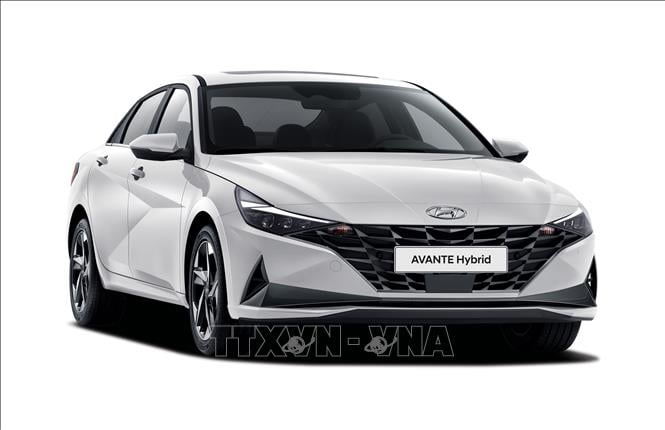
The Vietnamese automotive market is facing a major turning point as the amended Special Consumption Tax Law, passed by the National Assembly on June 14, 2025, officially expands tax incentives for self-charging hybrid vehicles (HEVs) – vehicles that use a combination of both internal combustion (gasoline) and electric motors for operation.
Accordingly, from January 1, 2026, HEV vehicles will be subject to a special consumption tax rate equal to 70% of that of gasoline and diesel vehicles of the same capacity – a preferential rate previously only available for PHEVs (plug-in hybrid vehicles). This new policy is considered a significant driving force in bringing hybrid vehicles closer to the majority of consumers.
Calculations show a significant impact of tax incentives on car prices. Specifically, a car model with an import price of 500 million VND currently faces a 45% special consumption tax applied to vehicles with engine capacities under 2,000cc (equivalent to 225 million VND), plus 10% VAT, bringing the price to 796.5 million VND. When the new policy takes effect, the special consumption tax will decrease to 157.5 million VND; VAT will also decrease accordingly, bringing the total price down to 723.25 million VND. Thus, buyers save 73.25 million VND without affecting the manufacturer's profit margin.
For higher-priced models, the price reduction is even more significant. For example, an imported car priced at 1.5 billion VND is currently subject to a 50% special consumption tax applied to vehicles with engine capacities between 2,000 and 3,000cc, equivalent to 750 million VND. From 2026, this tax will be reduced to 515 million VND, saving customers up to 225 million VND compared to a comparable gasoline-powered car. This difference is expected to significantly narrow the price barrier – a factor that has previously made consumers hesitant to adopt hybrid technology.
Lowering prices not only encourages car purchases but also promotes the transition to green vehicles. Hybrid cars, with their advantages of fuel efficiency and reduced CO₂ emissions, are increasingly seen as a suitable solution in the context of Vietnam's efforts to promote sustainable development, reduce pollution, and move towards carbon neutrality. This is also a firm goal of major manufacturers like Toyota and Honda, who are pursuing it as a stepping stone before transitioning from gasoline to fully electric vehicles.



Businesses accelerate investment - the market is booming.
Along with policy incentives, automotive businesses are accelerating investment to anticipate the projected surge in hybrid demand after 2026. Toyota and Honda, two brands with the most extensive hybrid vehicle portfolios in the region, have both confirmed plans to boost domestic hybrid vehicle assembly.
Accordingly, Honda Vietnam officially announced its plan to assemble the advanced CR-V e:HEV (Hybrid vehicle) model at its factory in Phu Tho province, starting in early 2026, instead of importing it from Thailand for distribution. Honda Vietnam stated that Hybrid vehicles will be a key product during the transition to electrification, contributing to the Vietnamese government's carbon neutrality goals.
Since 2023, Honda Vietnam has continuously expanded its Hybrid product range with the CR-V e:HEV RS, Civic e:HEV RS, and HR-V e:HEV RS models, all utilizing advanced e:HEV technology consisting of two electric motors combined with a gasoline engine, resulting in over 30% fuel savings compared to traditional vehicles.
Meanwhile, Toyota Motor Vietnam also announced it will invest over US$360 million (approximately VND 9,500 billion) to upgrade infrastructure and build a hybrid vehicle assembly line at its Phu Tho factory. Toyota Vietnam currently distributes hybrid models including the Corolla Cross Hybrid, Innova Cross Hybrid, Altis Hybrid, Camry Hybrid, and Yaris Cross Hybrid. The company stated that its first domestically assembled hybrid model is expected to be released in 2027. This is considered a strategic move to help Toyota expand its production capacity, reduce dependence on imported supplies, and increase competitiveness in the face of the impending boom in the hybrid market.
Not only traditional brands, but new manufacturers are also quickly joining the race. At the end of October 2025, Omoda & Jaecoo Vietnam – a joint venture between Geleximco Group (Vietnam) and Chery Group (China) – commenced construction of the first Chinese-made automobile factory in Vietnam, located in Hung Yen province. The factory has a total investment of VND 8,125 billion, a designed capacity of 120,000 vehicles per year, and is expected to begin operations in 2026. This will be a production facility for a diverse range of high-tech vehicles such as new energy vehicles, hybrid vehicles (PHEV – Super Hybrid), and purely electric vehicles (EV).
Alongside the factory construction, Omoda & Jaecoo Vietnam also announced plans to launch 16 completely new SUV models, ranging from urban SUVs and sports SUVs to off-road vehicles, in 2026. The arrival of this new product line is expected to liven up the hybrid segment, creating intense competition in terms of price, technology, and design in the coming years.



Besides domestic manufacturers investing in production and assembly, the Vietnamese automotive market also has many other brands importing and distributing products such as Hyundai, Kia, Haval, BYD, Suzuki, etc., demonstrating confidence in the development prospects of the Vietnamese hybrid market. With significantly reduced ownership costs thanks to tax incentives, combined with the advantages of fuel efficiency and increasingly sophisticated technology, hybrid vehicles have become an attractive intermediate option between traditional gasoline cars and pure electric vehicles.
Experts predict that the period from 2026 to 2030 will be a boom time for hybrid vehicles in Vietnam. This is not only a positive sign for the automotive industry, but also contributes significantly to the goal of reducing greenhouse gas emissions, promoting sustainable development, and boosting the "green car" trend that Vietnam is pursuing.
Source: https://baotintuc.vn/kinh-te/don-co-hoi-but-pha-nho-uu-dai-thue-20251204075632889.htm