On the evening of June 24th, two devastating earthquakes struck in quick succession, shaking the entire country of Venezuela and causing immense damage and loss of life.
According to reports, the disaster began around 6 p.m. on June 24 (local time) in Yaracuy state, located west of the capital Caracas. In less than a minute, two powerful earthquakes struck the area in quick succession.
The first tremor measured 7.2 on the Richter scale, with its epicenter near the city of San Felipe, and just 39 seconds later, another earthquake with a magnitude of 7.5 on the Richter scale struck the nearby Yumare area.
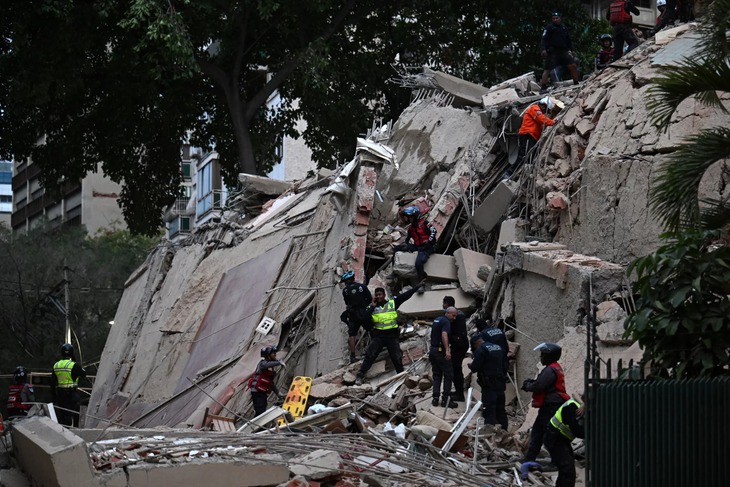
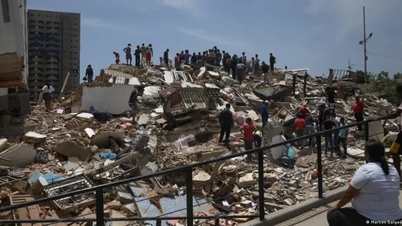
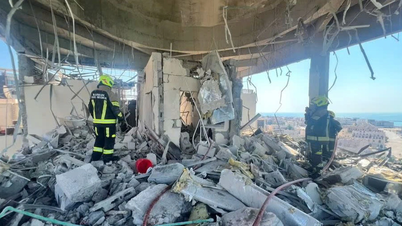
Rescue workers search for people trapped inside a collapsed building after an earthquake in Caracas on June 24. Photo: Juan Barreto/Getty Images
Because both earthquakes had relatively shallow epicenters, only about 20 km below the surface, their destructive power spread over an extremely large area. As a result, many high-rise buildings in Caracas collapsed or were deformed, with the most severely affected areas being bustling neighborhoods such as Chacao, Los Palos Grandes, San Bernardino, and Altamira.
Simón Bolívar International Airport in Maiquetía also suffered a similar fate when a section of its ceiling collapsed, forcing management to temporarily close it. In addition, life in the capital Caracas was completely disrupted as many areas experienced widespread power outages, and communication systems such as telephone and internet services were also interrupted.
The aftershocks of the disaster did not stop at the capital; they spread and severely damaged neighboring states including La Guaira, Aragua, Carabobo, and Falcón. In La Guaira alone, initial reports indicated that at least 15 buildings of varying sizes were flattened.
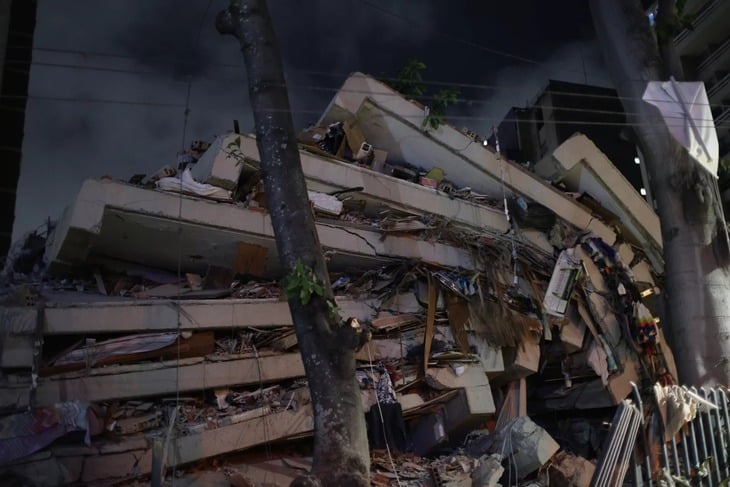
A building in Los Palos Grandes collapsed due to aftershocks from the 7.2 magnitude earthquake in Venezuela on June 24. Photo: Jesus Vargas/Getty Images

The earthquake was so powerful that people as far away as Bogota, the capital of neighboring Colombia, felt the tremors clearly. Even more worrying, the tragedy occurred on the holiday commemorating the Battle of Carabobo, a time when most people were gathered at home, further increasing the risk of casualties.
In response to the critical situation, Venezuelan Acting President Delcy Rodríguez declared a nationwide state of emergency and immediately established a special task force to directly command rescue and relief efforts.
Venezuelan Interior Minister Diosdado Cabello also urged residents to quickly evacuate homes showing signs of cracks and damage, and ordered a temporary cut in electricity and gas supplies in key areas to prevent the risk of secondary accidents.
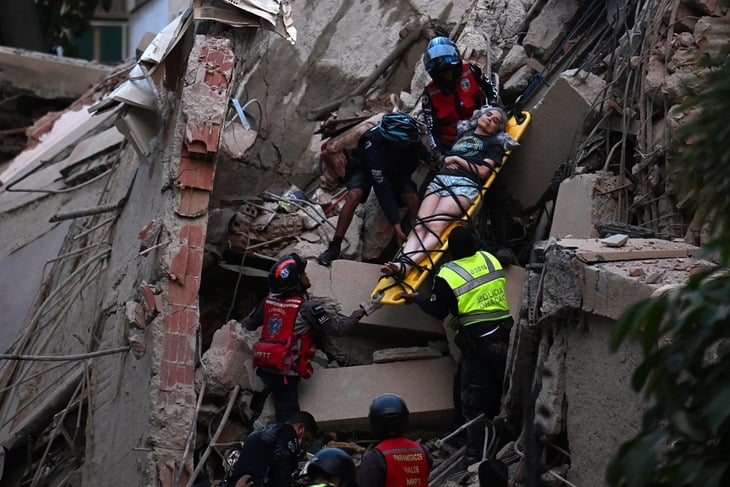
Rescue workers carry a person on a stretcher out of a building that collapsed after the earthquake on June 24. Photo: Juan Barreto/Getty Images
In the Chacao area, a massive rescue force of over 500 personnel was deployed urgently and initially successfully rescued at least 18 people trapped under the rubble. However, fear still hung over the area as it was hit by more than 20 aftershocks.
As of now, Venezuela has only recorded three deaths in the Caracas area, according to official confirmation from the mayor of the Baruta metropolitan area, Darwin Gonzalez. However, the U.S. Geological Survey (USGS) warns that this earthquake has a very high probability of causing extremely heavy casualties, with the number of victims potentially ranging from 10,000 to over 100,000.
Many countries in the Latin American region, such as Mexico, Brazil , and El Salvador, have expressed their deep sympathy and are preparing humanitarian aid packages to send to Venezuela. The US government has also announced plans to send elite rescue teams along with essential medical equipment and supplies to assist in the disaster zone.
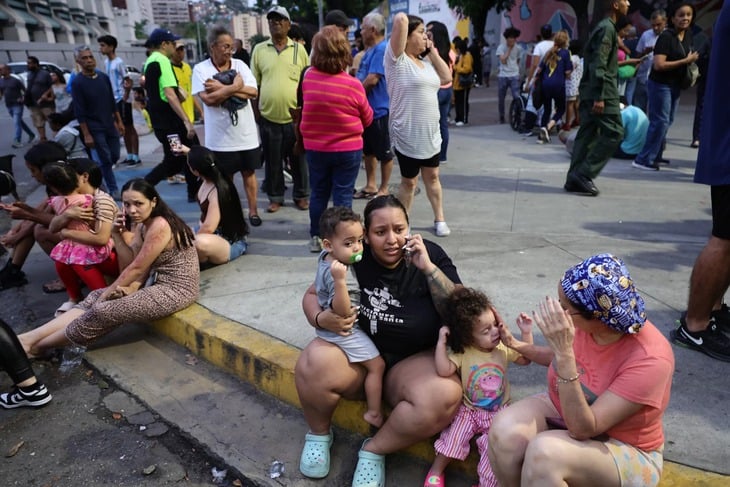
People panicked and rushed into the streets after the June 24 earthquake in Caracas. Photo: Federico Parra/Getty Images



Currently, a race against time to find survivors is underway at the scene of the devastation. For safety reasons, all schools in Venezuela have been temporarily closed, while public transportation has been completely paralyzed.
Venezuelan citizens are also advised to constantly update themselves on guidance from local authorities and proactively prepare for the possibility of further aftershocks of greater intensity in the coming days.
Source: https://suckhoedoisong.vn/dong-dat-lien-hoan-rung-chuyen-venezuela-169260625115235986.htm