

Didier Drogba, nicknamed "The Elephant of the Forest," was admired across Europe for his unstoppable style of play and goals for Chelsea. He led a brilliant generation of Ivorian footballers, including the Kolo brothers and Yaya Toure, Didier Zokora, and Aruna Dindane. They qualified for their first-ever World Cup in 2006, amidst the flames of civil war in their country.
"Nobody asks what ethnicity the goalscorer is from."
The civil war broke out in September 2002, between rebel forces in the north supporting politician Ouattara against the government of President Gbagbo. The northern half of Ivory Coast is home to predominantly Muslim people (39% of the population), including the Toure brothers. The southern half, with its largest city Abidjan and the capital Yamoussoukro, is predominantly Christian (33% of the population), and Drogba was born in Abidjan.
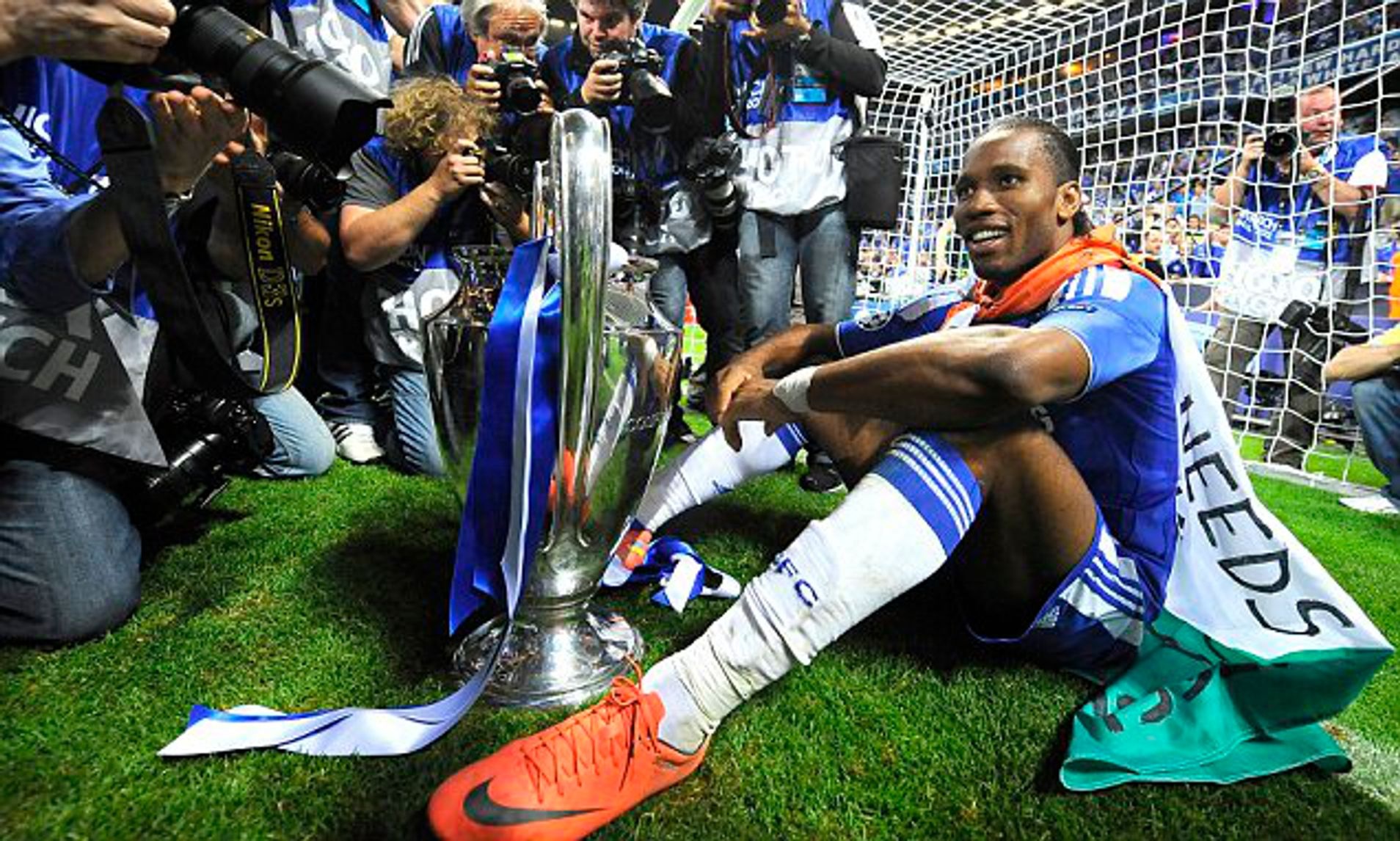
Drogba's greatest achievement of his career: winning the Champions League trophy with Chelsea in the summer of 2012. |
The civil war split in two a country considered one of Africa's most prosperous, with abundant exports of minerals and agricultural products. Ivory Coast is the world's number one cocoa exporter. However, it did not divide the national team and the people's love of football. Whenever the team plays, they stop fighting and sit in front of their screens.
“I, Toure, and Dindane come from different nationalities, but we don’t avoid each other, absolutely not, there’s no tension at all. When the team plays, nobody goes out into the streets, everyone sits in front of the TV, and when you score a goal, nobody asks what nationality the scorer is,” Drogba wrote.
The Ivory Coast coach at the time was a highly experienced figure, former French international Henri Michel, who had previously led France, Cameroon, and Morocco in World Cups. Ivory Coast was in a 2006 World Cup qualifying group alongside two very strong teams, Cameroon and Egypt, and three others: Libya, Sudan, and Benin. Six teams competed for a single qualifying spot.
They lost 0-2 to Cameroon in the first leg in July 2004. In the return leg at home in Abidjan, also the penultimate qualifying match, they lost again 2-3 to Cameroon, dropping to second place in the group with 19 points compared to Cameroon's 20. In the final match in October 2005, played at the same time, Ivory Coast completed their task with a 3-1 victory in Sudan and awaited Cameroon's result. Meanwhile, Cameroon played Egypt at home to secure the three points needed to qualify for Germany.
Cameroon took the lead in the 20th minute. But in the 80th minute, the "Indomitable Lions'" cauldron was dampened when Egypt equalized. In the 5th minute of added time, Olembe was fouled in the penalty area, and the referee awarded Cameroon a penalty. The famous striker Eto'o, for some reason, did not take the penalty as usual. Therefore, defender Wome stepped up, and his unfortunate shot hit the post and went wide. Cameroon was knocked out of the World Cup with that one penalty. Hell for Cameroon, heaven for Ivory Coast.
"We want to be happy, please stop shooting."
The Ivorian players gathered in the middle of the football pitch in Omdurman, Sudan. They surrounded a cameraman who was connecting a mobile phone to a friend in Abidjan watching the Cameroon match live. When the penalty was missed, their first action was to kneel on the pitch and pray for peace .
Drobga made a significant contribution to the national reconciliation process in Ivory Coast. |

“To the men and women of Ivory Coast, today we prove that all people can live and celebrate together for a common goal: qualifying for the World Cup,” Drogba pleaded. “We promise that the World Cup will unite everyone. Today, we kneel and beg all people for forgiveness, forgiveness, and more forgiveness. A wealthy African nation should not be embroiled in such a war. So, please lay down your arms, hold elections, and things will be better.”
The players then stood up, their faces beaming, and began singing a song with the chorus, "We want happiness, stop the shooting." Drogba's prayer after the victory persuaded the government and the opposing armed forces to cease fire and initiate peace negotiations. By early 2007, the two sides signed a formal peace agreement, and President Gbagbo declared an end to the war.
The subsequent peace process was not entirely smooth for Ivory Coast. The elections originally scheduled for 2005 had to wait five years before they could take place. The controversial results of the 2010 election sparked a new cycle of violence. However, the Ivorian football team's efforts to build peace and end the civil war have always been recognized. Opposition leader Ouattara was elected president in 2010 and remains in power to this day.
The match went down in the international football record books.
In January 2006, Drogba and his teammates participated in the African Cup of Nations (CAN) in Egypt. Drogba scored two goals in the first two group stage matches, helping the national team win narrowly against Morocco 1-0 and Libya 2-1. Having secured qualification, coach Michel rested Drogba and other key players in the final match against the host nation, fearing they might receive further yellow cards and be suspended for the knockout rounds. Ivory Coast lost to Egypt 1-3, a defeat that meant they would face Cameroon again in the quarter-finals.
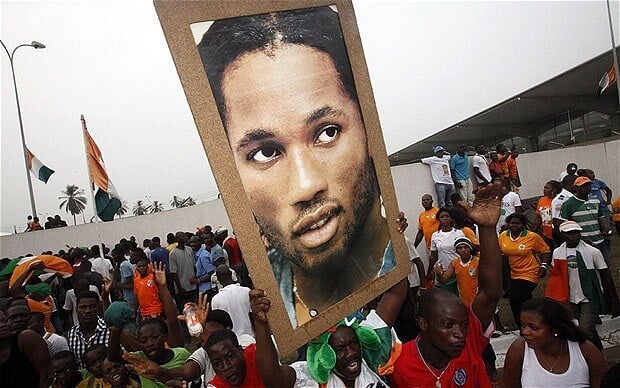
Speaking to Western media, many Ivorians said that Drogba's image was even greater than that of the country's president, and that he had contributed a lot of money to the country's reconstruction. |
The first 90 minutes were dull and fragmented by numerous fouls. Extra time brought excitement, with each side scoring a goal. This was followed by a penalty shootout that went down in international football history as the longest in history. All 22 players on the field, including both goalkeepers, successfully converted their penalties, resulting in an almost unbelievable 11-11 draw.
And so began another round of penalties, with Eto'o stepping up to take his and sending the ball over the crossbar. Drogba, who had a far better game than his illustrious opponent, calmly stepped up and finished the tense match 12-11. In another quarter-final match played on the same day, Nigeria defeated Tunisia 6-5 on penalties. In total, including missed penalties, 40 penalties were taken in the two matches.
Drogba scored the only goal to help the Ivory Coast "Elephants" defeat the Nigerian "Super Eagles" in the semi-final. In the final, they faced their familiar opponent, the host nation Egypt. Sadly, Drogba became the "villain" in this match. He missed a golden opportunity when he shot over the crossbar late in the game. The score was 0-0 after 120 minutes, and in the subsequent penalty shootout, Drogba missed the first penalty, resulting in Ivory Coast's defeat.
The players were surprised by the thousands of people who gathered at Abidjan airport to welcome them. It took them four hours to travel from the airport to the city's central stadium. Drogba was also particularly popular in neighboring Mali, where his wife, Lalla Diakite, was born. He was received as a VIP by the Malian president, and the Malian people poured into the streets to celebrate Ivory Coast's victory over Cameroon in qualifying for the World Cup as if it were their national team's victory.
Ivory Coast was in the "group of death" at the 2006 World Cup. Drogba scored against Argentina but it wasn't enough to save the team from a 1-2 defeat. Another 1-2 loss against the Netherlands, featuring strikers Van Nistelrooy and Van Persie, led to their elimination from the tournament. Drogba received a yellow card in every match and was suspended.
Robben, his Chelsea teammate, commented that Ivory Coast was the strongest team to be eliminated. But they also left their mark in the final match with a spectacular comeback; trailing Serbia 2-0 after the first 20 minutes, Ivory Coast finished the match with a 3-2 victory. Since Germany beat England 3-2 at the 1970 World Cup, it wasn't until 2006 that such a comeback had occurred…
Drogba scored a hat-trick for the Marseille Legends team. The former Chelsea striker scored three goals in a 7-4 victory against UNICEF in a charity friendly match on the morning of October 14th (Hanoi time).
![[Photo] Prime Minister Pham Minh Chinh receives the Chinese Ambassador to Vietnam](https://vphoto.vietnam.vn/thumb/1200x675/vietnam/resource/IMAGE/2026/04/05/1775397481797_ndo_br_dsc-5512-jpg.webp)








































Comment (0)