

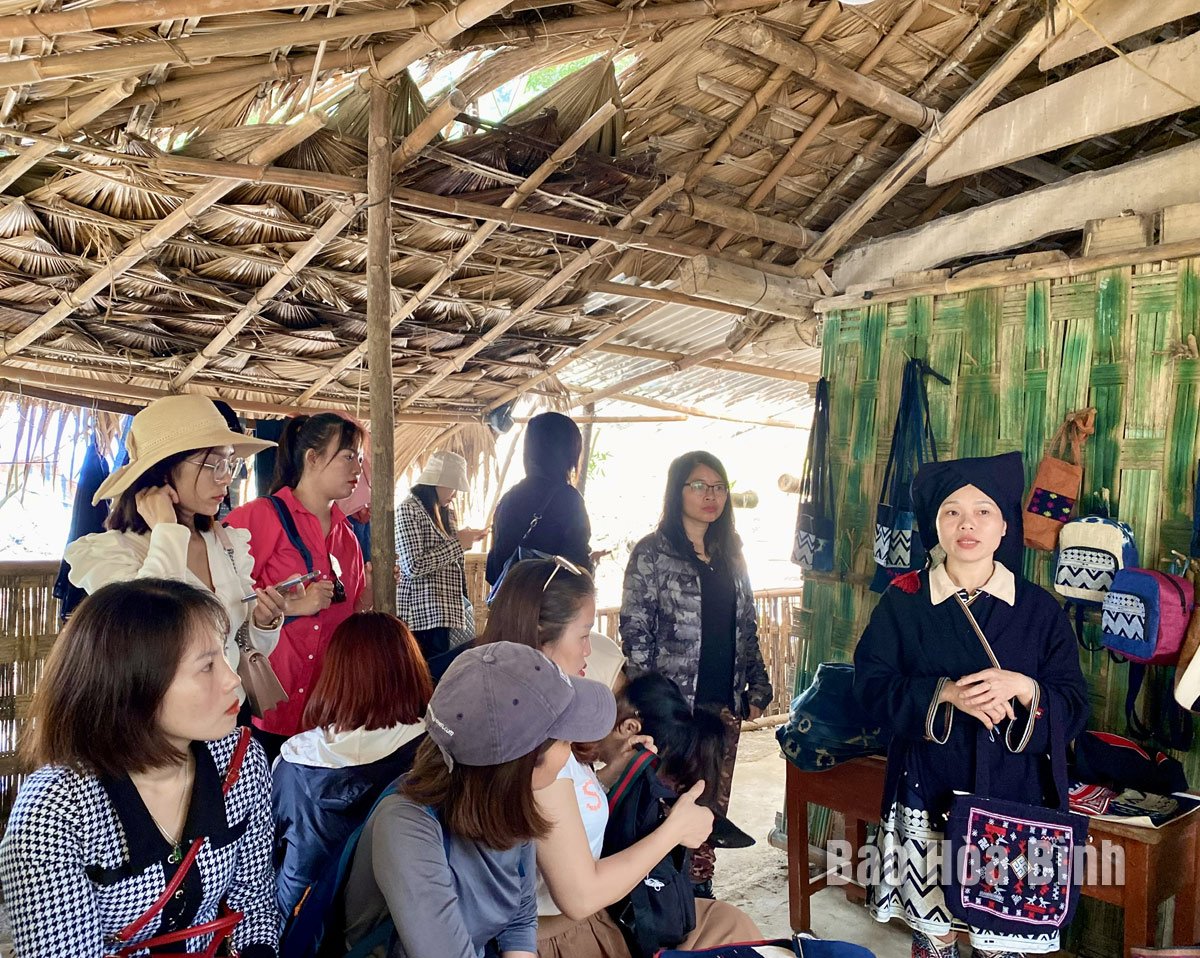
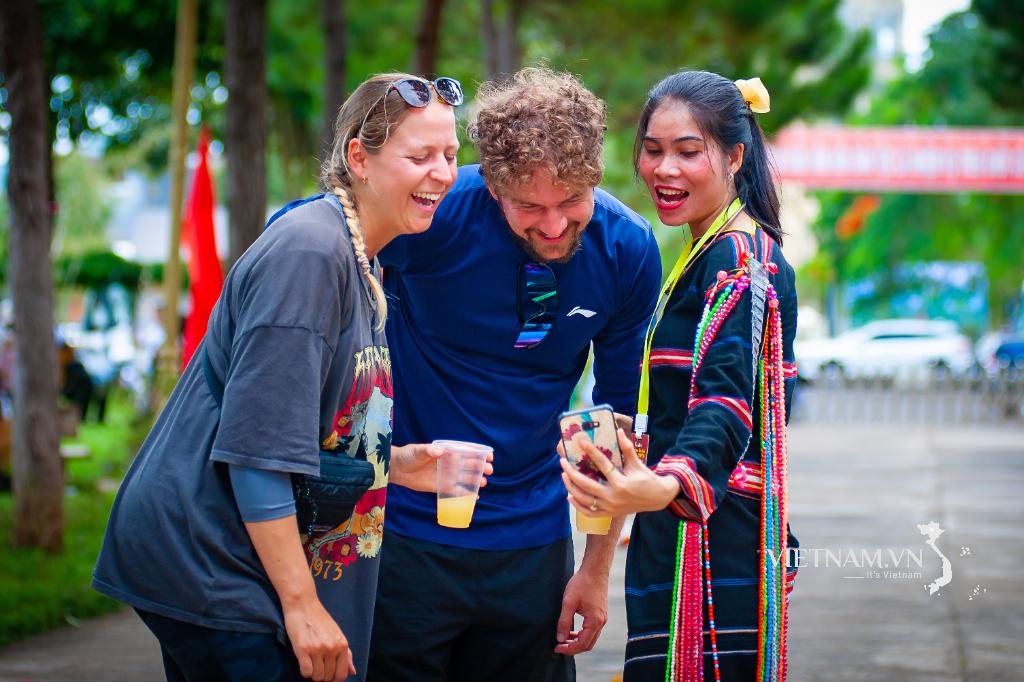
Tourists experience the traditional culture of the Dao people in Sung hamlet, Cao Son commune, Da Bac district - a 3-star OCOP community tourism destination of the province.
The first step on a long journey.
Issued on September 9, 2021, Project No. 03-DA/TU of the Standing Committee of the Hoa Binh Provincial Party Committee sets the goal of "developing agriculture and boosting product consumption associated with building new rural areas (NRA) in the period 2021 - 2025". This is one of the major socio -economic orientations of the province, aiming to create NRA not only through infrastructure and institutions, but also through internal economic strength and distinctive local products.
According to the assessment of the Department of Culture, Sports and Tourism, Hoa Binh currently has great potential for developing community-based tourism. Notably, it boasts diverse ethnic identities, rich natural landscapes, proximity to Hanoi , and is a familiar destination for international tourists. With over 150 community-based accommodation facilities (homestays) and more than 2,300 beds in villages, community-based tourism has favorable conditions to become a key direction in many highland districts if invested in comprehensively.
In implementing Project No. 03-DA/TU, the Department of Culture, Sports and Tourism proactively integrates relevant content into its regular work plan, especially in the areas of rural tourism and OCOP product development.
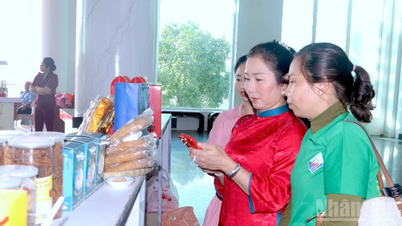
The first highlight was the English language and communication skills training courses on OCOP (One Commune One Product) sales organized in four districts: Da Bac, Lac Son, Mai Chau, and Tan Lac, with 104 participants. Locals, previously familiar with farming and traditional markets, were introduced to the concept of community-based tourism, learning how to welcome guests and promote local products. Although still somewhat unfamiliar with the concept, it marked a positive start. "I never thought I'd get to learn about tourism. The classes only lasted a few sessions, but I learned how to invite guests and speak a few basic English phrases. Having foreign tourists visit my village has made me a little more confident," shared Bui Van Thoan, a resident of Van Son commune, Tan Lac district.
In addition, several community-based tourism destinations have been standardized and included in the OCOP product system, such as Ngoi hamlet (Suoi Hoa commune, Tan Lac district), Cha Day hamlet (Pa Co commune, Mai Chau district), Sung hamlet (Cao Son commune, Da Bac district)... Notably, Mo hamlet was recognized as a 4-star OCOP community-based tourism destination in 2024 - a significant milestone on the rural tourism map of Hoa Binh.
Implementing Project No. 03-DA/TU, over the past years, the Department of Culture, Sports and Tourism has organized the Ethnic Groups' Community-Based Tourism Village Festival, and provided 600 million VND from the national target program to develop OCOP (One Commune One Product) rural tourism. Five OCOP tourism products have been recognized; 50 trainees in Mai Chau and Tan Lac districts have received English and communication skills training, and 157 trainees in Tan Lac district have been trained in community-based tourism and on-site tour guiding. However, revenue from community-based tourism remains quite modest.
"We clearly define the role of culture and tourism in building new rural areas, especially community-based tourism. Despite limited resources, the department is still striving to integrate tasks into regular plans, while closely coordinating with localities to identify and upgrade destinations," said a leader of the Department of Culture, Sports and Tourism.
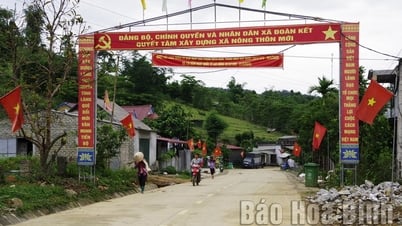
The promotional images, cultural performances, billboards, and slogans about the New Rural Development program are no longer simply propaganda tools, but are now being linked to concrete actions – from training human resources to building destinations, gradually making tourism a tangible component in the sustainable rural development program.
These bottlenecks are not easy to overcome.
Rural tourism has taken a head start. However, to develop it into a sustainable supporting economic sector, significant bottlenecks remain. For example, many community-based tourism destinations are included in the OCOP (One Commune One Product) product system, but their accompanying services lack appeal and differentiation. Promotional activities are primarily introductory, failing to create a stable connection between destinations, businesses, and tourists. Tour and route organization capabilities are limited; local people possess basic skills but lack practical experience; and tourism businesses remain hesitant due to a lack of infrastructure and stable output products…
Specifically, according to the Department of Culture, Sports and Tourism, the unit was not assigned specific tasks in Plan No. 242/KH-UBND - the document implementing Project No. 03-DA/TU. This is a significant gap that makes it difficult for the sector to allocate dedicated resources for rural tourism development, leading to the need to integrate tasks into regular plans, lacking depth and long-term planning.
In addition, there is the infrastructure problem. Many potential tourist destinations are located deep in disadvantaged areas, with poor road infrastructure and a lack of standard accommodation. Funding for training courses and promotional activities still heavily depends on the limited budget from higher levels of government.
Based on the above reality, according to Comrade Bui Xuan Truong, Deputy Director of the Department of Culture, Sports and Tourism, the department has proposed to the Provincial Steering Committee for the National Target Program on Building New Rural Areas and localities to strengthen resource support to standardize OCOP tourism products; expand in-depth training courses for grassroots officials; and establish a clearer coordination mechanism and assignment of tasks for departments and agencies in implementing Project No. 03-DA/TU in the next phase.
Rural tourism in Hoa Binh has taken its first steps. However, without policy support and strong leadership, this journey will remain a cycle of experimentation, followed by stagnation. In many villages, the gates remain open, but the people are waiting for something more than just tourists. They are waiting for a genuine connection between local potential and a sustainable development strategy.
Minh Vu
Source: https://baohoabinh.com.vn/276/201752/Du-lich-cong-dong-con-nhung-diem-nghen.htm


































































Comment (0)