

Visiting Champasak, you not only get to experience eco -tourism in Southern Laos, but also have the opportunity to slow down, enjoy happiness that sometimes simply means taking a deep breath of the fresh air...

Crossing the Nam Giang International Border Gate, in less than a day, we arrived in Pakse city, Champasak province, Laos. What's special about this city is that it's situated right at the confluence of the Mekong and Xe Pon rivers, so it's surrounded by lush greenery – rivers, mountains, grasslands, and vast forests.
Unlike other bustling cities, Champasak remains relatively unspoiled and peaceful. Often described as a hidden gem of Laos, it boasts a rich cultural, architectural, and religious heritage, including ancient temples like Wat Phou, Wat Oum Muong, and Phousalao, as well as numerous scenic spots and beautiful natural landscapes such as the Saphai Veunexay weaving village, the Si Phan Don archipelago along the Mekong River, and majestic waterfalls.
Champasak has become not only the economic , commercial, and cultural center of Southern Laos, but also a connecting point between Thailand, Laos, Vietnam, and Cambodia. From Pakse, across the 1,500m-long Friendship Bridge over the Mekong River, about 40km away, is the Vang Tao border gate, bordering Ubon province of Thailand.
The southern part of Champasak shares a border with Cambodia, and buses travel directly from Pakse through Cambodia to Ho Chi Minh City in a single day. Pakse has an international airport, two bus terminals connecting Laos and Thailand, Laos and Cambodia, and buses on domestic routes...
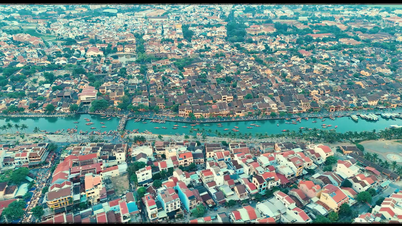
The driver, who also acts as a tour guide, is fluent in three languages: Vietnamese, Thai, and Cambodian. His English is sufficient for conversational practice. He often takes tourists to visit cultural heritage sites in the three Indochinese countries, relax and swim at Da Nang beach, explore Ba Na Hill, and visit World Heritage sites like My Son and Hoi An.
The route welcomes tourists from northeastern Thailand, southern Lao provinces, and Cambodia through the Nong Nokkhien and Trapeang Kriel border gates – the first and only international border crossings between Laos and Cambodia, contributing to the development of the Vietnam-Laos-Cambodia economic triangle.
It is incredibly interesting and convenient for tourists from Vietnam to travel to Laos and Thailand, and vice versa, to participate in festivals combined with shopping and sightseeing. Tourists choosing Vietnam, including Quang Nam, to travel and visit their homeland also contributes to strengthening national ties.
Traffic in Laos differs significantly from Vietnam, so you should pay attention, always yield to others, regulate your own traffic flow, and obey the law. While in Vietnam car horns are very loud, honking while driving is a violation of traffic rules. Not only will you be fined 50 Kip, but you'll also be looked at disapprovingly for being impolite and uncivilized.

Champasak has many waterfalls, such as Tad Yuang waterfall located at kilometer 40, provincial road 23, Tayicseua waterfall in Paksong district, Li Phi waterfall, Tad Phasuam waterfall along provincial road 20…
We chose Tad Yuang Waterfall, a popular destination for many foreign tourists, especially those from Europe and neighboring countries. Its beauty remains pristine, a vibrant green, untouched by environmental pollution, and it also preserves the traditional wood carving art of the Co Tu people.
Not far from there, in Dong Hua Sao National Park on the Bolaven Plateau, lies Tad Fane Waterfall, approximately 120 meters high, making it the most spectacular waterfall in Laos.
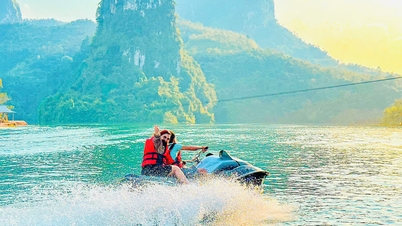
Along the stretch of the Mekong River that widens by more than 1km and is nearly 14km long, running through Champasak province, lies the Si Phan Don archipelago (in Lao, it means 4,000 islands, even though the country has no coastline).
There are many ways to get there by road and then by boat, or take a minibus to the pier, take a ferry to Si Phan Don, Khone Phapheng Falls - the largest waterfall in Southeast Asia, nicknamed the "Niagara of Asia". And a special feature is that at the bottom of the falls there is a colony of Irrawaddy dolphins...
The Mekong River is the main lifeline of southern Laos, providing water, food, and sustenance for people not only in the region but also elsewhere. The area enjoys a cool climate year-round, with abundant fruit trees throughout the four seasons, making it one of Laos' largest rice granaries.
Along the roadside, there are many stalls selling fresh, clean, and inexpensive fruits and agricultural products, as well as dishes with distinctive flavors such as grilled fish caught from the Mekong River and wild vegetables gathered from the islands, all abundant and diverse, perfectly suited to the Vietnamese palate.
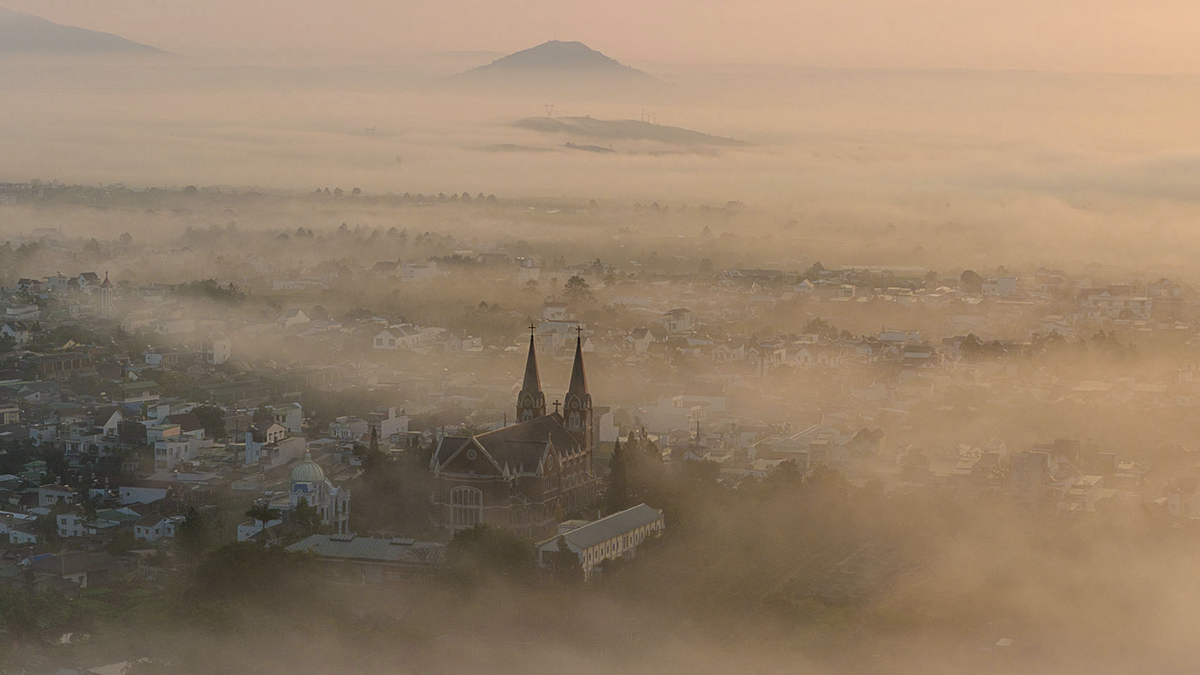
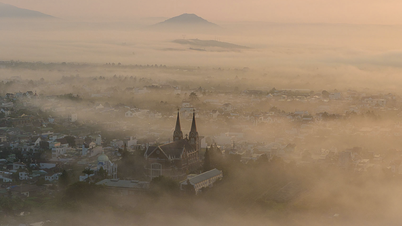
In the early morning, mist hangs over the riverbank, with majestic mountain ranges in the distance. From Wat Luang temple, near the Souphanouvong bridge – the most beautiful in Pakse – groups of young monks in their yellow robes spread out into the streets and villages to beg for alms. The feeling is strangely peaceful! Come to Champasak and enjoy these moments of slow living to rejuvenate your soul...
Source









































Comment (0)