Improve the environment, diversify revenue sources.
Mr. Nguyen Van Tuan, from Doa Cu village, Huong Phung commune, Quang Tri province, said that in recent years, the movement to plant coffee under shade trees has developed strongly in the locality. Instead of planting Arabica coffee as a monoculture, people have shifted to planting under shade trees and fruit trees, using organic fertilizers and biological pesticides. Surprisingly, coffee yields are more stable, and the selling price and economic efficiency are significantly higher compared to planting coffee as a monoculture.
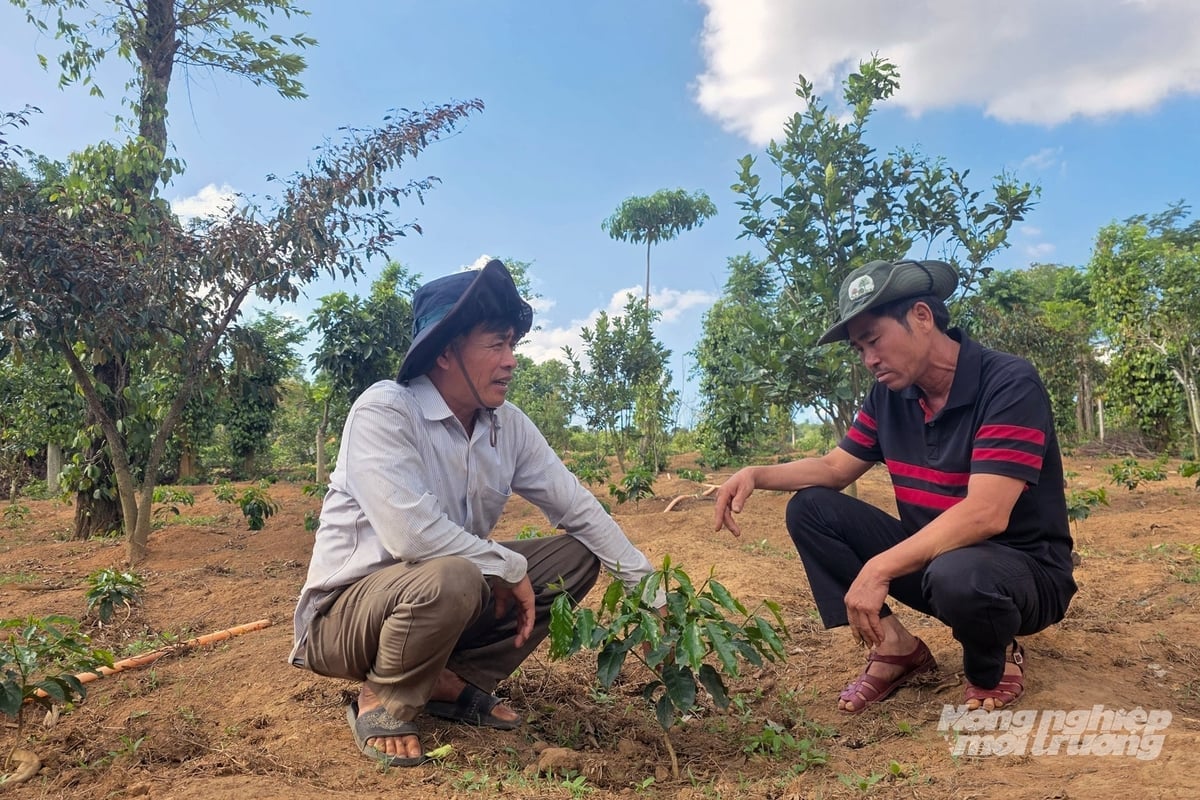
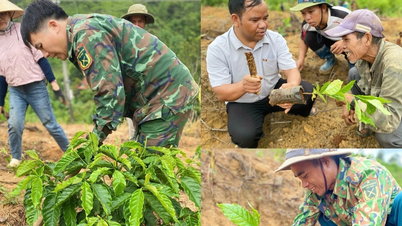
The area of replanted coffee is being cultivated by locals under shade trees. Photo: Vo Dung.
“Without shade trees, yields are erratic. In good years, we get 15-17 tons, but in bad years, it drops to only 7-10 tons per hectare. Now, with shade trees, yields are more stable. My coffee plantation yields 18 tons per hectare even in bad years, and 20-22 tons per hectare in good years. Coffee grown under shade trees produces plump, ripe fruit that fetches a higher price; without shade trees, the fruit is blemished, and we have to harvest it in bulk,” Mr. Tuan shared.
Ms. Luong Ngoc Tram, Director of Pun Coffee Co., Ltd., said that in recent years, the company has tended to purchase high-quality coffee beans for processing into specialty coffee. Coffee grown under the forest canopy, with ripe red berries, is always purchased at a higher price than traditionally cultivated coffee, by 5-6 thousand VND/kg. Coffee grown under the forest canopy ripens slowly, has a high natural sugar content, and the coffee plants compete with other crops, thus positively impacting the flavor and complexity of the aromas.
“The density of coffee plants has decreased compared to traditional farming methods, so the yield in some plantations has decreased by 5-10%, but it remains very stable. Besides selling at higher prices, coffee growers can diversify their income from fruit trees, beekeeping for honey… Most importantly, the benefits to the environment and the quality of agricultural products are the goals of sustainable agriculture ,” Ms. Tram said.
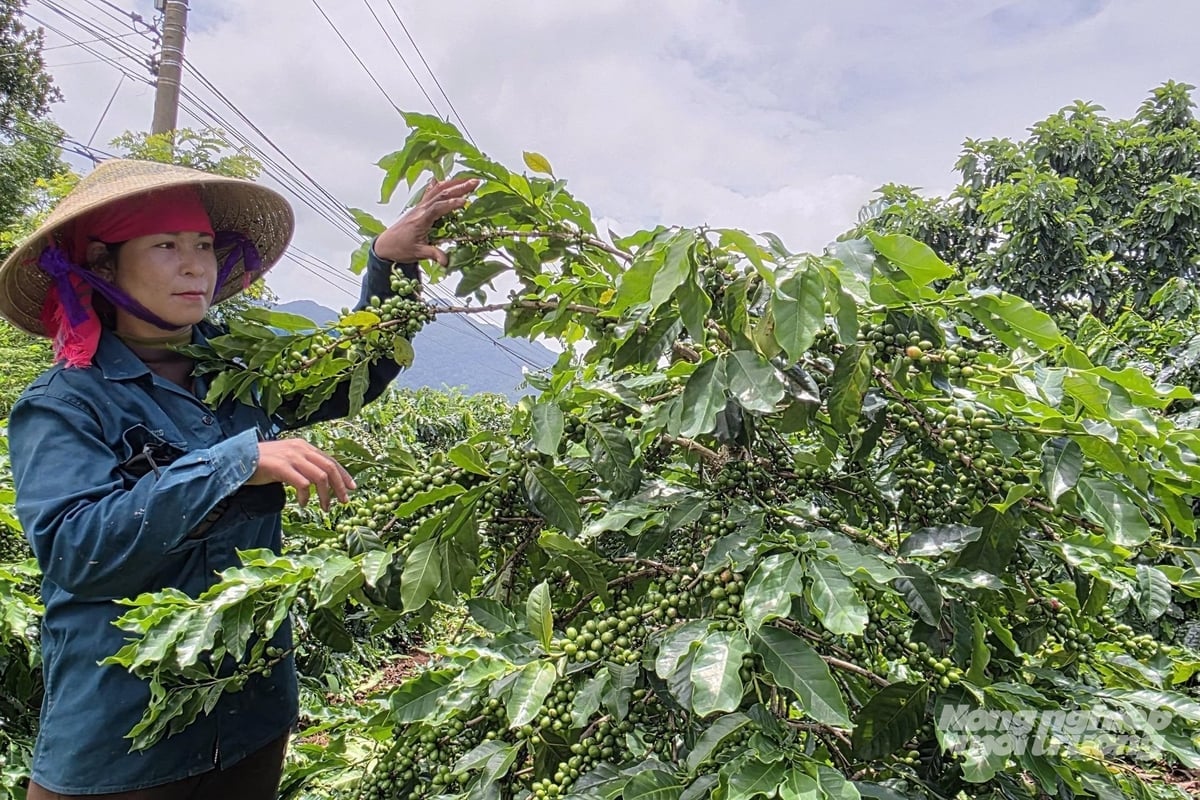
Coffee yields and production are stable thanks to cultivation under the forest canopy. Photo: Vo Dung.
According to Mr. Phan Ngoc Long, Vice Chairman of the People's Committee of Huong Phung commune, the commune currently has nearly 3,000 hectares of coffee, accounting for 60-70% of the total coffee area of the former Huong Hoa district. To date, 600 households have registered to participate in ecological coffee cultivation and natural forest improvement, with a total area of nearly 100 hectares already implemented.


The involvement of businesses through programs and projects will further motivate coffee growers to replicate the model, aiming for the global market with increasingly higher value.
“The locality will continue to promote and encourage farmers to produce coffee in an ecological and organic manner to have more raw materials for processing export products. This is a sustainable direction in agricultural production in general and the coffee industry in particular in Huong Phung. In the future, we hope that programs and projects will continue to support in-depth training and investment in seedlings so that farmers can expand the area of agroforestry coffee,” Mr. Long said.
A major shift in thinking.
Ms. Luong Ngoc Tram, Director of Pun Coffee Co., Ltd., said that, recognizing the global market's demand for traceability of agricultural products and production meeting criteria for improving natural forests, the company has shifted its thinking since 2022. Instead of purchasing traditionally grown coffee for processing, the company has partnered with hundreds of households to grow coffee with shade trees. To date, the company has planted 10,000 shade trees of various types in the coffee gardens of local people.
Many households have switched from monoculture coffee farming to polyculture with multiple canopy layers to create shade, retain moisture, prevent soil erosion, and limit pests and diseases. During cultivation, farmers do not use chemical fertilizers or harmful pesticides. Coffee husks and by-products after processing are composted into microbial organic fertilizer to be used as fertilizer for other crops.
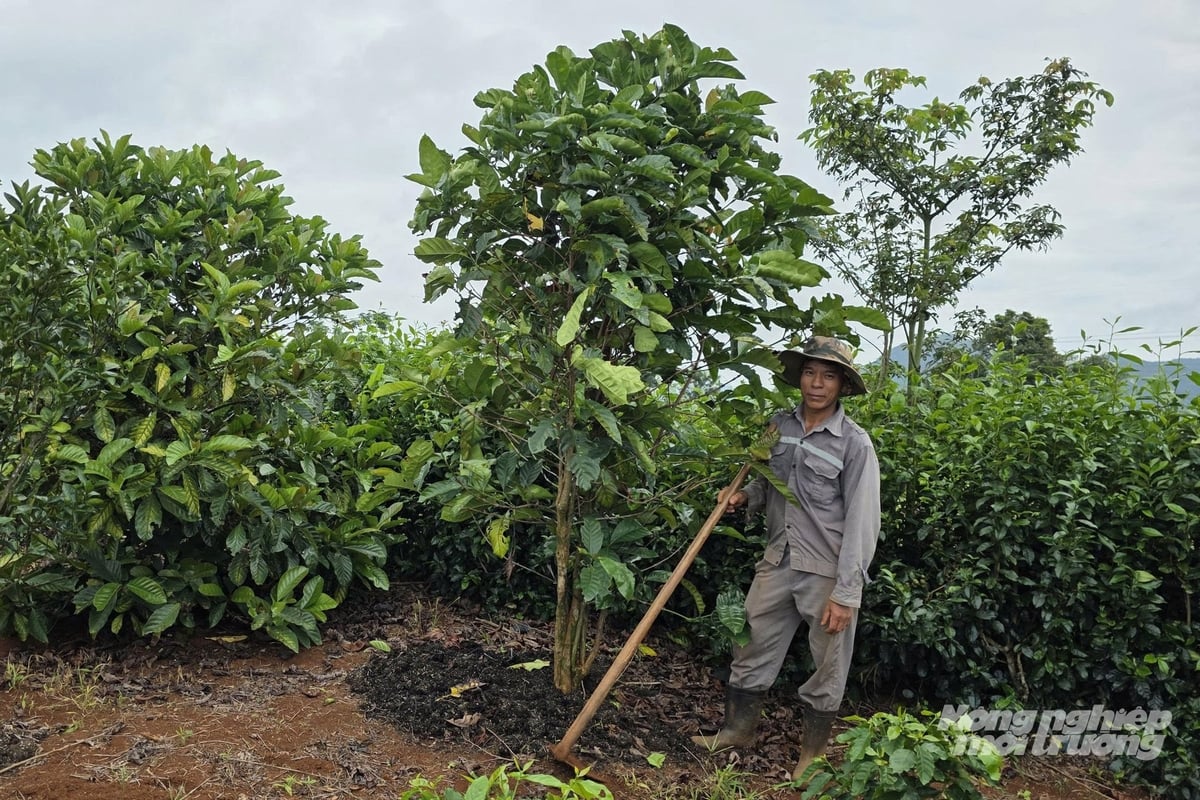
Growing coffee under the forest canopy helps farmers diversify their income sources. Photo: Vo Dung.
"We selected legumes, native trees, or trees with essential oils such as black acacia, rosewood, green lim, and fragrant re... which have both soil-improving and insect-repellent properties for coffee plants, to provide to farmers for planting. After a period of planting shade trees, farmers will earn income from these trees," Ms. Tram said.
When the movement to cultivate coffee without causing deforestation began to emerge, the people of Huong Phung commune were further motivated. In 2023, with non-refundable aid from the Danida Green Business Partnership Program (Denmark), the World Wide Fund for Nature (WWF) in Vietnam implemented the project "Ecological coffee production and natural forest improvement in Huong Hoa district, Quang Tri province" (formerly), now Huong Phung, Khe Sanh, Tan Lap communes, etc., with a total investment of nearly 30 billion VND, implemented from 2023 to 2027. Slow Vietnam Co., Ltd. partnered with farmers to build a supply chain, guarantee purchase, and commit to exporting high-quality Arabica coffee.
The project aims to convert 2,500 hectares of monoculture Arabica coffee plantations to agroforestry, protect 18,000 hectares of natural forest, support 2,000 small-scale producers (mainly Bru - Van Kieu ethnic minorities) in developing sustainable value chains, and increase the average income of participating households by 40%.
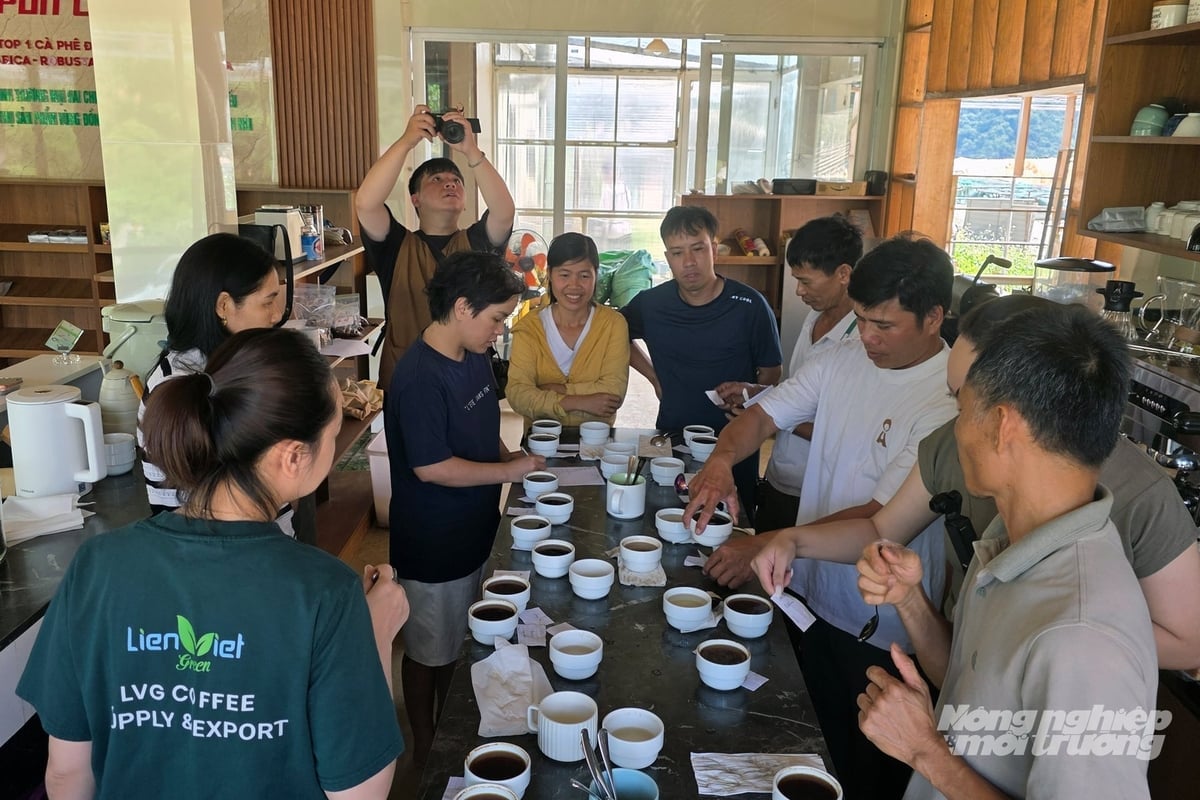
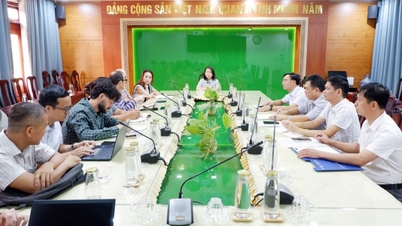
Many businesses in Hanoi have visited Huong Phung commune to assess the quality of coffee grown under the forest canopy. Photo: Vo Dung.



Furthermore, during its implementation, the project expects to produce, process, and export 1,000 tons of high-quality Arabica green coffee beans. These are practical goals that will help coffee growers gradually improve their lives and enable the coffee industry in Quang Tri province to achieve sustainable growth targets in the future.
“People have realized the benefits of growing coffee under the forest canopy, which brings very high efficiency and stable productivity year after year. People are increasingly aware of the importance of developing shade tree planting,” said Mr. Pham Song Toan, Group Leader of But Viet Coffee Group, Huong Phung commune, enthusiastically.
Programs and projects have contributed to promoting economic development while simultaneously conserving, managing, and improving natural forests. Coffee growers have gradually changed their perceptions and practices. This is a crucial factor in ensuring that coffee from Huong Phung, Khe Sanh, and Tan Lap communes in Quang Tri province maintains its brand as a specialty product and integrates deeply into the international market.
Source: https://nongnghiepmoitruong.vn/dua-rung-ve-vuon-ca-phe-d819692.html





























![Treasures of Tay Con Linh: [Part 1] The Legend of Mac Tea](https://vphoto.vietnam.vn/thumb/402x226/vietnam/resource/IMAGE/2026/07/03/1783085106804_2256-2238-z3118525722756_bfd39ad72c50b6cf047b17fa5267e37c-232139_617.jpeg)