The intention was good, but...
The lyric "the ripe rice stalks stand tall but never bow their heads" from musician Chau Dang Khoa's song, which is currently causing controversy, can be viewed from three perspectives: scientific meaning, cultural symbolism, and artistic creativity.
First of all, from a scientific perspective, the saying "ripe rice grows tall but never bows its head" is clearly likely to provoke a reaction. In nature, when rice ripens, the grains become heavier and the rice stalks usually droop. It is from this observation that the concept of "ripe rice bows its head" was formed in Vietnamese culture, meaning that the more talented and virtuous a person is, the more humble they become.
Therefore, if the lyrics are considered separately, many viewers believe it contradicts common knowledge and distorts cultural symbolism. However, considering the creative freedom of art, I don't believe that anything different from an idiom is immediately wrong. Poets, writers, musicians, etc., have every right to reverse meaning, break meaning, create paradoxes, or even change a familiar image to create a new message. In this case, musician Chau Dang Khoa explained that he wanted to use the image of "not bowing down" in the sense of national pride; Vietnamese people may be humble, but they will not submit.
If placed alongside the lines: "If there is a next life, I still wish to be/One more time a child of Vietnam," the author's intention is to speak of national pride and the proud, dignified stance of the nation, not to encourage arrogance.
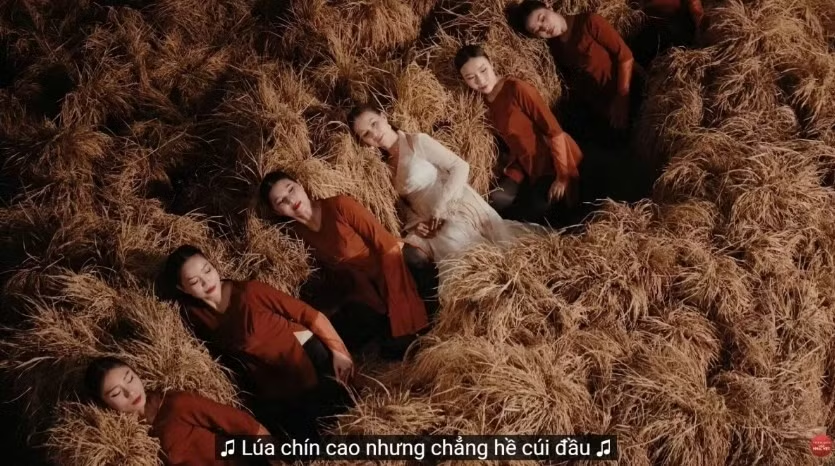
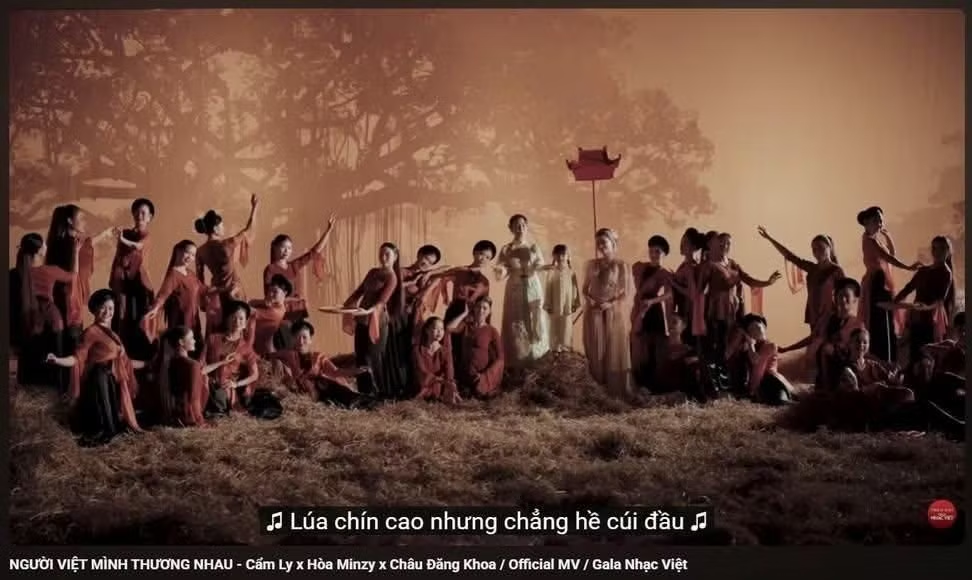
But the problem lies in the fact that this creative approach is not good, even flawed. The songwriter wanted to convey the idea of "not surrendering," but borrowed a symbol that already holds strong meaning in the community's consciousness: "ripe rice bowing its head" as a sign of humility. Therefore, this lyric contradicts agricultural knowledge and folk culture. This very contradiction provoked a reaction from listeners. A patriotic song should evoke a sense of shared emotion, but instead, it sparked debate.
It's inappropriate to harshly accuse this song of "distorting biological knowledge" in a dangerous or intentionally misleading sense. This isn't a biology textbook. However, the audience's reaction shouldn't be seen as excessive criticism either. When a song uses imagery related to agriculture and national culture, especially in a song about Vietnamese people, that imagery needs a certain level of cultural accuracy. Art allows for creativity, but that creativity must be reasonable and convincing.
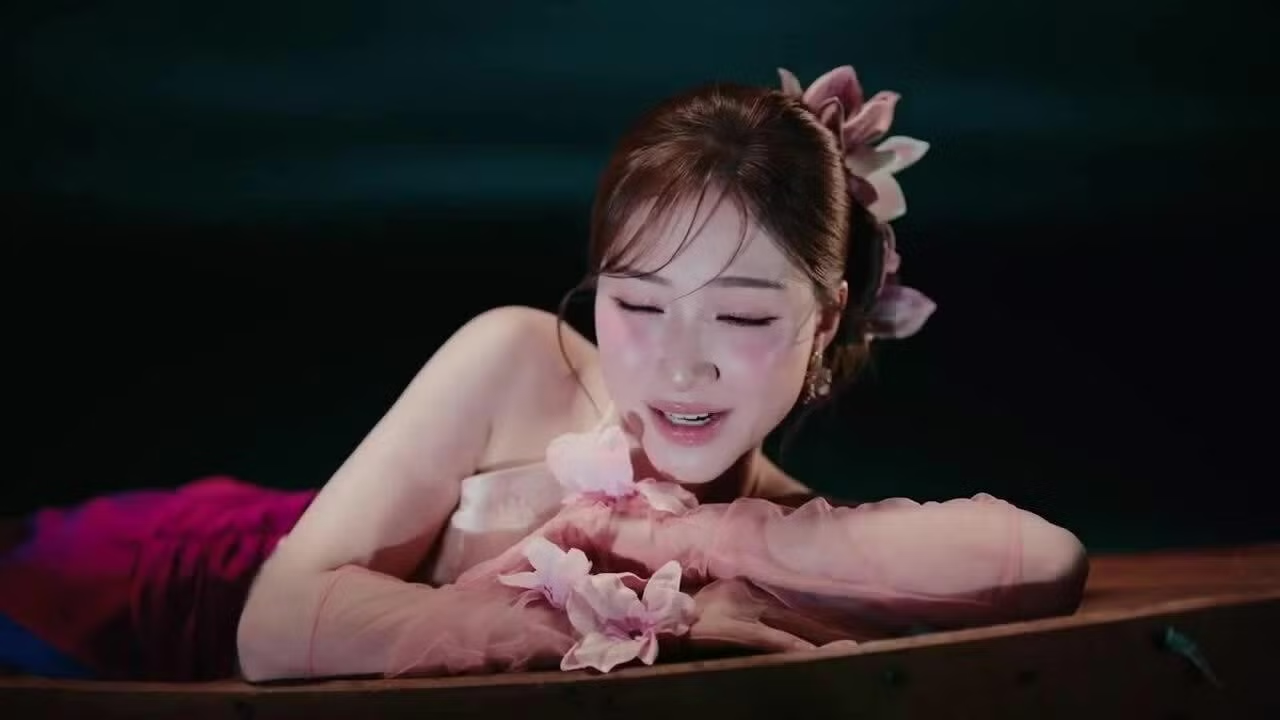


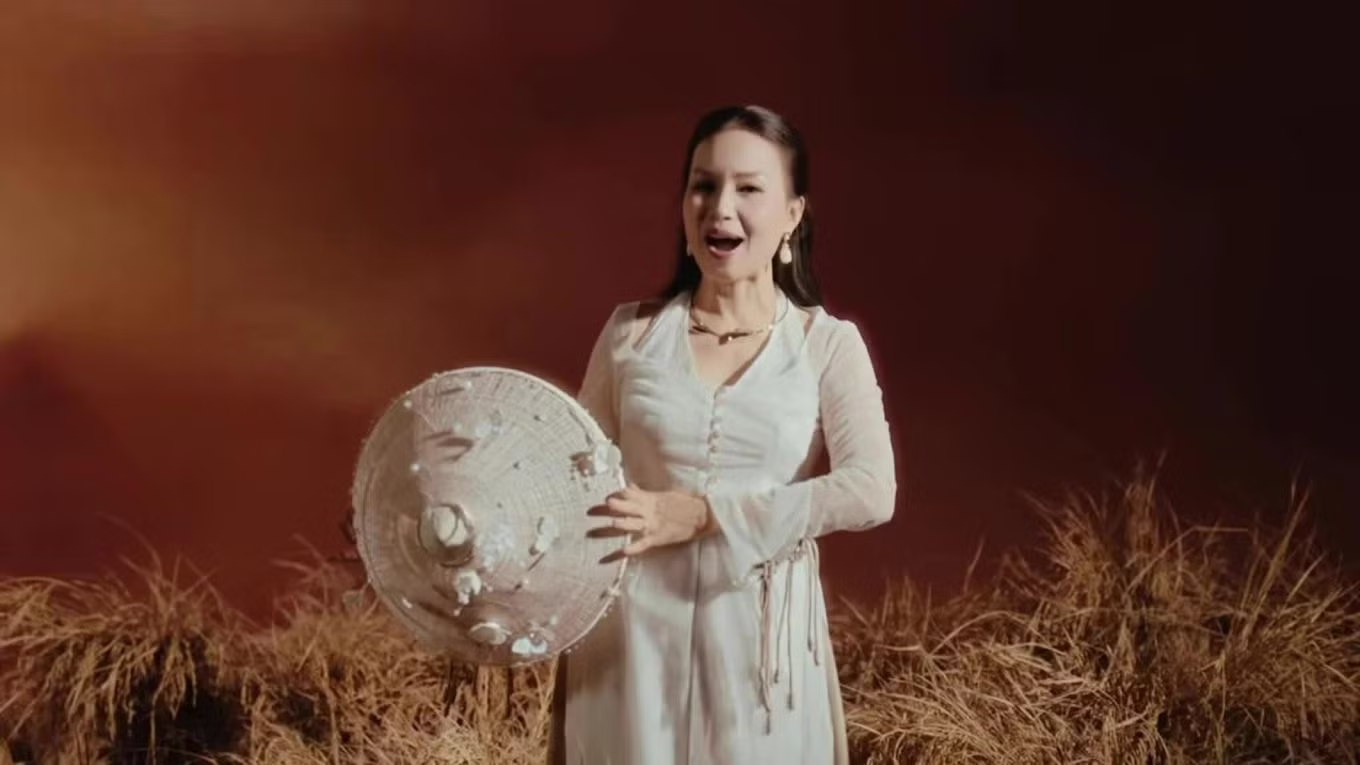
Vietnamese culture is not lacking in beautiful images of resilience in the face of adversity, such as bamboo before a storm, waves before rocks, or perhaps even the rice plant itself, but in a creative way, like "bending down because of the heavy grains, standing up after the storm."
In short, this lyric isn't a serious mistake that warrants condemnation, but it's an unconvincing choice of lyrics. The songwriter had good intentions and clear patriotic inspiration, but the creative execution wasn't perfect. Therefore, the audience's debate is valuable, showing that today's public listens to music not only emotionally, but also with their cultural background, their vocabulary, and their life experiences.
Refresh traditions subtly, don't reverse them in a shocking way.
This is a very thought-provoking experience for musicians who want to adapt and modify folk songs, proverbs, idioms, or folk culture into their music .
The first lesson is that to break the mold, one must first understand the underlying spirit. Folk songs and proverbs can be reinterpreted, but the creator needs to firmly grasp the literal and figurative meanings, the context of use, the cultural nuances, and even the emotions and collective thinking associated with the saying. If one merely borrows a few familiar words to create an effect, the work easily falls into superficial folklore-ization, sounding Vietnamese and traditional, but fundamentally incorrect in meaning.
The second lesson is creativity, but not arbitrariness. Art has the right to associate, reverse, and dialogue with cultural traditions. But such reversal needs a clear aesthetic purpose. If one wants to reverse a proverb, the writer should create a strong enough context for the listener to understand that this is a conscious counter-argument, not a misinterpretation of knowledge or misuse of symbolism. For example, if one wants to talk about an indomitable spirit, there are many other Vietnamese images that are closer in meaning, such as bamboo not breaking in the storm, waves never ceasing to crash, rocks standing against the sky, border markers, the stance of a liberation soldier.
These images are both rich in cultural content and not contrary to the national consciousness. Young people can innovate, remix, rap, pop, electronicize, stage, or even overturn old concepts. But each time they touch upon national culture, they are also touching upon the shared consciousness of the community. If understood well and creatively developed, the song will be both modern and culturally profound.



The third lesson is to distinguish between pride and exaggeration. Patriotic and community music often requires strong emotions, beautiful melodies, and easily relatable lyrics. But if pride is pushed to an excessive level of rhetoric, the work easily loses its subtlety. Vietnamese culture is not only characterized by unwavering fortitude, but also by the beauty of flexibility, humility, patience, and perseverance.
The rice plant bowing its head is not a symbol of submission, but rather a symbol of abundance, maturity, self-awareness, and understanding of the world. Sometimes, a strong nation is not strong because it always holds its head high, but also because it knows how to humble itself to sow seeds, to humble itself to the land, and from there, rise up very firmly.
Fourthly, it's advisable to consult experts before publishing widely, especially when using material related to folklore, history, religion, or national symbols. In the age of social media, a lyric no longer exists solely within the song itself. It will be dissected, scrutinized, debated, reinterpreted, and debated. Therefore, songwriters need to reread the meaning, consult experts, and gauge the reactions of various groups of listeners before publishing. This doesn't diminish creative freedom; instead, it helps creativity go further and avoids unnecessary controversies.
The lesson is not that young musicians shouldn't create using folk material. On the contrary, they should. But creativity should be based on understanding. They should renew tradition with subtlety, not with shocking inversions.
Source: https://tienphong.vn/dung-dao-nghia-gay-soc-post1839383.tpo