

 |
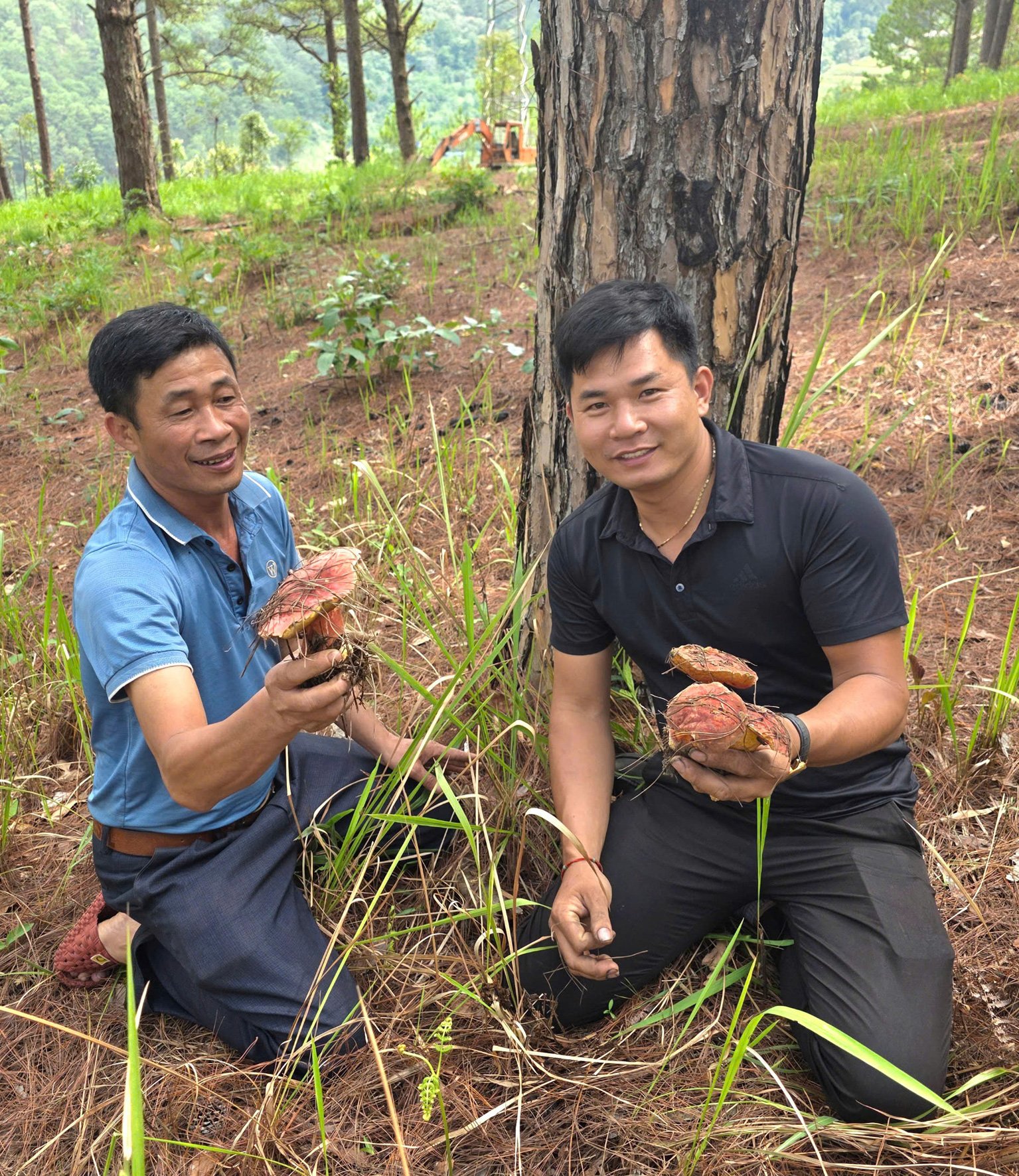
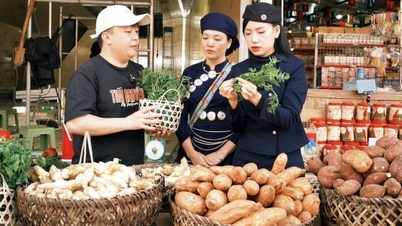
| Tourists experience mushroom picking in Da Lat. |
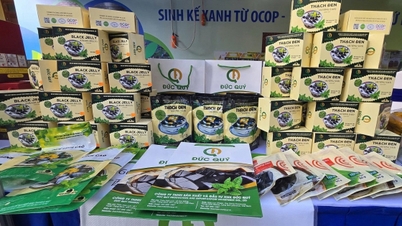
Based on his research, Dr. Nguyen Cao Cuong, Head of the Faculty of Medicine and Pharmacy at Yersin University in Da Lat, shared: “Lam Dong has many natural advantages: climate, topography, soil... very favorable for the growth and development of plant life, including endemic and rare medicinal plants. The Faculty of Medicine and Pharmacy at Yersin University in Da Lat has also successfully researched and formulated several products from Lam Dong medicinal plants such as: ginseng and cinnamon balm, brown rice and cordyceps tea, ginseng and cinnamon wine, burn treatment gel, cough syrup, herbal tea, etc.” According to Dr. Nguyen Cao Cuong, the products researched and produced by him and his colleagues in the Faculty of Medicine and Pharmacy are deeply rooted in the unique characteristics of Da Lat - Lam Dong. Initially, the Faculty of Medicine and Pharmacy, Yersin University in Da Lat, supplied the market with 25,000 products of Ngoc Linh ginseng medicated oil, 2,000 products of Ngoc Linh ginseng wine, 1,000 products of brown rice with cordyceps, and approximately 500 products of burn treatment gel... and received positive feedback from customers. This opens up a new direction for medicinal herbs in Lam Dong, not only affirming their important role in research and production (pharmaceuticals, cosmetics, food...), but also bringing economic benefits to the people from planting, caring for, protecting, and harvesting medicinal herbs to supply the pharmaceutical industry.
According to pharmacist Duong Kim Thoa ( Ho Chi Minh City), for a long time, we have only considered medicinal herbs as raw materials for drug production. In reality, medicinal herbs can also be processed into food, cosmetics, etc., to develop the medicinal herb economy.
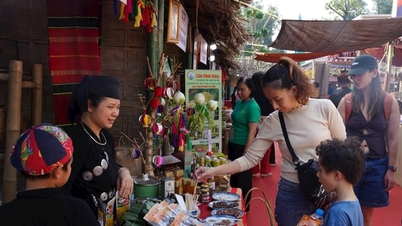
According to pharmacist Thoa, many dishes made from medicinal herbs are popular with tourists. For example, in Da Lat, there's the artichoke soup with pork trotters. In addition, Da Lat also has a dish made from medicinal mushrooms that is very attractive to tourists. Furthermore, the abundant medicinal herb resources of the indigenous communities in the Central Highlands, located in Lam Dong province, offer tourists a fascinating experience of the local environment, knowledge, and lifestyle of the Central Highlands people. "Imagine this: tourists experience the entire process from searching for medicinal herbs, harvesting them, to preparing dishes, then enjoying the meal with the indigenous people of the Central Highlands, listening to them talk about the uses and medicinal properties of each herb, and how they 'prepare medicine' for the healthy... how interesting that would be," said pharmacist Duong Kim Thoa. Cuisine and cosmetics made from medicinal herbs will contribute to improving the livelihoods of people in medicinal herb-growing regions, while also helping to preserve, maintain, and develop local cultural values and protect the biodiversity of medicinal plants.
Dr. Nguyen Cao Cuong further shared: To develop the medicinal plant economy, the central task is to increase investment in research, reorganize the medicinal plant industry in all stages (original seed sources, production along the chain, deep processing, quality preservation...), create a linked chain of planting - production - distribution - tourism based on benefit sharing, and form medicinal plant tourism destinations...
"First and foremost, we need to change our approach and not view medicinal herbs merely as raw materials for making medicine. Medicinal herbs also create other values such as culinary, cultural, and genetic resources... which need to be protected, promoted, and developed," pharmacist Duong Kim Thoa emphasized.
Source: https://baolamdong.vn/xa-hoi/202506/duoc-lieu-khong-chi-lam-nguyen-lieude-bao-che-thuoc-1dc7710/












































![[Photo] Closing Ceremony of the 15th Conference of the Central Committee of the 13th Party Congress](https://vphoto.vietnam.vn/thumb/402x226/vietnam/resource/IMAGE/2025/12/23/1766462841764_a1-bnd-3731-1647-jpg.webp)















Comment (0)